Executive Overview
As the 2026 midterm elections reach their climax, Artificial Intelligence has crossed a critical threshold—transitioning from a speculative tech sector topic into a high-stakes flashpoint of American and global politics. Facing escalating public resistance against massive grid power consumption, municipal resource strain, and the physical expansion of server infrastructure, OpenAI is mobilizing an aggressive post-election public relations and policy campaign.
Led by Chief Global Affairs Officer Chris Lehane, the strategy seeks to radically reshape how voters, regulators, and local communities view the physical backbone of the AI boom. Central to this effort is a high-profile attempt to rebrand deeply unpopular "data centers" into "AI compute campuses," alongside proposals for self-imposed "AI speed limits," federal push for global technological standards, and messaging designed to frame generative tools as fundamental agents of personal economic empowerment.
With political forecasters projecting shifts in Congressional control following Tuesday’s vote, tech executives view the post-midterm landscape not merely as a regulatory challenge, but as a trial run for the 2028 presidential campaign. In this emerging political paradigm, energy allocation, digital sovereignty, and the velocity of AI deployment are slated to become central issues for the American electorate.
Detailed Chronology
[Late 2025 – Mid 2026]
Rising Grassroots Resistance
• Municipal tensions flare over energy grids and water usage.
• Protests erupt in Western Canada (British Columbia, Manitoba) and key U.S. markets against sovereign compute farms.

[October 2026]
Corporate Transparency Shifts
• Amazon and Microsoft officially abandon non-disclosure agreements (NDAs) in negotiations with local governments following intense public scrutiny.

[November 1, 2026]
The Lehane Strategy Unveiled
• Axios reveals OpenAI’s post-midterm "PR blitz."
• Chris Lehane frames the 2026 midterms as a "movie trailer" for the 2028 presidential election.

[Post-Midterm 2026 Target]
Policy and Messaging Rollout
• Aggressive policy pushing for federal standard-setting, community benefit frameworks, and the rebrand to "AI Compute Campuses."
The Escalation of the Compute Conflict
The path to OpenAI’s post-midterm strategy has been paved by months of growing friction between technological expansion and municipal capacity:
- Mid-2025 to Early 2026: As large language models scaled exponentially, the industrial footprint required to train and run them expanded into rural and suburban corridors across North America. Municipalities across the United States and Canada began reporting unprecedented pressure on localized electrical grids and cooling water reserves.
- June 2026: Public dissatisfaction manifested in direct action. In Vancouver, British Columbia, as well as regions across Manitoba, grass-roots coalitions staged public demonstrations against localized server farms. Citizens expressed deep skepticism over "sovereign compute" initiatives, arguing that public utility networks were being repurposed to subsidize private tech infrastructure without clear public dividends.
- October 2026: Recognizing an unsustainable public relations posture, cloud and hyper-scaler giants Amazon and Microsoft officially announced a national policy pivot: eliminating non-disclosure agreements (NDAs) long utilized in site selection negotiations with municipal leadership. The move was designed to stem a rising tide of legal challenges and civic outrage surrounding secretive land acquisitions and energy subsidies.
- November 1, 2026: On the eve of the U.S. midterm elections, reports surfaced confirming that OpenAI had constructed a comprehensive post-election initiative. Designed under the leadership of Chris Lehane, the strategic offensive seeks to intervene directly in the legislative and public messaging vacuums expected to open immediately following the election results.
Supporting Context & Metrics
The Infrastructure Friction: Data Centers vs. Compute Campuses
The political challenge facing AI developers is fundamentally physical. The massive capital expenditures poured into generative AI over the past four years have catalyzed a building boom for physical facilities. However, public sentiment toward these structures has eroded sharply.
+-----------------------------------------------------------------------+
|                   THE INFRASTRUCTURE REBRANDING                       |
+-----------------------------------------------------------------------+
|  OLD PERSPECTIVE: "Data Centers"     |  NEW PERSPECTIVE: "Compute Campuses" |
|  • Resource extraction fears         |  • Civic infrastructure narrative  |
|  • Secretive local government NDAs   |  • Transparent community benefits  |
|  • Perceived grid strain & noise     |  • Economic empowerment hub        |
+-----------------------------------------------------------------------+
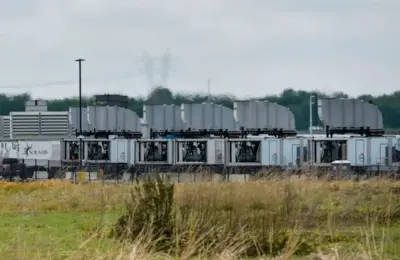
To combat local municipal resistance, OpenAI’s legislative strategy introduces a deliberate linguistic and conceptual shift: reframing server installations from industrial "data centers"—which carry connotations of environmental drain, noise pollution, and secretive land buys—into "AI compute campuses."
This rebranding is intended to position server clusters similarly to research universities or advanced technology parks: clean, high-value civic infrastructure projects that deliver localized economic dividends, research partnerships, and structural modernization to host communities.
Regulatory Metrics and "AI Speed Limits"
Alongside physical re-labeling, the policy framework addresses growing regulatory anxiety over the velocity of artificial intelligence development. As rival companies push frontier models into increasingly autonomous territories, legislative bodies have expressed concern regarding systemic market disruption and public vulnerability.
+-----------------------------------------------------------------------+
|                    EMERGING POLICY PILLARS                            |
+-----------------------------------------------------------------------+
|  PILLAR 1: Infrastructure Rebranding                                  |
|  --> Transform perception from grid drain to modern economic asset.   |
|                                                                       |
|  PILLAR 2: "AI Speed Limits" & Safety Frameworks                      |
|  --> Establish phased deployment gates & compute cap thresholds.      |
|                                                                       |
|  PILLAR 3: National Security & Global Standards                       |
|  --> Position U.S. compute infrastructure as vital to geopolitical    |
|      competitiveness against international adversaries.               |
+-----------------------------------------------------------------------+
The concept of "AI speed limits"—a term gaining traction across elite tech policy circles—refers to standardized safety thresholds, compute caps, and deployment pause triggers. OpenAI’s strategy signals a willingness to engage directly with structural guardrails, provided those guardrails are standardized nationally by federal authorities rather than fragmented across dozens of conflicting state laws.

Official Statements and Industry Alignment
The OpenAI Political Playbook
Speaking on the strategy, OpenAI Chief Global Affairs Officer Chris Lehane characterized the upcoming legislative window as a crucial transition period for tech governance in Washington and state capitals across the country.
"The midterms are going to be a bit of a movie trailer for what you’re going to see in 2028," Lehane remarked, arguing that artificial intelligence will move from a secondary policy topic to "the" defining economic and national security debate of the next presidential election cycle.
Lehane also highlighted the necessity of leaning directly into the public friction surrounding local infrastructure development, advocating for a policy framework that explicitly ties corporate compute expansion to community enrichment:
"Communities should hold companies responsible and accountable so they really and truly get a transformative benefit from these projects," Lehane stated, describing the broader debate around data center development as a "good and healthy" dialogue.
"The midterms are going to be a bit of a movie trailer for what you're going to see in 2028... Communities should hold companies responsible and accountable so they really and truly get a transformative benefit from these projects."
— Chris Lehane, Chief Global Affairs Officer, OpenAI
The Hyper-Scaler Alignment
OpenAI’s posture reflects a broader recalibration across the entire technology sector. Following widespread public protests in both the U.S. heartland and Canadian provinces such as British Columbia and Manitoba, major compute providers have been forced to abandon long-standing playbooks.
When tech giants such as Amazon and Microsoft formally abandoned secret municipal NDAs, it marked a historic retreat from traditional industrial site-selection tactics. Industry executives now broadly acknowledge that securing public buy-in, grid allocations, and zoning approvals requires total transparency regarding energy procurement, carbon offsets, and localized job creation metrics.
Future Outlook: The Road to the 2028 Elections
As political analysts prepare for potential shifts in the House of Representatives and the Senate following the midterms, the tech sector’s political strategy signals a long-term realigning of priorities.
+-----------------------------------------------------------------------+
|                  2026-2028 STRATEGIC ROADMAP                          |
+-----------------------------------------------------------------------+
| 2026 Midterm Elections  ==> Congressional Realignment                 |
|                                 |                                     |
| 2027 Legislative Push   ==> U.S. Federal Standards & Zoning Reform    |
|                                 |                                     |
| 2028 Presidential Election ==> AI Infrastructure as Core Policy Issue  |
+-----------------------------------------------------------------------+
Key Trends Shaping the 2027–2028 Policy Landscape
- Zoning and Municipal Grid Battles: The fight over where and how to construct "compute campuses" will shift from local zoning boards to state capitals. State legislatures are expected to introduce bills that mandate explicit community benefit agreements (CBAs) in exchange for access to high-capacity energy grids.
- Federal Preemption vs. State Oversight: Tech leaders will increasingly push for federal standardization of AI safety and compute capacity rules to preempt a chaotic patchwork of state-level restrictions.
- Geopolitical Framings of Sovereignty: Silicon Valley will continuously frame domestic compute expansion as a crucial component of national defense, asserting that domestic infrastructure development is essential for maintaining global technological leadership.
- Consumer Empowerment Messaging: Public relations campaigns will focus heavily on everyday consumer utilities, shifting the public focus away from corporate model power and toward personal productivity, healthcare diagnostics, and localized economic access.
By framing the post-midterm environment as the precursor to the 2028 presidential campaign, OpenAI and its peers are attempting to control their regulatory trajectory. Whether public skepticism can be dispelled by simple linguistic shifts—replacing "data centers" with "AI compute campuses"—remains uncertain. What is clear, however, is that the physical and political space occupied by artificial intelligence will be contested at every level of American governance.