Executive Overview
In a decisive move to capture a larger share of the highly lucrative consumer e-commerce market, OpenAI has officially launched a suite of new, globally available shopping features for its conversational assistant, ChatGPT. Announced on Thursday, the update introduces an interactive virtual try-on tool alongside a dedicated "Favorites" curation system. This deployment represents a major step forward in OpenAI’s ongoing effort to transform ChatGPT from a text-based productivity utility into an immersive, multimodal shopping companion capable of influencing high-intent consumer purchasing decisions.
At the core of this update is the integration of OpenAI’s state-of-the-art visual model, ChatGPT Images 2.5. By utilizing advanced image generation and editing capabilities, the tool allows users to upload personal photos to visualize how clothing and accessories will look on their bodies. Additionally, a new "Favorites" library enables users to save discovered products and virtual try-on renderings for future reference.
This launch comes at a critical juncture for conversational AI. Tech giants and agile startups alike are racing to monetize their large language models (LLMs) through direct integration with consumer retail. By entering the fashion discovery and visual search space, OpenAI is directly challenging established industry leaders like Google and Pinterest, both of which have spent years optimizing their platforms to convert visual inspiration into affiliate and direct retail sales.
Detailed Chronology of OpenAI’s E-Commerce Experiments
OpenAI’s journey into conversational commerce has been characterized by rapid experimentation, structural pivots, and a steep learning curve regarding consumer behavior. The company’s retail strategy has evolved through several distinct phases:
[Early 2026]              [Late 2026]                 [Present]
Instant Checkout Pivot  ->  Instinct Ad Controversy  ->  ChatGPT Images 2.5 & Try-On Launch
(Low consumer adoption)     (Market backlash to ads)     (Focus on visual utility & user control)
The Instant Checkout Pivot (March 2026)
Initially, OpenAI sought to control the entire transaction funnel. In early 2026, the company piloted an "instant checkout" feature within ChatGPT, aiming to let users buy recommended products directly inside the chat interface. However, the feature struggled with low adoption rates, integration friction with legacy retail backend systems, and consumer hesitation to trust an AI with direct financial transactions. By late March 2026, OpenAI pivoted away from this transactional model, shifting its focus toward discovery, visualization, and curation.
The Agentic AI Backlash (September 2026)
As OpenAI refined its approach, the broader AI sector faced growing pains. In September 2026, agentic AI startup Instinct introduced proactive product recommendations. Rather than waiting for user queries, the assistant pushed targeted product suggestions directly into conversational threads. This approach sparked immediate backlash, with users complaining that the proactive recommendations felt intrusive and resembled unsolicited advertisements. This controversy underscored a major challenge in AI commerce: balancing helpful utility with unwelcome monetization.
The Launch of ChatGPT Images 2.5 (October 2026)
Learning from these industry missteps, OpenAI chose a utility-first approach. On Thursday, the company announced the global rollout of its new shopping features, powered by the newly launched ChatGPT Images 2.5 model. Rather than pushing unsolicited ads or forcing transaction checkouts, OpenAI is positioning ChatGPT as an interactive, highly visual styling assistant. This strategy prioritizes user-initiated discovery and high-fidelity visualization to drive organic engagement.
Supporting Context & Technical Metrics
The success of virtual apparel visualization depends heavily on image fidelity. Traditional generative image models often struggle with "hallucinations," producing unrealistic fabric draping, distorted proportions, or inconsistent lighting that breaks the user’s immersion.
+-------------------------------------------------------------------------+
|                      ChatGPT Images 2.5 Performance                      |
+-------------------------------------------------------------------------+
|  Lighting Fidelity:   [████████████████████████████████] Natural/Dynamic|
|  Texture Rendering:   [██████████████████████████████] Rich/Detailed    |
|  Instruction Adherence:[██████████████████████████████] High Precision   |
|  Image Latency:       [████████████████] Reduced by ~40%                |
+-------------------------------------------------------------------------+
To address these challenges, OpenAI built these new shopping features on ChatGPT Images 2.5. The company claims this model delivers several key technical improvements over its predecessors:

- Dynamic Lighting & Shadow Integration: The model analyzes the ambient lighting of a user’s uploaded photo and applies matching, realistic highlights and shadows to the superimposed clothing. This minimizes the artificial, "photoshopped" look common in older try-on technologies.
- High-Fidelity Texture Mapping: Images 2.5 renders complex fabrics—such as knitwear, denim, leather, and silk—with enhanced structural depth, preserving realistic weaves and material weights.
- Precise Instruction Adherence: The model processes complex, multi-step editing instructions with higher reliability. This allows users to request specific adjustments, such as "tuck in the shirt" or "roll up the sleeves," without distorting the rest of the image.
- Latency Reduction: OpenAI has optimized the inference pipeline for ChatGPT Images 2.5, significantly reducing generation times. This lower latency is essential for maintaining a responsive, conversational shopping experience.
Official Statements and Feature Workflows
According to OpenAI, the newly introduced features are designed to fit naturally into existing shopping workflows, giving users complete control over how they interact with the assistant.
The Virtual "Try On" Experience
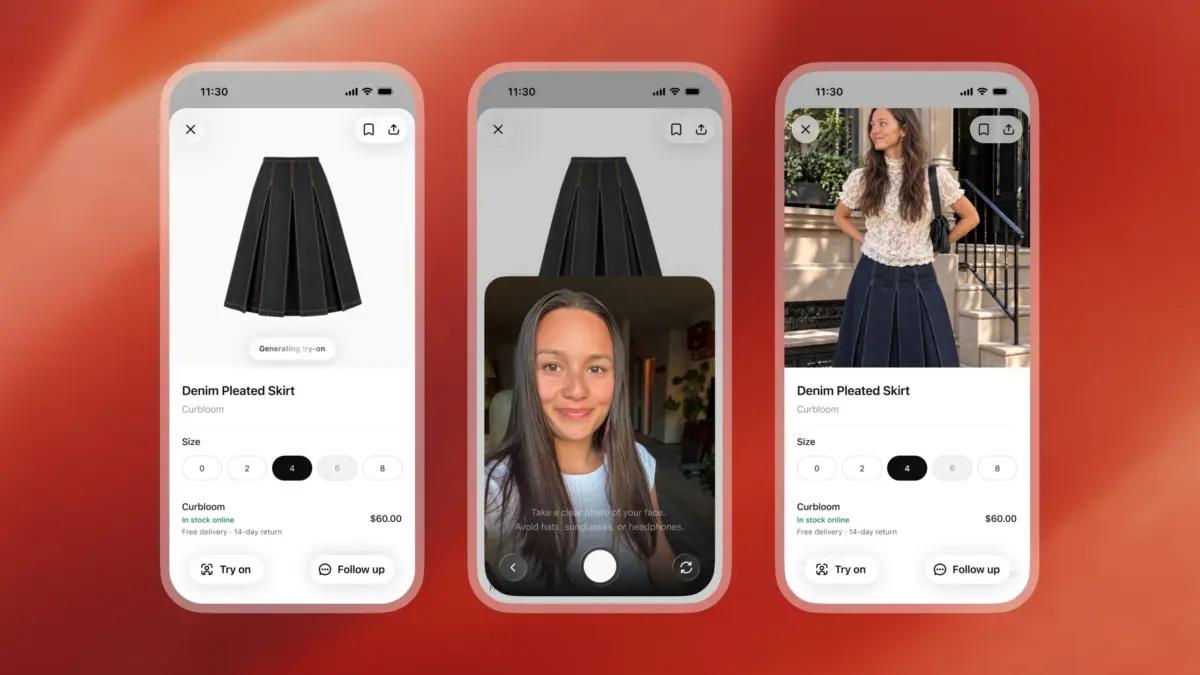
The virtual try-on workflow begins when a user searches for clothing, footwear, or accessories within ChatGPT.
- Discovery: When ChatGPT displays shopping results, a new, interactive "Try On" button appears next to eligible items.
- User Upload: Users can upload a selfie or a full-body photograph to serve as their personal digital model. Alternatively, they can upload an image of an item—such as a screenshot from an online boutique—and instruct ChatGPT to render it on their uploaded photo.
- Rendering: Using the Images 2.5 model, ChatGPT processes the request and generates a high-fidelity image of the user wearing the selected item.
+--------------------------------------------------------------------------+
|                       Virtual Try-On User Workflow                       |
+--------------------------------------------------------------------------+
|                                                                          |
|  [ User Uploads Photo ] ---> [ Clicks "Try On" ] ---> [ ChatGPT Renders ]|
|     (Selfie/Full-body)        (On shopping result)     (High-fidelity)   |
|                                                                          |
+--------------------------------------------------------------------------+
The "Favorites" Library and Visual Curation
To complement the try-on tool, OpenAI has launched Favorites, a dedicated curation space within the ChatGPT application.
- Saves and Organization: Users can save products they discover during chat sessions directly to a centralized Library.
- Unified Visual Storage: The Library stores saved products alongside the user’s generated try-on images. This setup allows shoppers to compare different outfits side-by-side and build cohesive, personalized lookbooks.
- Inspirational Styling Queries: Users can also use ChatGPT for broader styling advice. For example, a user can describe an aesthetic—such as "classic 1970s tailoring"—and ask the assistant to source individual, shoppable pieces to recreate it.
- Celebrity Style Replication: Users can upload photos of public figures or historical outfits and ask ChatGPT to identify the garments and suggest similar, purchase-ready alternatives available online.
Future Outlook and Strategic Implications
By introducing these visual shopping tools, OpenAI is entering a competitive market currently dominated by search engines and social discovery platforms.
The Competitive Landscape
OpenAI’s most formidable opponent in this space is Google, which launched its own AI-powered virtual try-on feature in 2025. Google’s tool benefits from its massive Merchant Center database, which houses billions of structured product listings directly linked to global retailers.
Similarly, Pinterest has spent years refining its visual search and "shop the look" capabilities, leveraging deep user engagement data focused on fashion, home decor, and lifestyle inspiration.
+----------------------------------------------------------------------------+
|                        Visual Commerce Landscape                           |
+----------------------------------------------------------------------------+
|  Platform    | Primary Strength            | AI Visual Try-On Status      |
+--------------+-----------------------------+------------------------------+
|  Google      | Massive Retail Database     | Launched (2025)              |
|  Pinterest   | High-Intent Visual Boards   | Image-to-Shop Integrations   |
|  OpenAI      | Conversational Flexibility  | Launched (October 2026)      |
+----------------------------------------------------------------------------+
Monetization and the Affiliate Dilemma
As OpenAI integrates deeper into the retail journey, monetization remains a key question. While the current update focuses on user experience and visual utility, the long-term business model will likely rely on affiliate revenue and sponsored placements. If ChatGPT successfully guides users from inspiration to purchase, OpenAI can capture lucrative referral commissions from retail partners.
However, the company must walk a fine line. If ChatGPT’s recommendations begin to feel like paid advertisements—similar to the user backlash experienced by Instinct—it could erode user trust. To succeed, OpenAI must ensure its shopping recommendations remain objective, highly personalized, and driven by genuine user utility.
Conclusion
The global rollout of virtual try-ons and the Favorites library marks a new chapter for OpenAI. By leveraging the advanced rendering capabilities of ChatGPT Images 2.5, the company is attempting to redefine the online shopping experience. Whether consumers will fully adopt ChatGPT as their primary starting point for fashion discovery remains to be seen. However, one thing is clear: the boundary between conversational AI and global e-commerce has officially dissolved.