Executive Overview
The architecture of modern pop music is undergoing a seismic, structural realignment. For decades, the global music industry operated along a strictly delineated axis: Western markets acted as the primary center of gravity, dictating stylistic trends, chart metrics, and the cultural parameters of mainstream success, while non-Western regions were routinely relegated to peripheral, regional status. Today, that hegemony is fracturing. Driven by hyper-connected digital ecosystems, shifting generational demographics, and a restless generation of boundary-pushing artists, the epicenters of pop innovation are decentralizing.
At the vanguard of this paradigm shift are two distinct yet symbiotically aligned artists: Chinese pop trailblazer Lexie Liu and South Korean soloist Yves. Rising from vastly different incubators—Liu emerged from the white-hot crucible of China’s underground rap scene and reality television, while Yves was forged in the meticulously engineered, hyper-polished mechanics of the South Korean K-pop idol system—both musicians have chosen the path of radical creative autonomy.
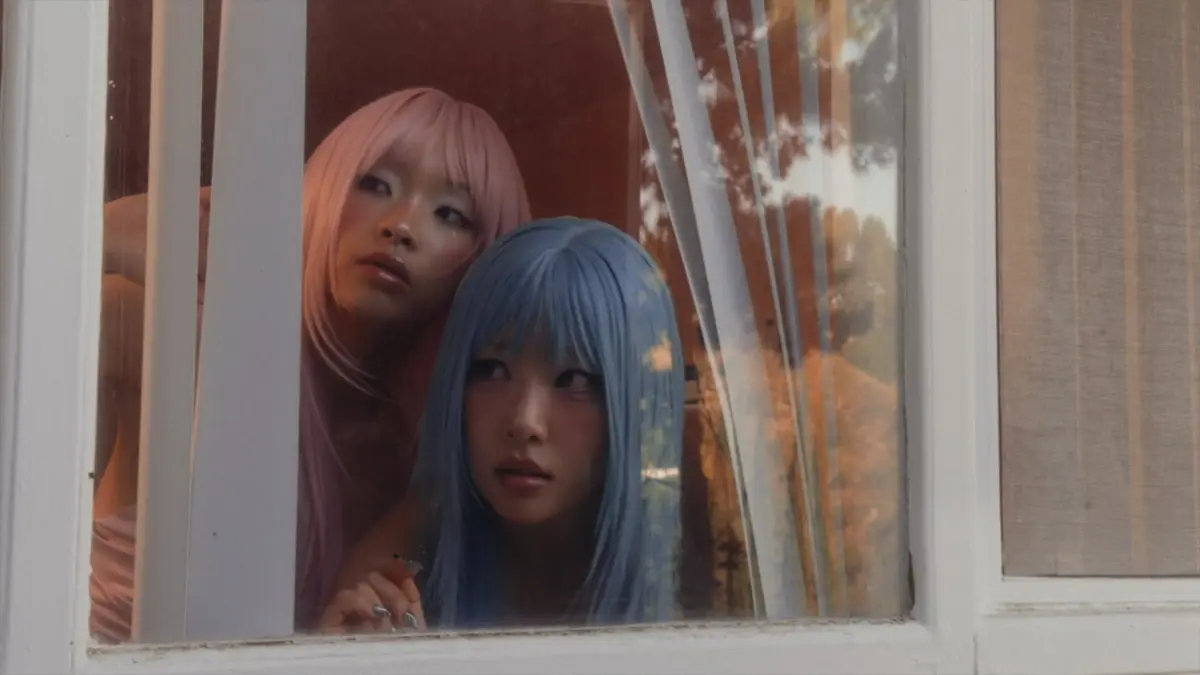
Their recent collaboration, the futuristic single "Pop Girl," serves as both a sonic manifesto and a cultural touchstone. Merging a destabilized, off-kilter lead synth melody with hyperpop textures, tech-heavy visual aesthetics, and bilingual lyrics that interrogate the anxieties of the digital age—from beauty filters to doomscrolling—the track captures a pop landscape in radical flux. In the following extensive interview, Liu and Yves unpack the realities of building new pathways in their respective pop ecosystems, analyze the evolving power dynamics of the global music industry, and discuss what it truly means to inhabit the mindset of a modern "pop girl" in an era stripped of traditional gatekeepers.
Detailed Chronology: From Regional Icons to Global Trailblazers
To understand the artistic weight of the Liu-Yves collaboration, one must trace the winding, divergent trajectories that brought these two distinct pop auteurs to the same digital crossroads.
Lexie Liu: Building the Road While Walking On It
Born in Changsha, China, in 1998, Lexie Liu’s entry point into the public consciousness was anything but conventional. In 2018, a young Liu stepped onto the stage of The Rap of China, a zeitgeist-defining competition series that brought underground hip-hop culture into millions of Chinese living rooms. Emerging as a finalist, Liu quickly distinguished herself not merely as a skilled lyricist, but as a visionary aesthetic force.
Unlike Western artists who step into well-established industry pipelines, or K-pop idols who enter rigidly structured training academies, Liu found herself operating in an uncharted territory. In China, the infrastructure for a globally minded, avant-garde pop starlet was practically nonexistent. Rather than conforming to traditional Mandopop templates, Liu began fusing futuristic electronic production, cyberpunk visual motifs, and socially conscious lyricism, effectively inventing her own artistic taxonomy in real-time.
Yves: Escaping the Idolatry Paradigm
Meanwhile, in Busan, South Korea, a parallel evolution was taking place. Yves’ journey into the public eye began within the hyper-controlled machinery of the K-pop industry. In 2017, she was introduced as a member of LOONA, a girl group renowned for its complex conceptual lore, synchronized choreography, and pristine production values. Within this system, performance, visual presentation, and artistic identity were tightly interwoven and meticulously managed by corporate frameworks.
However, the year 2024 marked a pivotal turning point. Striking out on her own as a solo artist with her debut single "Loop," Yves initiated a quiet rebellion against the pristine, unblemished aesthetics historically demanded of female K-pop idols. By diving headfirst into hyperpop, experimental electronica, and raw emotional vulnerability, Yves began dismantling her own pop lineage, carving out a gritty, fiercely independent artistic identity.
The Convergence: "Pop Girl"
The artistic convergence of these two trajectories seemed almost predestined. Despite operating in distinct musical ecosystems, both artists shared an underlying creative philosophy: a profound disinterest in replicating past formulas.
The connection was initiated when Liu slid into Yves’ direct messages on Instagram, proposing a collaboration. For Yves, who had long admired Liu’s futuristic sonic palette—noting that Liu’s track "Fortuna" was the very first song she ever liked on Spotify after discovering it independently—the invitation was an immediate "yes." By the time of their collaboration on "Pop Girl," the two artists had already established a mutual digital admiration society, swapping praise across language barriers and cultural divides.
Supporting Context & Metrics: The Anatomy of a Borderless Pop Ecosystem
The partnership between Liu and Yves arrives at a moment of unprecedented structural transformation within the global entertainment industry. To contextualize their impact, one must examine the shifting metrics of music consumption and cultural influence across Asia.
- The Demise of Geographic Gatekeeping: For decades, international music expansion was measured by a one-way street: Western artists toured Asia, while Asian artists sought validation through Western award shows and validation metrics. Today, platforms like TikTok, YouTube, and global streaming algorithms have flattened geographic hierarchies. Fans in New York, Seoul, Shanghai, and London consume music simultaneously, rendering traditional regional boundaries increasingly obsolete.
- The Rise of Hyperpop and Experimental Aesthetics: The embrace of hyperpop by mainstream-adjacent artists like Yves, alongside prominent K-pop acts such as Seventeen’s The8 and Vernon, signals a broader underground migration. Artists are rejecting clean, radio-friendly pop formulas in favor of distorted basslines, abrasive sound design, and erratic song structures that mirror the fractured nature of modern attention spans.
- The Chinese Independent Hip-Hop and Pop Renaissance: As Lexie Liu notes, the Chinese contemporary music scene is experiencing a wild-card renaissance. Artists and producers like Billionhappy and SkaiIsYourGod are bypassing traditional state and corporate gatekeepers, leveraging the hyper-connected internet to build direct, unfiltered relationships with global audiences.
Official Statements: In Conversation with Lexie Liu and Yves
How did you both first come into contact?
Yves: It was Lexi who chose me first. She DM’d me and gave me the idea of the collaboration. I loved Lexie’s music even before my solo debut. The first ever song I liked on Spotify was Lexie’s “Fortuna”, so I was really happy to work with her. I think that Lexie’s work is really futuristic. We have a lot of similarities because we try to be different from what’s expected.
Lexie Liu: I’ve been a fan of Yves’ solo career ever since [2024 single] ‘Loop’. Then, at some point, I saw a fan post a screenshot of Yves sharing one of my songs, and I remember being really happy about that. So there was already this back-and-forth of us showing love to each other before we worked together. I think we’re similar in the sense that we both really care about having a strong individual identity within the realm of pop music. We both come from places with very different pop ecosystems, but neither of us seems interested in just following what is already there.
You mentioned coming from different pop ecosystems. Could you speak a bit more about that?
Yves: I was trained in the K-pop system as an idol – a part of this ‘perfect’ system, where performance, visuals, and concept are all connected. But after my solo debut, I tried to be more independent in looking for the visual or musical concept [myself]. I spent a lot of time thinking about who I wanted to be, and that’s when I tried experimenting with hyperpop. I didn’t want to restrict myself to the hyperpop genre; I wanted to keep finding new characters for myself.
Lexie Liu: I think what Yves is doing is really interesting because she comes from this incredibly developed tradition and is now finding ways to bend it into something that feels completely hers. For me, the challenge is kind of the opposite, because in China there isn’t really an equivalent path to becoming a globally recognised pop artist. I’m building the road while walking on it. That uncertainty is definitely frustrating at times, but it’s creatively exciting because there are fewer rules.
What does the title “Pop Girl” mean to you both?
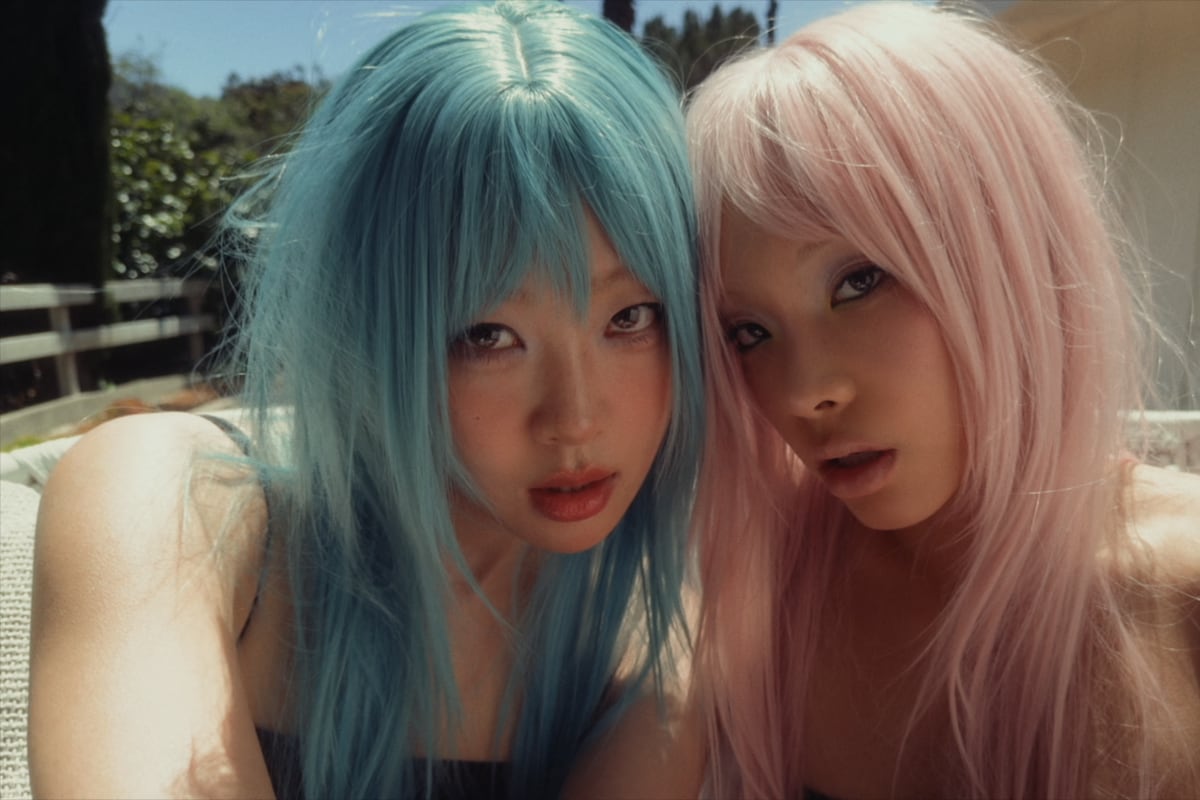
Lexie Liu: I think being a pop girl is more of a mindset than a status. It’s for the people who have their own soundtrack when they walk down the street; they don’t overthink about how they express themselves, and they know how to make an ordinary day feel fabulous and special. Maybe they even cry at night because of insecurity as well. That’s not a prerequisite, but it happens. Everyone’s invited.
Yves: For me, I think a pop girl is not defined by how you look or how successful you are, but rather someone who doesn’t hide their ambition or vulnerability, and someone who can translate that complexity into a language. We say ‘girl ’, but it’s not a matter of age or gender; it’s more of an attitude, and that’s why being a pop girl doesn’t have any auditions or interviews you need to pass.
“K-pop is the trailblazer of showing the Western world what a confident Asian would look like on stage.”
— Lexie Liu
Lexie, you mentioned building the path as you were walking on it. What sorts of sounds and spaces are you exploring?
Lexie Liu: It’s everything that isn’t already written in the books. I think [Chinese rappers] Billionhappy or SkaiIsYourGod, are good examples. Everyone’s basically a wild card now – [Chinese people] are more connected to the world than ever; we’re in an age where the internet has made it so easy to access everyone, but it’s also challenging because so much music drops every day. It takes luck, determination, and authenticity to stay true to yourself, but very soon people are going to discover many new forms of popular music coming out of China.
Meanwhile, Yves, you mentioned exploring hyperpop, which is something other K-pop artists like Seventeen’s The8 and Vernon are doing, too. Do you think this is becoming a wider trend of K-pop going underground?
Yves: Initially, K-pop was influenced a lot by American and European markets; we borrowed a lot from them. But now, I think K-pop has its own unique character, and we’re trying to expand into a wider spectrum of genres. I don’t think the question is about how far a K-pop artist can go, but rather about how diverse K-pop artists can be, and, because we have such diverse aesthetics, at least one of them is going to be underground.
BTS recently decided to withdraw from the Grammys, which could be seen as a power move, given the increasing influence of East Asian artists more widely. Where do you think the future is headed for pop artists from eastern countries?
Yves: Like I said earlier, the market was really centred around the US and Europe, and I think there was a bias. People were thinking that Western is global and all the rest are regional, but Asian culture has always been there; it just wasn’t noticed. But now Asian music and culture are influencing the West as well.
I really respect what BTS have done, because giving a separate award for Asian regions is actually creating a boundary between the world and Asia. It’s creating a boundary between ‘mainstream’ and ‘Asian’ artists. It’s taking Asia out of the mainstream.
Lexie Liu: K-pop is definitely the trailblazer of showing the Western world what a confident Asian would look like on stage. For the future, I think it’ll feel less and less like Eastern artists crossing over, more like everyone just existing in the same global conversation. Nowadays, people are open to music from different languages and cultures, so the idea of what feels global is naturally expanding. It gives artists from Asia more space to be themselves instead of trying to fit into one box of what global pop should sound like. The ideal future is one where Asian artists are simply recognised as pop artists without being put in a separate category.
Do you have any questions for each other?
Yves: Where do you see yourself in ten years?
Lexie Liu: Honestly, I don’t know. I’m just enjoying being a wild card – building the path, walking on the path and not knowing where it is leading me. But I won’t quit making music until I physically can’t. So, ideally, I would still be on stage and singing stuff that really comes from my heart. And my question for you, Yves: what’s something about yourself that you only discovered after starting your solo career?
Yves: I used to consider myself as someone who’s really soft-hearted but after my solo debut, there were a lot of situations where I had to handle issues, troubles, and frustration with things – new challenges I hadn’t faced in the past. I’ve discovered myself as someone who doesn’t break but bends instead. I discovered resilience in myself after I became solo.
Future Outlook: The Horizon of Borderless Pop
As the dust settles on traditional industry paradigms, the trajectory charted by Lexie Liu and Yves points toward a fascinating, decentralized future for popular music. The refusal of major Asian acts to accept tokenizing categorization—underscored by high-profile institutional pushback such as BTS’s strategic distancing from sequestered award categories—signals an industry entering its post-colonial maturity.
For artists operating in the East, the objective is no longer about "crossing over" into a Western-dominated mainstream. Instead, the paradigm has shifted toward total integration: a borderless musical ecosystem where language, geography, and corporate origin points are secondary to raw artistic vision. Whether building roads across uncharted Chinese underground networks or bending the rigid structures of the South Korean idol complex into hyperpop masterpieces, Liu and Yves prove that the future of pop does not belong to the gatekeepers. It belongs to the wild cards.