Executive Overview
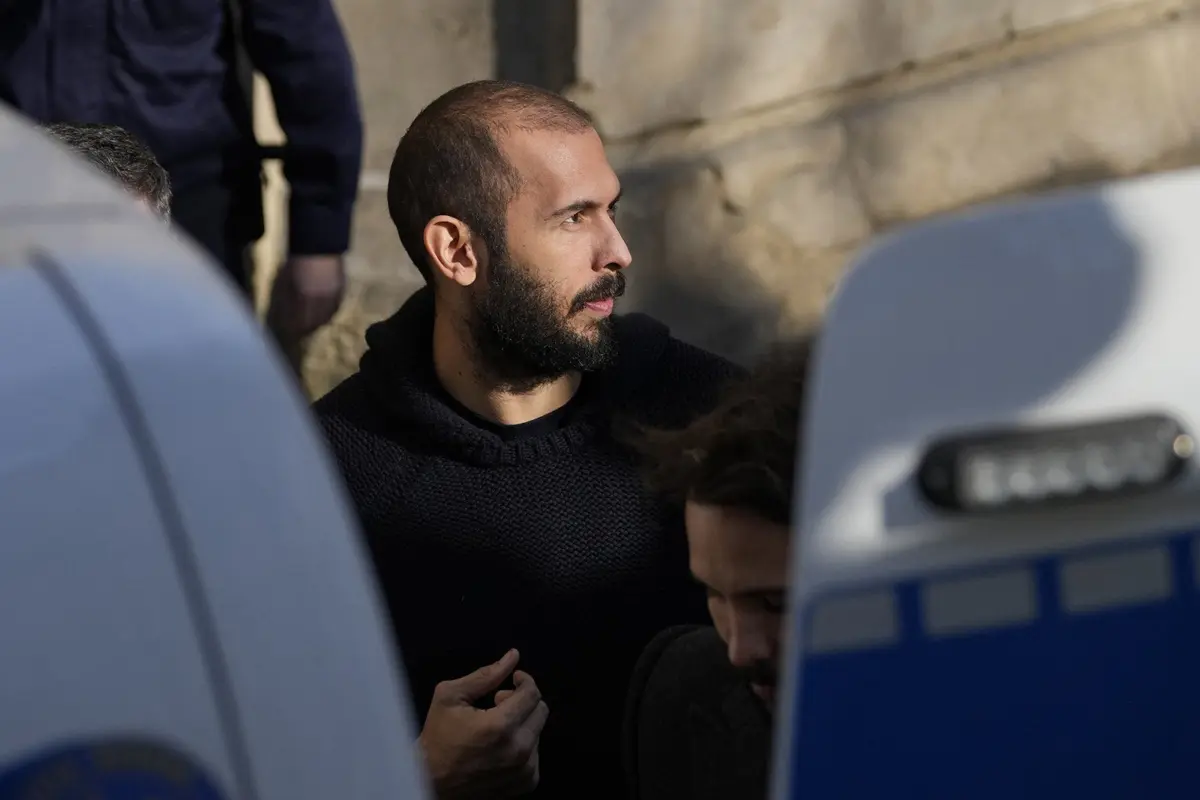
Controversial influencer Andrew Tate and his brother, Tristan Tate, alongside two alleged accomplices, Georgiana Naghel and Luana Radu, transitioned from a Romanian jail cell to house arrest in late March. This shift marked a significant procedural milestone following their initial December 29 arrest on suspicion of organized crime, human trafficking, and forming an organized criminal group. While the move to a secure compound north of Bucharest offered temporary relief for the siblings—whose trial is anticipated to commence in late April—an exhaustive review of court documents, freedom of information requests, and insights from judicial insiders reveals a far more complex reality.
Far from mitigating their legal exposure, the actions and communications attributed to the Tates and their associates during their detention have allegedly deepened their judicial jeopardy. Prosecutors and legal experts contend that the defendants engaged in a pattern of obstructionist behavior, including coordinated efforts to flee the jurisdiction, covert attempts to influence witnesses, and the deployment of legal threats against accusers in the United States. Furthermore, emerging allegations involving unauthorized access to classified police databases and overtures toward polarizing political figures have amplified the scrutiny of Romanian authorities.
This investigative report examines the multifaceted legal fallout surrounding the Tate brothers, synthesizing court records, wiretapped communications, expert legal commentary, and official statements to outline the rising stakes as the trial approaches.
Detailed Chronology: From Arrest to House Arrest
The legal trajectory of the Tate brothers in Romania has been marked by rapid escalations, strategic maneuvers, and persistent resistance from judicial authorities.
December 29: The Initial Sweep
Law enforcement agencies in Romania detained Andrew Tate, Tristan Tate, Georgiana Naghel, and Luana Radu during raids on properties associated with the influencers. Investigators alleged that the group operated an organized criminal enterprise that recruited, transported, and exploited women by forcing them to produce pornography for specialized online platforms. The high-profile arrests immediately drew international media attention, turning the compound near Bucharest into a focal point for global debates surrounding online radicalization, the "manosphere," and accountability for digital influencers.
February 21: Judicial Pushback and Refusal of Release
During a pivotal court session on February 21, a Bucharest judge firmly rejected defense requests to release the defendants from central custody. The official written summary of the session introduced "new reasons" for denying freedom, explicitly stating that the accused presented a clear danger to public order. The judge underscored that the suspects had made active preparations to evade criminal investigations by leaving Romania, sought to influence witnesses, and exerted psychological pressure on victims.
March 31: The Transition to House Arrest
Despite the strict posture maintained by initial magistrates, a panel of appeals court judges—reportedly newly assigned to the case—approved the transition of the Tates, Naghel, and Radu to house arrest on March 31. This ruling injected considerable anxiety into official and legal circles in Bucharest. Consequently, law enforcement established constant surveillance around the residential compound in the affluent northern suburbs where the brothers are serving their detention terms.
Supporting Context & Metrics: Obstruction, Wiretaps, and Alleged Conspiracies
Court files and leaked documents obtained through freedom of information requests illuminate the specific actions that have allegedly antagonized Romanian prosecutors and bolstered the state’s case regarding obstruction of justice.
The Dubai Flight Plot and the Medical Pretext
Wiretapped jailhouse phone conversations cited extensively in court papers indicate that Andrew Tate devised a plan to flee Romania for Dubai under the guise of seeking specialized medical treatment. The United Arab Emirates does not maintain an extradition treaty with Romania, making it a favored jurisdiction for individuals seeking to evade European legal proceedings.
In early March, a Tate representative informed the Daily Mail that a dark spot discovered on Andrew Tate’s lung during medical examinations was "most likely a tumor." However, Andrew subsequently took to social media, asserting via Twitter that the spot was merely scarring "from an old battle." Romanian authorities ultimately denied all requests for international travel, citing clear flight risks.
Intimidation of Witnesses and Victims
Prosecutors allege that the Tates orchestrated campaigns directed at their online followers to pressure at least one alleged victim into retracting her statements. According to court summaries, public commentaries and targeted messaging created an environment of intimidation designed to instill fear and force a reversal of testimony.
Concurrently, in December, a U.S. law firm representing the brothers dispatched a formal cease-and-desist letter to a key witness residing in Florida, demanding a retraction under the threat of a defamation lawsuit. While members of the Tates’ legal team have publicly distanced themselves from this specific correspondence, Romanian magistrates view the letter as a component of a broader, transnational strategy to suppress adverse testimony.
Unauthorized Database Access and Institutional Infiltration
Luana Radu, a former police officer turned alleged accomplice, is facing separate scrutiny regarding unauthorized access to classified databases within the Romanian Ministry of Internal Affairs. Court documents allege that between April and December 2022—while the overarching investigation remained active—Radu utilized external assistance to breach restricted police computers, presumably to gather intelligence and secure an advantage for the defense. Prosecutors noted that such access would have been virtually impossible without institutional collusion.
Overtures to Political Figures
In an effort to shape public narrative and political pressure, Andrew Tate allegedly instructed associates to approach two prominent right-wing Romanian politicians: George Simion and Diana Șoșoacă. Known for polarizing rhetoric surrounding sex, gender, COVID-19 vaccines, and anti-Western stances, both politicians were propositioned with promises of future rewards if they publicly defended the brothers. Transcripts of Romanian-language wiretaps reveal Tate instructing an assistant to assure the politicians of future reciprocation. Ultimately, both figures declined requests from local media to comment or intervene on the Tates’ behalf.
Official Statements and Legal Perspectives
The friction between the defense strategies employed by the Tates and the institutional prerogatives of Romanian prosecutors has drawn commentary from prominent legal scholars and defense counsels alike.
The Prosecutor’s Perspective
An anonymous source within the prosecutor’s office characterized the defendants’ actions as a high-stakes, reckless gamble. "The Tates have played an extremely dangerous game," the official stated, noting that witness intimidation and social media campaigns targeting victims strike at the core sensitivities of the judicial process. "From their tweets, it appears they are encouraging it… Every aspect of the case that touches on the victims is very sensitive."
Defense Counter-Arguments
Defense attorneys have consistently pushed back against allegations of obstruction and flight risk. Eugen Vidineac, a lawyer representing the Tates, emphasized their ties to the country during local media appearances: "They have a home and children in Romania, they are under criminal investigation, there is no reason to run away."
Mateea Petrescu, spokesperson for the Tates, clarified the context of the wiretaps regarding Dubai: "Regarding their departure from the country, the partially published wiretaps omitted the context, [namely] Andrew discussing leaving to Dubai for medical inquiries only in the case that his status allows it." Regarding the U.S. cease-and-desist letter, Petrescu maintained that it constituted standard legal action and that suspicions surrounding it were rendered obsolete by the appeals court’s decision to grant house arrest.
Academic and Expert Analysis
Mihai Mareș, a criminal defense lawyer in Bucharest and law lecturer at Alexandru Ioan Cuza University of Iași, cautioned that the demonstrable "irritation" of judges documented in court papers could carry long-term consequences.
"Any subsequent statements they may give will be viewed with a certain amount of skepticism by the judicial bodies," Mareș observed. Furthermore, Mareș noted that the cease-and-desist correspondence directed at witnesses could expand the scope of criminal charges: "If the notification concerned a withdrawal of the criminal complaint, it could lead to a widening of the criminal investigation scope under the aspect of a new crime—that of influencing statements."
A seasoned insider within the Romanian justice system offered a behavioral assessment of Andrew Tate’s actions during detention, attributing the missteps to an unyielding impulse for controversy: "I think Andrew Tate is not the most intelligent guy, but he probably can’t help himself."
Future Outlook
As the legal teams prepare for the formal commencement of the trial in late April, the structural dynamics of the case have evolved past the initial human trafficking and organized crime allegations. The subsidiary investigations into witness tampering, alleged database breaches, and international legal maneuvering threaten to encumber the defendants with additional indictments.
While the shift to house arrest provides the Tates with a degree of physical autonomy compared to central detention, the constant electronic and physical surveillance surrounding their compound underscores the gravity of their position. For Romanian prosecutors, the accumulation of procedural missteps by the defendants offers a robust foundation to argue against future leniency. For the defense, the primary challenge will be neutralizing the perception of institutional defiance while mounting a cohesive defense against a multi-layered indictment that continues to expand in scope and complexity.