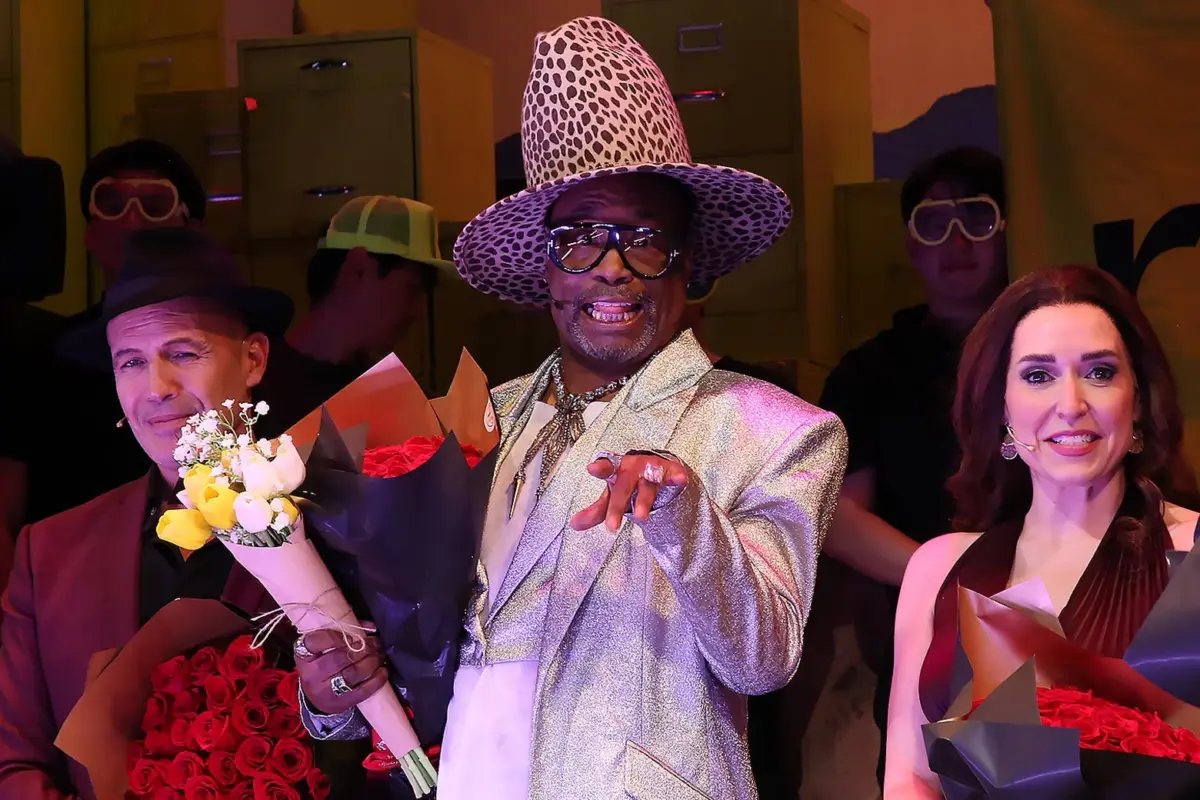
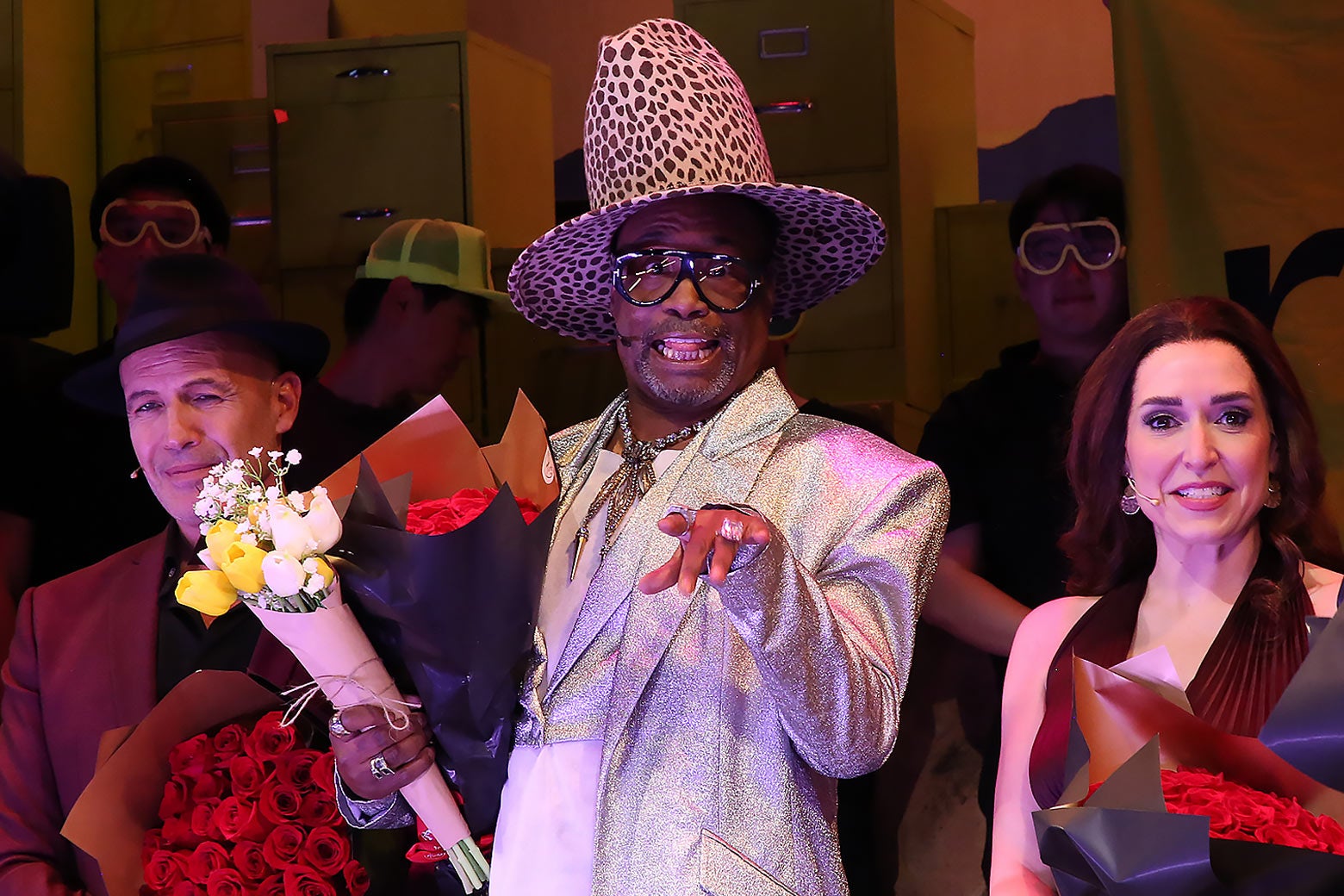
On a brisk Friday evening at the Broadhurst Theatre in the heart of New York City, a cultural collision of the highest order took place. Billed as Bill Pay the Musical, a one-night-only Broadway production brought together a star-studded cast—including Broadway royalty Billy Porter, Hollywood veteran Billy Zane, and stage powerhouse Jessica Vosk—for an unvarnished, high-energy, 60-minute commercial. The underwriter of this theatrical spectacle was not a traditional entertainment conglomerate or non-profit arts institution, but rather Ramp, a rapidly expanding, multi-billion-dollar New York-based financial technology and expense-management platform.
For a contemporary tech startup backed by prominent venture capital firms, staging a fully realized, union-backed Broadway musical complete with original musical numbers, elaborate choreography, a yellow carpet, and branded merch distribution may sound like an eccentric fever dream. Yet, as tech and business journalist Nitish Pahwa observed firsthand from the orchestra section, Bill Pay the Musical was a remarkably calculated cultural gambit. It signaled a nostalgic return to the midcentury tradition of "industrial musicals"—corporate-commissioned theatricals designed to rally employees and shareholders—while cleverly leaning into contemporary anxieties surrounding artificial intelligence, corporate overreach, and the soulless homogenization of the digital age.
The production arrived at a fascinating juncture in the cultural and economic zeitgeist. While tech firms have spent recent years inundating consumers with uncanny-valley artificial intelligence infomercials, automated slop, and austere cost-cutting initiatives, Ramp chose a vastly different path: a massive display of performative generosity, deploying venture capital funds to treat thousands of attendees, influencers, and employees to a glamorous, free night out. Complete with self-aware humor, progressive messaging, and a staunch anti-AI-in-art stance, the musical offered a masterclass in modern corporate public relations. It demonstrated that corporate synergy, millennial-coded irony, and lavish experiential marketing might just be staging a major comeback.
Detailed Chronology: Inside Opening Night at the Broadhurst Theatre
The Preshow Spectacle and the "Yellow Carpet"
The atmosphere outside the Broadhurst Theatre hours before curtain time resembled a major Hollywood movie premiere rather than a B2B software launch. Crowds of expectant attendees, fashion-forward influencers, and Ramp employees sporting the company’s signature yellow lanyards choked the West 44th Street sidewalk. The venue itself had been thoroughly overhauled, saturated with Ramp’s branding, colorful signage, and immersive photo-op stations.
Guests navigating the "yellow carpet" were greeted by an army of brand representatives and digital creators, including viral financial and lifestyle influencers documenting the scene with vintage cameras and high-end smartphones. Inside the lobby, the corporate hospitality knew no bounds. Attendees were showered with a dizzying array of complimentary goods: branded Playbills, souvenir wine cups, premium fruit sodas, cupcakes, and snacks from MrBeast’s "Feastables" line.
The Performance: Meta-Theater and "Billicon Valley"
When the house lights finally dimmed 21 minutes past the scheduled start time, the audience was immediately let in on the joke. A pre-show announcement cheerfully informed the crowd that they were about to witness a 60-minute commercial without an intermission—and explicitly encouraged them to take out their phones, record bootleg clips, and tag @Ramp on social media.
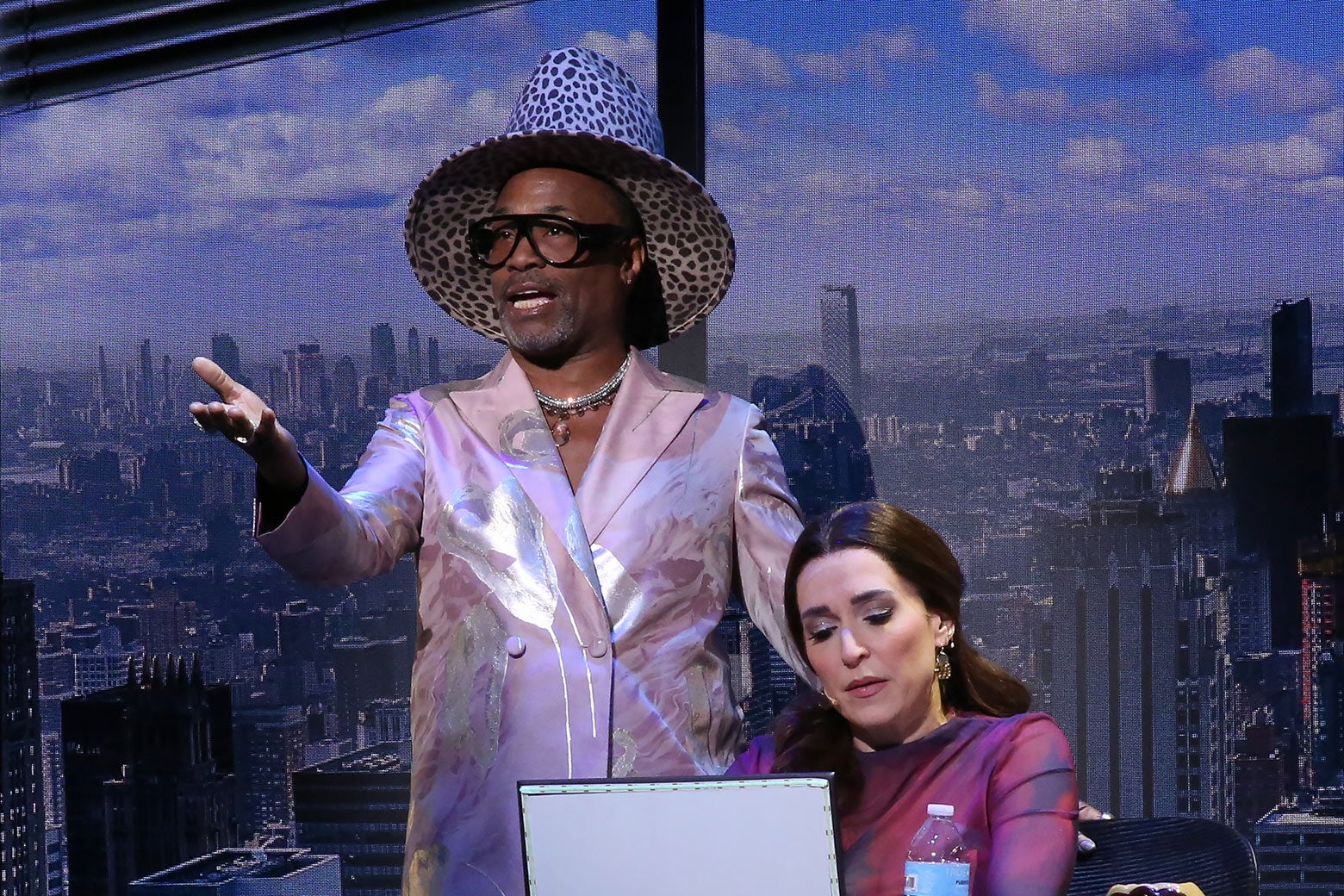
The plot of Bill Pay the Musical centers on a struggling small-business owner named Lisa Blupey, brilliantly brought to life by Broadway veteran Jessica Vosk. Lisa runs a boutique sock company, but she is rapidly drowning under a mountain of chaotic financial statements, unpaid invoices, and malfunctioning, generic artificial intelligence tools. After shouting out a line lamenting that "A.I. has gone too far"—which drew immediate, vocal approval from the crowd—Lisa is magically sucked into a surreal digital realm known as "Billicon Valley."
In this alternate universe, a theatrical witch named Rampa (played by Rema Webb) subjects Lisa to a Wizard of Oz-style journey of corporate self-discovery. To find her way back to reality, Lisa must navigate a gauntlet of historical and pop-culture "Bills." The stage hums with appearances by famous namesakes, including William Shakespeare, Willy Wonka, and a theatrical iteration of "Bill-bo Baggins," alongside cheeky winks toward culturally "canceled" Bills like Bill Cosby and Bill Clinton.
Weaving the narrative together is Billy Porter, functioning as an omniscient, fourth-wall-shattering narrator. Porter effortlessly pivoted between driving the plot forward, interacting directly with audience members, and praising Ramp CEO Eric Glyman for reviving the long-dormant industrial musical format.
The script itself was aggressively self-aware, functioning as a post-postmodern cultural checklist. The rapid-fire jokes and lyrical references spanned an eclectic generational spectrum: Fortnite dances, Wicked, girlboss culture, the Lehman Brothers collapse, Rihanna, the Kardashians, unskippable YouTube ads, antidepressants, Kill Bill, Celsius energy drinks, The Traitors, Billy Mays, Schoolhouse Rock’s iconic "I’m Just a Bill," Jacob Elordi, Netflix’s "Are You Still Watching?" prompt, and The Fresh Prince of Bel-Air. The apex of this meta-humor arrived with a surprise cameo by Brian Baumgartner—best known as Kevin Malone from The Office—who delivered a classic "that’s what she said" punchline and nodded directly to CEO Eric Glyman, who was seated mere feet away in the audience.
By the time the narrative concluded, Lisa realizes the truth: she had been standing in her own way all along, and her administrative nightmares could have easily been solved by automating her invoices through Ramp’s platform.
The Grand Finale and Curtain Call
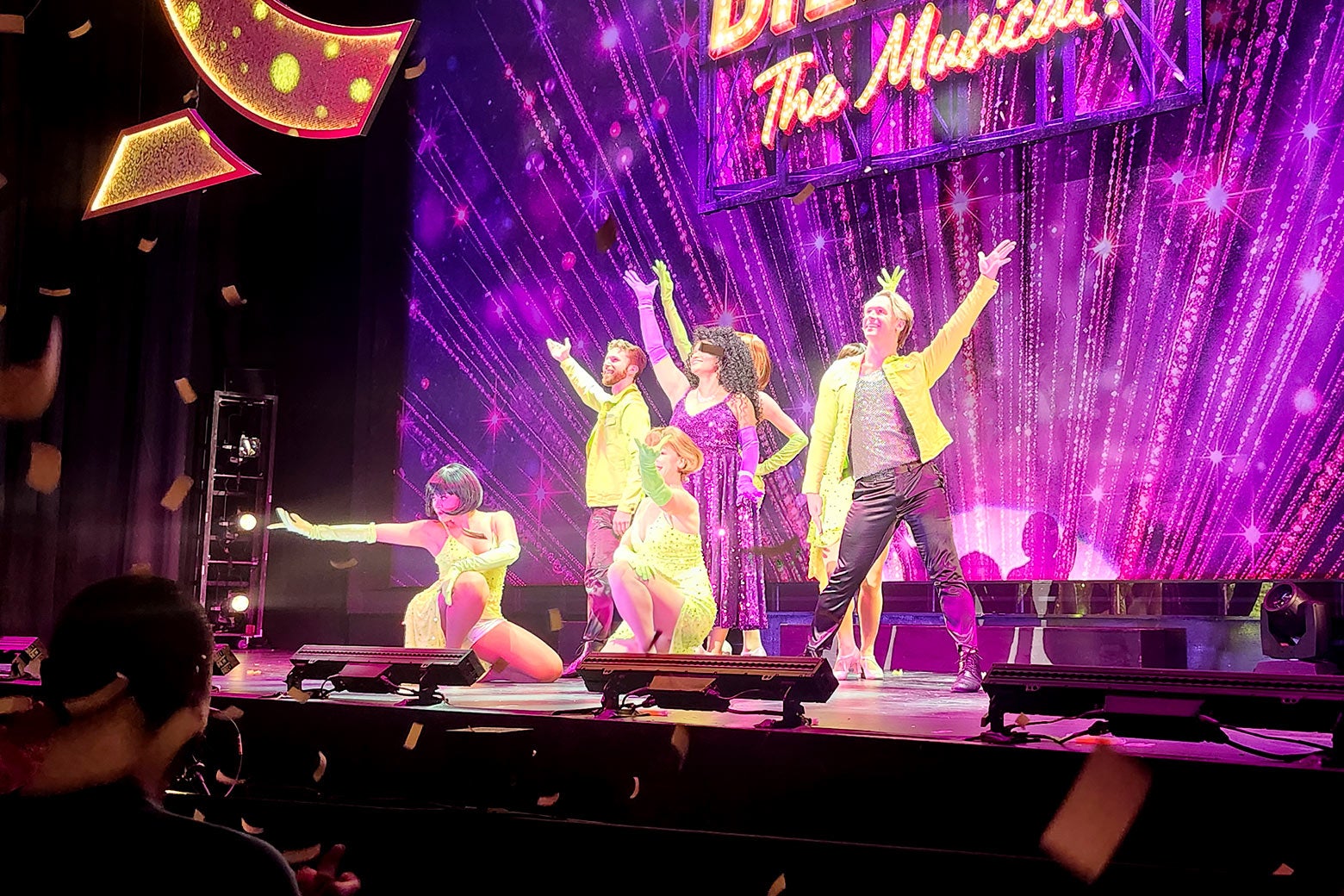
As the production transitioned into its resplendent curtain call, a shower of confetti rained down over the stage as the ensemble cast—featuring Porter, Zane, Vosk, and Webb—belters out a final harmonious number. CEO Eric Glyman joined the cast on stage, proudly donning a pair of yellow sneakers custom-matched to Ramp’s corporate branding.
Taking the microphone to roaring applause from the Ramp workforce and broader audience, Glyman delivered the evening’s definitive thesis statement:
"A.I. is for finance. It is not for fine art."
The declaration struck a chord, drawing massive decibels of approval from the theater crowd. Glyman bookended the sentiment by reiterating the core commercial utility of his software: letting automated systems handle annoying financial paperwork so human beings can reclaim their time and actually enjoy the finer things in life—like attending Broadway musicals.
Supporting Context & Metrics: The Rise of Ramp and the Industrial Musical
Who Is Ramp?
To understand why a company would invest heavily in a full-scale Broadway production complete with A-list talent, it is necessary to examine Ramp’s meteoric rise within the financial technology sector. Co-founded seven years ago by chief executive Eric Glyman and Karim Atiyeh, Ramp positioned itself as an all-in-one corporate card and expense-management platform. By offering automated invoicing systems, proactive spend controls, and automatic cash-back rewards, the company quickly captured the attention of lean startups navigating a volatile post-pandemic economy.
Backed by prominent Silicon Valley venture capital heavyweights—most notably Peter Thiel’s Founders Fund, which recently closed a staggering $6 billion fund—Ramp’s financial valuation has skyrocketed. By mid-2026, the company reached a jaw-dropping valuation of $44 billion, reporting over $1 billion in annual revenue. Its rapid ascension has made it a darling of the New York tech scene and attracted considerable attention from federal policy circles and high-profile institutional investors alike.
The Marketing Playbook: Stunts Over Software
While Ramp’s software metrics are impressive, the company has arguably achieved its greatest cultural footprint through audacious, unorthodox marketing stunts. Long before renting out the Broadhurst Theatre, Ramp mastered the art of viral experiential marketing:
Super Bowl Advertising: The company ran high-profile commercials featuring NFL star Saquon Barkley and The Office actor Brian Baumgartner.
The "Penny Funeral": Following the United States Mint’s decision to phase out the production of one-cent coins, Ramp staged a dramatic, heavily attended public memorial at the Lincoln Memorial in Washington, D.C., featuring hundreds of Abraham Lincoln and Mary Todd impersonators.
The Flatiron Livestream: Ramp placed actor Brian Baumgartner inside a transparent, glass-walled cube in New York’s Flatiron Plaza, livestreaming his fictional "workday" to tens of thousands of online and in-person spectators.
The History of Industrial Musicals
Ramp’s pivot to theater is rooted in a fascinating, largely forgotten corporate history. During the mid-20th century—stretching from the 1950s through the 1980s—major American corporations like Ford, General Electric, J.C. Penney, and Coca-Cola regularly commissioned lavish, full-scale original musicals. These "industrial musicals" were performed exclusively for internal stakeholders, dealers, and employees at corporate conventions, serving as high-entertainment motivational tools. Staffed by union professionals, top-tier Broadway composers, and choreographers, these productions represented a unique intersection where corporate propaganda met genuine theatrical craftsmanship before fading into obscurity by the early 2000s.
Official Statements and Industry Reception
The cultural implications of Bill Pay the Musical sparked immediate debate among theater critics, business analysts, and tech commentators.
In promotional interviews leading up to the one-night-only performance, star Billy Porter emphasized that the production utilized 100% human labor, union-backed talent, and zero generative artificial intelligence. Porter noted a personal connection to the medium, recalling how industrial-style performance work helped sustain artists like himself during the early, pre-fame stages of their careers.
From the corporate perspective, CEO Eric Glyman framed the musical as a celebration of human creativity set against the cold, utilitarian backdrop of modern software. By explicitly drawing a line between automation tools used for corporate bookkeeping and human-driven artistic expression, Ramp sought to inoculate itself against the growing public backlash facing tech firms over AI copyright infringement and the displacement of creative labor.
Cultural critics, however, viewed the stunt through a more nuanced, sociological lens. Observers noted that the production successfully tapped into a distinct cultural nostalgia—a deliberate regression to the optimistic, high-budget, corporate-synergy era of the late 2010s. By embracing progressive, urban-friendly aesthetics, diverse casting, a queer icon as its narrator, and outward expressions of worker appreciation, Ramp positioned itself not as a cold, austere tech monopoly, but as an inclusive, culturally literate benefactor of the arts.
Future Outlook: What Bill Pay Means for Corporate Culture and Marketing
As the confetti was swept off the stage of the Broadhurst Theatre and the yellow lanyards were packed away, Bill Pay the Musical left a lasting impression on how brands might approach public engagement in the late 2020s.
The Backlash to AI Slop: As consumers grow increasingly fatigued by low-effort, AI-generated marketing campaigns, deepfakes, and automated spam, brands are discovering that authentic, human-centric "real world" experiences carry immense currency. Ramp proved that spending venture capital on physical, union-backed artistic spectacles generates vastly more positive goodwill than digital ad-buys ever could.
The Return of Experiential Corporate Synergy: Ramp’s success is likely to embolden other well-capitalized tech enterprises. Rather than relying solely on traditional digital funnels, companies with deep pockets may increasingly look to sponsor immersive, high-art, and deliberately self-aware cultural activations to capture the attention of millennials and Gen Z consumers.
The Evolution of B2B Marketing: By turning corporate accounts payable software into a theatrical punchline, Ramp demonstrated that even the most dry, unglamorous B2B software categories can be transformed into pop-culture talking points through sheer audacity and creative storytelling.
Whether Bill Pay the Musical marks the permanent revival of the industrial musical genre remains to be seen. However, one thing is certain: in an era defined by algorithmic predictability, the companies winning the cultural conversation are the ones willing to sing, dance, and occasionally rent out a historic Broadway theater just to prove a point.