Executive Overview
Sega and developer Ryu Ga Gotoku (RGG) Studio are preparing to release the most audacious, gritty, and structurally daring entry in the sprawling crime-epic franchise formerly known in the West as Yakuza. Titled Stranger Than Heaven, this standalone spin-off pivots away from the contemporary, neon-drenched antics of Kazuma Kiryu and Ichiban Kasuga, instead pulling the franchise back to its conceptual roots. Spanning five decades of transformative Japanese history—from 1915 to 1965—the game charts the turbulent life of Makoto Daito, a Japanese-American outcast carving out a brutal existence across changing urban landscapes.
Following several hours of hands-on time with the opening chapters, it is clear that Stranger Than Heaven is more than a mere period-piece diversion. It is an uncompromising character study that utilizes a demanding, physics-driven combat system and a deeply personal narrative framework to tackle historical themes of immigration, identity, and systemic prejudice. While the franchise’s trademark bizarre side content remains present, the overarching tone is resolutely stoic, inviting comparisons to classic cinematic epics like Sergio Leone’s Once Upon a Time in America. Scheduled for a worldwide release on January 17, 2027, for PC, PlayStation 5, and Xbox Series X|S, Stranger Than Heaven stands poised to redefine what fans can expect from Sega’s flagship crime drama.
Detailed Chronology: Five Decades of Turmoil
To understand the scope of Stranger Than Heaven, one must look at the timeline RGG Studio has constructed. Eschewing the modern-day settings that defined the latter-day entries of the main series, the narrative is systematically mapped across five distinct eras, tracing the industrialization, wartime devastation, and postwar reconstruction of Japan through the eyes of an outsider.
The Spark: San Francisco and Kokura (1915–1929)
The journey begins in 1915 within the segregated United States. Makoto Daito, a mixed-race protagonist of Japanese and White American descent, finds himself wrongfully accused of a crime by corrupt San Francisco police officers purely due to his racial background. Fleeing systemic persecution, Daito escapes to his ancestral homeland, only to discover that the safety he sought is an illusion.
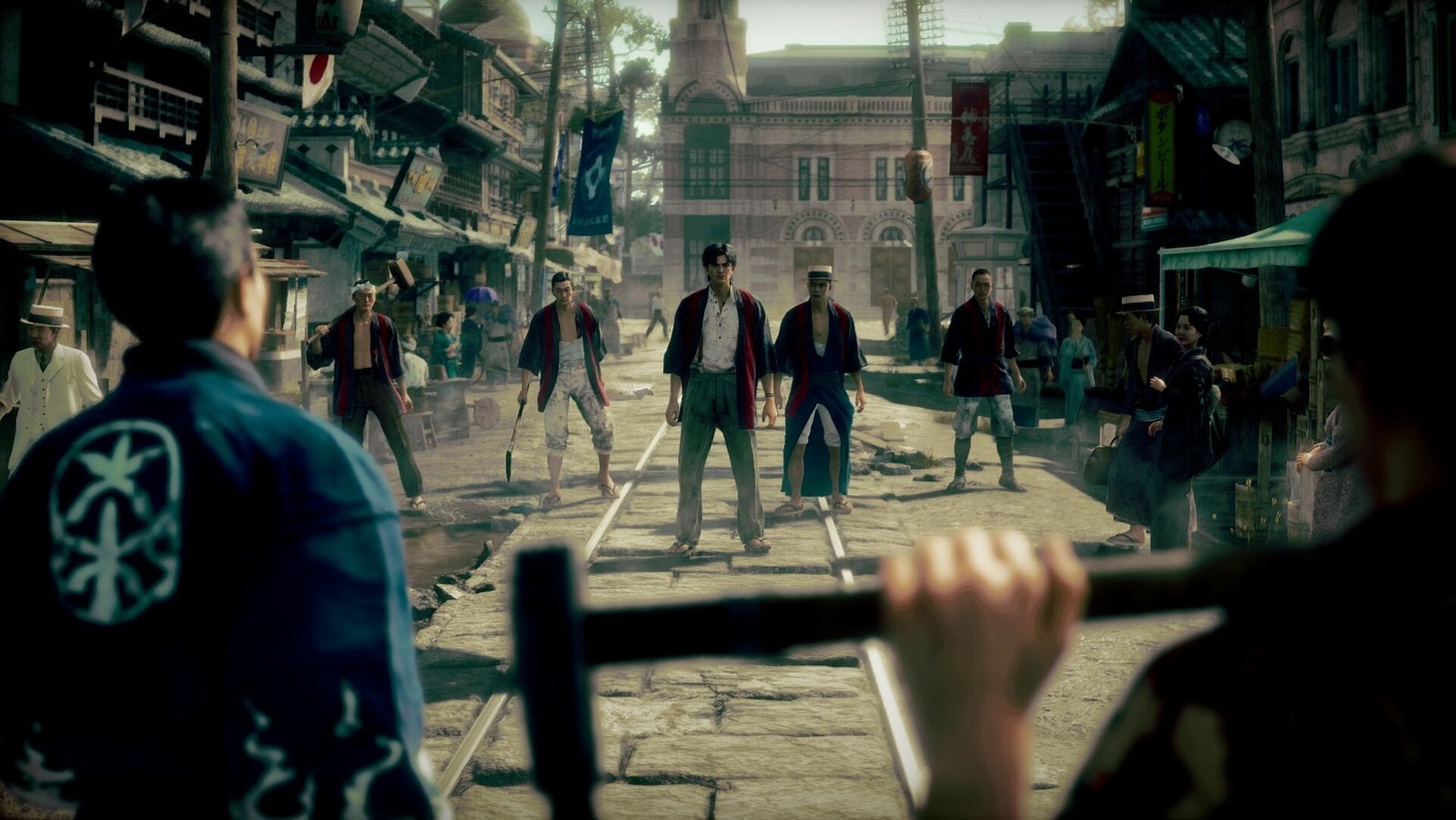
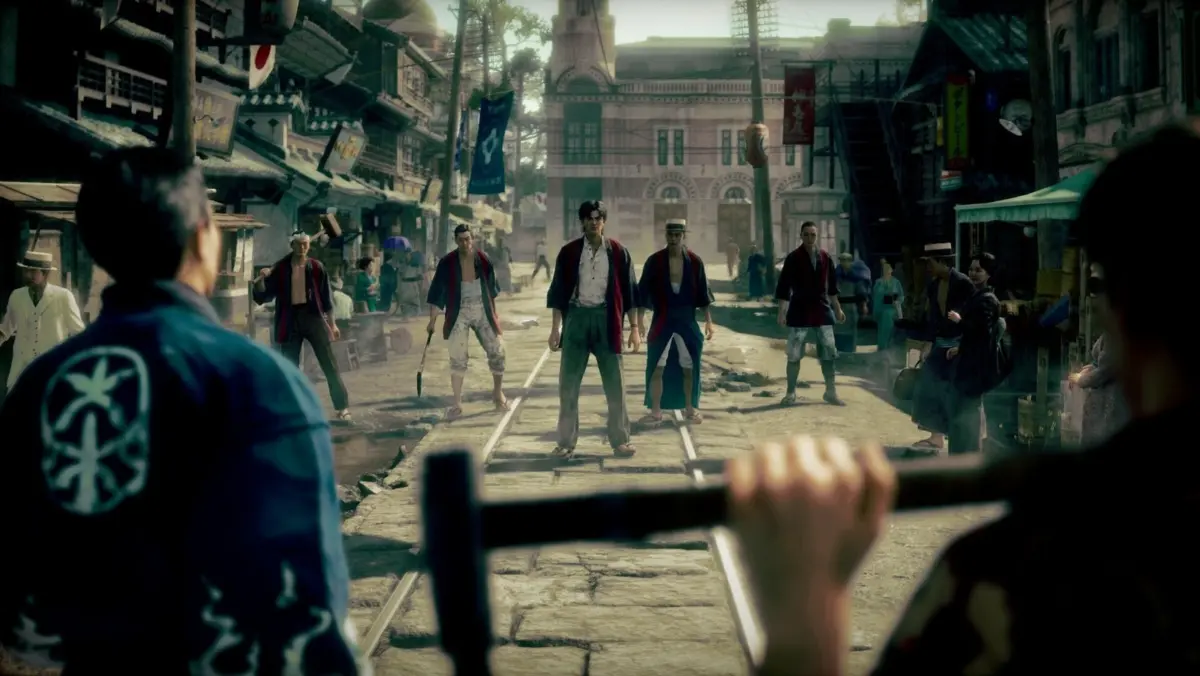
In early 1900s Japan—specifically the industrial city of Kokura—Daito is met with localized bigotry, suspicion, and hostility from townsfolk who view him as an interloper. Early gameplay chapters depict Daito working grueling shifts as a scrappy dock and factory worker. It is here that he learns to survive on the streets, turning his fists into his only reliable currency as he navigates a society stepping cautiously into the modern era.
Rise in the Metropolis: Osaka (1943)
As the timeline progresses to the height of global conflict in 1943, Daito’s survival instincts and street-level savvy elevate him within the underworld. Moving to Osaka, he transitions from a dock worker into an up-and-coming nightclub owner and astute businessman. This era captures the tense atmosphere of wartime Japan, where the entertainment districts serve as a front for underground survival economies. Daito must balance the shifting loyalties of local syndicates while maintaining his precarious foothold in a society under immense political strain.
The Foundation of an Empire: Shinjuku (1951–1965)
The final stretches of the narrative thrust Daito into the postwar boom of the 1950s and the explosive, high-growth economy of 1960s Shinjuku. By this era, Daito has transformed into an infamous gangster and kingpin, ultimately cementing himself as a foundational, shadowy figure within the Tojo Clan. His actions and alliances during these decades lay crucial narrative groundwork, subtly shaping the institutional foundations that will eventually govern the lives of legendary series protagonists Kazuma Kiryu and Ichiban Kasuga.
Supporting Context & Metrics: Breaking Down the Mechanics
While the narrative scope is sweeping, the nuts-and-bolts execution of Stranger Than Heaven represents a radical departure from traditional Like a Dragon gameplay conventions. RGG Studio has overhauled core mechanics to reflect the grounded, desperate nature of Daito’s survival.
The Independent-Limb Combat System
The most striking gameplay evolution lies in the combat engine. Eschewing the classic arcade-style beat-‘em-up simplicity or the turn-based RPG systems seen in recent franchise installments, Stranger Than Heaven introduces an intricate, physics-weighted combat scheme that grants players precise control over Daito’s individual arms.
- Controller Mapping: The left shoulder buttons govern Daito’s light and heavy left-handed strikes, while the right shoulder buttons handle his light and heavy right-handed attacks.
- Defensive Nuance: Players must master directional-based blocking—alternating left and right defensive postures based on the specific angles of incoming enemy attacks.
- Pacing and Flow: Early impressions from initial demos at events like Summer Game Fest 2026 noted a steep learning curve, likened to a more visceral, up-close variant of Elden Ring-style combat pacing. Following fan feedback, RGG Studio refined the onboarding process, ensuring that the heavy, impactful thuds of every punch and makeshift weapon strike translate into a satisfying, skill-based gameplay loop.
Environmental Immersion and World-Building
The open-world design philosophy remains structurally familiar—players explore semi-open-world towns filled with side activities, shops, and spontaneous street fights outside the main story path. However, the psychological weight of exploration has shifted:
- The Immersion of Prejudice: Unlike Kiryu or Kasuga, who are largely respected or feared locals, Daito faces audible bigotry, racial slurs, and passive-aggressive hostility from non-player characters when wandering the streets. This mechanic intentionally instills a sense of alienation, reinforcing the game’s central themes.
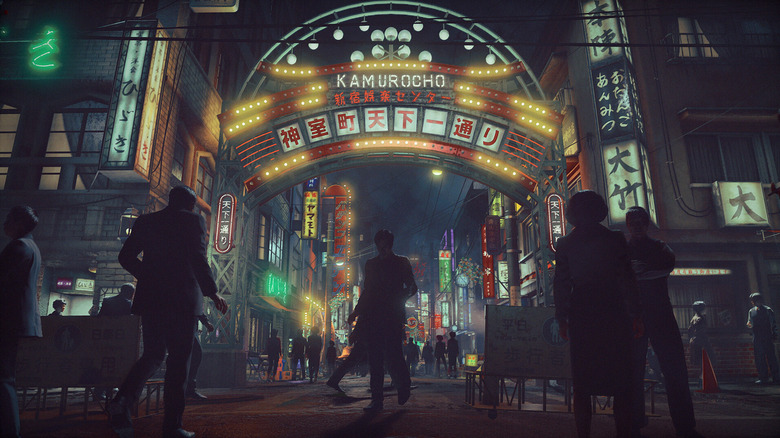
- Dynamic Settings: Cities visibly warp and evolve across the decades, transitioning from dusty, early-century industrial ports into bustling neon hubs, marking one of the most drastic environmental shifts in series history.
Official Statements & Creative Vision
RGG Studio has been transparent about the artistic risks they are taking with Stranger Than Heaven. Moving away from the lighthearted, wacky tone that often balances the heavy drama of the main series, the development team sought to create an unyielding exploration of historical adversity.
In promotional briefings, creative leads emphasized that Daito’s mixed-race heritage and immigrant perspective were vital to establishing a fresh narrative angle. "We wanted to examine what it truly means to look for a home in a land that rejects you twice over," notes an RGG Studio production brief. "Daito is not a hero of justice in the traditional sense; he is a man forged by hostility, whose survival depends entirely on his adaptability and his knuckles."
Despite the serious tone, the studio has maintained signature elements of franchise DNA—such as eccentric side encounters, including a memorable run-in with a lethal, knife-wielding serial killer lurking in the alleyways of Kokura. However, critics have noted occasional tonal friction, such as stunt-cast appearances by cultural figures like Snoop Dogg, whose characters occasionally flirt with fourth-wall-breaking commentary on bigotry. Despite these stylized narrative bumps, critics acknowledge that the game’s core exploration of systemic racism remains thoughtfully handled and deeply educational regarding early 20th-century societal pressures.
Future Outlook: A Daring New Horizon for Sega
As the industry counts down to its January 17, 2027 launch, Stranger Than Heaven is shaping up to be a watershed moment for Sega and RGG Studio. By stepping back from the contemporary timeline and stripping away the protective armor of beloved legacy heroes, the developers have crafted a narrative that demands players reckon with history, hardship, and personal reinvention.
The transition to a more deliberate, mechanically demanding combat system indicates that Sega is willing to gamble on its core audience’s appetite for challenge. If RGG Studio can successfully balance the sprawling, multi-decade emotional arc of Makoto Daito with its refined gameplay loops, Stranger Than Heaven will not only prove to be the most bold and relentless spin-off in the franchise’s history—it will establish a masterclass in how long-running intellectual properties can successfully reinvent themselves through historical introspection.