Executive Overview
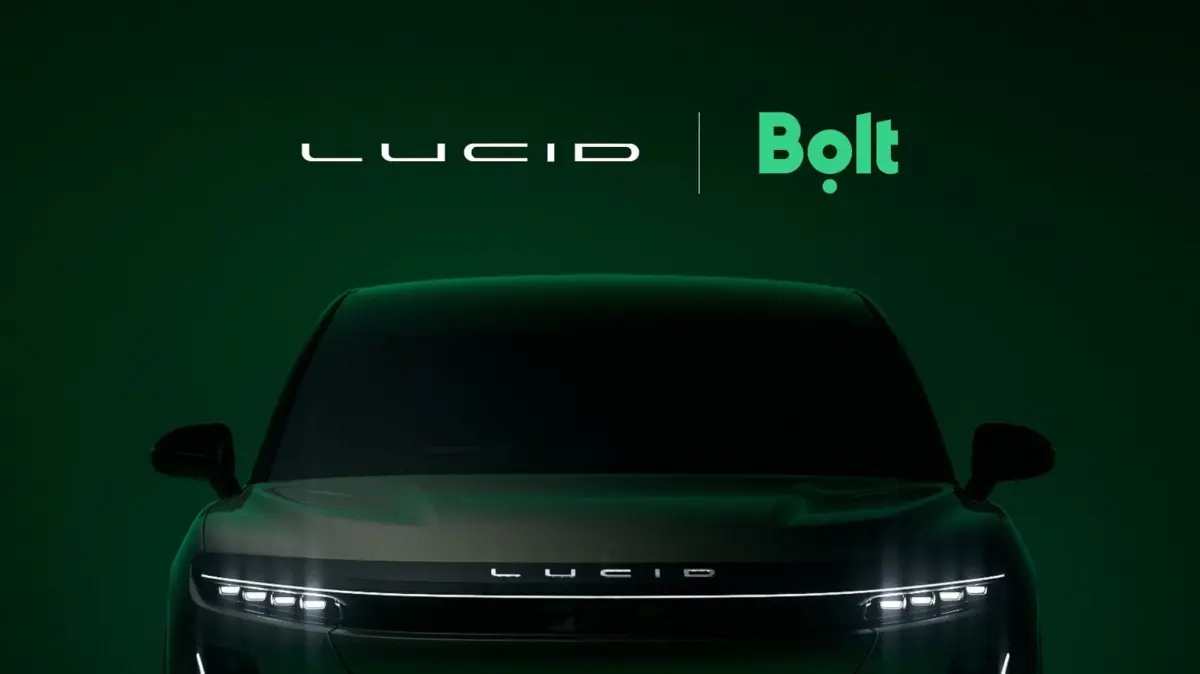
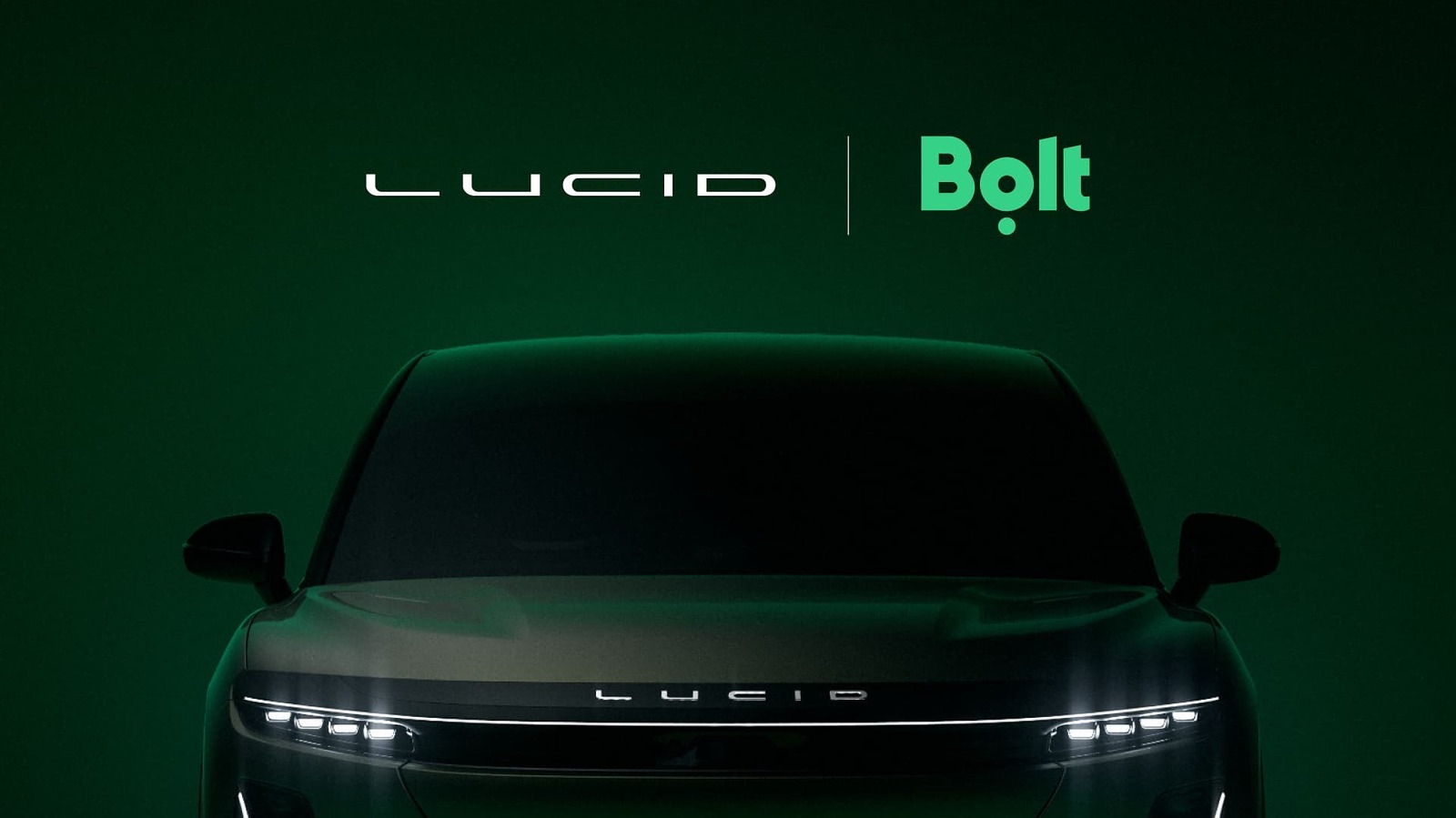
The global race toward autonomous mobility has taken a significant leap forward as luxury electric vehicle manufacturer Lucid Group and European ridesharing giant Bolt officially announced a massive strategic partnership. The collaboration aims to manufacture, deploy, and operate a fleet of at least 25,000 advanced robotaxis across key European markets.
This ambitious alliance anchors Bolt’s broader corporate objective to integrate 100,000 autonomous vehicles (AVs) into its ridesharing ecosystem by 2035. Under the terms of the agreement, the vehicles will be built using Lucid’s highly anticipated upcoming midsize EV platform. Bolt will retain full ownership and operational control of the fleet, while working in tandem with Lucid’s engineering teams to fine-tune the hardware and software for European urban environments.
While the technical blueprints are taking shape, the exact commercial launch timeline remains under wraps. Neither company has specified when the first commercial passenger rides will commence on European streets. However, industry insiders note that the partnership heavily relies on cutting-edge technological frameworks, including NVIDIA’s advanced Hyperion autonomous vehicle architecture. Designed explicitly for Level 4 autonomy—meaning the vehicles can operate completely driverless within geofenced, predefined geographical boundaries—this collaboration represents a structural shift in how European urban centers could handle public transit and shared mobility over the next decade.
This European push arrives at a pivotal juncture for Lucid. The American EV maker has been aggressively diversifying its revenue streams beyond direct-to-consumer luxury vehicles, pivoting toward business-to-business (B2B) autonomous fleets. Yet, this high-stakes partnership unfolds against a backdrop of internal restructuring, strategic delays, and a broader industry-wide reevaluation of the commercial viability and timeline for autonomous driving technologies.
Detailed Chronology: The Road to the Bolt-Lucid Partnership
To understand the weight of the Lucid-Bolt announcement, one must trace the timeline of technological milestones, strategic pivots, and corporate restructurings that have defined both companies over the past few years.
The Foundation of Lucid’s Midsize Platform
For years, Lucid Motors built its brand prestige on high-end luxury, epitomized by the Lucid Air sedan and the expansive Lucid Gravity three-row SUV. However, long-term market penetration required a shift toward mass-market accessibility. Lucid began developing a modular, cost-efficient midsize platform designed specifically to dramatically lower the cost of production and make its advanced EV technology accessible to a wider demographic.
Earlier this year, Lucid offered the public a glimpse into the future of this platform by revealing a specialized two-seater robotaxi prototype. Built directly on the midsize architecture, this prototype was engineered from the ground up to support autonomous driving suites without sacrificing interior space or passenger comfort. It served as the technological proof-of-concept that ultimately caught the attention of major fleet operators, including Bolt.
Bolt’s Grand Autonomous Ambitions
Bolt, a dominant player in the European ridesharing and micro-mobility sectors, has steadily outlined a roadmap toward a driverless future. Facing rising labor costs, driver shortages, and the constant pressure to improve profit margins, Bolt executives recognized that scaling a sustainable ridesharing business requires transitioning a percentage of their fleet to autonomous operations.
Bolt’s corporate strategy established a target of integrating 100,000 autonomous vehicles onto its platform by the year 2035. Securing a commitment for at least 25,000 vehicles from Lucid serves as a foundational pillar for this strategy, guaranteeing a steady supply of purpose-built robotaxis tailored to the unique regulatory, spatial, and infrastructural demands of European cities.
Lucid’s Internal Headwinds and Delays
Despite the optimism surrounding the Bolt partnership, Lucid’s path to mass production has encountered notable speedbumps. Economic pressures, shifting capital requirements, and supply chain adjustments forced the automaker to make difficult structural decisions.
In mid-2026, Lucid implemented sweeping workforce reductions, laying off approximately 18 percent of its global staff in an effort to streamline operations and extend its cash runway. Shortly after these layoffs, the company announced a strategic delay regarding the Cosmos SUV—its highly anticipated consumer-facing electric vehicle built on the new midsize platform. Originally slated for release in late 2026, the Cosmos SUV production schedule was pushed back to early 2027.
These internal adjustments underscore the delicate balancing act Lucid must perform: pouring capital and engineering hours into lucrative B2B autonomous partnerships while simultaneously trying to stabilize its core consumer vehicle business.
Supporting Context & Metrics: The Global Robotaxi Landscape
The Lucid-Bolt partnership does not exist in a vacuum. It is part of an aggressive, multi-continent race to commercialize autonomous ridesharing, with companies jockeying for dominance across the United States, Europe, and Asia.
The US Precedent: Lucid’s Deals with Uber and Nuro
Long before partnering with Bolt in Europe, Lucid laid the groundwork for its B2B autonomous strategy in the United States through high-profile agreements with Uber and Nuro.
Under the US umbrella, Uber has outlined plans to deploy a staggering 35,000 Lucid robotaxis domestically. This fleet will consist of a mix of vehicles built on the midsize platform and specialized models derived from the luxury Lucid Gravity SUV architecture.
To turn this vision into reality, Lucid partnered with Nuro—a leader in autonomous driving technology—to handle the rigorous testing phase. Nuro has actively begun testing the Gravity-based robotaxi on public roads in Houston, Texas, and across the San Francisco Bay Area in California. These tests currently utilize a safety driver seated behind the steering wheel to monitor system performance, collect real-time edge-case data, and satisfy state regulatory compliance requirements before true driverless deployment can occur.
Technical Architecture: The Power of NVIDIA Hyperion
A robotaxi is only as reliable as the silicon and software powering its decision-making matrix. To ensure maximum safety and redundancy, Lucid and Bolt are leaning heavily on industry-standard computing frameworks.
Reports indicate that the upcoming European robotaxi fleet will utilize NVIDIA’s cutting-edge Hyperion autonomous vehicle architecture. NVIDIA Hyperion provides a pre-integrated suite of sensors, high-performance compute hardware, and software development kits specifically designed for Level 4 autonomous driving. By standardizing on a proven automotive-grade AI platform, Lucid and Bolt can significantly reduce software development cycles, accelerate regulatory approval processes across different European nations, and ensure seamless sensor fusion across cameras, radar, and LiDAR arrays.
Official Statements and Industry Analysis
The announcement has triggered widespread reactions across the automotive, tech, and financial sectors. While corporate press releases emphasize the transformative nature of shared autonomous mobility, industry analysts are carefully evaluating the logistical and regulatory hurdles that lie ahead.
Corporate Optimism
In joint announcements released by Lucid and Bolt, executives framed the partnership as a historic step toward sustainable, congestion-free urban mobility.
"Our collaboration with Bolt represents a monumental expansion of Lucid’s advanced technology stack into the global ridesharing market," industry statements suggest. "By pairing our revolutionary midsize vehicle architecture with Bolt’s extensive European operational footprint, we are laying the groundwork for safe, accessible, and scalable autonomous transportation."
Bolt leadership echoed this sentiment, emphasizing that vehicle ownership and fleet management will remain core to their operational strength. By owning the fleet outright while outsourcing the heavy lifting of vehicle engineering to Lucid and autonomous computing to NVIDIA, Bolt is positioning itself as a platform-agnostic service provider capable of meeting future urban mobility demands without bearing the entirety of the hardware research and development costs.
Investor and Analyst Perspectives
Market analysts have expressed cautious optimism tempered by historical realism regarding autonomous vehicle timelines.
- Capital Allocation and Burn Rates: Analysts point out that while B2B fleet orders provide long-term revenue visibility, the immediate capital expenditure required to scale manufacturing lines for the midsize platform—especially in the wake of Lucid’s recent layoffs—puts immense pressure on the automaker’s balance sheet.
- Regulatory Fragmentation in Europe: Unlike the United States, where testing frameworks are heavily state-driven but relatively uniform in tech-friendly hubs like California and Texas, Europe presents a fragmented regulatory landscape. Each country—from Germany and France to the UK and Nordic nations—maintains distinct legal frameworks regarding liability, geofencing, and driverless permits. Navigating these disparate bureaucratic channels will be Bolt and Lucid’s most formidable challenge.
- Timeline Ambiguity: The conspicuous absence of a launch date has not gone unnoticed. By declining to specify when the 25,000 robotaxis will hit European streets, both companies have signaled that technological readiness, safety validation, and regulatory approval will dictate the timeline rather than arbitrary corporate deadlines.
Future Outlook: What Lies Ahead for Lucid and Bolt
As the automotive industry transitions from human-driven combustion engines to software-defined electric and autonomous mobility, the Lucid-Bolt partnership serves as a classic case study in strategic synergy.
Overcoming the Horizon: Key Milestones to Watch
Over the next 24 to 36 months, several critical benchmarks will determine the ultimate success or failure of this 25,000-unit deployment:
- Completion of US Testing: The data harvested from Nuro’s ongoing safety-driver tests in Houston and the San Francisco Bay Area with the Gravity-based robotaxis will directly inform the software algorithms deployed in Europe. The stability and safety metrics recorded during these US trials will serve as the baseline for European regulatory filings.
- Cosmos SUV Launch (2027): Because the European robotaxis rely on the same foundational midsize platform as Lucid’s consumer-facing Cosmos SUV, the successful commercial launch of the Cosmos in early 2027 is a critical prerequisite. Any further delays to the consumer platform could ripple through the B2B robotaxi manufacturing timeline.
- Regulatory Framework Integration: Bolt will need to actively collaborate with municipal and national transit authorities across Europe to establish designated geofenced operating zones (Level 4 operational design domains). Success will depend heavily on building trust with urban planners who remain wary of unsupervised autonomous fleets operating in dense pedestrian zones.
- Fleet Infrastructure and Maintenance: Unlike private vehicle sales, where maintenance is largely offloaded to consumer service centers, a commercial robotaxi fleet requires hyper-efficient charging, cleaning, sensor calibration, and rapid-response physical repair infrastructure. Bolt’s operational strategy will be tested as it learns to manage a massive fleet of complex, high-tech autonomous hardware.
Conclusion
The partnership between Lucid and Bolt is a clear signal that the future of urban ridesharing will be electric, autonomous, and shared. By marrying Lucid’s state-of-the-art vehicle engineering and NVIDIA-powered autonomy with Bolt’s vast European passenger network, the two companies are positioning themselves at the bleeding edge of the transportation revolution.
However, translating a bold press release and a 25,000-vehicle commitment into humming, driverless reality on the cobblestones of Europe will require navigating immense engineering hurdles, shifting financial landscapes, and complex regulatory webs. As the clock ticks toward Bolt’s 2035 autonomous horizon, all eyes will be on Lucid’s manufacturing lines and Nuro’s test tracks to see when these luxury-derived robotaxis finally make the leap from concept to pavement.