Executive Overview
Artificial intelligence has officially transitioned from the realm of science fiction and corporate back-offices into the intimate architecture of daily human life. From clinical therapy rooms and university campuses to the privacy of individual smartphones, AI is no longer merely a tool we use; it is a mirror that reflects, shapes, and occasionally dictates who we are.
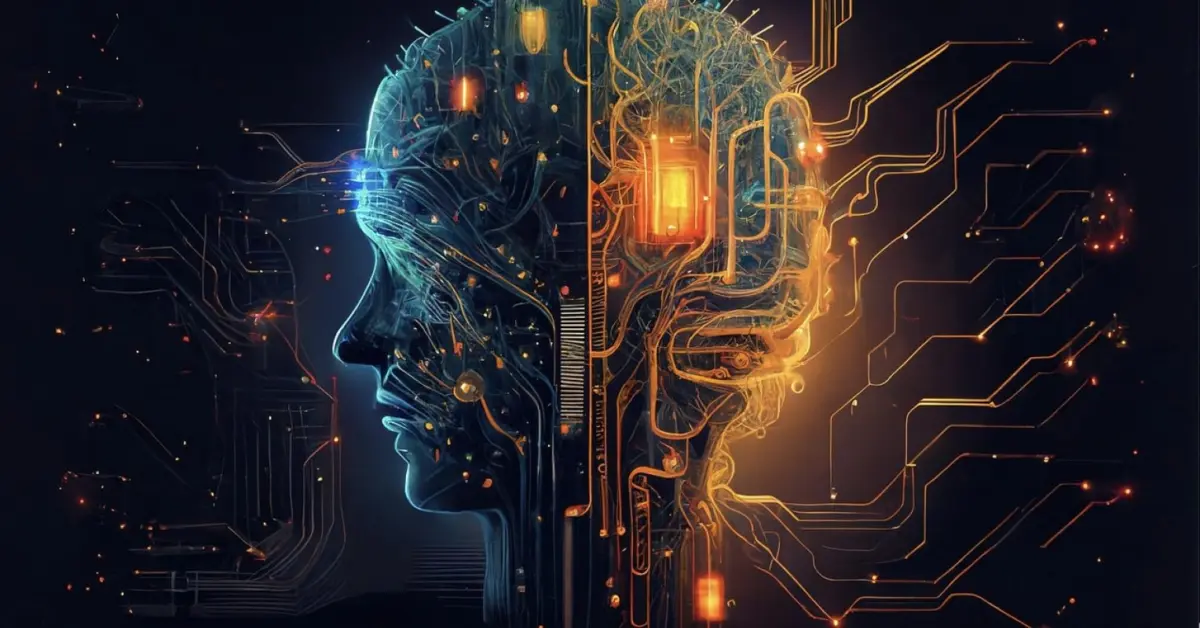
While public discourse is sharply divided—praising AI’s boundless capacity for optimization while condemning its potential to erode human connection—a more profound psychological transformation is quietly taking place. We are witnessing the birth of the "algorithmic self," a state of being where personal preferences, emotional landscapes, and core identities are increasingly mediated, predicted, and manufactured by predictive algorithms.
This paradigm shift is felt most acutely by younger demographics. While Generation Alpha (born from 2010 onward) represents the first true "AI-natives," it is Generation Z—individuals born roughly between 1997 and 2012—who stand at the vanguard of conscious, active AI engagement. For Gen Z, AI is not a novelty; it is a confidant, a cognitive co-pilot, a romantic partner, and, increasingly, a substitute for traditional psychological support.
However, this reliance on synthetic convenience introduces profound developmental risks. Human identity formation has historically relied on friction, trial and error, emotional ambiguity, and the difficult navigation of interpersonal conflict. When algorithms replace these vital struggles with frictionless efficiency, we risk trading authentic self-discovery for passive algorithmic consumption. This investigative report explores the intersection of artificial intelligence and the human psyche, examining how everyday algorithms shape our behavior, why Gen Z is redefining relationships through technology, and what this means for the future of individual autonomy.
Detailed Chronology: From Alan Turing to the Age of Generative Companionship
To understand the current psychological fixation on artificial intelligence, it is necessary to retrace the historical trajectory of the technology. Contrary to popular belief, artificial intelligence is not a modern invention born in Silicon Valley boardrooms over the last half-decade. Its conceptual roots stretch back to the mid-20th century.
- The 1950s—The Theoretical Genesis: The formal lineage of AI traces back to the dawn of computing science. In 1950, pioneering mathematician Alan Turing published his landmark paper, Computing Machinery and Intelligence, in which he posed the deceptively simple question: "Can machines think?" Turing introduced the "Imitation Game" (now known as the Turing Test), shifting the philosophical debate from whether machines possessed internal consciousness to whether they could successfully mimic human intelligence so convincingly that an observer could not tell the difference.
- The Decades of Incubation (1960s–2010s): For decades, AI remained largely confined to academic laboratories, government research facilities, and specialized enterprise software. While advancements were made in expert systems, natural language processing, and chess-playing algorithms (such as IBM’s Deep Blue), the technology operated far beneath the threshold of everyday psychological consciousness. It was invisible infrastructure.
- The Quiet Integration (Late 2000s–Early 2010s): The proliferation of smartphones quietly normalized machine learning in everyday life. Algorithms began governing content delivery through recommendation engines on platforms like Netflix, Spotify, and YouTube. Predictive text, GPS route optimization, and targeted e-commerce advertising subtly trained human populations to outsource basic decision-making processes to machines.
- November 2022—The Generative Turning Point: The psychological floodgates opened with the public launch of OpenAI’s ChatGPT in late 2022. By democratizing access to large language models (LLMs) capable of fluid, context-aware, and emotionally resonant conversation, AI ceased to be a mere computational calculator. It became a conversational partner, a creative collaborator, and, for millions of users, a psychological sounding board.
- The Present Day—The Era of the Algorithmic Self: Today, AI is deeply embedded in the developmental milestones of contemporary youth. Gen Alpha grows up conversing naturally with voice assistants before they can read, while Gen Z utilizes generative AI as an active life partner, a search engine replacement, and an emotional safety net.
Supporting Context & Metrics: How Gen Z Interacts with AI
The generational divide in how humans interact with technology is widening. While older generations (Millennials, Gen X, and Boomers) typically adopt AI tools for explicit, productivity-driven tasks—or interact with them passively through recommendation feeds—Generation Z approaches artificial intelligence as an integrated extension of their social and emotional lives.
From "Google It" to "AI It"
For older cohorts, information retrieval is synonymous with search engines: typing fragmented keywords into Google and sifting through blue links. Gen Z, by contrast, relies on conversational, long-form, highly contextual, and goal-based queries. Instead of searching for "symptoms of anxiety," a young user might converse with an LLM for an hour, inputting complex emotional states, relationship dynamics, and personal histories to receive customized, empathetic feedback.
The Rise of Synthetic Companionship
Perhaps the most striking statistical shift involves emotional and social outsourcing. Recent psychological and sociological data reveals a startling trend:
- Over 75% of Gen Z users engage with AI tools not just for academic or professional utility, but as emotional, social, and even sexual companions.
- Nearly 50% of active Gen Z users report having formed a "meaningful relationship" with an artificial intelligence companion.
- Approximately 25% of young users surveyed believe that an AI companion could eventually replace a human partner in certain contexts.
Furthermore, a growing segment of youth is turning to AI chatbots as a low-barrier substitute for traditional psychotherapy. Faced with long waiting lists, prohibitive financial costs, and the lingering social stigma of mental healthcare, young people are utilizing generative AI to manage panic attacks, process grief, and navigate interpersonal conflicts.
The Ubiquitous, Unconscious Algorithm
Even for those who claim to reject artificial intelligence, the technology dictates daily existence. Consider the invisible architecture of modern life:
- Navigation: Applications like Google Maps and Waze continuously analyze millions of data points in real time to reroute drivers, subtly dictating their physical trajectories.
- Entertainment: Streaming algorithms track hover time, pause rates, and completion percentages to curate hyper-specific media diets, generating notifications like: "Because you watched X, we think you might like Y."
- Commerce & Media Feeds: A single fleeting click on a funny cat video or a gardening tutorial sets off a cascade of hyper-targeted algorithmic reinforcement. Suddenly, exotic houseplants and tropical holiday ads flood every open app.
This is not coincidence; it is an engineered feedback loop designed to capture and monetize human attention.
Official Perspectives and Expert Insights
As mental health professionals, academic researchers, and cultural commentators grapple with these shifts, a chorus of concern has emerged regarding the psychological implications of living in an AI-mediated reality.
Mental health clinicians attending international psychology and psychiatry summits report a dramatic surge in media inquiries regarding youth reliance on AI. Clinical discussions increasingly center on the phenomenon of the "algorithmic self"—a hybrid identity forged at the intersection of human psychology and machine learning data points.
Specialists in adolescent development warn that offloading core cognitive functions—such as memory, sustained attention, and complex decision-making—to artificial intelligence risks flattening individuality. When mood-trackers, personalized social feeds, and conversational AI assistants dictate how individuals interpret their internal emotional landscapes, human agency is compromised.
"Am I feeling emotionally depleted today because of natural biological hormone fluctuations," asks one leading psychological researcher, "or because my AI mood-tracker predicted I would feel burnt out based on my typing speed and sleep app data? The boundary between internal self-awareness and external algorithmic suggestion is rapidly dissolving."
Moreover, developmental psychologists emphasize that the human self is forged in the crucible of interpersonal friction. Navigating misunderstandings, tolerating boredom, surviving adolescent awkwardness, and resolving real-world conflicts are the evolutionary mechanisms through which identity solidifies. By replacing these developmental trials with optimized, frictionless, and endlessly validating AI interactions, society risks fostering a generation that struggles to tolerate the inherent messiness of authentic human relationships.
Future Outlook: Navigating the Age of Conscious AI Use
To state that artificial intelligence poses psychological risks is not to declare that AI is inherently "bad." Technology is neutral; its impact is determined by human intent, systemic regulation, and individual mindfulness.
As we look toward the future, the primary challenge facing society is not how to banish artificial intelligence from our lives—an impossibility given its deep economic and structural integration—but how to transition from passive consumers of algorithms to conscious users of technology.
1. Cultivating Digital Mindfulness
Users of all ages, particularly digital natives, must develop a heightened awareness of how algorithms shape their desires, beliefs, and emotional states. Recognizing that every search, scroll, view, and chat session contributes to a digital profile is the first step in reclaiming cognitive autonomy.
2. Preserving Interpersonal Friction
Educational institutions, parents, and mental health advocates must champion environments where young people can experience productive struggle. Real human intimacy requires vulnerability, misunderstanding, and the courage to navigate unscripted emotional terrain—qualities that synthetic companions cannot genuinely reciprocate, no matter how eloquently they mimic empathy.
3. Ethical Frameworks for Synthetic Companionship
As the market for AI therapists and romantic companions expands, policymakers and mental health associations must establish rigorous ethical standards. Vulnerable populations—especially adolescents whose identities are still under construction—deserve transparency regarding the limitations of machine intelligence and safeguards against predatory emotional attachment loops.
Ultimately, artificial intelligence will continue to map, influence, and redefine the human experience. Whether the "algorithmic self" becomes a prison of optimized conformity or a stepping stone toward expanded human potential depends entirely on our willingness to maintain our psychological sovereignty in a machine-driven world.