Executive Overview
The pace of enterprise technology innovation continues to accelerate, collapsing the theoretical buffer between vulnerability disclosure, threat actor exploitation, and automated remediation. In this week’s comprehensive analysis of Amazon Web Services (AWS) ecosystem developments, several overarching themes emerge: the compression of the software patch lifecycle, the operational convergence of generative artificial intelligence with traditional industries like agriculture, and the maturation of scalable cloud-native architectures designed to simplify microservice exposure and database migrations.
From the general availability of AWS Continuum—an automated vulnerability management system designed to counter near-instantaneous zero-day exploitation—to architectural breakthroughs like Amazon ECS Gateway and major upgrades to foundational machine learning infrastructure such as TorchNeuron and Amazon Polly, cloud engineering is shifting from manual orchestration to context-aware, policy-driven automation.
This report provides an in-depth breakdown of these critical releases, exploring the technical mechanics, quantitative metrics, and broader strategic implications for developers, platform engineers, and enterprise leaders.
Detailed Chronology & Core Technical Releases
1. Security & Vulnerability Management: AWS Continuum and the Collapsed Patch Window
The most critical security announcement of the week is the general availability of AWS Continuum, a service that fundamentally reframes vulnerability management from a passive reporting mechanism into an active, context-aware remediation pipeline.
Traditional vulnerability scanners provide static lists of Common Vulnerabilities and Exposures (CVEs), leaving engineering teams overwhelmed by severity scores and manual investigation loops. AWS Continuum changes this dynamic by constructing a comprehensive context graph mapping code repositories directly to running AWS environments.
Mechanics of AWS Continuum:
- Evidence-Based Ranking: Rather than relying solely on abstract CVSS severity labels, Continuum assesses whether an issue actually poses a threat based on its proximity to business-critical systems and live attack paths.
- Automated Sandbox Reproduction: Exploitable findings are safely reproduced inside an isolated sandbox environment, generating proof-of-concept code so engineering teams can visually and technically verify the flaw.
- Pull Request Remediation: Once a vulnerability is verified, Continuum automatically drafts a fix and opens a pull request.
- Human-in-the-Loop Governance: To maintain rigorous security control boundaries, all remediations currently require manual approval, ensuring engineers review and merge patches before deployment. Autonomous remediation classes remain gated behind strict future confidence thresholds.
The "Why Now?" Factor: The Death of the Patch Window
The urgency behind Continuum’s release was underscored by threat intelligence telemetry published by Amazon during the same week. Analyzing data from Amazon’s MadPot honeypots, Amazon Threat Intelligence identified active exploitation attempts of the PHP2Shell vulnerability (associated with CVE-2026-109618 and CVE-2026-109619) on October 17—four full days before the vulnerabilities were publicly disclosed.
Furthermore, on the official disclosure day, proof-of-concept exploits were actively circulating across public channels by 02:00 UTC, twelve hours ahead of the scheduled embargo lift at 14:00 UTC.
This data signals a definitive paradigm shift: the traditional "patch window" measured in days or weeks is effectively obsolete. Modern enterprise security strategies must assume that threat actors weaponize vulnerabilities the moment—or even before—they are disclosed. Alongside Continuum, AWS released dedicated AWS WAF mitigations for the PHP2Shell CVEs. AWS Continuum is currently available in the US East (N. Virginia) and US West (Oregon) regions.
2. Network & Microservices Architecture: Introducing Amazon ECS Gateway
Managing ingress traffic, TLS certificates, and security groups across large-scale containerized fleets has historically created friction between networking specialists and application developers. Amazon ECS Gateway resolves this organizational bottleneck by establishing a clean separation of concerns.
Structural Breakdown:
- Platform Team Controls: Infrastructure and networking teams define a unified gateway encompassing organization-wide subnets, security groups, TLS certificates, listener settings, and AWS WAF web ACLs.
- Application Team Opt-In: Application developers simply attach a gateway connector to their service definitions. Amazon ECS automatically provisions and manages the underlying AWS Certificate Manager (ACM) certificate, a unique DNS hostname, custom listener rules, target groups, and isolated security groups that exclusively admit traffic from the designated Application Load Balancer (ALB).
Architectural Scale & Economics:
- High Density: Up to 25 microservices can efficiently share a single ALB, significantly reducing infrastructure overhead.
- Dynamic Provisioning: ECS automatically provisions the first ALB upon initial connection and decommissions ALBs when traffic scales to zero.
- Cluster Capacity: A single gateway can associate with up to 10,000 clusters, with a maximum of five gateways per cluster.
- Incremental Adoption: Existing architectures can migrate incrementally using
UpdateServicecommands without requiring immediate teardown of legacy load balancers.
Amazon ECS Gateway is available at no additional charge in all commercial AWS regions where Amazon ECS is supported.
3. Artificial Intelligence & Machine Learning Breakthroughs
Amazon Polly Generative Engine Upgrade
Highlighting the intersection of AI and edge environments, AWS announced a major upgrade to the Amazon Polly Generative engine, expanding its expressive catalog to 57 generative voices across 11 languages and 25 locales.
The update introduces 14 new voices across 9 locales, including landmark native support for Hindi, Finnish, and two distinct Brazilian Portuguese voices: Leo and Carolina. Engineered as a drop-in upgrade, existing applications retain their original voice names, API parameters (SynthesizeSpeech), and pricing tiers while instantly benefiting from vastly more natural, human-like speech synthesis.
TorchNeuron: Native PyTorch Support for AWS Trainium (Public Beta)
Addressing the hardware lock-in dilemma inherent in modern machine learning operations, AWS announced the public beta of TorchNeuron, an open-source PyTorch backend designed for AWS Trainium chips (supporting both Trainium2 and Trainium3 instances).
By changing a single initialization line to .to('neuron'), developers can execute models directly on Trainium silicon without undertaking major codebase rewrites, preserving both eager execution paradigms and torch.compile. TorchNeuron integrates deeply with the Neuron Kernel Interface, allowing teams to implement custom operators while maintaining architectural flexibility across hardware stacks.
Amazon SageMaker AI: Custom Training Sessions Without GPU Management
Managing distributed GPU clusters, fault recovery, and checkpoint storage has long acted as a barrier to advanced model fine-tuning. Amazon SageMaker AI introduced generally available Training Sessions, giving engineers granular control over the post-training loop—including custom loss functions and reward signals—while SageMaker abstracts away hardware orchestration.
Billing is calculated strictly by processed tokens, pausing automatically while custom reward functions evaluate batch iterations. The release coincides with native integration support for Muse Glimmer, Qwen 3.8, and Ministral 3.
Structured Outputs for Claude on Amazon Bedrock
Enterprise workflow automation frequently stumbles over unstructured LLM text outputs. AWS announced native support for Structured Outputs for Anthropic Claude models across both bedrock-runtime and bedrock-mantle endpoints on Amazon Bedrock. Developers can now enforce strict, schema-compliant JSON returns directly at the API level, eliminating complex custom parsing, retry loops, and post-processing scripts when parsing financial filings, clinical notes, or customer support tickets.
4. Database Modernization & Serverless Evolution
Amazon ElastiCache Serverless for Valkey: Zero-Downtime Migration
Modernizing high-throughput caching layers has historically required intricate orchestration and risky maintenance windows. Amazon ElastiCache Serverless for Valkey now supports online migration with zero downtime, allowing organizations to transition self-managed Valkey or Redis OSS instances running on Amazon EC2 directly into ElastiCache Serverless.

Using native replication mechanisms rather than third-party tooling, the system synchronizes data live and supports both manual and automated cutovers while returning zero client errors throughout the entire transition. The feature is available globally across all commercial, China, and AWS GovCloud regions.
Supporting Context & Metrics
To contextualize the week’s announcements, we can examine several critical operational metrics shared across AWS engineering updates and customer migration case studies:
| Initiative / Service | Key Metric / Performance Indicator | Operational Impact |
|---|---|---|
| Amazon ECS Gateway | Up to 25 services per ALB; up to 10,000 clusters per gateway | Drastically reduces ALB sprawl and infrastructure costs. |
| AWS Continuum | 02:00 UTC exploit appearance vs. 14:00 UTC disclosure | Highlights a 12-hour pre-disclosure exploitation window requiring automated defense. |
| U.S. Bank Oracle Migration | 119 TB migrated from Oracle Exadata to RDS for Oracle | Baseline copy completed in 7 days; 4-hour average cutover windows per database. |
| Coding Agent Tokenomics | Routing strategy yielded 44.7% cost reduction | Achieved with a marginal 4.8% trade-off in mean quality scores. |
| Amazon Polly Generative Engine | 57 voices, 11 languages, 25 locales | Expands localized, hyper-realistic voice interfaces for hands-free and edge applications. |
Official Statements & Industry Perspectives
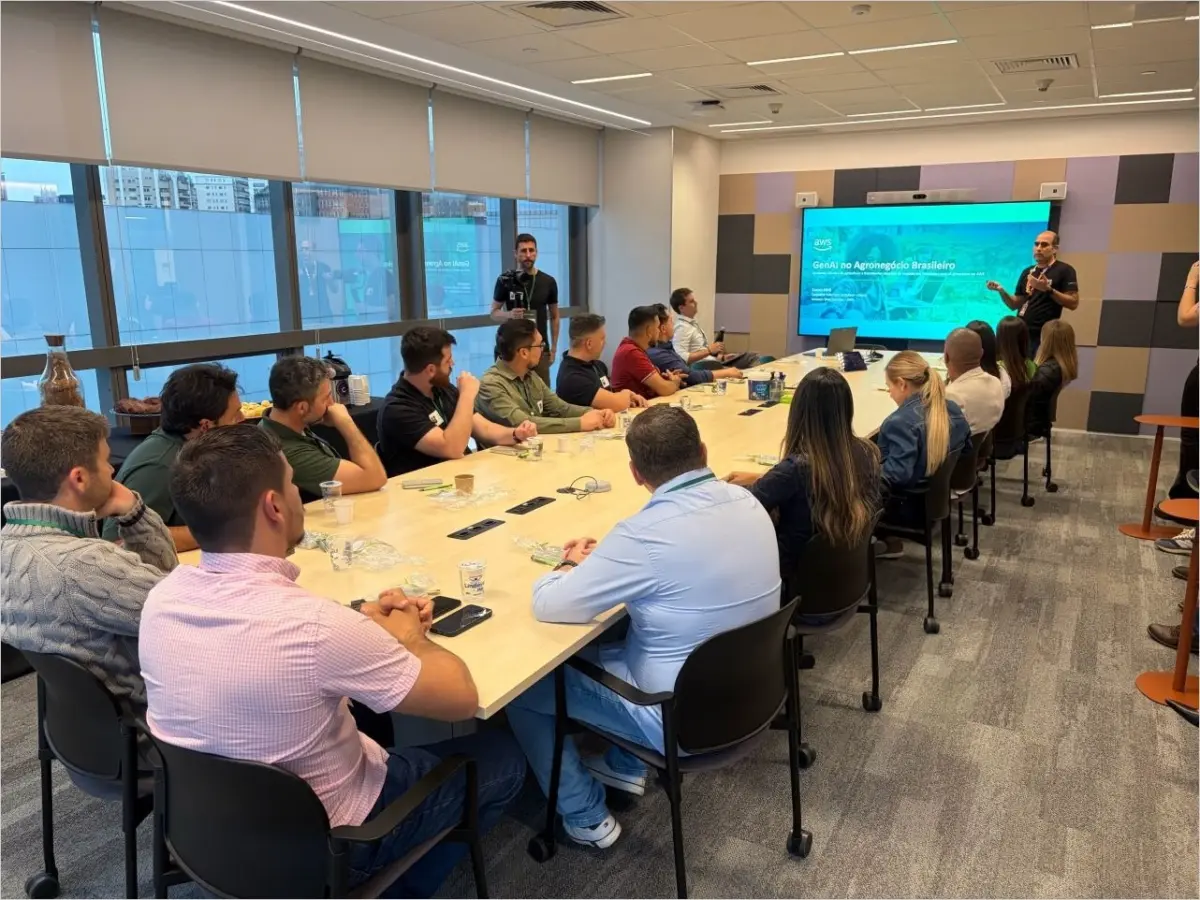
Reflecting on the evolving landscape of enterprise technology deployment, industry leaders emphasize the necessity of automated resilience. During an executive briefing at the AWS office in São Paulo focused on generative AI in agribusiness, technology leaders repeatedly steered the conversation away from whether AI should be deployed toward how it is delivered.
"When your user has both hands on a steering wheel while driving between remote agricultural fields, the user interface cannot be a dashboard or a terminal. The interface is a voice," noted technology strategists during discussions on edge AI deployment. This operational reality underscores the strategic importance of localized, high-fidelity speech engines like the newly upgraded Amazon Polly Brazilian Portuguese voices.
Similarly, addressing the reality of modern threat landscapes, security engineers emphasize that defensive posture can no longer rely on human reaction times:
"A patch window measured in days assumes a delay that no longer exists. Security investigations and automated remediations must initiate from the earliest known telemetry of exploitation rather than arbitrary public disclosure dates."
Future Outlook & Upcoming Events
As the enterprise technology calendar approaches its annual crescendo, engineering teams are turning their attention toward major educational and networking forums:
- AWS re:Invent 2026: Scheduled for November 30 to December 4 in Las Vegas, this year’s conference features a massive catalog exceeding 2,200 technical sessions. With reserved seating now live, engineering leadership is finalizing schedules focused heavily on autonomous security, serverless data architectures, and production-grade generative AI deployments.
- AWS Community Days: The regional calendar closes out in South America with the AWS Community Day Brasil Norte taking place in Belém on October 31, bringing together local developers, architects, and community leaders to discuss regional cloud adoption trends.
Conclusion
The convergence of accelerated zero-day exploitation vectors and automated response mechanisms like AWS Continuum signals that enterprise cloud engineering has entered an era of hyper-velocity defense. Concurrently, architectural abstractions like ECS Gateway and TorchNeuron prove that AWS remains dedicated to decoupling developer velocity from underlying infrastructure complexity. Organizations that successfully adopt these context-aware, automated paradigms will find themselves decisively ahead of the curve as enterprise computing enters its next evolutionary phase.