Executive Overview
For video game historians, preservationists, and longtime veterans of the genre, the late 1990s represent a primordial era—a time when massive multiplayer environments were still the Wild West of digital entertainment. Chief among the pioneers of this era was Ultima Online (UO), a title that fundamentally reshaped how humans interact, cooperate, and conflict inside a virtual space.
Now, the definitive history of this monumental project has been captured in staggering, unprecedented detail. YouTube video essayist Majuular has released the latest—and presumably penultimate—installment of his multi-year Ultima retrospective series, a monumental four-and-a-half-hour documentary dedicated entirely to Ultima Online.
Six months in the making, this latest video completes another monumental chapter in a project that has quietly transformed Majuular from an independent creator into one of the most celebrated and respected digital historians on YouTube. Spanning more than twenty hours across multiple parts, the retrospective series explores the origins, triumphs, and trials of Richard Garriott’s legendary franchise. This latest deep dive not only examines the improbable conception of Ultima Online under the banners of Origin Systems and Electronic Arts, but also explores its deep, systemic influence on the entire modern gaming landscape.
Detailed Chronology: From Concept to Cultural Phenomenon
To truly understand the weight of Majuular’s four-and-a-half-hour video, one must retrace the harrowing timeline of Ultima Online‘s development—a turbulent process that forever altered the trajectory of online gaming.
The Spark: Garriott, Long, and the Vision of Britannia
In the mid-1990s, the concept of a graphical Massively Multiplayer Online Role-Playing Game (MMORPG) was virtually non-existent. While text-based Multi-User Dungeons (MUDs) thrived on university servers and dial-up bulletin board systems (BBS), bringing a persistent, graphical fantasy world to the commercial masses seemed like an impossible financial and technical hurdle.
Enter Richard "Lord British" Garriott, the visionary creator behind the single-player Ultima series, alongside producer Starr Long. Recognizing the rapid evolution of internet infrastructure, Garriott championed a bold idea: what if thousands of players could simultaneously inhabit the kingdom of Britannia?
Majuular’s documentary details the unvarnished reality of these early brainstorming sessions. Far from a smooth corporate greenlighting process, Ultima Online was an ambitious gamble that fought for resources, technological viability, and internal belief within Origin Systems.
The Crucible: Raph Koster and the MUD Pioneers
Once the project gained traction, the development team needed individuals who truly understood persistent virtual spaces. They found their answer in Raph Koster and a team of passionate MUD enthusiasts who joined the project to help construct its foundational mechanics.
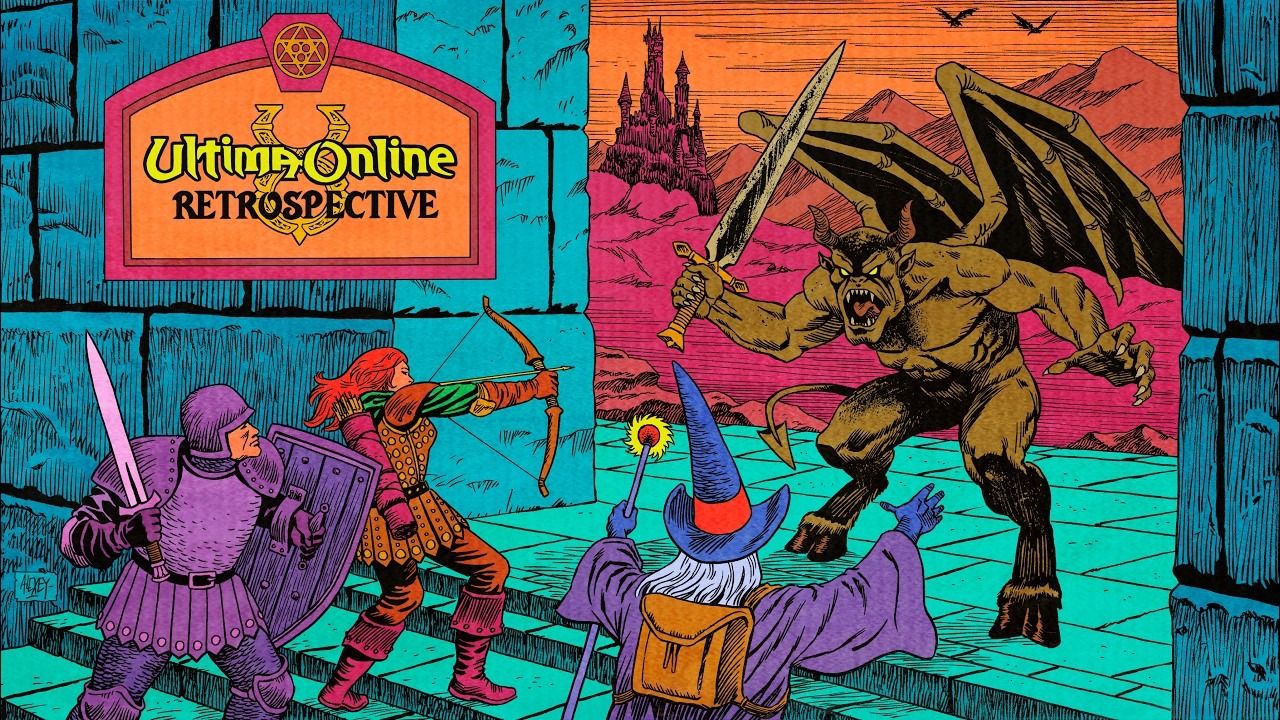
Koster’s design philosophy introduced unprecedented systemic freedom to Ultima Online. Unlike modern MMORPGs, which are often heavily curated theme parks, UO was envisioned as an ecology-driven sandbox. Monsters had simulated lifecycles; players could harvest resources, craft items, build houses anywhere in the game world, and—most notoriously—engage in full-loot, open-world player-versus-player (PvP) combat.
Majuular’s video carefully dissects how this radical freedom birthed a living, breathing digital society. It wasn’t just a game; it was a social experiment that forced real human behavior—complete with economics, politics, guilds, and ruthless banditry—into a digital medium for the first time.
The Growing Pains, Competition, and Changing Identity
As Ultima Online approached its commercial launch in September 1997, it faced immense technical hurdles, including notorious server lag, duping exploits, and sweeping server rollbacks. Yet, despite these instability issues, the game captured the imagination of hundreds of thousands of players worldwide.
As competitors began to notice UO’s unprecedented financial and cultural success, the landscape shifted. Other studios rushed to develop their own persistent worlds, forcing Origin Systems to continuously adapt, update, and sometimes compromise the original sandbox vision of the game to accommodate a broader, more mainstream audience. Majuular’s retrospective chronicles these painful growing pains, highlighting the cultural friction between hardcore sandbox purists and the commercial realities dictated by publisher Electronic Arts.
Supporting Context & Metrics: The Scale of Majuular’s Retrospective
The release of the Ultima Online documentary is not merely a drop in the ocean of gaming content; it represents a towering achievement in digital preservation and long-form video essay creation.
By the Numbers:
- Video Length: 4 hours and 30 minutes of meticulously researched, tightly edited historical footage, interviews, and analytical commentary.
- Production Time: Six grueling months of focused writing, editing, and fact-checking just for this single installment.
- Series Scope: Over 20 hours of cumulative documentary content produced across a multi-year timeline chronicling the entire Ultima lineage.
- Audience Impact: The staggering dedication required for this project unexpectedly catapulted Majuular to YouTube prominence, crossing the milestone of 200,000 subscribers.
The Creative Process
As detailed in a PC Gamer feature profiling the creator, Majuular’s journey to historical chronicler was fueled by "a good idea, infinite drive, and lots of Diet Pepsi." Eschewing the fast-paced, high-turnover meta of modern content creation, Majuular chose a path of deep, fastidious, and affectionate critique. He didn’t just read about the games—he immersed himself in them, playing through obscure titles, deciphering dense lore, and tracking down the human stories behind the code.
The result is a masterclass in video journalism that bridges the gap between western and Japanese role-playing history, illustrating how an American PC gaming titan planted the seeds for entire generations of subsequent game design.
Official Statements & Community Reactions
The response to the Ultima Online retrospective has been nothing short of rapturous, reverberating across retro-gaming forums, Reddit, and social media platforms.
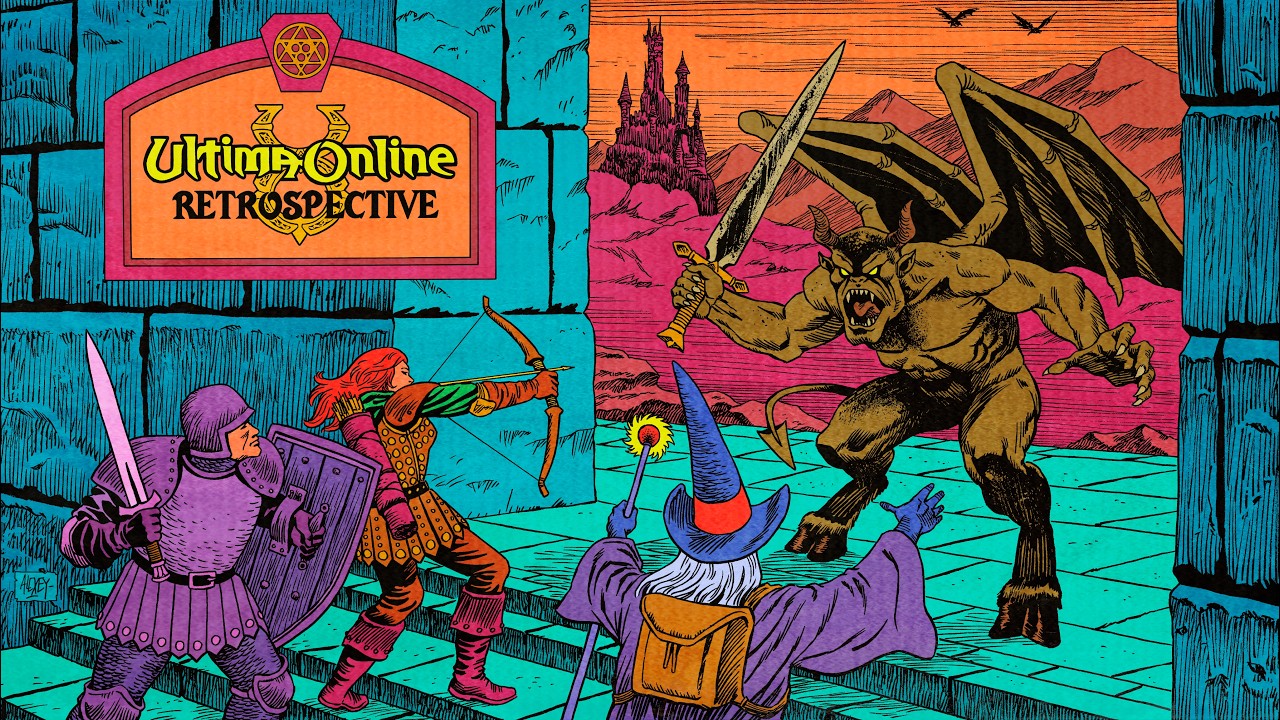
"This one was a doozy," Majuular noted in the comments section of the YouTube release, acknowledging the immense complexity and emotional weight of capturing Ultima Online’s volatile history.
The documentary has also sparked a massive wave of nostalgia and renewed engagement within the enduring Ultima Online community. For those inspired by the documentary to experience the game firsthand, Majuular explicitly highlighted active fan-run preservation efforts that keep the late-’90s spirit alive. Among them is In Mani Ylem, a dedicated community server designed to faithfully recapture the exact mechanics, rulesets, and atmosphere of Ultima Online as it existed in its seminal late-90s heyday.
Industry veterans and modern developers alike have praised the series for documenting an era of game development that risks being lost to time. Without corporate PR filtering the narrative, Majuular’s breakdown offers an unvarnished look at the creative genius, interpersonal conflicts, and infrastructural breakthroughs that made modern online gaming possible.
Future Outlook: Preserving the Digital Frontier
As Majuular’s multi-year epic nears its conclusion with its final planned installments, the cultural footprint of the project looms large. It proves that there is an insatiable, deep-seated hunger among modern audiences for rigorous, long-form historical investigations into the roots of interactive entertainment.
The legacy of Ultima Online lives on—not just in the code of surviving official servers and passionate fan projects like In Mani Ylem, but in every MMORPG, survival sandbox, and persistent online world we inhabit today. Every time a modern player builds a house in an open world, engages in player-driven economies, or participates in emergent faction warfare, they are treading paths first bulldozed by the pioneers at Origin Systems.
For anyone looking to understand where modern gaming came from—and how a few visionaries managed to wire the world together before broadband was even a household term—Majuular’s Ultima Online retrospective is essential viewing. Clear your weekend, grab your favorite beverage, and prepare to step back into Britannia.
Where to Watch
- The Complete Ultima Retrospective Playlist: Available on YouTube
- Experience the Game: Fans looking to dive into the classic era can check out the community-driven server In Mani Ylem.