SAN FRANCISCO, CA — Speaking to a packed audience on the main stage at the inaugural PokémonXP convention, The Pokémon Company President and CEO Tsunekazu Ishihara offered a rare, forward-looking glimpse into how the multi-billion-dollar franchise plans to adapt to an increasingly interconnected world. Tracing the trajectory of hardware innovation from the early days of monochrome game cartridges to the omnipresence of modern smartphones, Ishihara signaled that the franchise’s next frontier lies beyond standalone companion devices and firmly within mainstream wearable technology.
The keynote discussion, titled Producing Pokémon: A Conversation with Mr. Ishihara and livestreamed globally via Pokémon’s official channels, served as both a retrospective of the brand’s historic hardware philosophy and a manifesto for its future. As consumer tech shifts toward ubiquitous computing through smartwatches, smart glasses, and ambient wellness trackers, The Pokémon Company is actively rethinking how players interact with their virtual pocket monsters in the physical world.
Executive Overview
For nearly three decades, Pokémon has thrived at the intersection of gaming hardware and real-world social interaction. From the introductory Game Boy Link Cable that enabled player-to-player trading in 1996 to modern location-based augmented reality and sleep-tracking apps, hardware integration has always been central to the Pokémon identity.
However, the proliferation of smartphones fundamentally disrupted the dedicated accessory market. During his keynote at PokémonXP, Ishihara detailed how the company had to pivot its hardware strategy to remain relevant in an era where consumers already carry powerful, hyper-connected supercomputers in their pockets. Looking ahead, Ishihara highlighted smartwatches, smart glasses, and smart rings as the logical catalysts for the next evolution of companion gameplay.
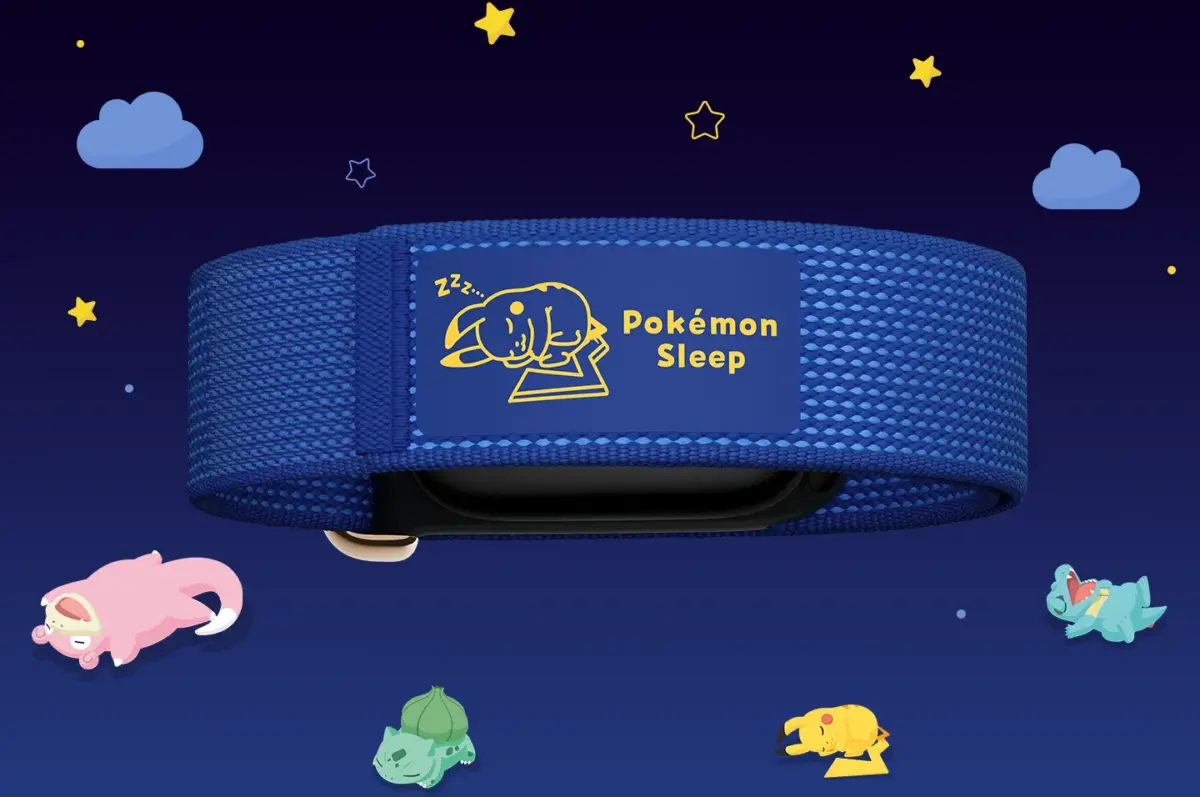
This strategic shift is already materializing in the marketplace. Hot on the heels of Google’s reveal of the Fitbit Air Special Edition Pokémon Sleep—a dedicated health and wellness tracker natively integrated with the Pokémon Sleep ecosystem—The Pokémon Company is laying the groundwork for a future where gaming, biometric data, and ambient technology seamlessly merge.
Detailed Chronology: From Standalone Pocket Toys to Ubiquitous Wearables
To understand where Pokémon is heading, industry analysts often look to where it has been. Tsunekazu Ishihara, who also founded and previously led Creatures Inc. (one of the three core entities owning the Pokémon franchise alongside Nintendo and Game Freak), has overseen every major hardware paradigm shift in the brand’s history.
The Era of "Secret Weapons" (1998–2015)
In the formative years of the franchise, physical companion gadgets were designed to feel like exclusive, tangible extensions of the game world. Devices such as the Pokéwalker—released in 2009 alongside Pokémon HeartGold and SoulSilver—allowed players to store a Pokémon on a pedometer-like device, leveling up the creature by walking in the real world.
Reflecting on this era during the panel, Ishihara described these gadgets with a sense of nostalgia, noting their distinct place in gaming culture.
"In the past, these gadgets or companion accessories [like the Pokéwalker and Pokémon GO Plus] were kind of like these cool secret weapons you could pull out of your pocket and do something really cool with," Ishihara told the PokémonXP audience.
These devices operated as self-contained experiences. They did not require persistent cloud connections or complex cross-platform synchronization; instead, they offered localized, tangible engagement that rewarded physical activity with in-game progression.
The Smartphone Disruption (2016–Present)
The launch of Pokémon GO in July 2016 shattered industry expectations, bridging the gap between digital gaming and physical exploration on a global scale. Yet, the ubiquity of smartphones fundamentally altered consumer expectations regarding hardware. When everyone carries a high-powered computer equipped with GPS, accelerometers, and high-definition touchscreens, the appeal of carrying a secondary, single-purpose plastic toy begins to wane.
Consequently, The Pokémon Company had to adapt its hardware philosophy. Accessories transitioned from standalone novelty items into utilitarian bridges meant to feed data back into smartphones—exemplified by the Pokémon GO Plus series, which allowed players to spin PokéStops and catch Pokémon without constantly staring at their phone screens.

The Wearable Convergence (2026 and Beyond)
As demonstrated by the newly announced Fitbit Air Special Edition Pokémon Sleep, the modern consumer market has moved past single-purpose plastic clip-ons toward multi-functional lifestyle technology. By integrating gameplay directly into consumer health hardware, Pokémon is moving away from the "secret weapon pulled from a pocket" and toward ambient, persistent integration.
Supporting Context & Metrics: The Business of Pokémon Hardware
The commercial viability of Pokémon hardware rests on an unprecedented foundation of generational longevity and cross-media dominance. As one of the most lucrative intellectual properties in human history, Pokémon generates tens of billions of dollars across video games, trading cards, mobile applications, and licensed merchandise.
| Milestone / Era | Key Hardware / Software Innovation | Impact on Consumer Behavior |
|---|---|---|
| 1996–1999 | Game Boy Link Cable, Red & Green / Blue | Established social trading and collaborative gameplay as core pillars. |
| 2009 | The Pokéwalker (Infrared / Pedometer) | Pioneered real-world step-counting as a mechanic for digital progression. |
| 2016 | Pokémon GO & Pokémon GO Plus | Normalized augmented reality and peripheral-assisted mobile gaming on a mass scale. |
| 2023–2026 | Pokémon Sleep, Fitbit Air Special Edition | Gamified biological wellness, bridging sleep metrics with digital rewards. |
Ishihara’s personal history mirrors this expansion. Having witnessed the birth of the franchise from its humble roots on the original Game Boy to its current status as a cultural behemoth, his passion for physical gadgets remains undiminished. During the panel, he emphasized that his lifelong love for handheld toys continues to fuel his creative ambitions for the brand.
Official Statements and Insights from the PokémonXP Panel
The Producing Pokémon: A Conversation with Mr. Ishihara panel provided rare transparency into the executive mindset guiding the franchise’s long-term roadmap. Rather than chasing fleeting technological fads, Ishihara stressed that the core objective must always center on human engagement and novel forms of play.
Addressing the audience in San Francisco, Ishihara explicitly outlined the upcoming hurdle for product developers:
"Today I was thinking, going forward, maybe a challenge for us is going to be figuring out how we can integrate Pokémon more with some of the wearable technology, like smartwatches, smart glasses, or even smart rings, for example."
This commentary arrives alongside official confirmation from Google regarding the Fitbit Air Special Edition Pokémon Sleep. The device leverages advanced biometric tracking to monitor sleep cycles, seamlessly feeding that data into the Pokémon Sleep application to reward users based on their resting habits. It represents a clear ideological shift: rather than asking users to carry an extra device, Pokémon is embedding itself into the technology consumers already wear on their bodies daily.
Looking toward the horizon, Ishihara expressed his profound hope for the stewardship of the franchise:
"I really hope Pokémon and the people who are stewarding it will continue to be creating entirely new forms of play that really excite people. And also that humanity, in general, will continue to really enjoy those experiences. And maybe even across three or four generations in the future."
Future Outlook: What Smart Wearables Mean for Trainers
As the technological landscape shifts toward ambient computing, augmented reality headsets, and biometric smart rings, the implications for the Pokémon franchise are profound.
- Smart Glasses & Augmented Reality: With major tech firms heavily investing in lightweight smart glasses, the dream of seeing wild Pokémon projected seamlessly into the physical environment—without the heavy battery drain and social friction of holding up a smartphone camera—moves closer to reality.
- Smart Rings & Continuous Biometrics: Following the success of sleep gamification, smart rings could open doors to continuous health and activity tracking, utilizing heart rate, stress levels, and daily movement to influence in-game Pokémon temperaments, breeding mechanics, or evolution pathways.
- Smartwatch Ecosystems: Deeper, native integrations with watchOS and WearOS could transform smartwatches into full-fledged wrist-bound Pokédexes, enabling quick interactions, notifications, and localized multiplayer encounters without ever reaching into a pocket.
By shifting focus from pocket-sized "secret weapons" to integrated body-worn technology, Tsunekazu Ishihara and The Pokémon Company are ensuring that the franchise remains woven into the fabric of daily life. If Ishihara’s multi-generational vision holds true, trainers of the future won’t just play Pokémon—they will wear it, live it, and experience it as a continuous, ambient layer of the physical world.