
Executive Overview
For over a decade, consumer data broker Radaris.com operated with near-total impunity, systematically ignoring removal requests, dodging regulatory scrutiny, and burying its operations beneath a convoluted labyrinth of offshore shell companies. That era of unaccountability has officially come to an end.
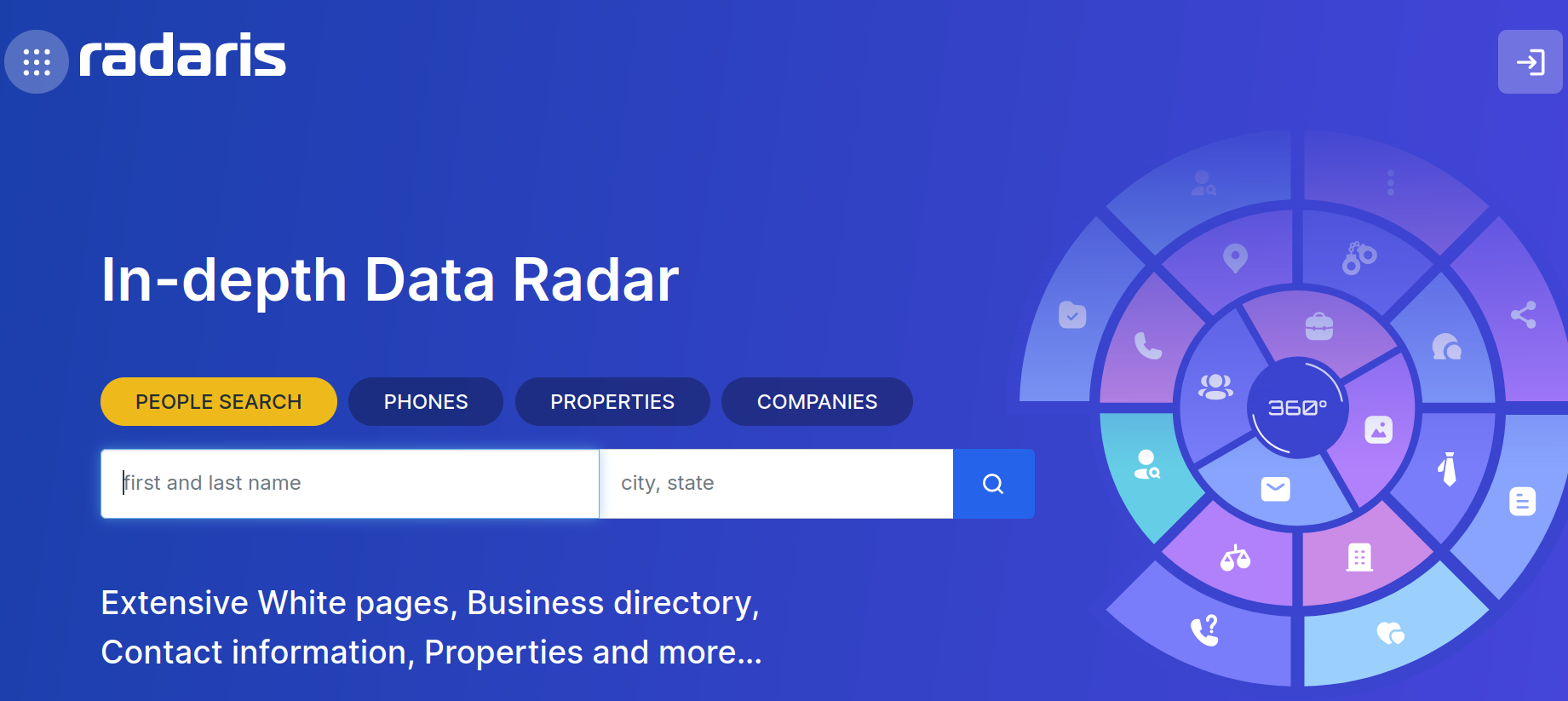
In a landmark decision stemming from the enforcement of New Jersey’s strict privacy legislation, known as "Daniel’s Law," a federal court ordered the transfer of radaris.com—along with more than a dozen associated people-search domains—directly to the plaintiffs. Rather than functioning as a searchable database of personal dossiers on millions of Americans, the once-lucrative homepage now redirects to a court-mandated seizure notice managed by Atlas Data Privacy Corp.
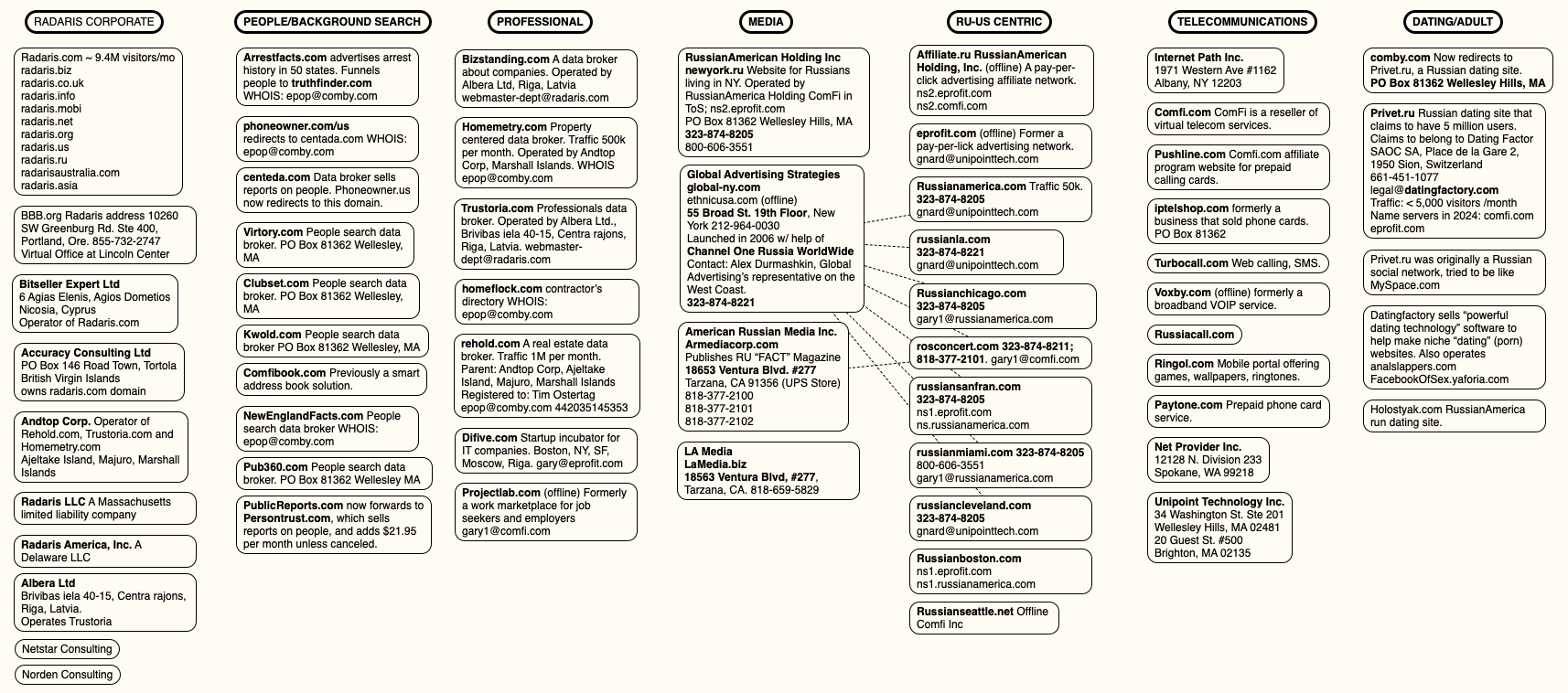
This unprecedented judicial reckoning is the culmination of years of investigative reporting, aggressive litigation, and a high-stakes corporate shell game. It exposes the inner workings of an empire built by Massachusetts-based brothers Igor and Dmitry Lubarsky, who utilized fictitious executives, shifting international jurisdictions, and a sprawling network of front companies to shield their lucrative data-harvesting operations from accountability.
Yet, while the seizure of Radaris marks a monumental victory for privacy advocates and law enforcement personnel, it also underscores the precarious legal landscape surrounding state-level privacy statutes. As data brokers mount aggressive First Amendment challenges in federal courts, the battle over Radaris highlights a glaring systemic failure: the continued absence of comprehensive federal privacy legislation in the United States.
Detailed Chronology: From Impunity to Intervention
The Genesis of the Conflict
The legal storm surrounding Radaris began in February 2024, when Atlas Data Privacy Corp filed a lawsuit against the data broker. Atlas targeted Radaris for alleged violations of Daniel’s Law, a New Jersey statute enacted in the wake of a tragic shooting that claimed the life of the son of a federal judge. The law was specifically designed to protect state law enforcement officials, government personnel, judges, and their families by compelling commercial data brokers and people-search services to completely remove their personal information. Crucially, the statute carries steep financial penalties, levying fines of $1,000 per violation against companies that ignore legitimate removal requests.
Exposing the Puppet Masters
Just weeks after the initial lawsuit was filed, investigative journalist Brian Krebs published an exhaustive deep dive into the true masterminds behind Radaris: Russian-born brothers Igor and Dmitry Lubarsky (also known as Gary and "Dan" Lybarsky), who operated their vast enterprise out of Massachusetts. The reporting revealed that the brothers managed not only a dizzying array of interconnected people-search engines but also several Russian-language dating services and affiliate programs.
Instead of addressing the substantive allegations of privacy violations, attorneys for the Lubarsky brothers threatened to sue for defamation unless the reporting was retracted and an apology issued. Their legal representation claimed the article was wildly inaccurate and insisted the true owners of the platform were Ukrainian nationals living in Ukraine.
KrebsOnSecurity countered with subsequent investigations exposing how the Lubarsky brothers operated their data broker empire using a completely fabricated executive: a fictitious CEO named "Gary Norden." Val Gurvits, an attorney with the Boston Law Group representing Radaris, ultimately admitted in court that his clients had invented the pseudonym. Internal records and historical press releases revealed that Radaris had repeatedly quoted "Gary Norden" over the years to secure funding from prospective investors.
The International Shell Game
Faced with mounting legal pressure, Radaris lawyers deployed a classic litigation strategy: delay, obfuscation, and jurisdictional maneuvering.
When Atlas re-filed and expanded its lawsuit in June 2025 to encompass a much broader family of Radaris-affiliated data brokers, Matt Adkisson, president and CEO of Atlas, witnessed firsthand the company’s "island-hopping" phase.
"Privacy policies changed constantly, and new entities kept appearing from places like the Marshall Islands, the British Virgin Islands, and Seychelles," Adkisson explained. "Behind the scenes, it felt like a shell game. Defense lawyers told the court that certain entities merely operated the domains and were the proper parties to sue. But by the time a judgment neared, those entities would be discarded and new entities would appear."
In one notable instance, after defendants updated their terms of service to claim that Radaris was suddenly managed by a firm in the Marshall Islands, Atlas dispatched a local investigator. They quickly discovered that the newly minted corporate entity did not even exist.
This tactical evasion mirrored previous legal challenges. In a 2017 class-action lawsuit (Huebner v. Radaris, LLC) that the company initially lost by default, plaintiffs were unable to collect a $7.5 million judgment. The court ordered domain registrar Verisign to transfer radaris.com to the plaintiffs. However, Gurvits successfully appealed that verdict by arguing that the lawsuit had failed to name the actual owner of the domain—a Cyprus-based company named Bitseller Expert Limited—thereby violating due process.
Following that ruling, control of Radaris shifted from Bitseller to Andtop Company, an entity incorporated in the Marshall Islands in October 2020. Plaintiffs abandoned the refiling, allowing Radaris to continue its operations unhindered for years.
Supporting Context & Metrics: Unmasking the Financial Apparatus
For over a decade, the Radaris enterprise survived through attrition. Plaintiffs’ attorneys simply grew exhausted by endless procedural hurdles and walked away. However, the discovery process in the recent litigation yielded a massive trove of internal documentation that definitively mapped out the financial and administrative architecture of the operation.
The Corporate Web
According to Atlas, discovery produced more than 10,000 emails, bank statements, and corporate documents. These files confirmed that a dense portfolio of nominal legal entities—including:
- Radaris America, Inc.
- Bitseller Expert Limited
- Digital Orbit Corp
- Core Solutions Group Inc.
- Lucky Solutions Inc.
- Virtura Corp.
- Veripages Inc.
- Nuform Solutions Inc.
- Growth Data Advisors Inc.
- Property Experts, Inc.
…were all administered by the exact same group of three or four individuals. These entities shared centralized payment card processing, bank accounts, and a single virtual office address.
Technical analysis revealed that the administrative, financial, and technical infrastructure for radaris.com and at least 25 sister people-search sites was anchored to the difive.com mail domain and its successor domains (centerex.com, scienteco.com, eprofit.com, realmo.com, and pub360.com).

Lucrative Ecosystems and Partnerships
The internal documents offered a rare glimpse into the highly lucrative economics of the data-broker underground:
- Revenue Streams:
Radaris.comwas pulling in an estimated $42,000 per month, while sister siteVeripages.comgenerated roughly $45,000 monthly. - Corporate Partnerships: Veripages maintained lucrative affiliate partnerships with the Lifetime Value Company, a major marketing and advertising conglomerate whose brands include PeopleLooker, PeopleSmart, NumberGuru, and the vehicle history platform Bumper.
- The "Removal" Paradox: Perhaps most hypocritically, internal records showed the Radaris network earned up to $25,000 a month through partnerships with Onerep, a privacy-washing service that claims to help consumers scrub their data from people-search sites. This revelation echoes previous investigative findings linking Onerep’s founder to the simultaneous creation of dozens of people-search engines—effectively fueling the disease while selling the cure.
Official Statements and Legal Maneuvers
As the New Jersey litigation reached its climax, legal representatives for both sides staked out firm positions regarding the legitimacy of the court’s actions.
Raj Parikh, a partner at PEM Law in New Jersey who manages Daniel’s Law litigation for Atlas, emphasized the necessity of unwavering commitment when confronting systemic corporate evasion.
"In the past, they won by attrition. Plaintiffs’ attorneys tired of the procedural games and just gave up," Parikh noted. "That strategy worked for a decade, and it probably would have worked in this case too… But we were acutely aware of the threat this website posed to law enforcement officers and other public officials in New Jersey, and decided early on to commit whatever time and resources were necessary to remove that threat."
On August 26, the presiding judge ruled that the defendants had been granted ample opportunity to contest the claims against them and had repeatedly failed to do so. Consequently, the court ordered the transfer of 14 domain names associated with the Radaris family to Atlas.
Attorney Val Gurvits declined to comment on the record, noting that the case had been reassigned to attorney Victor Worms. In response to press inquiries, Worms maintained that the default judgment was fundamentally flawed.
"We have made a motion to vacate that default judgment on the grounds that it is void since a non-entity has no legal capacity to sue or be sued," Worms stated. "We also intend to pursue all appropriate appeals because we believe the transfer of Radaris.com amounts to a forfeiture in violation of various constitutional principles."
Despite these ongoing legal challenges, the immediate practical impact is undeniable: radaris.com no longer monetizes detailed dossiers on American citizens, instead serving as a public monument to a court-ordered domain forfeiture.
Future Outlook: The Battle for Privacy Legislation
While the neutralization of Radaris is a watershed moment for digital privacy enforcement, it represents a single skirmish in a much larger, nationwide legal war.
The Constitutional Battleground
Daniel’s Law itself faces an existential threat. Virtually all of the roughly 150 consumer data broker firms targeted in ongoing lawsuits by Atlas have joined forces to mount a sweeping constitutional challenge. The data broker industry has successfully shifted at least 70 of these lawsuits into federal courts, arguing that state-level privacy statutes are overly broad and violate First Amendment protections governing the dissemination of public records.
While the U.S. Court of Appeals for the Third Circuit has yet to rule on New Jersey’s statute, federal courts in other jurisdictions have demonstrated skepticism toward similar laws; notably, a federal district court struck down West Virginia’s version of Daniel’s Law as facially unconstitutional under the First Amendment in August 2025. Regardless of intermediate appellate rulings, legal experts expect the constitutional battle over data broker regulation to ultimately reach the U.S. Supreme Court.
At the state level, lawmakers are rushing to fill the void. At least 14 other states have enacted legislation modeled after New Jersey’s statute, with numerous others considering similar frameworks.
The Need for Comprehensive Federal Reform
According to privacy expert and author Justin Sherman (The Middlemen), state-level patches will ultimately prove insufficient so long as federal lawmakers yield to heavy lobbying from big tech, social media giants, cryptocurrency interests, and artificial intelligence proponents.
"These days at the federal level, add in the intense amount of lobbying against these laws from social media companies, big tech, cryptocurrency firms, and now AI proponents in the mix who claim that limiting their data scraping is somehow going to collapse the whole U.S. economy under Chinese rule," Sherman warned.
Sherman points out that people-search companies will continue to thrive because virtually all state-level privacy frameworks contain sweeping exemptions for records categorized as "public" or "government" documents. This includes voting registries, property filings, marriage certificates, motor vehicle logs, criminal histories, court documents, death notices, professional licenses, and bankruptcy filings.
The systemic dangers of unregulated data accumulation extend far beyond people-search sites. While at least 25 states mandate age-verification protocols for online adult content, federal law imposes zero restrictions on how third-party vendors store, share, or safeguard scanned driver’s licenses. This regulatory vacuum directly enabled major disasters, such as the catastrophic breach at IDScan.net, which exposed the sensitive driver’s license data of over 153 million Americans on the dark web.
"The average person can look at Daniel’s Law and have a perfectly normal reaction, which is that everyone should be covered, not just police and judges," Sherman concluded. "But we don’t need more wake-up calls. We’ve had eight million wake-up calls already on the need for better privacy laws. The lack of comprehensive federal privacy law is not for a lack of knowledge, and anyone claiming otherwise is either not reading the news or kidding themselves."
The downfall of Radaris demonstrates that coordinated private litigation and targeted state statutes can successfully dismantle predatory data brokers. Yet, until Washington enacts comprehensive, 21st-century federal privacy legislation, the relentless harvesting and monetization of American citizens’ personal lives will remain a deeply entrenched reality of the modern digital age.