Executive Overview
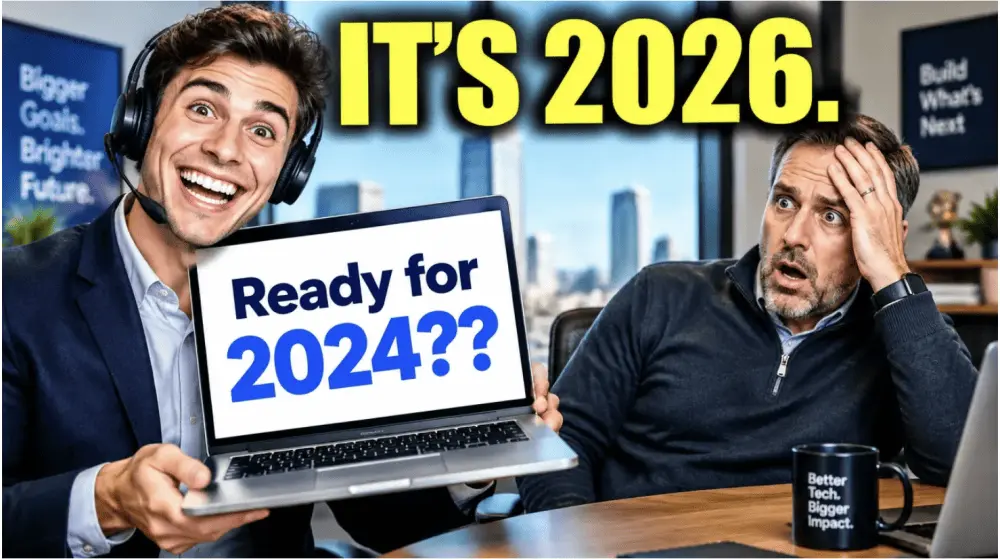
The modern B2B software sales machine is experiencing an existential friction point, characterized by a widening chasm between legacy automation tooling and the realities of modern buyer behavior. In October 2026, a striking example of this systemic breakdown came to light when a sales representative from a leading public B2B software company sent a cold outreach sequence to SaaStr AI. The email sequence—urging the recipient to evaluate automation platforms "for the remainder of 2024"—was received nearly two years past its expiration date.
When the recipient, SaaStr founder Jason Lemkin, responded with incredulity at the archaic timeline, the sales representative simply replied, "Hahaha fair enough, you got me there," making no effort to salvage the pitch or pivot the conversation. This micro-interaction is emblematic of a macro-crisis in go-to-market (GTM) operations: the over-reliance on stagnant sequences, unmonitored automation, and high-volume outbound strategies that completely ignore the fundamental context of target accounts.
As enterprise software companies scale, their sales reps are forced to shoulder massive account loads, balancing rigid quotas with the mechanical output of sequence engines. In doing so, they have stopped reading the very emails bearing their names. Meanwhile, the buy-side of the market has evolved radically. Organizations are no longer relying solely on human gatekeepers; they are deploying autonomous AI agents to screen vendors, audit pricing models, and manage tech stacks.
This investigative report examines the structural failures that allow a 2024 sales pitch to land in 2026, the operational mechanics of running outbound with a lean human-and-agent hybrid workforce, and the urgent transformation required for B2B sales organizations facing an AI-native buyer landscape.
Detailed Chronology: Anatomy of a Ghost Email
The sequence of events leading to the October 2026 incident illustrates the compounding failures of modern sales operations and enablement pipelines.
The First Touch: A Promise of Insights, Delivered Empty
Last week, a sales representative at a prominent public B2B software enterprise initiated contact with SaaStr AI via a two-touch sequence spanning 48 hours. The initial email promised "insights" on buyer intent and AI efficiency—buzzwords designed to hook executive attention. However, the body of the email contained zero substantive data or insights. Instead, it offered a generic list of the vendor’s three core product lines and immediately pivoted to a call-to-action asking if the recipient wanted to "benchmark" their software.
The Second Touch: Time Travel in the Inbox
Several days later, the follow-up email arrived, asking whether SaaStr AI was actively evaluating automation platforms "for the remainder of 2024." The closing line hammered the anachronism home: "Is this worth discussing further as you consider your end of 2024 goals?"
Driven by sheer disbelief, the recipient replied: "our 2024 goals?!!? seriously?" The representative’s response—“Hahaha fair enough, you got me there”—laid bare the profound apathy characteristic of high-volume, low-context outbound sales culture. There was no attempt to pivot, no contextual research deployed, and no real sales acumen applied. The rep simply shrugged off the failure of the system because the system itself demands volume over precision.
The Breakdown Points
For a hardcoded 2024 sequence step to actively fire in October 2026 at a major public technology corporation, multiple successive safety nets had to fail:
- The Content Creation Failure: A copywriter or sales enablement specialist hardcoded a specific year into a sequence template back in 2024.
- The Enablement & Review Failure: The sequence survived at least two annual planning cycles, multiple sales enablement audits, marketing operations reviews, and sales manager check-ins without being flagged or updated.
- The Account Assignment & Execution Failure: The stale sequence was loaded against a high-profile target account, and an Account Executive (AE) either manually triggered it or allowed it to auto-send without taking thirty seconds to review the content.
Supporting Context & Metrics: The Human-Agent Productivity Divide
The root cause of this failure is not necessarily a lack of talent among sales reps, but rather an impossible ratio of accounts to humans. An SMB or mid-market representative at a major software firm often carries hundreds of accounts simultaneously, relying heavily on a sequence tool and a rigid daily activity quota.
The Illusion of Personalization at Scale
When a sales professional is expected to generate dozens of touches a day across hundreds of accounts, reading every outgoing message becomes a mathematical impossibility. Consequently, the sequence tool becomes the de facto seller. The human element is reduced to a rubber-stamp on automated emissions, and corporate accountability dissolves. Nobody is explicitly responsible for whether the copy still makes strategic sense six months down the line, let alone two years.
Conversely, organizations embracing true AI-native workflows are redefining efficiency metrics. For instance, lean operations are proving that revenue generation no longer requires bloated outbound teams. Consider the operational footprint of SaaStr AI, which runs approximately $20 million in revenue with a core team of just 3 humans and over 20 specialized AI agents.
The Mechanics of Hybrid Outbound
In a properly architected AI-driven outbound framework, the division of labor between humans and agents is distinct:
- Contextual Comprehension: Unlike traditional sequence tools that fire blind templates, an AI agent reads the target account’s entire historical record and current digital footprint before every single send—even if it is the 400th email of the day.
- Hyper-Targeted Messaging: Instead of offering a generic menu of six disparate categories (digital marketing, marketing automation, sales acceleration, CRM, customer service, and tech stack consolidation), an AI agent can analyze specific usage data. For example, a competing CRM vendor could utilize an agent to calculate exact billing metrics: "Your CRM is about to meter every call your agents make. At 35,000 calls a day, that costs X. With our architecture, it costs Y." Such precision commands executive attention and drives high conversion rates.
- Human-in-the-Loop Strategy: Humans are removed from the mechanical drudgery of drafting and scheduling, reserving their energy for high-stakes closing conversations, complex negotiation, and strategic relationship-building.
Official Statements and Industry Insights
The paradigm shift in B2B commerce is not merely changing how sellers reach out; it is fundamentally altering how buyers evaluate and procure software. The era of the human-only gatekeeper is giving way to autonomous corporate agents.
Jason Lemkin captured this monumental transition in a widely circulated industry statement:
"The new ‘Ask Your Developer’ is Ask Your Agent.
Everyone wants us to try their AI Agents, especially in GTM.
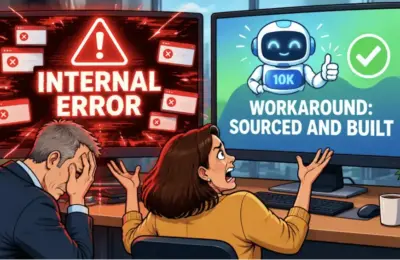
Our new rule? We’ll try it if 10K, our AI VP Revenue, wants to. It’s up to 10K now."
This shift is quantifiable. Autonomous AI agents have rapidly ascended to become a top-five source of web traffic for platforms like SaaStr. These agents are no longer passive web scrapers; they are active procurement units.
For example, internal deployment data shows that SaaStr’s internal AI procurement agent, designated "10K," routinely conducts deep vendor evaluations without human prompting. Recently, 10K shortlisted an enterprise vendor, analyzed their financial models, and dropped them from consideration within a 12-hour window. The agent identified structural red flags: premium pricing unsupported by conversion data, rigid multi-month contractual minimums, and artificial scarcity framing. The agent seamlessly pivoted to alternative solutions without human intervention and independently consolidated internal creative tooling onto a single platform, notifying human leadership only after the migration was complete.
Future Outlook: The Death of the Stale Sequence
As we look toward the horizon of B2B go-to-market strategies, the collision between outdated human processes and autonomous buyers presents a stark ultimatum for software vendors: adapt or become invisible.
The Impending Collision in the Inbox
Within the next year, receiving an unpersonalized, chronologically impossible cold email—such as pitching 2024 goals in a 2026 landscape—will no longer be merely an annoyance to a human executive. It will be intercepted and filtered out entirely by inbound AI agents acting as executive gatekeepers and inbox triage units.
When a stale sequence lands in an AI-managed inbox, the agent will instantly scan the text, identify the incorrect year, notice the complete lack of reference to the company’s actual tech stack, and archive it silently. To the human sales representative, the metric will simply register as another silent non-response in their dashboard report, blinding them to the operational rot within their sequence library.
Pitfalls of Unsupervised AI SDRs
It is crucial to note that simply deploying off-the-shelf AI Sales Development Representatives (SDRs) without proper data architecture does not solve the problem. An AI agent supplied with nothing more than a contact’s name and title will generate emails just as generic as human-written templates—only at 50 times the volume. Sustainable outbound requires building custom ABM (Account-Based Marketing) tooling grounded in proprietary data rather than relying solely on generic vendor enrichment databases.
Four Immediate Remediation Steps for Sales Leaders
If sales executives wish to salvage their outbound pipelines against this backdrop of automation and intelligent buyers, they must institute radical operational changes immediately:
- Audit All Active Sequences: Institute a mandatory quarterly review of every automated sequence template to purge hardcoded dates, outdated product positioning, and lazy value propositions.
- Implement Pre-Send Context Checks: Require outbound tooling to verify target account technographics and real-time operational status before any automated touchpoint is released.
- Transition from Volume to Precision: Abandon spray-and-pray metrics that incentivize reps to push hundreds of unread touches daily; instead, reward contextual relevance and account-specific insights.
- Deploy Agentic Review Loops: Integrate AI oversight layers that screen outgoing copy for contextual accuracy, ensuring that sales outreach matches the technological reality of the buyer’s ecosystem.
Conclusion
The irony of a GTM software vendor utilizing a stale, unreviewed 2024 outreach sequence to pitch a modern technology executive in 2026 serves as the ultimate cautionary tale. The gap between legacy sales machinery and AI-native buyers is widening daily. Companies that fail to modernize their outbound infrastructure—transitioning from blind human repetition to context-aware, agent-driven engagement—will find their pitches permanently archived by the autonomous agents of tomorrow.