Executive Overview
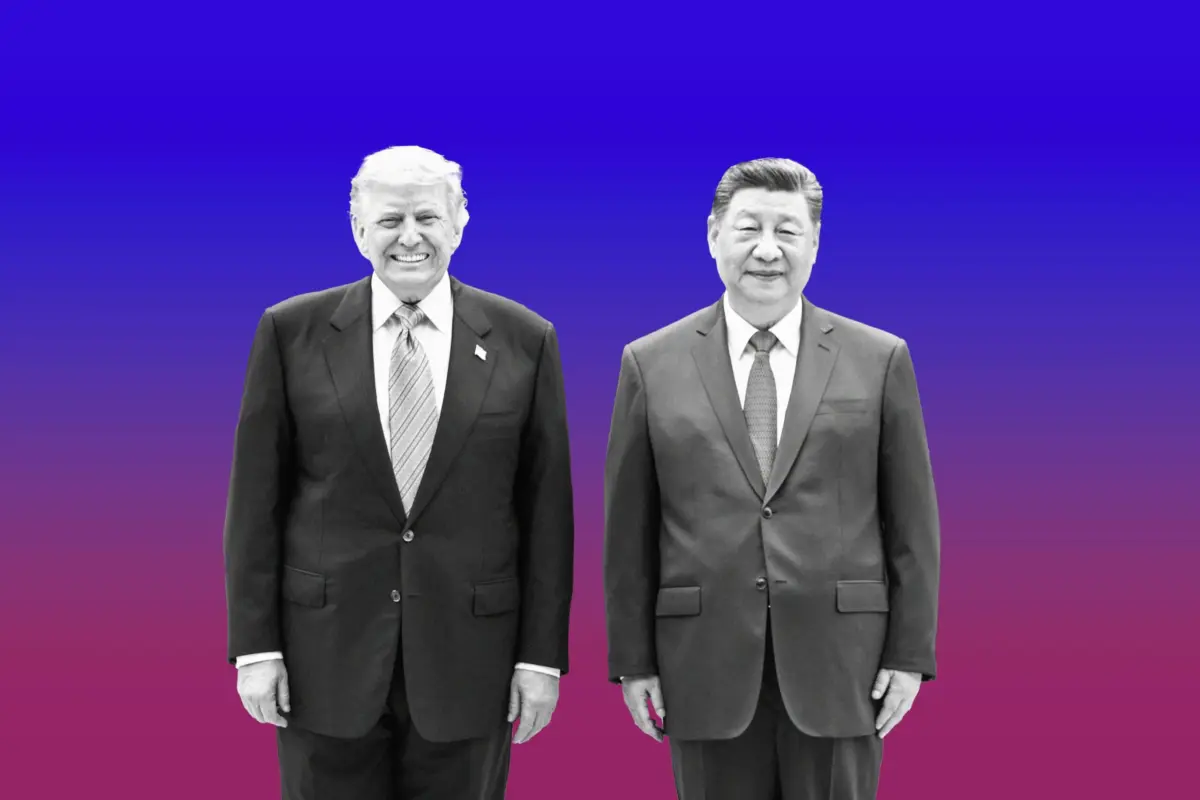
Artificial intelligence has rapidly transitioned from an academic pursuit and a speculative trope of science fiction into the definitive geopolitical battleground of the twenty-first century. For the United States and the People’s Republic of China, AI is viewed through a dual-lens prism: it is simultaneously hailed as an unprecedented economic powerhouse capable of driving decades of productivity growth, scientific breakthroughs, and industrial transformation, and feared as a potential harbinger of existential doom—capable of automating warfare, destabilizing global financial systems, and upending the international balance of power.
As these two superpowers race to secure technological supremacy, a critical question emerges: Can the world’s foremost economic and military rivals find a pathway toward cooperation sufficient to harness the immense benefits of artificial intelligence while averting its apocalyptic risks?
This inquiry forms the core of a recent episode of What Next: TBD, featuring insights from Scott Singer, a fellow and co-director of the China AI Initiative at the Carnegie Endowment for International Peace. Singer’s analysis sheds light on the complex, overlapping, and frequently contradictory ways Washington and Beijing conceptualize, regulate, and deploy generative models and machine learning infrastructures.
While the prevailing geopolitical narrative often frames U.S.–China relations in terms of a zero-sum Cold War tech decoupling, a closer examination reveals fascinating points of philosophical convergence. Both nations recognize that frontier AI systems present severe safety risks, yet both are deeply incentivized by national prestige, economic dominance, and military utility to push the boundaries of capability without adequate guardrails. This comprehensive report unpacks the structural differences and similarities in how the U.S. and China approach artificial intelligence, examines the institutional mechanisms driving their rivalry, and assesses the feasibility of bilateral or multilateral risk mitigation in an era of deepening distrust.
Detailed Chronology: The Escalation of the Transpacific AI Rivalry
To understand the current friction points between Washington and Beijing, it is necessary to trace the historical and regulatory trajectory that transformed commercial machine learning into a matter of high national security.
1. The Awakening and Early Divergence (2010–2016)
- 2012: The breakthrough of deep learning architectures, catalyzed by AlexNet winning the ImageNet competition, signals a renaissance in neural networks. U.S. technology giants (Google, Microsoft, Meta) begin heavily investing in foundational AI research.
- 2015: Beijing releases its ambitious "Made in China 2025" strategy, which identifies advanced information technology and robotics as core pillars for national modernization.
- 2017: The Chinese State Council publishes the New Generation Artificial Intelligence Development Plan (AIDP), formally establishing a state-backed roadmap for China to become the "primary AI innovation center" of the world by 2030. This blueprint merges private sector dynamism with top-down state guidance, setting off alarm bells in Western security circles.
2. The Weaponization of the Supply Chain (2018–2022)
- October 2018: The U.S. government, under the Trump administration, begins expanding export controls on critical technologies, signaling a shift toward protecting the domestic semiconductor ecosystem.
- May 2019: Huawei is placed on the U.S. Department of Commerce’s Entity List, severely restricting its access to American hardware, software, and semiconductor design tools. This marks the kinetic opening of the tech cold war.
- October 2022: The Biden administration implements sweeping, unprecedented export controls designed to choke off China’s access to advanced logic chips, semiconductor manufacturing equipment, and U.S.-origin talent required to train frontier AI models. This regulatory sledgehammer redefines the geopolitical landscape, making it clear that Washington views compute capacity as a strategic military asset akin to enriched uranium.
3. The Generative Boom and Regulatory Convergence (2023–Present)
- November 2023: OpenAI releases ChatGPT and subsequent multimodal models, igniting a global gold rush. China’s domestic tech ecosystem—featuring companies like Baidu, Alibaba, Tencent, and ambitious startups like Moonshot AI and Zhipu—scrambles to release competitive foundational models.
- August 2023: The Cyberspace Administration of China (CAC) implements its Interim Measures for the Management of Generative Artificial Intelligence Services. Unlike the fragmented U.S. regulatory landscape, China enacts some of the world’s first comprehensive binding rules governing generative models, requiring content to align with "core socialist values" while simultaneously attempting to foster commercial growth.
- Late 2023–2024: High-level bilateral dialogues, including discussions at the Woodside summit between Presidents Joe Biden and Xi Jinping, open tentative channels for AI safety talks. However, foundational strategic distrust persists, leaving both nations locked in a high-stakes dilemma where cooperation is viewed as vital yet politically perilous.
Supporting Context & Metrics: The Structural Architecture of Power
To fully appreciate the U.S.–China AI dynamic, one must examine the underlying structural realities—ranging from compute infrastructure to talent concentration and ideological frameworks.
The Compute Bottleneck and Semiconductor Geopolitics
At the heart of the AI race lies compute: the specialized GPUs (primarily manufactured by NVIDIA and AMD) and tensor processing units required to train and run massive large language models (LLMs).
- U.S. Advantage: The United States maintains a decisive chokehold on the foundational layers of the semiconductor stack. American firms design the most advanced architectures (NVIDIA H100 and B200 chips), while key allies like Taiwan (TSMC) and the Netherlands (ASML) control fabrication and lithography equipment.
- Chinese Adaptation: Despite sweeping U.S. export controls, Chinese entities have demonstrated remarkable resilience. Through architectural innovations, stockpiled hardware, utilization of older-node chips (such as NVIDIA’s compliant H20), and aggressive domestic development of indigenous processors like Huawei’s Ascend 910B, China continues to narrow the training efficiency gap, even if it remains generationally behind in raw mass-production capability.
Ideological Frameworks: Innovation vs. Control
While Western companies primarily frame AI risks around existential threats, bias, copyright infringement, and disinformation, the Chinese Communist Party views AI through the lens of social stability, ideological security, and state control.
- The Beijing Model: China’s regulatory framework mandates that generative AI outputs must not subvert state power, overthrow the socialist system, or incite separatist activities. The state actively shapes model training data to ensure political compliance, while simultaneously deploying AI for extensive domestic surveillance and public security applications.
- The Washington Model: The United States relies on a decentralized, market-driven ecosystem where private capital dictates the pace of innovation. Federal interventions have historically been light-touch, though recent executive orders and proposed legislative acts seek to establish voluntary safety standards, red-teaming protocols, and oversight mechanisms for dual-use foundation models.
Official Statements and Expert Perspectives
The dichotomy between competitive ambition and cooperative necessity was a central theme of the discussion on What Next: TBD, featuring Scott Singer of the Carnegie Endowment for International Peace.
The Dual-Use Dilemma
Singer highlighted the inherent paradox of artificial intelligence as a technology that resists traditional arms control frameworks. Unlike nuclear warheads or chemical agents, which have clear civil-military demarcations, foundation models are inherently dual-use. The same neural network architecture used to discover life-saving pharmaceutical compounds can theoretically be weaponized to engineer synthetic pathogens or optimize autonomous cyber-attacks.
"Artificial intelligence is pitched as a potential economic powerhouse—and also a potential bringer of the apocalypse. Can two economic and military rivals cooperate enough to fulfill the former (and former only)?"
— Scott Singer, Carnegie Endowment for International Peace, speaking on What Next: TBD
The Challenge of Bilateral Trust
According to Singer, structural mistrust complicates even the most basic safety dialogues between Washington and Beijing. In the nuclear era, the United States and the Soviet Union established mutual deterrence theories and arms control verification treaties because both sides recognized the absolute finality of atomic annihilation.
In contrast, the velocity of AI development makes verification nearly impossible. A laboratory in Shenzhen or Silicon Valley can train a frontier model in secret without requiring massive physical infrastructure like uranium enrichment plants or missile silos. Consequently, U.S. officials worry that any collaborative framework with Beijing on AI safety could be exploited by China for espionage or intellectual property theft, while Chinese counterparts suspect that American safety rhetoric is merely a protectionist tool designed to maintain a permanent technological hegemony.
Future Outlook: Scenarios for the Next Decade
As both superpowers pour hundreds of billions of dollars into artificial intelligence, four distinct scenarios define the potential trajectory of the U.S.–China technological relationship over the coming decade.
Scenario 1: The Bipolar Tech Splinter ("The Splinternet 2.0")
In this scenario, bilateral trust breaks down entirely. Export controls expand into a total technological embargo. The world splits into two distinct technological blocs: a Western ecosystem relying on U.S. hardware and open/closed-source models adhering to democratic norms, and a Sinocentric ecosystem operating on indigenous Chinese silicon, alternative operating systems, and state-vetted AI models. Global supply chains fracture permanently, resulting in duplicated research, higher costs, and a fragmented digital economy.
Scenario 2: Unregulated Hyper-Competition ("The Peloponnesian Trap")
Driven by intense security dilemmas, both Washington and Beijing abandon safety considerations in a desperate bid to achieve military and economic dominance first. Corporations and defense agencies bypass red-teaming and alignment protocols to deploy autonomous weapon systems, high-speed algorithmic trading platforms, and unverified decision-support tools. This scenario maximizes the probability of catastrophic accidents, flash crashes, or unintended military escalations triggered by runaway algorithmic behavior.
Scenario 3: Pragmatic Compartmentalization (The "Guardrails" Model)
Recognizing the mutual existential threat of rogue superintelligence or automated warfare, the U.S. and China establish pragmatic, narrow bilateral channels. Much like Cold War-era incidents agreements at sea, both nations agree to basic red lines—such as keeping human-in-the-loop controls mandatory for nuclear command-and-control systems and autonomous kinetic strikes. While commercial and ideological competition remains fierce, technical safety experts from both sides engage in periodic, behind-the-scenes dialogues to manage systemic tail risks.
Scenario 4: Multilateral Institutionalism
A global governance coalition—anchored by the United Nations or a newly forged international agency—succeeds in establishing binding global standards for frontier AI safety, compute tracking, and algorithmic auditing. Both the U.S. and China participate, driven by domestic public pressure and the undeniable reality of global systemic risks. While difficult to achieve given current geopolitical tensions, this remains the gold standard for long-term human survival.
Conclusion
The artificial intelligence revolution represents the ultimate test of statecraft for the United States and China. As What Next: TBD and experts like Scott Singer underscore, the stakes could not be higher. The dual nature of AI—its capacity to generate unimaginable economic prosperity alongside apocalyptic instability—demands a sophisticated policy response that transcends naive techno-optimism and paranoid zero-sum nationalism.
Whether Washington and Beijing can transcend their strategic rivalry to establish meaningful safety guardrails will shape the trajectory of human civilization for generations. In the absence of cooperation, the world risks stumbling into a technological arms race where the only victor is catastrophe. The imperative for policymakers, technologists, and global citizens is clear: to balance competitive drive with rigorous, ironclad safety cooperation before the algorithms dictate terms of their own.