Date: October 2, 2026
Author: Catie Owen, Regional Content & Insights Lead
Estimated Read Time: 6 minutes
Executive Overview
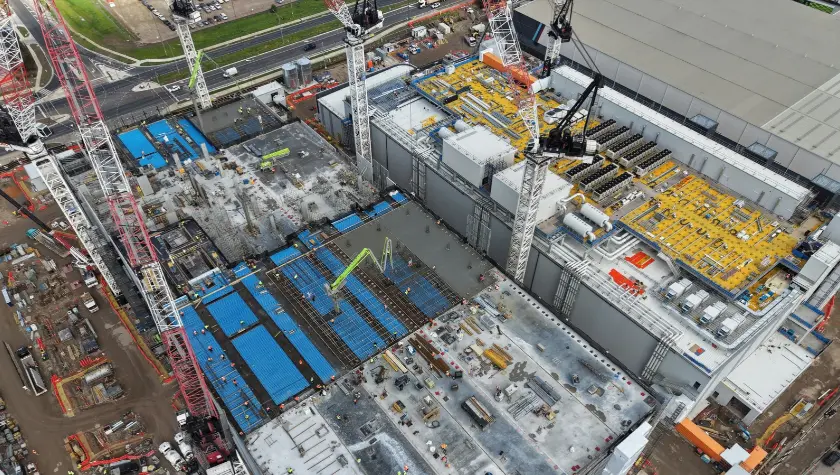
The global race to build out infrastructure capable of supporting the artificial intelligence (AI) boom has collided with rural preservation efforts in southwest Scotland. Developer CX Tech has formally submitted ambitious proposals for a massive 1-gigawatt (GW) data centre campus at Chapelcross in Dumfries and Galloway—the site of a former nuclear power station.
Carrying a staggering price tag of £16.5 billion (approximately US$21.8 billion), the project is being heralded by its backers as a historic catalyst for regional employment and a "once-in-a-generation" opportunity to position Scotland at the forefront of the European digital economy. According to the Scottish Greens, if realized as planned, the development will rank among the largest data centre installations globally by power capacity.
Yet, the monumental scale of the project has triggered immediate and fierce pushback. Local residents, environmental advocacy groups, and regional policymakers are mobilizing against the development. Concerns span a diverse array of issues, ranging from the immediate loss of agricultural greenfield land and local woodland to wider systemic worries regarding energy security, potential electricity bill spikes, and the massive carbon footprint associated with construction and ongoing operations.
Arriving on the heels of newly enacted Scottish government regulations mandating strict oversight for large-scale digital infrastructure, the Chapelcross proposal is poised to serve as a bellwether for the entire European data centre sector. It highlights a central tension defining the modern tech landscape: the insatiable appetite for AI computational power versus the real-world environmental and social costs borne by local communities.
Detailed Chronology & Site History: From Nuclear Energy to Digital Power
To understand the magnitude of the Chapelcross proposal, one must look at the complex history of the land it seeks to occupy. Located near Annan in Dumfries and Galloway, Chapelcross was historically one of the United Kingdom’s pioneering nuclear energy installations.
The Nuclear Era (1959–2004)
- 1959: Chapelcross officially begins generating electricity, operating as a four-reactor Magnox nuclear power station complemented by eight 30MW turbines. For decades, it stands as a cornerstone of regional industrial employment and national energy production.
- 2004: After 45 years of continuous service, the power station ceases electricity generation, entering a long-term, multi-decade phase-down.
- 2007: In a striking visual shift for the region, the station’s four iconic cooling towers are systematically demolished, permanently altering the local landscape.
- 2012: Decommissioning projections indicate that complete site clearance and final restoration will not be achieved until somewhere between 2089 and 2095—a testament to the enduring, complex legacy of nuclear infrastructure.
The Pivot to Digital Infrastructure
Recognizing the intrinsic value of legacy energy sites—specifically their robust, pre-existing high-capacity grid connections, expansive footprints, and strategic locations—CX Tech identified Chapelcross as an ideal candidate for industrial repurposing.
The developer’s newly unveiled blueprint envisions transforming the brownfield nuclear footprint into a "net zero technology campus." The master plan incorporates:
- Eight distinct, hyperscale-grade data centres.
- Supporting critical digital and power infrastructure.
- A dedicated training centre aimed at upskilling the local workforce for tech-sector careers.
According to CX Tech, the construction phase alone is projected to generate up to 750 jobs, while the operational campus would sustain roughly 540 permanent, high-tech positions.
Supporting Context & Metrics: The AI Boom Meets the Grid
The Chapelcross initiative is not an isolated phenomenon; rather, it reflects a sweeping pan-European trend. As generative AI, cloud computing, and automated data processing scale exponentially, technology firms and infrastructure developers are scouring the continent for sites capable of sustaining massive power loads.
Why Former Industrial Sites Are Prime Targets
Data centres of the AI era require unprecedented amounts of uninterrupted electricity. Traditional urban and suburban locations frequently lack the electrical substation capacity or available land to support multi-hundred-megawatt or gigawatt-scale facilities. Consequently, developers are increasingly targeting former power stations, heavy industrial plants, and decommissioned military installations. These sites offer:
- Pre-existing Transmission Lines: Direct access to high-voltage grid connections that would otherwise take years to approve and construct.
- Spatial Scale: Expansive acreage necessary for massive server halls, cooling yards, and on-site renewable energy integration.
- Industrial Zoning: Prior history of heavy industrial use, which theoretically streamlines planning hurdles compared to pristine wilderness.
The Scale of Chapelcross in Global Context
A 1GW data centre campus represents an astronomical concentration of power. To put it into perspective, 1 gigawatt is roughly equivalent to the baseline energy output of a medium-to-large traditional power plant. The proposed campus would dwarf almost every operational data centre currently functioning in Europe, placing it in an elite, controversial tier of global digital infrastructure projects.
Official Statements and Stakeholder Perspectives
As the planning application moves through official channels, a stark ideological divide has emerged between project proponents and community stakeholders.
Industry Optimism and Economic Vision
For CX Tech, the project represents an indispensable bridge between Scotland’s industrial past and its technological future.

"This is a once-in-a-generation opportunity for Dumfries and Galloway and for Scotland as a whole," stated Graeme Anderson, Chief Executive of CX Tech. "Chapelcross allows us to uniquely combine abundant renewable energy resources, world-class digital infrastructure, and sustainable employment, returning a nationally significant industrial site to highly productive modern use."
Proponents argue that without such massive investments, Scotland risks falling behind in the global AI race, losing out on high-value digital jobs, tax revenues, and technological sovereignty to other European nations aggressively courting data centre capital.
Local Backlash and Community Concerns
Conversely, residents living in the shadow of the proposed site view the initiative with deep apprehension. A grassroots local campaign opposing the development has rapidly gained momentum, securing roughly 1,000 signatures in its initial phases.
Local critics point to several major hazards:
- Grid Strain and Consumer Costs: Residents worry that drawing 1GW of power from the local grid will destabilize regional energy transmission, exacerbate capacity constraints, and ultimately drive up retail electricity prices for households already grappling with cost-of-living pressures.
- Agricultural and Environmental Encroachment: Despite being framed as a brownfield redevelopment, opponents and environmental groups emphasize that portions of the vast campus plan spill over into greenfield land, threatening local woodlands and agricultural acreage.
- Visual and Aesthetic Disruption: Transforming a rural Scottish landscape into a sprawling, hyper-industrialized technology complex threatens the scenic integrity and tourism-dependent economy of Dumfries and Galloway.
Environmental Scrutiny
Institutional environmental bodies have amplified these local anxieties. The Action to Protect Rural Scotland (APRS) has publicly questioned whether the localized economic windfalls can justify the steep environmental price tag.
APRS has raised pointed concerns over the project’s aggregate carbon footprint, construction-related waste generation, and profound landscape alterations. Crucially, APRS highlighted the unprecedented nature of the facility, noting that its sheer power capacity exceeds any operational data centre currently functioning anywhere on Earth, making its environmental impact largely unproven at this scale.
Regulatory Landscape: A New Test for Scottish Policymakers
The Chapelcross controversy arrives precisely as the Scottish government moves to exert tighter control over the runaway expansion of the digital infrastructure sector.
Recognizing that the localized benefits of data centres often mask systemic risks to national energy strategies, policymakers have rapidly overhauled the regulatory framework:
- The 50MW Notification Rule (August): The Scottish government instituted a mandatory policy requiring local planning authorities to officially notify national ministers of any incoming data centre application exceeding 50MW in capacity. This ensures central oversight of cumulative energy grid implications.
- Mandatory Environmental Impact Assessments (September): Just weeks before the Chapelcross submission, Scotland tightened the screws further by mandating comprehensive Environmental Impact Assessments (EIAs) for all new data centre developments surpassing the 50MW threshold. This directive compels developers to thoroughly evaluate and defend their projected energy consumption, carbon emissions, water usage, and community disruptions before a single shovel hits the dirt.
Given its unprecedented scale, the Chapelcross proposal is universally viewed by legal and planning experts as the ultimate test case for these rigorous new policies.
Future Outlook: Implications Beyond Dumfries and Galloway
The battle lines drawn at Chapelcross offer a vivid preview of the challenges awaiting the digital infrastructure sector across the United Kingdom and wider Europe.
As artificial intelligence models grow exponentially more complex, the demand for hyper-scale computing capacity will only intensify. However, the days of frictionless, rubber-stamped approvals for massive data centres appear to be coming to a definitive close.
The unfolding saga at the former nuclear station demonstrates that future investments will face intense, multi-layered scrutiny. Investors and developers can no longer rely solely on the economic allure of technological leadership; they must actively secure social license by providing transparent, ironclad guarantees regarding environmental sustainability, community coexistence, and equitable energy distribution.
Whether CX Tech can successfully navigate the storm of local opposition and stringent regulatory hurdles at Chapelcross will establish a vital precedent. The outcome will resonate far beyond the borders of Dumfries and Galloway, signaling to the global tech industry precisely how high the bar has been raised for the next generation of AI infrastructure.