Executive Overview
As the tech industry watches the ongoing transformation of the platform formerly known as Twitter under Elon Musk’s leadership, a fundamental pillar of digital journalism is quietly crumbling. Beginning April 1, Twitter initiated the removal of legacy verified blue checkmarks from high-profile accounts, imposing a strict binary choice on global media organizations and their journalists: subscribe to Twitter Blue for $8 a month, shell out a steep $1,000 monthly fee for the "Verified Organizations" enterprise tier, or watch decades of platform-vouched authenticity evaporate overnight.
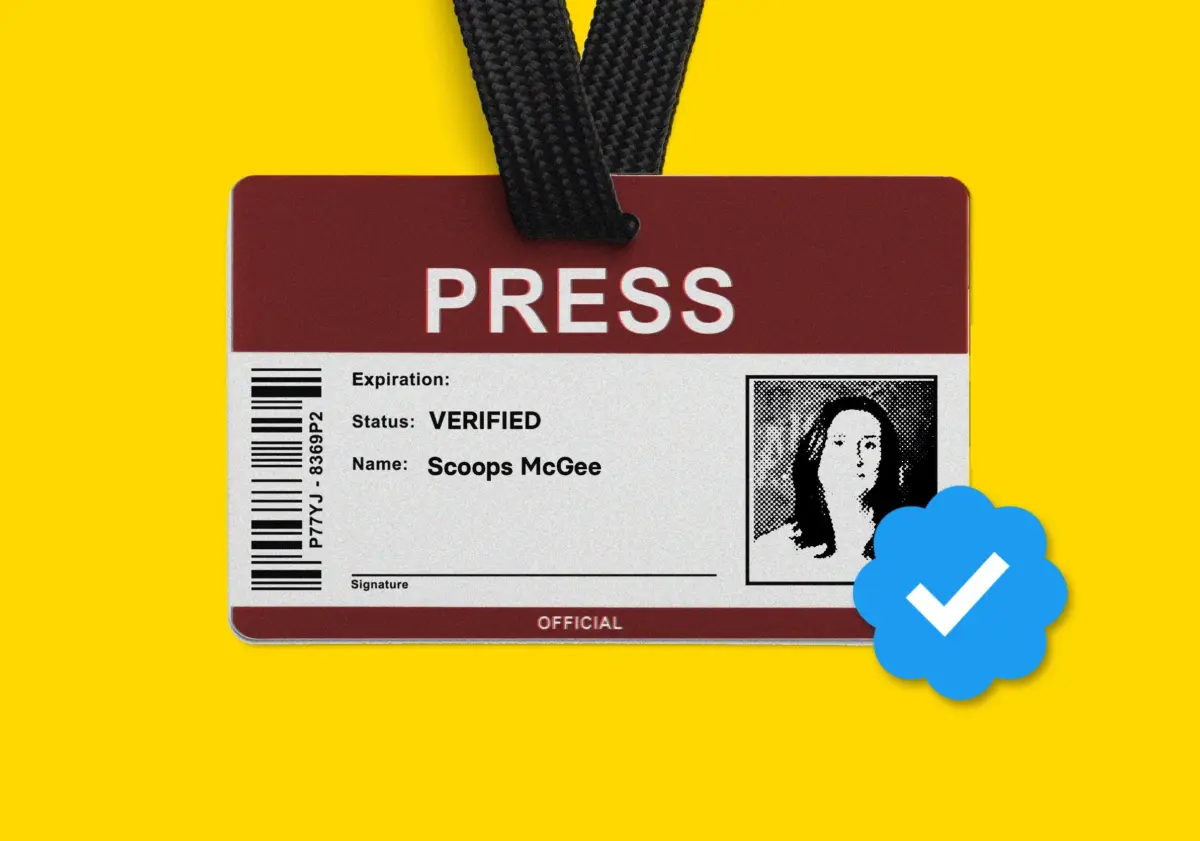
This shift marks the definitive end of an era where the blue checkmark served as a digital badge of editorial integrity, verifying that an account belonged to a bonafide reporter, public official, or recognized expert. Today, the checkmark signals something entirely different: that the account holder pays a subscription fee.
In response, major media ecosystems are splitting into distinct factions. Industry titans—including The New York Times, The Washington Post, The Los Angeles Times, Politico, Insider, and BuzzFeed—have drawn a hard line, announcing they will neither pay the corporate ransom nor subsidize individual subscriptions for their reporting staff. Conversely, a handful of digital-first outlets, independent newsletters, and niche publications are calculating that the algorithmic distribution perks tied to paid subscriptions outweigh the reputational optics.
This comprehensive report examines how newsrooms across the journalistic spectrum are reacting to Twitter’s overhaul, the financial and strategic dilemmas facing media executives, and what the death of legacy verification means for the future of digital news distribution, public trust, and online safety.
Detailed Chronology: The Road to the Paywalled Checkmark
To understand the current standoff between media boardrooms and Twitter’s executive suites, one must trace the rapid dismantling of the platform’s traditional trust-and-safety apparatus.
The Legacy Verification System
For over a decade, Twitter’s verified badge was a coveted, non-transferable asset. Handed down through an internal vetting process, the blue checkmark was designed to combat widespread impersonation of public figures, politicians, athletes, and journalists. It did not imply a political endorsement or an institutional stamp of approval on a user’s views; rather, it was a technical safeguard confirming identity: This person is who they say they are. For journalists breaking news in real-time, the checkmark was an indispensable tool for sourcing verified information and separating credible reporting from viral misinformation.
The Musk Takeover and Twitter Blue
Following Elon Musk’s acquisition of the platform in late 2022, the billionaire entrepreneur moved quickly to restructure Twitter’s business model away from heavy reliance on advertising toward a consumer-subscription model. Musk frequently criticized the legacy verification system as a "lords and peasants" structure, vowing to democratize the platform.
The vehicle for this change was "Twitter Blue," a revamped subscription tier priced at $8 per month for web users (and higher for mobile app stores). Initially rushed out, paused due to a wave of sophisticated impersonation scams, and subsequently relaunched, Twitter Blue tied the iconic blue checkmark directly to financial payment rather than identity verification.
The April 1 Deadline and Enterprise Tiers
As the platform prepared to sunset legacy checkmarks entirely, Twitter introduced corporate tiers aimed at monetization. The flagship offering—dubbed "Verified Organizations"—was priced at a staggering $1,000 per month, plus an additional $50 monthly fee for every affiliated sub-account. In exchange, enterprises received a gold checkmark (for organizations) or retained blue checkmarks for a designated batch of five employees, alongside a tiny company logo displayed adjacent to the user’s handle.
For cash-strapped newsrooms grappling with declining digital ad revenues, print-to-digital transitions, and successive rounds of industry layoffs, the price tag was immediately recognized as an unjustified line item. As the April 1 deadline loomed, newsroom leaders found themselves locked in urgent internal debates over whether the platform’s utility justified dipping into corporate budgets.
Supporting Context & Metrics: The Algorithmic Dilemma
While media executives initially framed the debate around ethics and brand identity, the calculus quickly shifted to a much harsher economic reality: algorithmic visibility.
The "For You" Feed and Distribution Advantages
Under Musk’s administration, Twitter overhauled its timeline mechanics. The platform heavily prioritized the algorithmic "For You" feed, shifting away from the chronological "Following" feed. Crucially, algorithmic distribution rules were adjusted to heavily favor paid Twitter Blue subscribers and accounts explicitly followed by the user.
For digital media brands, whose business models rely heavily on click-through rates, referral traffic, and viral distribution, this shift created a profound dilemma. Independent journalists and smaller digital outlets quickly realized that opting out of Twitter Blue could mean severe algorithmic suppression.
- The Indie Perspective: For independent creators and substack writers, the $8 monthly fee is viewed purely as a cost-of-doing-business distribution tax. Alex Kantrowitz, former BuzzFeed News staffer and author of the Big Technology newsletter, voiced a pragmatic view shared by many independent operators: "I don’t care about the blue checkmark, which might be a liability at this point. But getting added distribution in the For You tab is worth it for me at $8/month, given that distribution is the lifeblood of smaller media brands."
- The Institutional Calculus: Conversely, legacy institutions commanding millions of organic followers felt secure enough in their standalone brand equity to withstand potential algorithmic throttling.
The Financial Burden on Large Newsrooms
For a major news outlet employing hundreds of journalists—many of whom rely on Twitter as their primary reporting and crowdsourcing desk—paying individual subscriptions or enterprise packages represents a massive financial commitment.
Consider a mid-to-large newsroom with 300 editorial staffers:
- Individual subscriptions at $8/month amount to $2,400 per month (nearly $29,000 annually).
- Enterprise packages at $1,000/month for a handful of accounts, plus $50 per additional staffer, scale into tens of thousands of dollars per year with very little tangible return on investment.
Faced with these figures, executive editors across the board questioned whether paying tech platforms for basic user utility sets a dangerous financial precedent.
Official Statements: How the Industry Reacted
BuzzFeed News reached out to over two dozen major news organizations ahead of the transition. The responses illustrate a deeply fractured media landscape, divided between institutional defiance and pragmatic compliance.
The Institutional Holdouts: "We Will Not Pay"
The overwhelming consensus among elite legacy outlets was a flat refusal to participate in the monetization of verification.
- The New York Times: Charlie Stadtlander, director of external communications, stated clearly: "We aren’t planning to pay the monthly fee for check mark status of our institutional Twitter accounts. We also will not reimburse reporters for Twitter Blue except in rare instances where this status would be essential for reporting purposes." True to their word, when the Times experienced public friction regarding its institutional status, the platform removed its checkmark entirely without corporate capitulation.
- The Washington Post: A corporate spokesperson adopted an equally firm stance: "The Washington Post will not pay for Twitter Blue service as an institution or on behalf of our journalists. It’s evident that verified checkmarks no longer represent authority and expertise."
- The Los Angeles Times: Managing editor Sara Yasin sent an internal memo to the newsroom outlining the publication’s decision not to fund subscriptions. Yasin noted that verification "no longer establishes authority or credibility, instead it will only mean that someone has paid for a Twitter Blue subscription," adding that while Twitter remains a useful newsgathering tool, it has become fundamentally unreliable.
- Insider: Editor-in-chief Nicholas Carlson offered a concise critique of the platform’s eroded value proposition: "The value of a blue checkmark was that it said the person was who they said they are. Now a blue checkmark just says they are a Twitter Blue subscriber. That doesn’t help Twitter users or our readers."
- Politico: In a memo shared with the newsroom by senior editor of standards and ethics Anita Kumar, the outlet warned staffers that checkmarks would henceforth denote payment rather than journalistic credentials. "Politico will not pay for you to subscribe to Twitter Blue. You may, of course, enroll at your own expense."
- BuzzFeed Inc.: Karolina Waclawiak, editor-in-chief of BuzzFeed News, summarized the industry-wide skepticism regarding resource allocation: "As a company, we do not think it’s a wise use of resources to pay for individuals to retain a blue checkmark that is no different from anyone else’s — an amateur medical expert, Elon stan, or otherwise — who is simply willing to pay the fee for a blue check."
The Pragmatists and Niche Outlets: Weighing Utility Over Optics
While mainstream prestige press uniformly rejected the fees, specialized, digital-first, and opinion-driven publications approached the transition through a lens of tactical pragmatism.
- Semafor: Co-founder Ben Smith took a market-driven approach, confirming that his publication would permit reporters to expense Twitter Blue if it yielded measurable distribution benefits. "I just see it as a totally practical issue in that sense," Smith explained.
- The Daily Caller: Editor-in-chief Geoffrey Ingersoll admitted that while he personally had no desire to maintain a checkmark—noting it had lost utility for tracking media consensus—his organization would likely trial the enterprise tier. The outlet planned to review traffic and engagement analytics over several months to determine if the corporate investment generated a genuine return.
- Entertainment and Niche Publications: Unnamed newsroom leaders in the entertainment sector revealed unique operational pressures. For certain digital tabloids and pop-culture outlets, paying for verification served as a defensive shield against persistent impersonation scams—fraudsters frequently posing as reporters to solicit money or fake interview fees from aspiring artists and musicians.
Future Outlook: The Post-Verification Media Ecosystem
As the dust settles on the rollout of paid verification, the relationship between journalism and social media has undergone a permanent structural shift. The implications of this transition extend far beyond the aesthetic presence of a little blue badge.
1. The Erosion of Public Trust and the Rise of Impersonation
Without cryptographic certainty of identity backed by rigorous third-party verification, the barrier to entry for malicious actors has dropped to zero. Security analysts and newsroom ethics boards have long warned that a pay-to-play verification system invites sophisticated disinformation campaigns, fake breaking news alerts, and targeted financial scams. When a verified badge can be purchased by anyone willing to spend a few dollars, the public’s ability to distinguish between a Pulitzer Prize-winning investigative reporter and an anonymous troll diminishes rapidly.
2. Diversification of News Distribution
The friction introduced by Twitter’s policy changes has accelerated a trend already underway: newsrooms diversifying away from a single reliance on Twitter for traffic acquisition. Publishers are increasingly doubling down on alternative discovery channels, including:
- First-Party Platforms: Direct-to-consumer newsletters (Substack, Beehiiv), proprietary mobile apps, and push notifications.
- Emerging Social Networks: Decentralized protocols (Mastodon, Bluesky) and alternative text-based platforms competing to capture displaced media audiences.
- Search and Discovery: Reinvesting in traditional SEO and Google News optimization to secure stable, predictable referral traffic.
3. The Changing Identity of the Modern Journalist
Journalists are also reassessing their personal digital footprints. For decades, a reporter’s personal Twitter account served as a portable portfolio, digital business card, and vital reporting tool rolled into one. With platform dynamics shifting, individual journalists are learning to build brand equity independent of platform-bestowed badges. Whether through personal newsletters, podcasting, or multi-platform syndication, the modern reporter is learning not to build their house on rented land.
Conclusion
Twitter’s transition to a subscription-based verification model represents a profound milestone in the history of digital media. By converting a foundational trust mechanism into a consumer product, the platform has forced news organizations to re-evaluate the cost-benefit analysis of social media engagement.
While legacy giants like The New York Times, The Washington Post, and Politico have successfully called the platform’s bluff—refusing to pay for a badge that no longer signifies authority—smaller digital operators and independent creators continue to navigate a complex trade-off between editorial principle and algorithmic survival. Ultimately, the great unchecking serves as a stark reminder to the media industry: in the digital age, platform rules can change overnight, and true authority must stem from the quality of the reporting, not the color of a badge.