Executive Overview
When Havn burst onto the hardware scene with its debut chassis, the HS 420, it turned heads by seamlessly blending retro-futuristic aesthetics with a layout meticulously engineered to hide the visual clutter of modern PC building. Earning a stellar 90% score, the HS 420 proved that a panoramic glass case could be both stunning and practical. However, its massive footprint meant it wasn’t the ideal fit for every desk or layout.
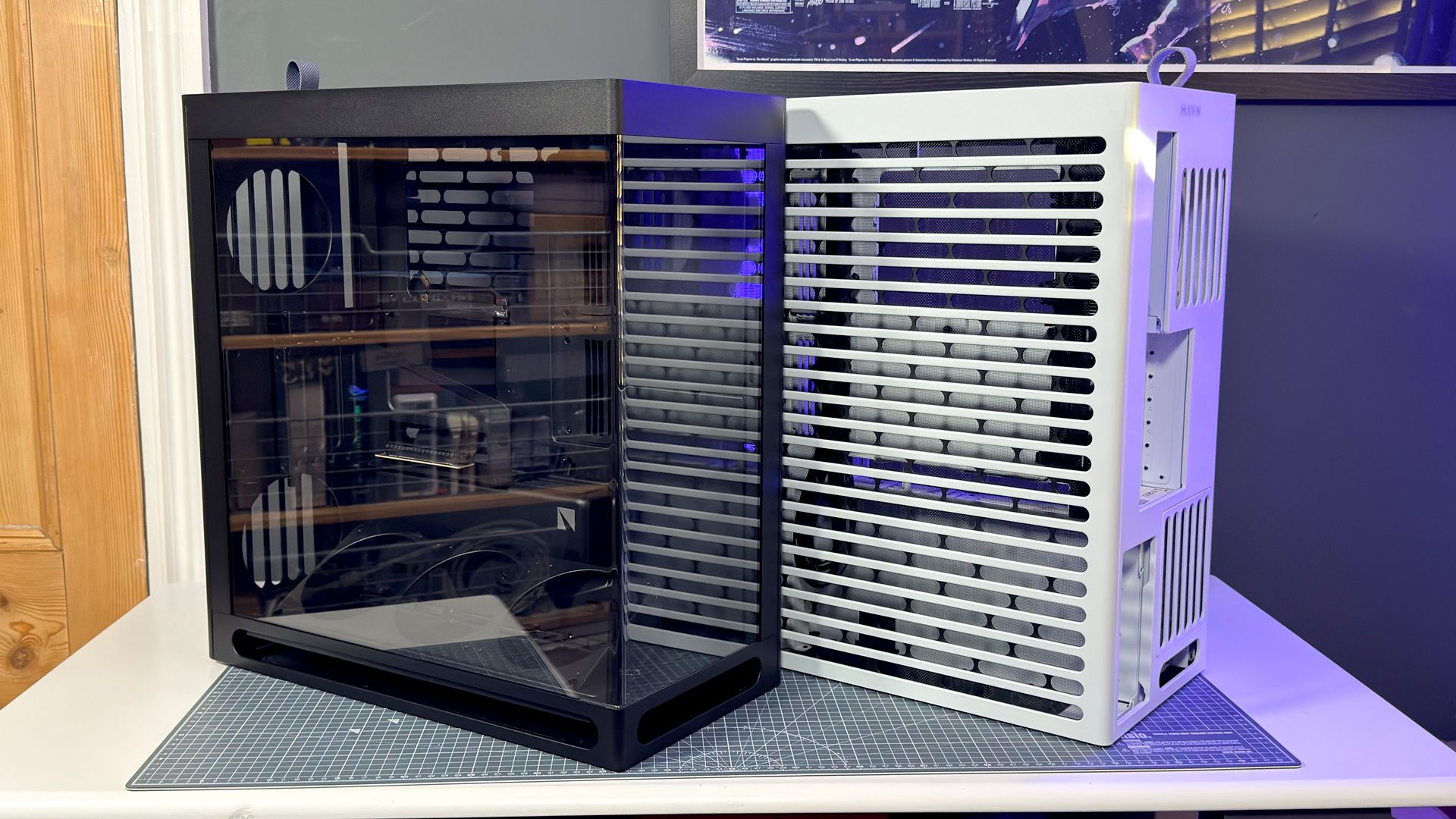
Enter the Havn HS 360—a slightly smaller, more manageable mid-tower iteration designed to build upon its predecessor’s wins. Shaving roughly 14.9% off the volume of the original model, the HS 360 preserves the signature panoramic aesthetic while introducing crucial quality-of-life adjustments. It adds support for Back Connect (BTF) motherboards, eases the installation and replacement of rear fans, and features a tighter curve on its breathtaking glass panel.
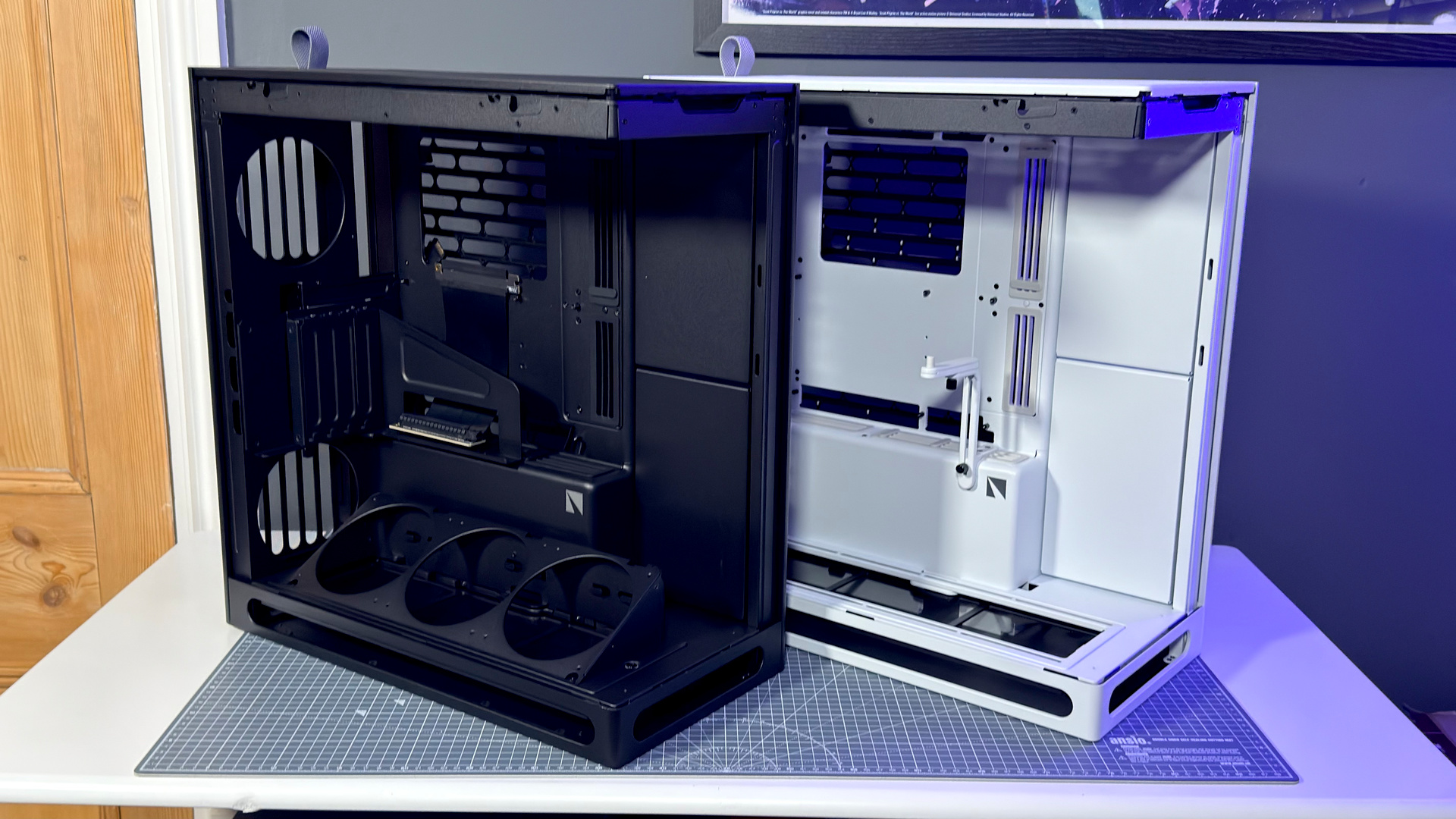
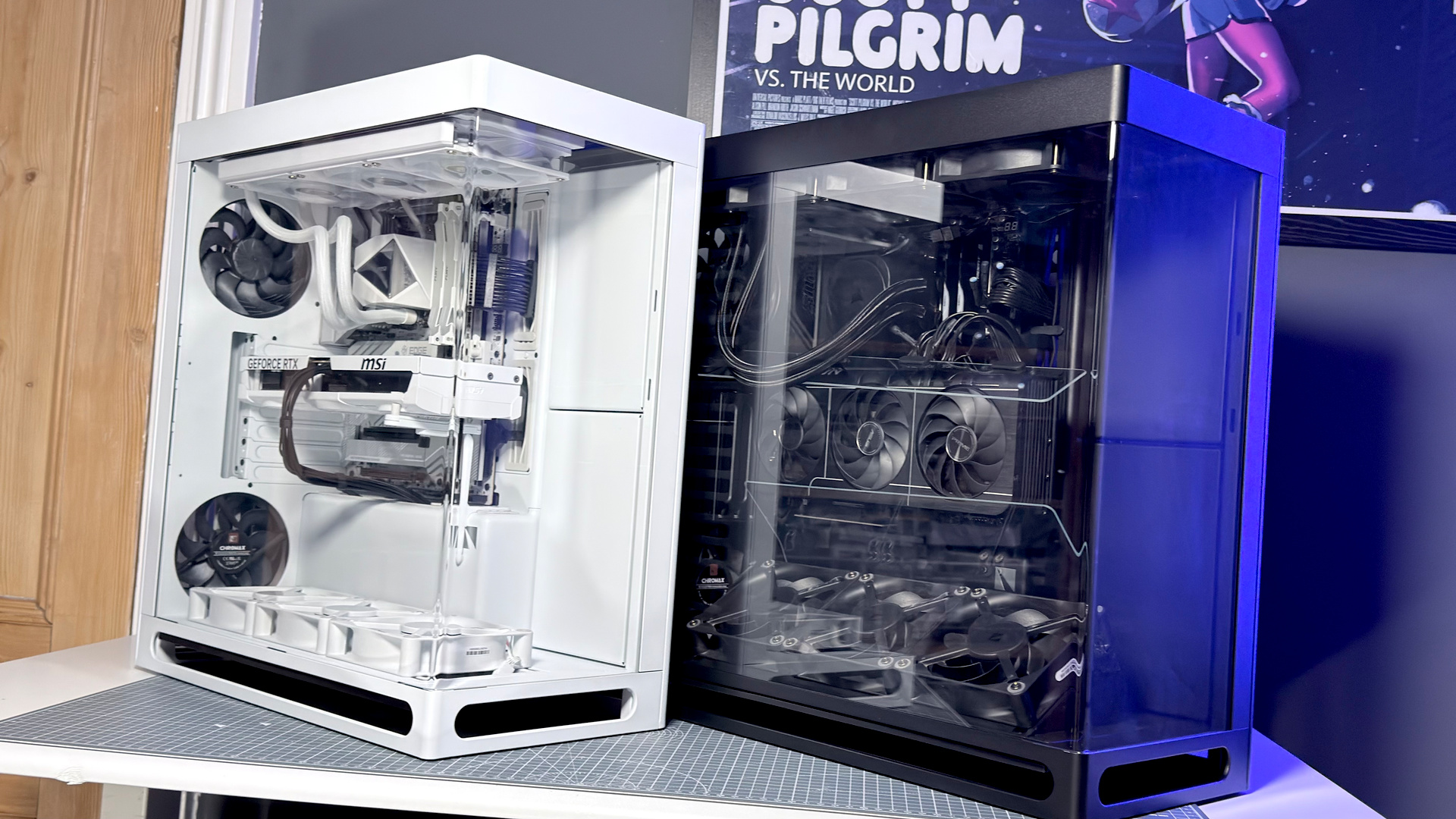
Available in two versions—standard ($200 / £170) and vertical GPU (VGPU) ($280 / £240)—in both sleek black and crisp white, the HS 360 aims to capture the hearts of enthusiasts building high-end, desk-proud rigs. But does its high entry cost, coupled with a total lack of included fans, justify the steep price tag? To find out, we put two review units to the test, assembling rival light-and-dark gaming setups to evaluate building complexity, thermal performance, and overall value.
Detailed Chronology: Design Evolution and Build Experience
Building in the Havn HS 360 is a masterclass in modern hardware layout, provided you plan your component selection carefully. Shaving down the dimensions (measuring 491 x 242 x 521 mm compared to the HS 420’s 541 x 259.5 x 547 mm) makes the HS 360 considerably easier to position on a standard desk without dominating the workspace, yet it retains a generous 430 mm of clearance for graphics cards.
The Installation Process
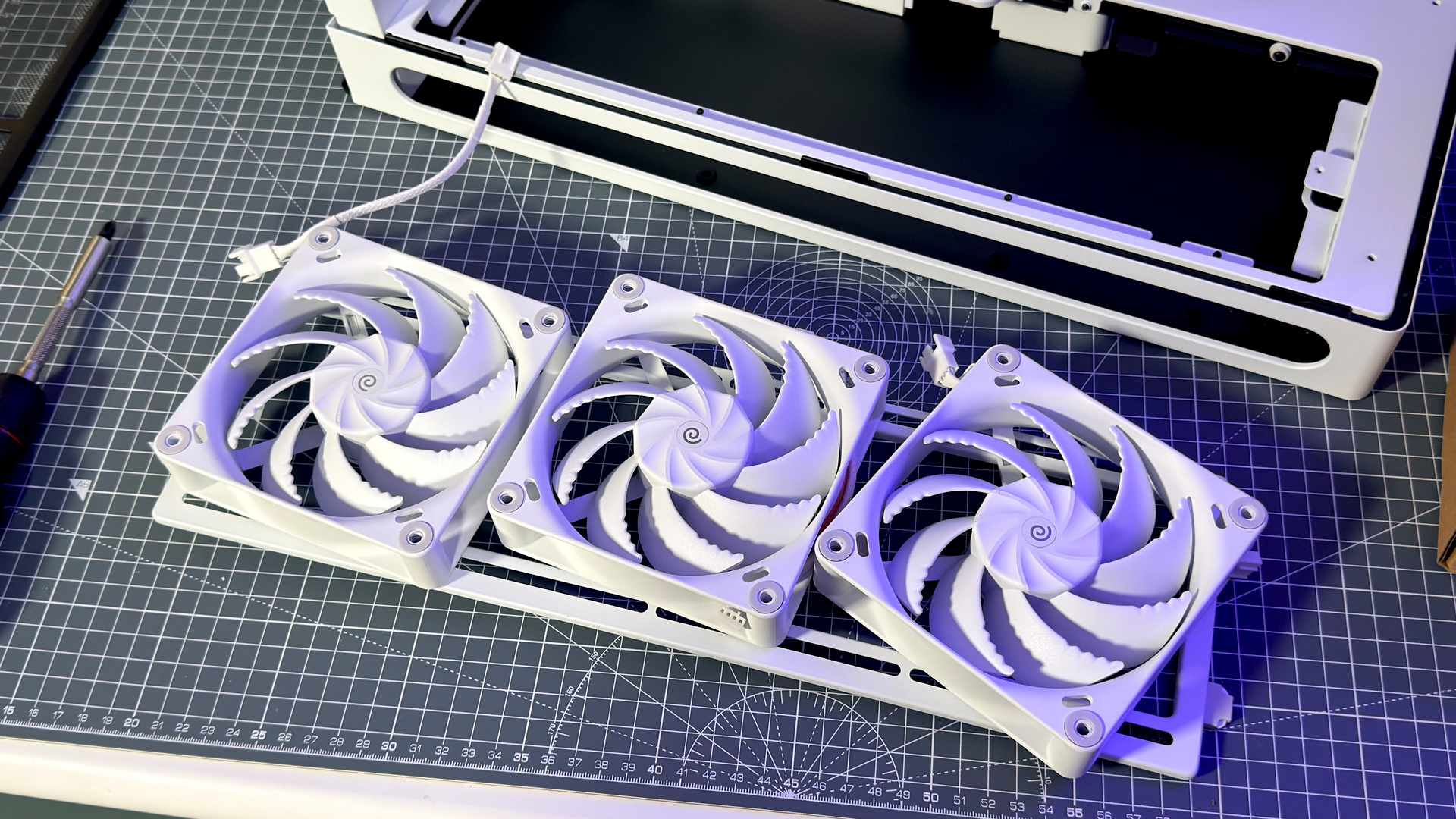
The assembly journey begins at the ground floor. Because the HS 360 features removable mounting brackets throughout, installing intake and exhaust fans is straightforward. However, builders should note a few quirks during the routing phase:
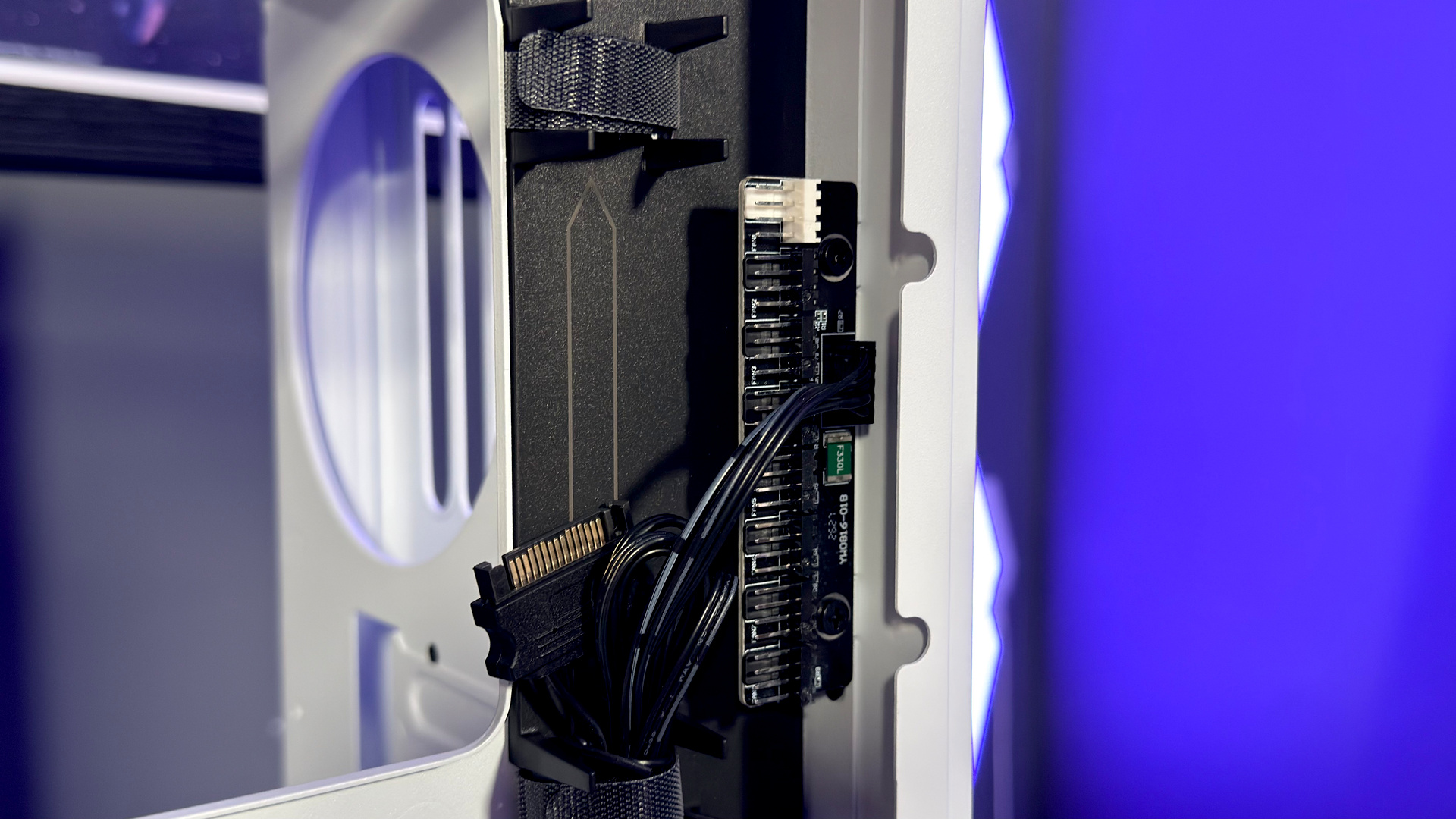
- Fan Cabling: Bottom-mounted intake fans require careful cable routing around the lower dust filters. Additionally, you will likely need fan extension cables to reach the pre-installed rear fan hub or the nearest motherboard headers.
- Power Supply Limitations: The chassis accommodates standard power supplies up to 230 mm in length. However, the sideways mounting position and stubby PSU shroud completely rule out side-cable designs like Corsair’s Shift series. Traditional, non-modular or standard modular cabling setups are a must here.
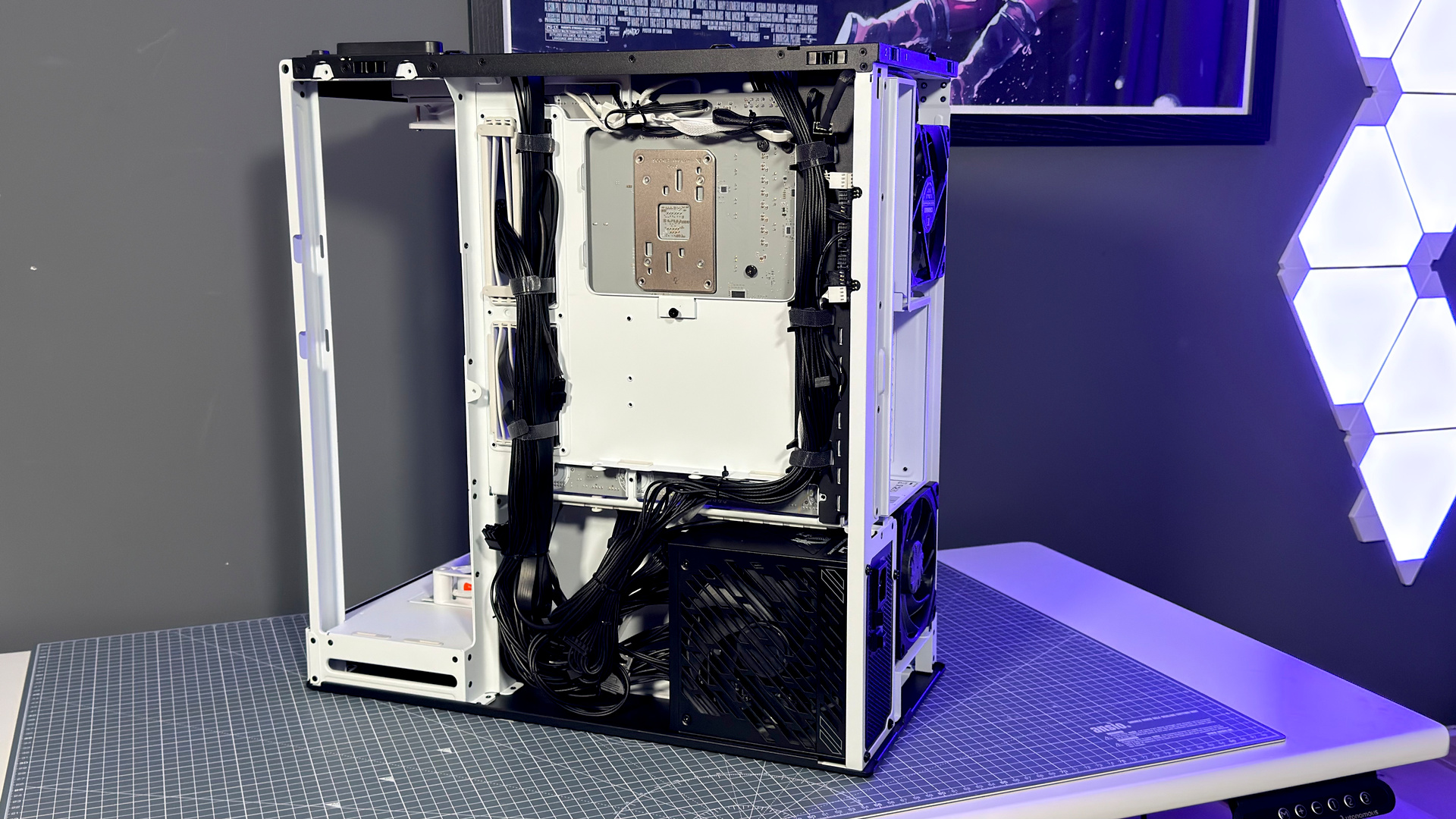
- Cable Management: Cable routing is remarkably stress-free. Havn supplies a generous amount of hook-and-loop fasteners and zip-ties. The numerous tie-down points across the back of the chassis make it simple to lock cables into place, ensuring a clean aesthetic with minimal effort.
Standard vs. VGPU: A Tale of Two Builds
To test the full breadth of the lineup, we built two opposing rigs—a light AMD-powered system and a dark Nvidia-powered machine—using both the standard and VGPU variants.
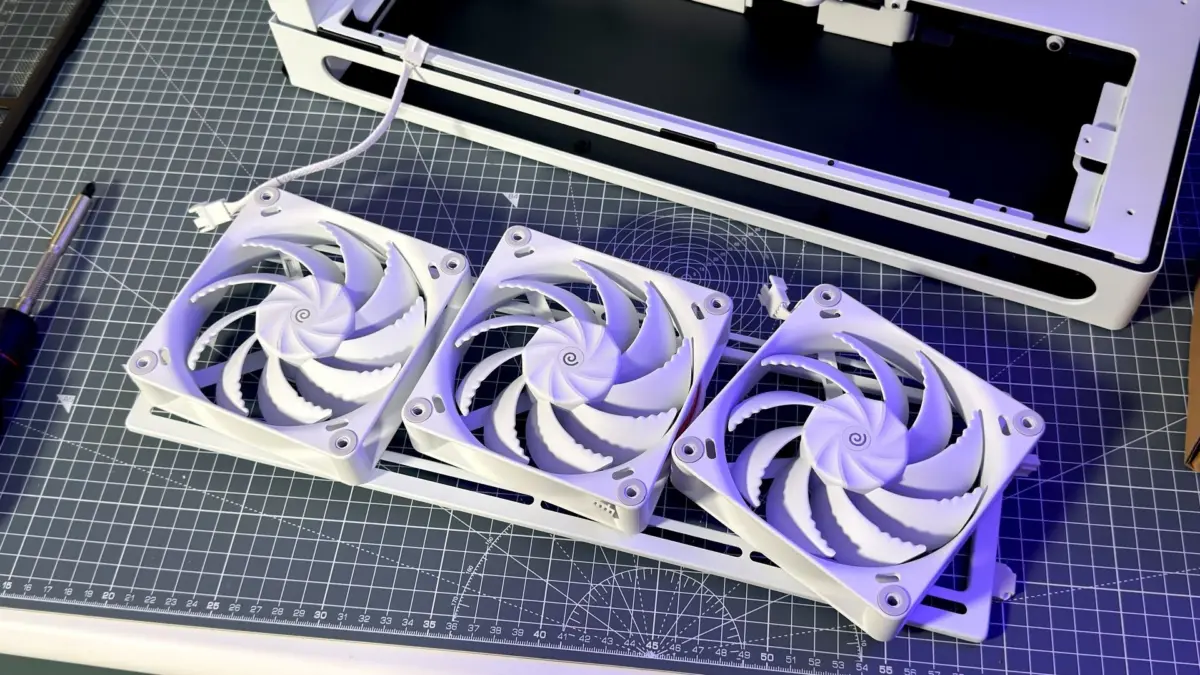
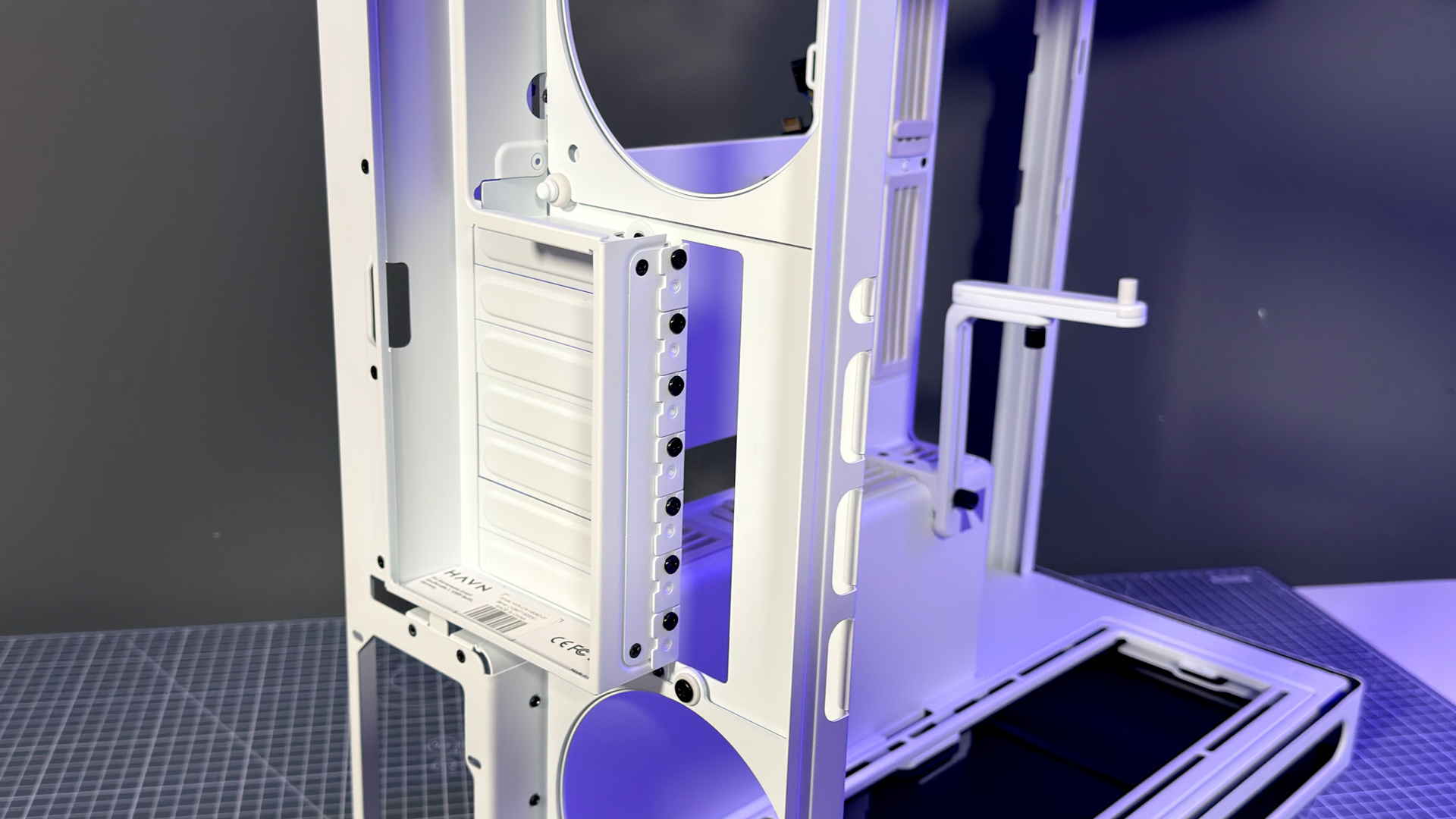
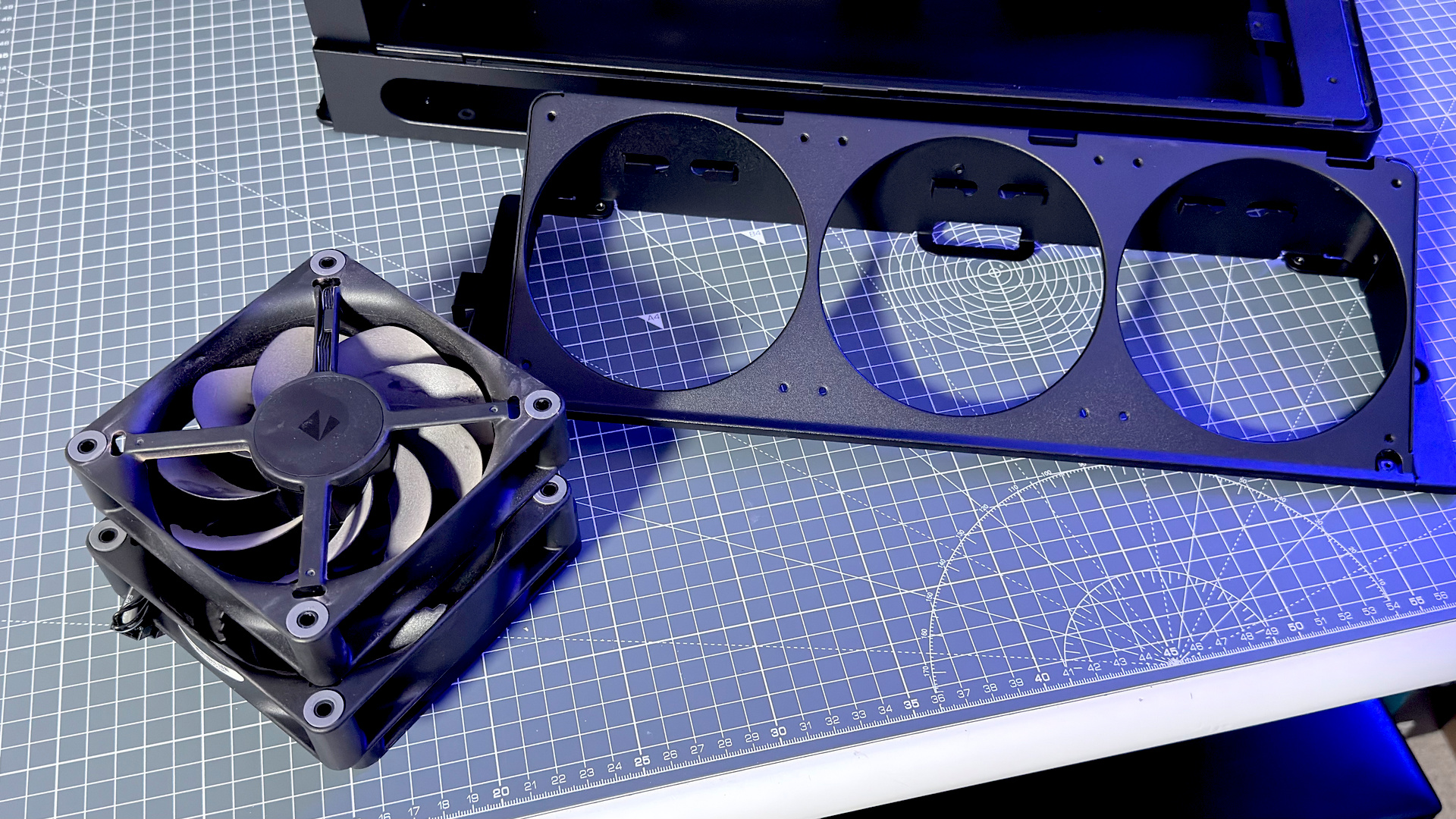
The standard model keeps things simple. It features a flat three-fan bracket at the bottom that blows air directly upward into the GPU, alongside an adjustable, removable integrated GPU support brace sitting neatly atop the lower cable routing points.
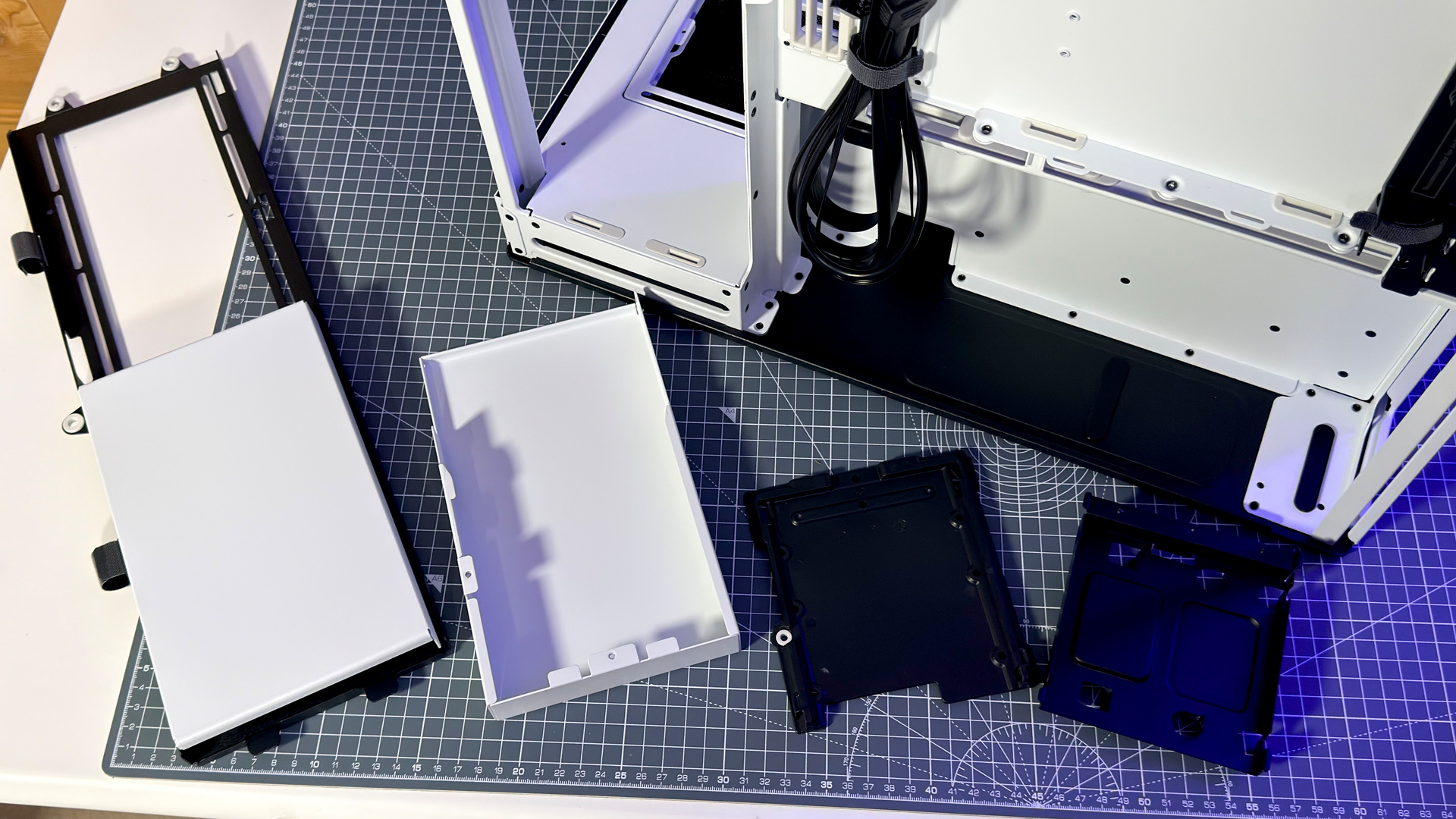
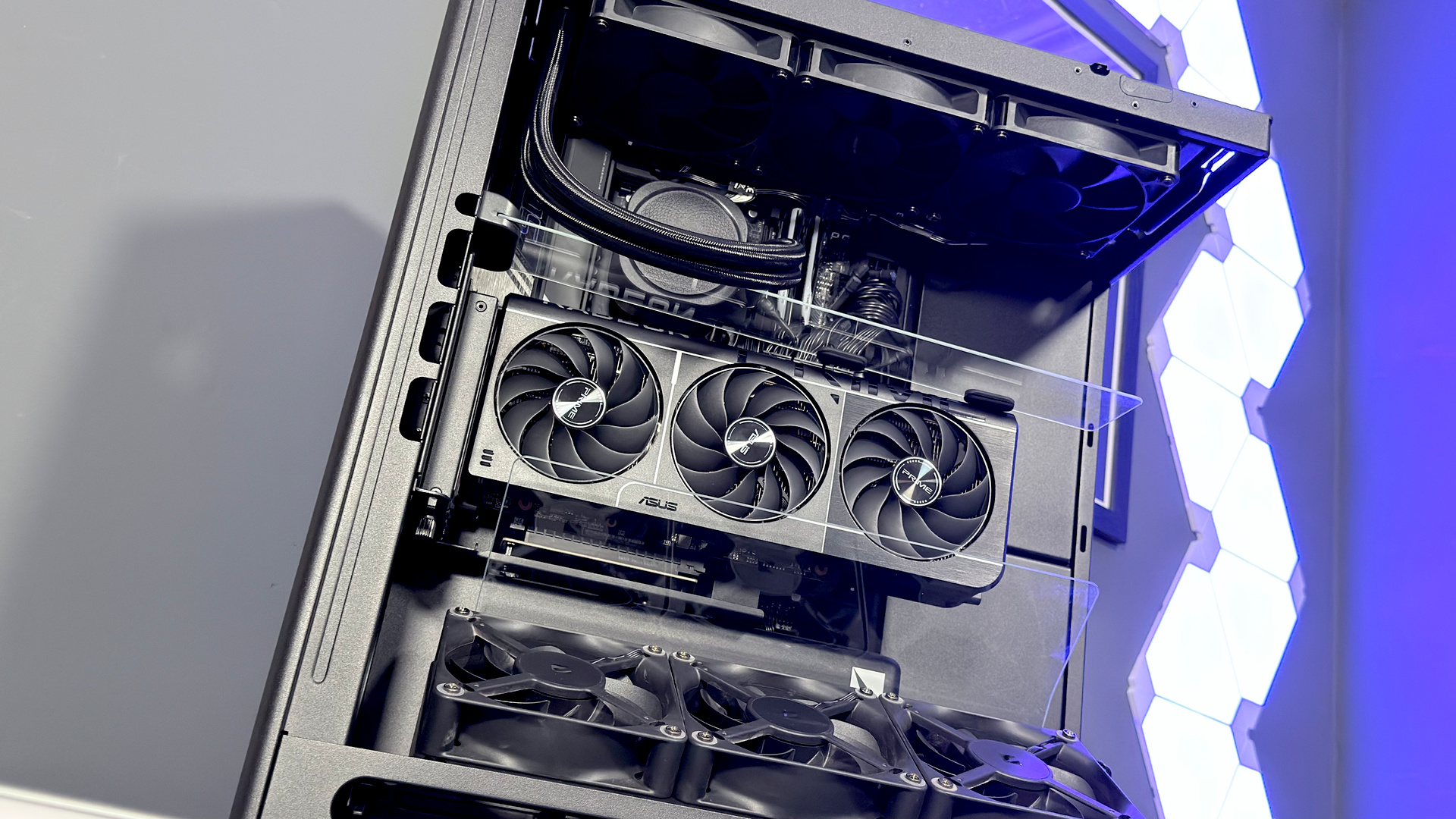
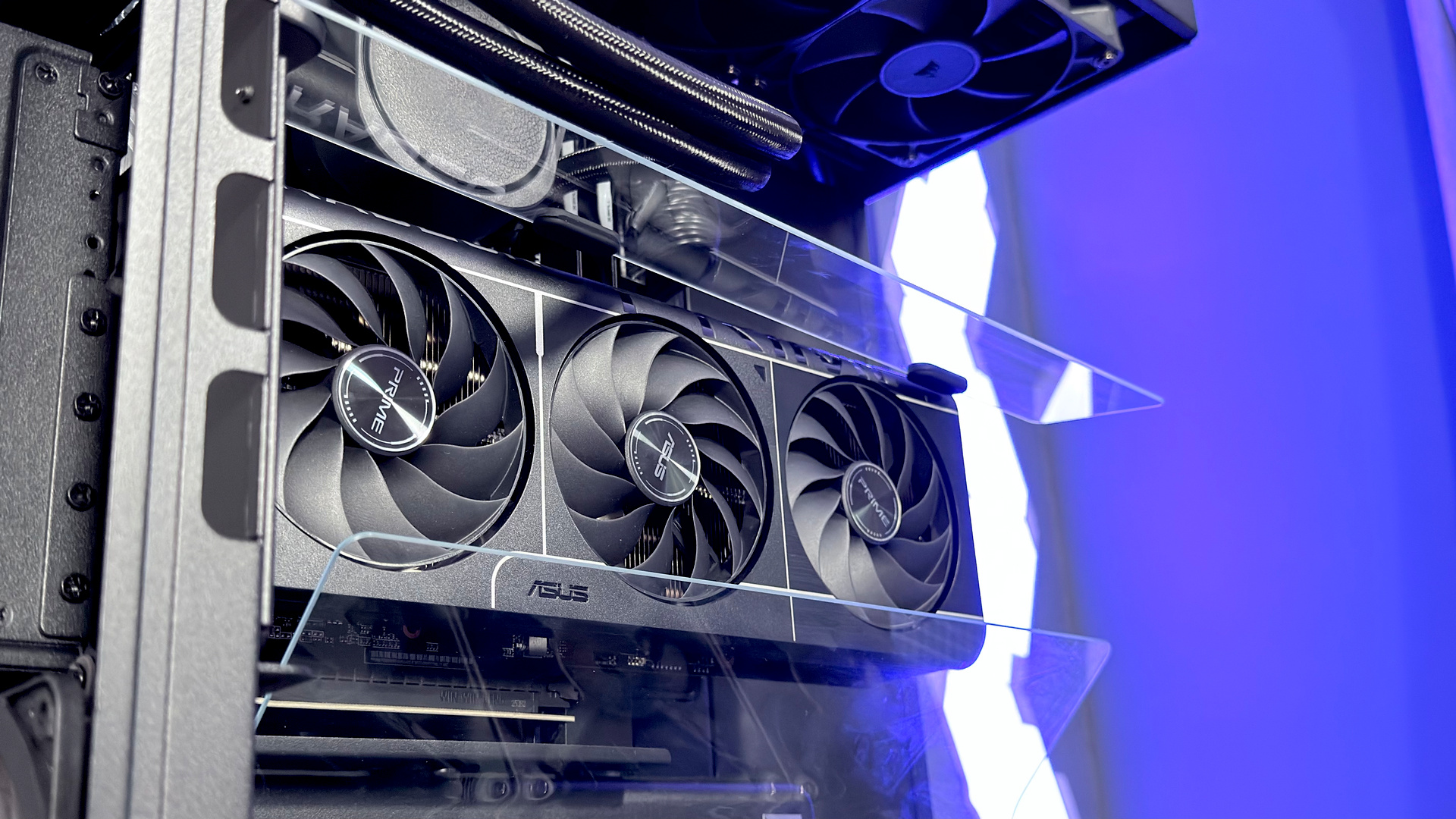
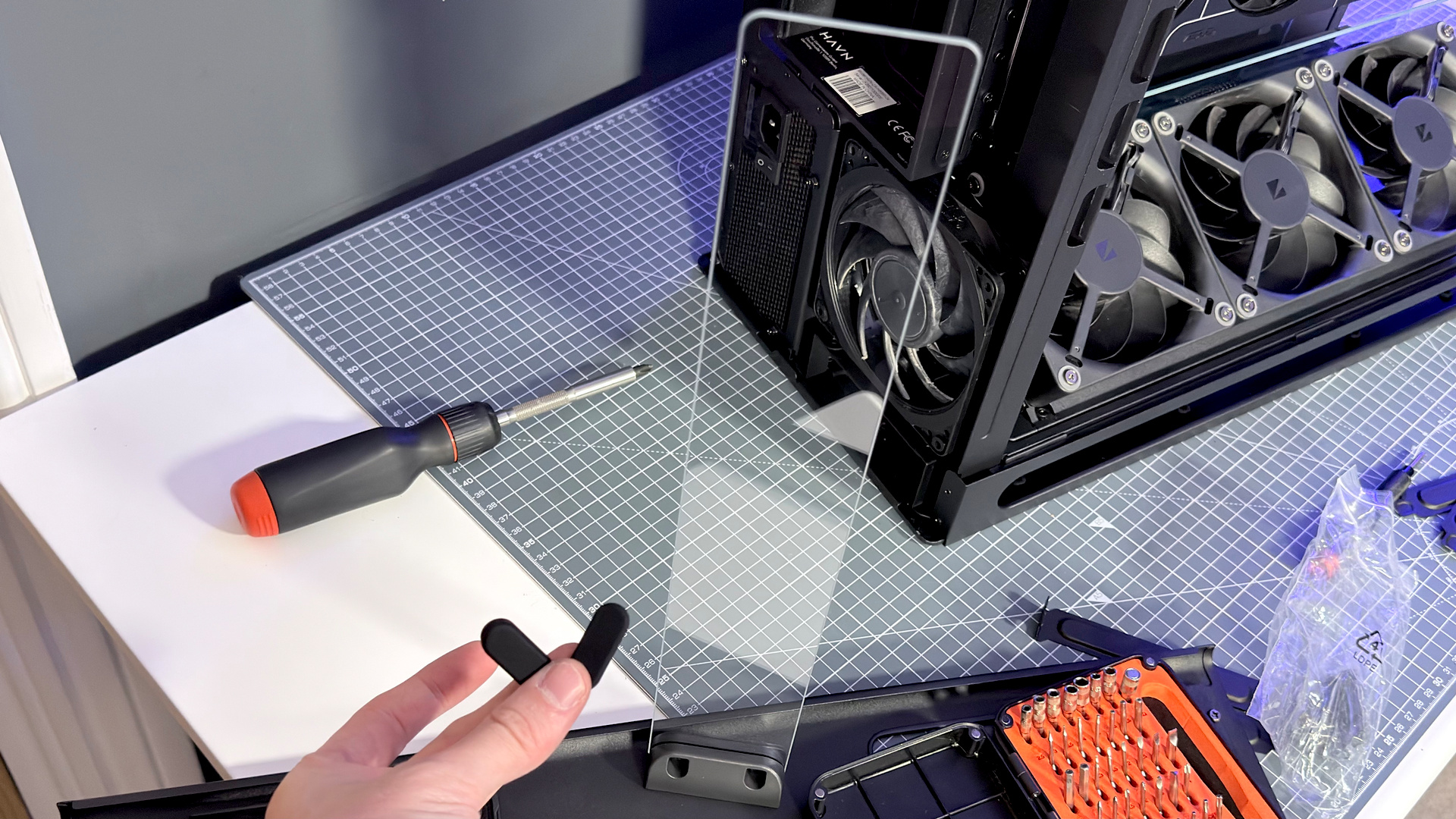
The VGPU model, commanding an $80/£70 premium, introduces a vertical mounting bracket accompanied by a magnetic ‘Airflow Divider’ and a glass divider on the tilted fan bracket. While the VGPU configuration successfully segments the interior into a "cool zone" and a "hot zone," it introduces notable friction:
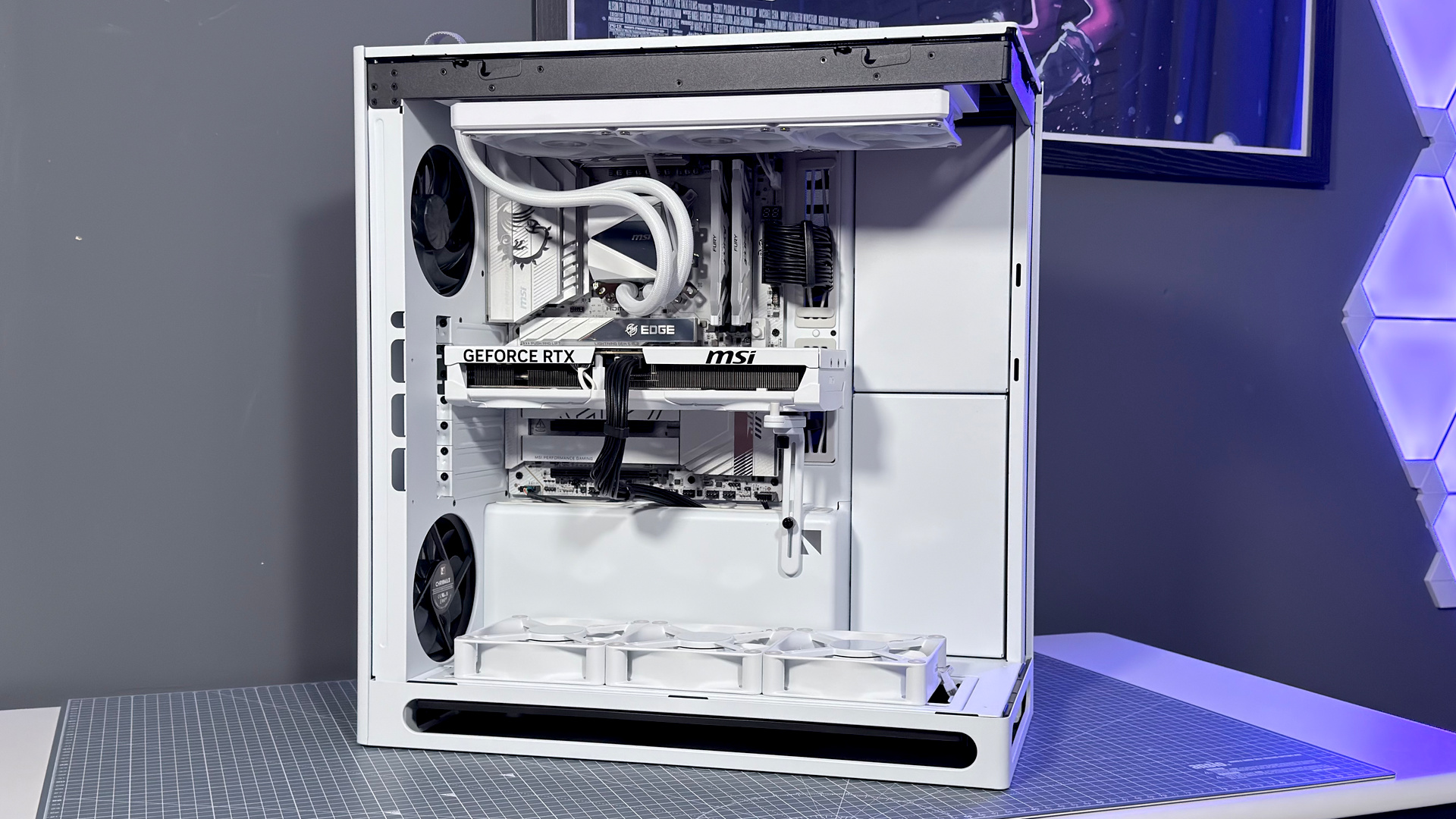
- You must dismantle the VGPU bracket to install the motherboard, then reinstall it afterward.
- The vertical arrangement clutters the interior visually, leaving GPU power cables hanging awkwardly in close proximity to the RAM sticks.
- Liquid cooling tubes can occasionally lean against the glass divider, pushing it askew and requiring precise placement of anti-vibration rubber pads.
For most builders, the standard option is the cleaner, less frustrating, and more cost-effective choice.
Supporting Context & Metrics: Specifications, Aesthetics, and Thermals
Specification Comparison
| Feature | Havn HS 360 | Havn HS 420 |
|---|---|---|
| Dimensions (mm) | 491 x 242 x 521 | 541 x 259.5 x 547 |
| Motherboard Support | ATX / BTF ATX / M-ATX / Mini-ITX | ATX / M-ATX / Mini-ITX |
| Radiator Support | TOP: Up to 360 mm | RIGHT: Up to 360 mm (max 58 mm thick) | TOP: Up to 420 mm | RIGHT: Up to 420 mm |
| Fan Support | TOP: 3x 120 mm | RIGHT: 3x 120 mm | BOTTOM: 3x 120 mm | REAR: 2x 120 mm (max 30 mm thick) | TOP: 3x 120/140 mm | RIGHT: 3x 120/140 mm | BOTTOM: 3x 120/140 mm | REAR: 2x 120/140 mm (max 30 mm thick) |
| Storage Bays | 2x 3.5-inch / 4x 2.5-inch (modular) | 5x 3.5-inch, 10x 2.5-inch |
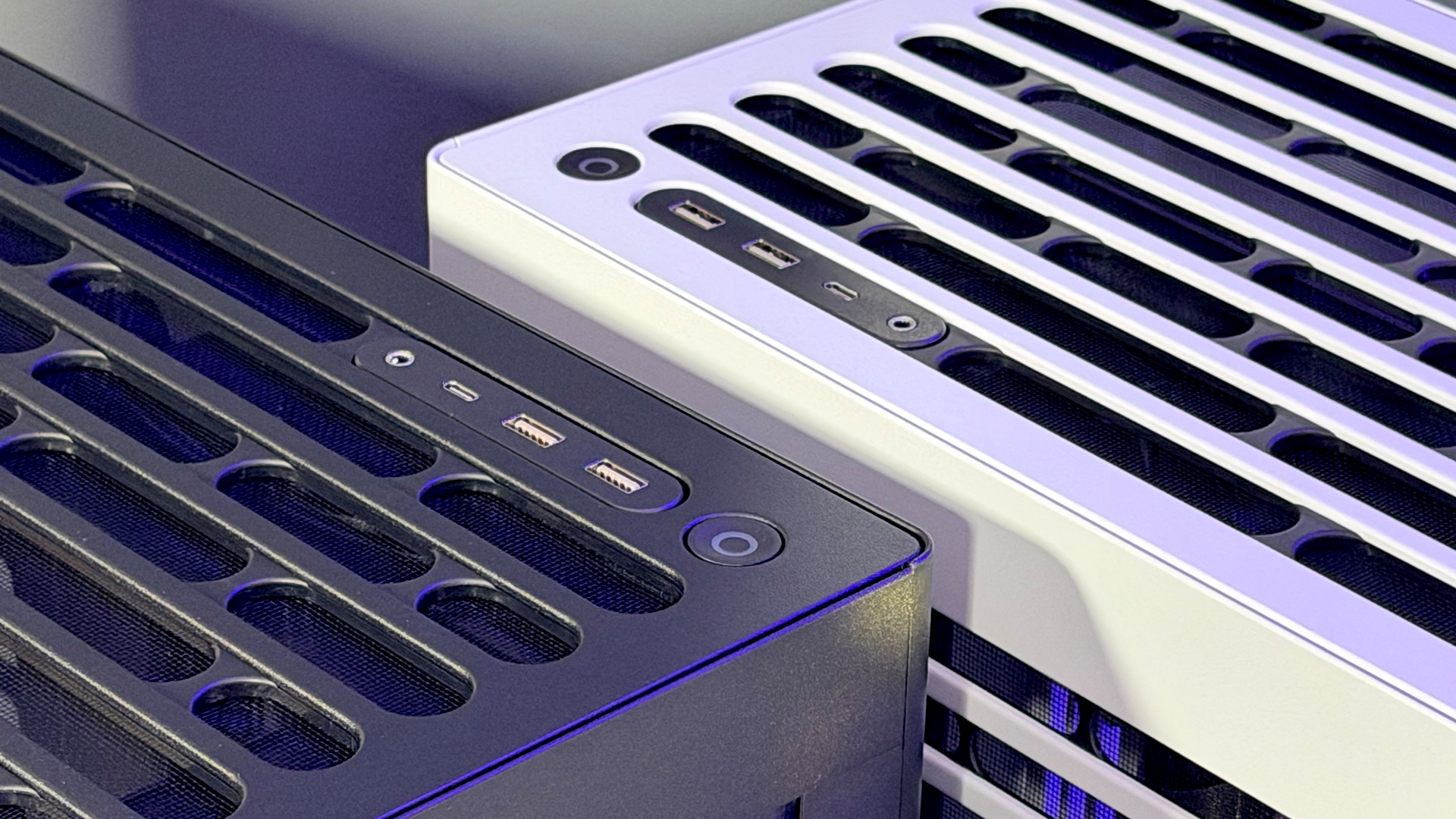
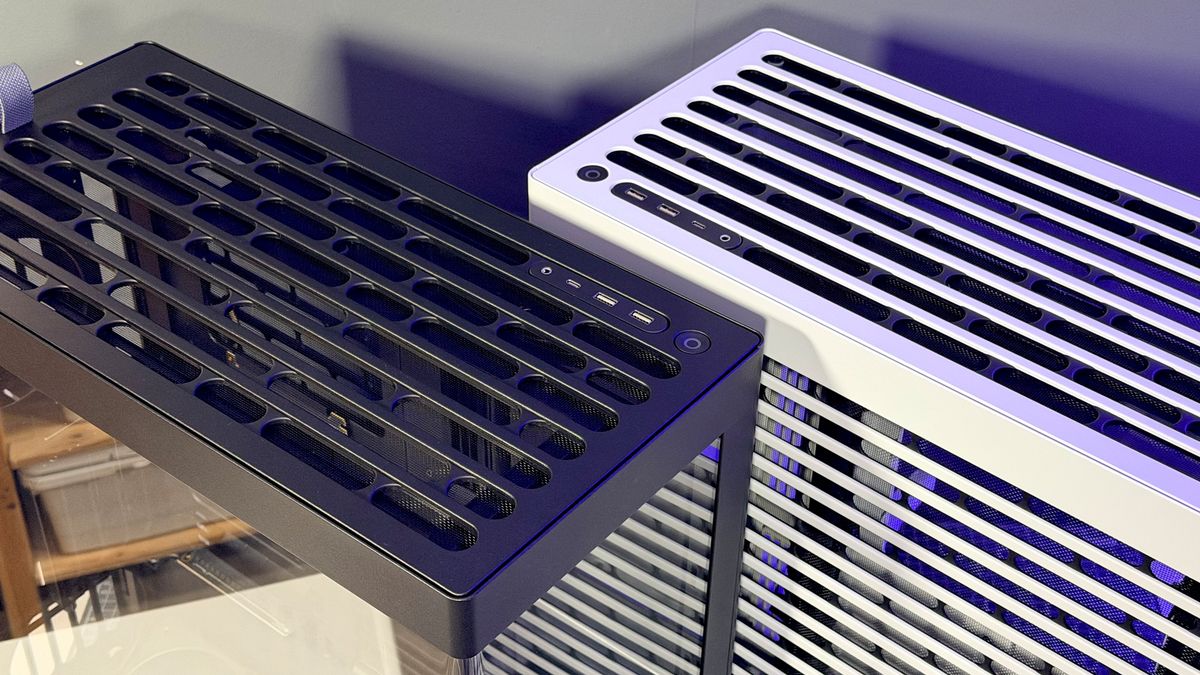
| Front I/O | 2x USB 3.2 Type-A, 1x USB 3.2 Gen 2 Type-C, 3.5mm jack | 2x USB 3.2 Type-A, 1x USB 3.2 Gen 2 Type-C, 3.5mm jack |
| Max GPU Length (mm) | 430 | 470 |
| Max PSU Length (mm) | 230 | 220 |
| Price (US) | $200 (Standard) / $280 (VGPU) | $250 (Standard) / $330 (VGPU) |
| Price (UK) | £170 (Standard) / £240 (VGPU) | £200 (Standard) / £270 (VGPU) |
Aesthetics and Visual Presentation
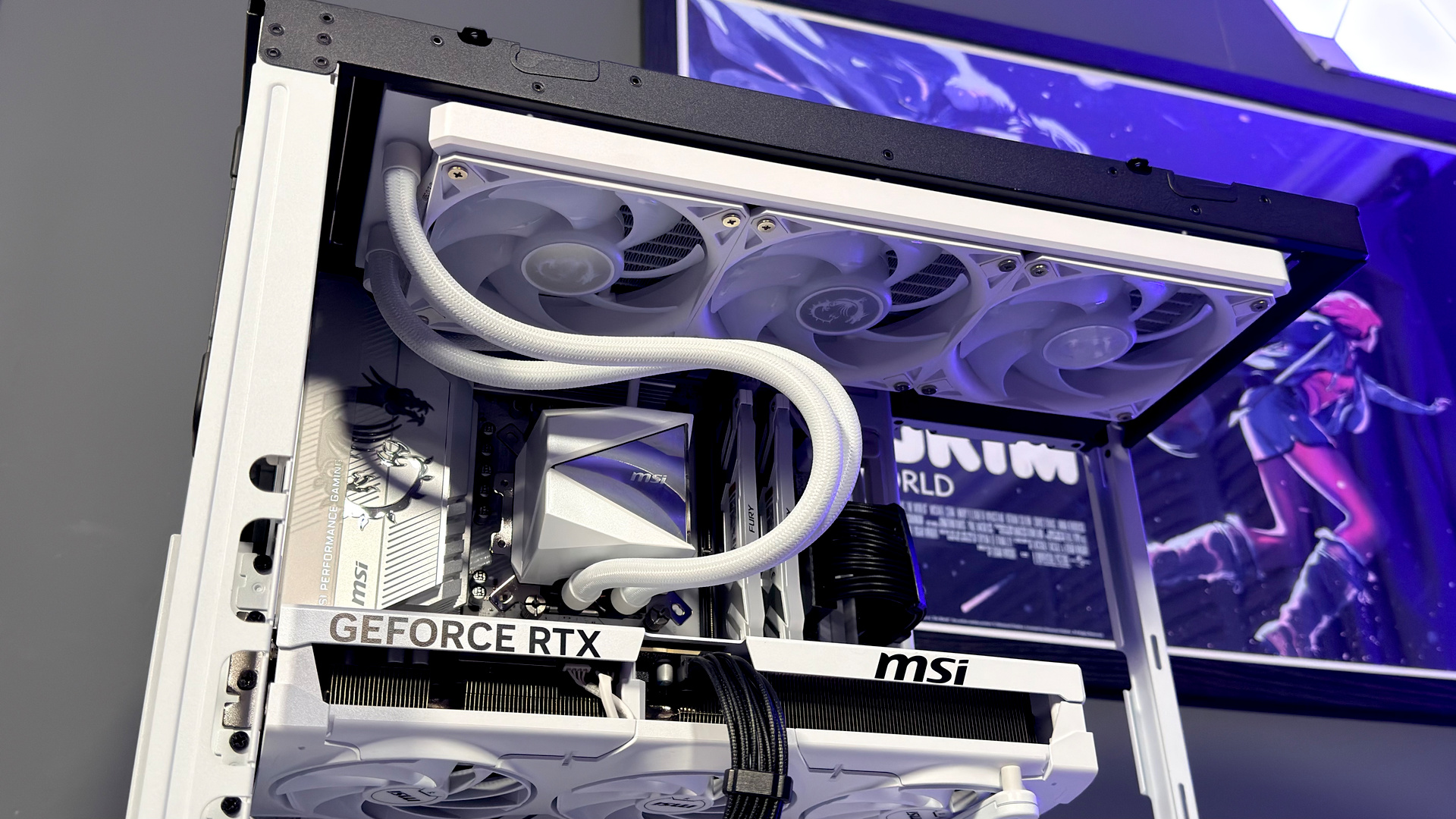
Aesthetically, the Havn HS 360 is easily one of the most striking mid-tower cases released in recent memory. The panoramic glass panel features a tighter curve than the HS 420, creating a seamless wraparound effect that brilliantly showcases your hardware while cunningly masking unsightly cables, headers, and cable clutter.
The chassis’s interior black accents assist greatly with color-matching components. Even if you mix and match black and white components—such as using black rear fans when white units run out—the overall presentation remains effortlessly clean and premium.
Thermal Performance and Airflow Dynamics
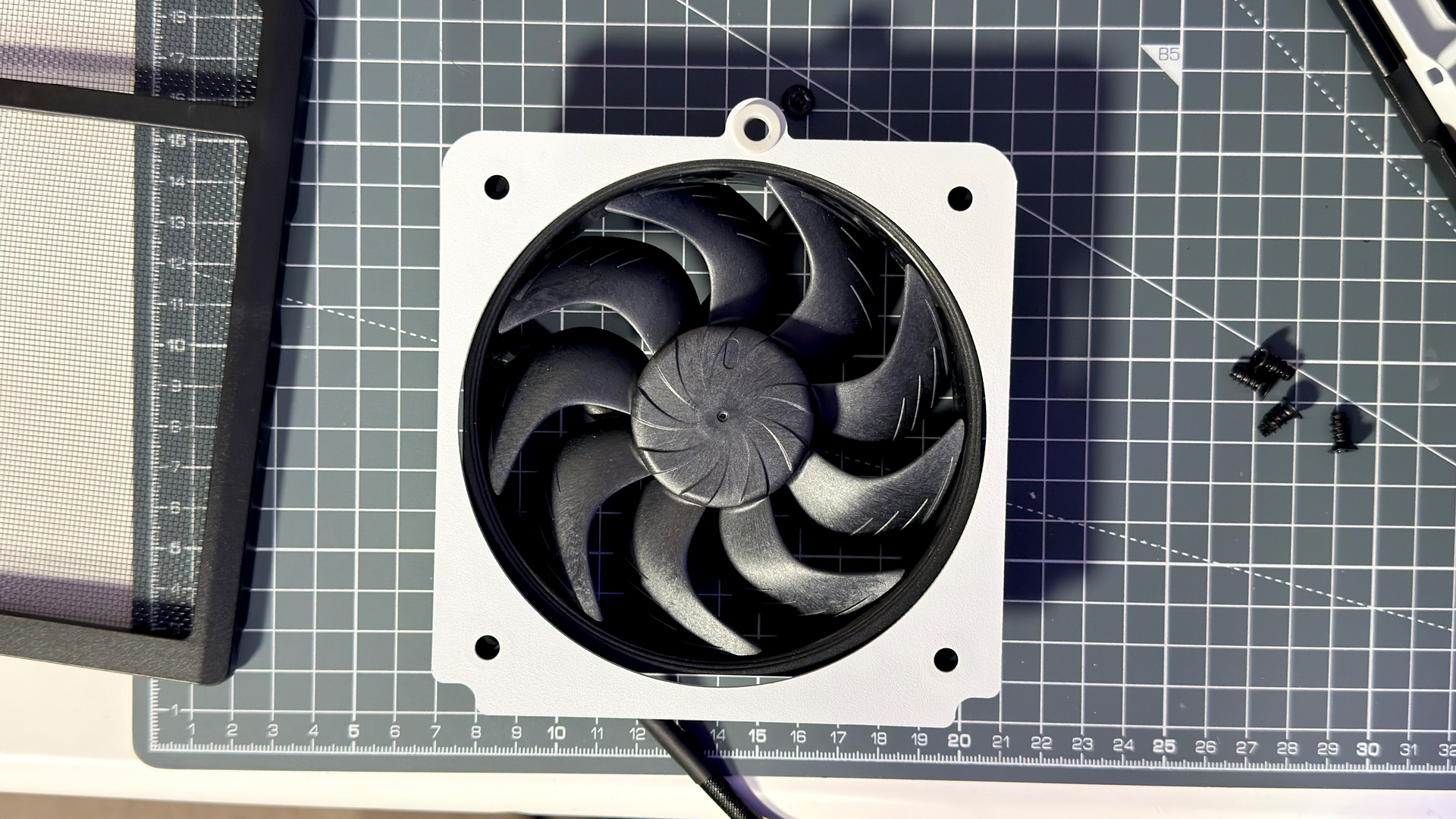
Adopting a traditional chimney-style airflow configuration, the HS 360 works best with intake fans mounted at the bottom and exhaust fans at the top. However, this configuration presents a minor visual hurdle: standard intake fans expose their structural hub supports and power stickers on the visible side. Given the chassis’s premium price point, the absence of reverse-blade fan options from Havn feels like a missed opportunity.
On the VGPU model, the inclusion of the magnetic airflow divider and glass panel yields measurable thermal shifts:
- GPU Temperatures: Havn’s internal testing reported a 1.4°C to 1.8°C reduction in GPU temperatures by isolating hot air recirculation. Our testing closely mirrored these findings, showing an average ~1.4°C drop with the glass dividers in place.
- CPU Temperatures: CPU thermals remained entirely unaffected by the presence or absence of the glass dividers.
While the thermal gains on the VGPU model are technically verifiable, the marginal drop is hardly dramatic enough to offset the added visual clutter and assembly hurdles of the vertical bracket system.
Official Statements & Industry Positioning
Havn has positioned the HS 360 as a direct response to enthusiast feedback gathered during the lifecycle of the larger HS 420. By optimizing internal clearances, adding Back Connect motherboard compatibility, and refining fan accessibility—such as allowing rear fan replacement without stripping out existing components—the company demonstrates a keen ear for the DIY community.
However, market positioning introduces interesting questions regarding value. The standard HS 360 enters the US market at $200 (£170), while the VGPU variant climbs to $280 (£240). While these prices represent a savings over the current pricing of the larger HS 420 (which has experienced multiple price hikes since its late 2024 launch, now sitting at $250 for standard and $330 for VGPU), a major caveat remains: no fans are included in the box.
When comparing the HS 360 to competitor chassis in the premium tier—such as the Cooler Master HAF II 500 or the Corsair Air 5400, both of which ship with multiple pre-installed fans—buyers must factor in the additional cost of populating the chassis. Equipping the HS 360 with a full suite of matching Havn H12 fans can easily push total expenditure past the $300 threshold.
Future Outlook & Final Verdict
Buy the Havn HS 360 if:
- Your PC sits proudly on your desk: The HS 360 delivers jaw-dropping aesthetics, offering the striking panoramic glass look of the HS 420 in a more compact, desk-friendly footprint.
- You value clean cable management: The chassis excels at hiding clutter, features intuitive routing channels, and includes modern quality-of-life enhancements like Back Connect motherboard support.
Do NOT buy the Havn HS 360 if:
- You are on a strict cooling budget: Because the case ships completely devoid of fans, completing a full build requires a significant additional cash outlay for cooling hardware.
- You prefer hassle-free GPU mounting: The standard model is a joy to build in, but the VGPU variant adds unnecessary complexity and visual clutter for minimal thermal gain.
The Verdict
The Havn HS 360 successfully refines the winning formula established by its larger sibling. It is slightly smaller, simpler to build into, and preserves the immaculate retro-futurist aesthetic that made the HS 420 a cult favorite. While the lack of included fans and the questionable value proposition of the VGPU variant keep it from absolute perfection, the standard HS 360 remains an indisputable masterpiece of mid-tower design. If you have the budget to kit it out with quality fans, it is easily one of the best-looking and most satisfying enclosures on the market today.