By Catie Owen | Regional Content & Insights Lead
Published: September 18, 2026
Executive Overview
The global artificial intelligence revolution is hurtling forward at an unprecedented pace, fundamentally transforming modern economies, scientific research, and daily life. However, beneath the gleaming facade of server farms, large language models, and automated breakthroughs lies a complex and alarming environmental trade-off.
According to a sweeping new independent report by the non-profit organization ChemSec, the exponential expansion of AI infrastructure is inadvertently triggering a massive "tidal wave" of per- and polyfluoroalkyl substances (PFAS)—commonly referred to as "forever chemicals."
Valued globally between $25 billion and $30 billion, the PFAS market is expanding rapidly, fueled not just by legacy applications in textiles and non-stick coatings, but by the booming demands of next-generation technology. As data centers scale up to compute heavier workloads, and as semiconductor manufacturing and lithium-ion battery production accelerate to support this digital transformation, the need for advanced thermal management has skyrocketed.
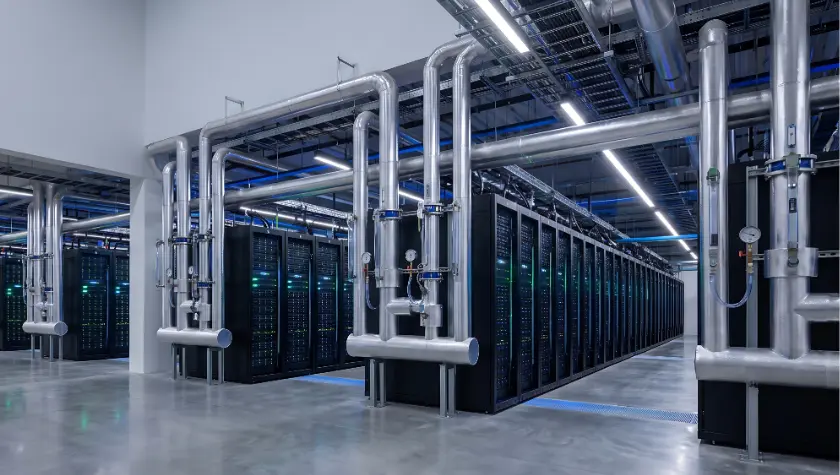
To circumvent the severe public scrutiny and environmental constraints surrounding water scarcity, data center developers are increasingly turning to advanced cooling solutions powered by fluorinated gases, including PFAS. While these systems successfully mitigate the staggering water footprints traditionally associated with server cooling, they introduce an insidious, long-term hazard. Because PFAS do not break down naturally in the environment, critics warn that the tech industry is merely swapping one critical environmental crisis for another—trading water depletion for persistent chemical pollution.
Detailed Chronology: The Intersection of AI Infrastructure and Chemical Production
To understand how the digital economy became inextricably linked to persistent industrial chemicals, it is necessary to examine the convergence of recent technological and environmental milestones:
- The Escalation of AI Computational Demands (2023–2024): As generative AI tools gained mainstream adoption, technology giants scrambled to build massive clusters of energy-intensive graphics processing units (GPUs). This sudden surge in computing density created an unprecedented thermal challenge: how to cool racks of servers generating extreme amounts of heat without exhausting local utility grids or municipal water supplies.
- The Regulatory and Resource Crunch (2025): Public opposition to the immense water consumption of data centers reached a fever pitch. A landmark 2025 report by techUK highlighted a shifting landscape, revealing that over half of England’s data centers had already transitioned to waterless cooling systems to alleviate local resource strains. Concurrently, international governing bodies like the European Commission ramped up pressure on chemical manufacturers to phase out hazardous substances, setting the stage for a high-stakes collision between digital innovation and environmental regulation.
- The ChemSec Findings (September 2026): Releasing its comprehensive assessment of the world’s major PFAS producers, ChemSec brought global attention to the quiet symbiosis between the tech hardware supply chain and chemical manufacturing. The report revealed that major fluoropolymer producers are aggressively scaling up manufacturing capacity specifically to meet the burgeoning needs of the AI, semiconductor, and green-energy sectors.
Supporting Context & Metrics: Weighing Water Against Persistence
The pivot toward PFAS-based cooling infrastructure is driven by hard arithmetic regarding resource consumption and thermal physics.
The Water Crisis in Data Centers
Data centers are notoriously thirsty. According to data from the Environmental and Energy Study Institute (EESI), a typical medium-sized data centre can consume up to 110 million gallons of water annually—an amount roughly equivalent to the yearly water usage of 1,000 average American households. In drought-prone regions or densely populated urban areas where grids and municipal water supplies are stretched to their limits, securing continuous water rights for evaporative cooling towers has become nearly impossible.
In response, operators have leaned heavily into closed-loop air cooling and direct-to-chip liquid cooling systems. The techUK study noted that 51% of data centers in England have adopted waterless cooling designs, with only a tiny fraction (4%) consuming more than 100,000 cubic meters of water per year.
The Chemical Solution—and Its Perils
To achieve waterless or high-efficiency liquid cooling without risking hardware failure, engineers rely on fluorinated gases and specialized fluids. PFAS excel in these environments because they are chemically inert, highly resistant to extreme heat, and exceptionally durable.
However, it is precisely these molecular properties that make PFAS an environmental nightmare. Because they do not break down under natural environmental conditions, they earn the moniker "forever chemicals." When these substances escape during manufacturing, usage, or disposal, they infiltrate soil, agricultural food chains, and municipal drinking water supplies.

Public health research compiled by regulatory agencies indicates that long-term exposure to certain PFAS compounds leads to severe health complications, including endocrine disruption, developmental issues in wildlife and humans, and an increased risk of various forms of cancer.
Official Statements and Industry Perspectives
The tension between rapid technological progress and environmental protection has prompted sharp critiques from policy watchdogs and public interest groups.
Anne-Sofie Bäckar, Executive Director of ChemSec, did not mince words when discussing the implications of the report’s findings:
"These companies’ expansion plans show that unless governments and regulators insist on a rapid phaseout, we will face a new tidal wave of forever chemicals."
Bäckar’s warning underscores a systemic blind spot in current corporate sustainability strategies. While major technology enterprises routinely report on their carbon offsets, energy efficiency metrics, and water-saving initiatives, the upstream chemical footprint of their hardware infrastructure often remains obscured.
Conversely, defenders of the digital infrastructure sector argue that managing thermal loads efficiently is vital to maintaining the uptime of services that underpin modern global communications, healthcare diagnostics, and financial networks. Without high-performance thermal fluids, the expansion of high-density computing—and the societal benefits it promises—would grind to a halt. The engineering dilemma, therefore, is not merely how to keep servers cool, but how to do so without poisoning the biosphere in the process.
Future Outlook: Navigating the Road Ahead
As the world looks toward 2030 and beyond, the digital infrastructure sector faces a reckoning similar to the one experienced by the textile and packaging industries years prior.
Regulatory Pressure and the Push for Alternatives
Regulatory bodies are increasingly unwilling to grant exemptions for critical industries simply because alternatives are difficult to engineer. The European Union, for instance, has pioneered broad restriction proposals aimed at curbing the entire class of PFAS compounds, forcing manufacturers to innovate or face steep penalties.
Similar regulatory momentum is building in various global jurisdictions, prompting some chemical producers to explore non-toxic, biodegradable chemical alternatives. While such substitutes have successfully replaced PFAS in low-stress applications like outdoor clothing and food packaging, adapting them to the extreme thermal and electrical environments of AI servers and semiconductor fabrication plants remains an immense scientific hurdle.
What Lies Ahead for AI and Data Centres?
For developers breaking ground on the next generation of hyperscale data centers, the choices are stark:
- Invest in Closed-Loop Safety: If fluorinated fluids must be used to preserve scarce water resources, operators will need to implement near-zero-leakage containment guarantees, backed by rigorous end-of-life recycling and destruction protocols.
- Accelerate R&D into Safe Coolants: Technology conglomerates possess the capital and research capabilities to co-develop non-PFAS dielectric fluids. Partnering with chemical innovators will be essential to finding compounds that offer high heat capacity without long-term persistence.
- Proactive Transparency: As consumers and institutional investors increasingly scrutinize environmental, social, and governance (ESG) metrics, transparency regarding chemical supply chains will become just as critical as carbon accounting.
Ultimately, the AI boom has forced humanity to confront a sobering reality: every digital innovation carries a physical footprint. Whether the tech industry can out-innovate its own chemical dependency will define not only the sustainability of the artificial intelligence era, but the long-term health of global ecosystems for generations to come.