Executive Overview
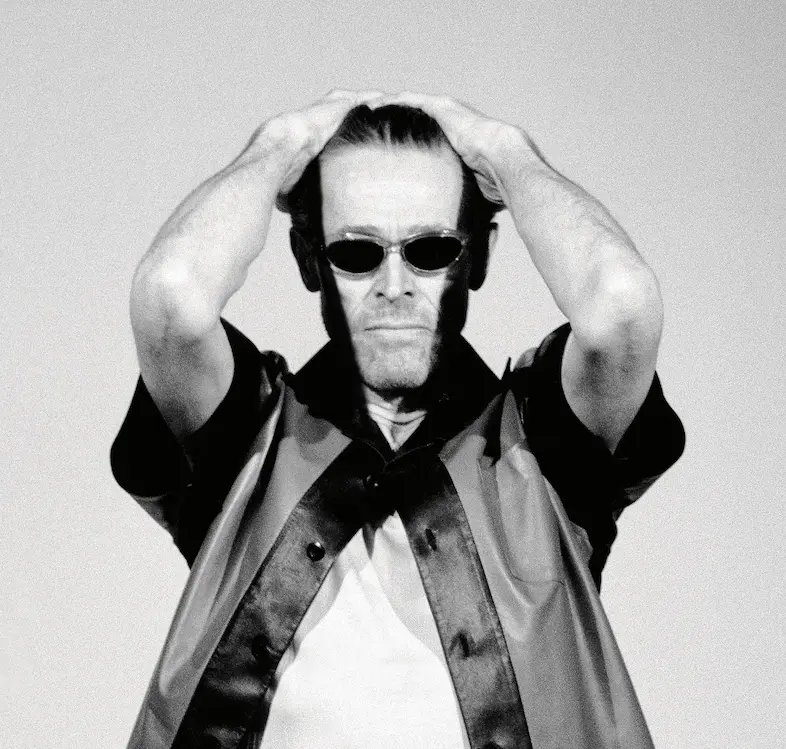
At 71 years of age, Willem Dafoe occupies a rare, perhaps singular, echelon within contemporary global culture. He is simultaneously a titan of the international arthouse avant-garde—a foundational architect of the Wooster Group and a muse to auteurs ranging from Martin Scorsese to Yorgos Lanthimos—and an accidental monarch of Gen Z internet meme culture. Whether he is screaming at the heavens in At Eternity’s Gate, declaring himself “something of a scientist” in Sam Raimi’s Spider-Man, or posing alongside a mouldy orange in a viral photoshoot, Dafoe’s face is a permanent fixture of digital vernacular.
Yet, rather than retreating from this bizarre intersection of high art and internet ephemera, Dafoe leans into the cultural slipstream with characteristic curiosity. This duality forms the beating heart of his 159th screen appearance: Late Fame, an adaptation of an 1895 Arthur Schnitzler novella directed by Kent Jones and scripted by Samy Burch. In the film, Dafoe plays Ed Saxberger, a long-dormant New York postman whose forgotten poetry is suddenly unearthed by a zealous faction of young, anti-technology artists.
In many ways, Late Fame serves as a cinematic mirror for Dafoe’s real-world dynamic: an elder statesman of cinema perpetually energized by the raw, uncalculated hunger of youth. This feature explores Dafoe’s unexpected dominance over digital culture, his exhaustive cinematic lineage, the genesis of his latest role, and his lifelong philosophy on collaboration, aging, and the relentless pursuit of creation.
Detailed Chronology: From the Avant-Garde to the Digital Pantheon
To understand Willem Dafoe’s current cultural ubiquity, one must trace a career that has defied conventional Hollywood trajectory for half a century.
The Foundational Decades (1975–1999)
Dafoe’s artistic DNA was forged not on Hollywood backlots, but in the radical theatrical trenches of New York City. In 1975, he co-founded the Wooster Group, an experimental theater collective based in SoHo that redefined American performance art through collage, multimedia, and deconstruction. This theatrical grounding immunized Dafoe against the constraints of naturalism. He learned early to treat his body and face as instruments capable of extreme abstraction.
By the 1980s and 1990s, this fearless physicality caught the attention of visionary filmmakers. He earned an Academy Award nomination for Oliver Stone’s Platoon (1986), played Jesus Christ in Martin Scorsese’s controversial The Last Temptation of Christ (1988), and collaborated with luminaries like David Lynch (Wild at Heart), Kathryn Bigelow (The Loveless), and Wim Wenders. By the turn of the millennium, Dafoe had established himself as an actor incapable of giving a mundane performance, seamlessly pivoting between blockbuster villainy (Green Goblin in Spider-Man) and transgressive character studies.
The Prestige and Auteur Renaissance (2000–2020)
In the 21st century, Dafoe’s career accelerated into overdrive. He became a fixture in the symmetrical, deadpan worlds of Wes Anderson (The Life Aquatic with Steve Zissou, The Grand Budapest Hotel, Asteroid City), plunged into the psychological depths of Lars von Trier’s Antichrist and Nymphomaniac, and earned further Oscar nods for his work in Julian Schnabel’s At Eternity’s Gate (as Vincent van Gogh) and Sean Baker’s The Florida Project.
It was during this period that the internet began to systematically claim him. The pained, upward gaze from At Eternity’s Gate transitioned seamlessly from arthouse cinema into a universal shorthand for spatial discomfort—the ultimate meme for sitting too close to the screen in an IMAX theater.
The Meme Era and Late Fame (2020–Present)
Today, Dafoe’s digital footprint is codified on platforms like KnowYourMeme.com, where indices catalog everything from classic movie quotes to absurd, out-of-context editorial imagery. Despite logging onto Zoom calls from New York with the cautious hesitation of a man who still types on his smartphone with a single index finger, Dafoe is acutely aware of his digital afterlife.
This brings us to his current chapter: Late Fame. Developed from a passion project Dafoe initially pitched to Abel Ferrara, the film represents a meta-textual collision between Dafoe’s artistic history and his current status as an icon to younger generations. Scheduled for UK theatrical release on September 4, Late Fame brings the actor full circle, exploring what happens when an aging man is suddenly forced to reckon with the ghosts of his youthful ambitions.
Supporting Context & Metrics: Dafoe’s Unprecedented Cultural Footprint
To quantify Willem Dafoe’s cultural persistence, one must examine the intersection of his extensive filmography and his digital resonance.
| Metric / Category | Detail / Context |
|---|---|
| Total Screen Credits | 159 film and television appearances (culminating in Late Fame). |
| Major Collaborators | Martin Scorsese, David Cronenberg, Lars von Trier, Wes Anderson, Spike Lee, Paul Schrader, Robert Eggers, Yorgos Lanthimos, Abel Ferrara, Kathryn Bigelow, John Waters. |
| Academy Award Nominations | 4 (Best Supporting Actor for Platoon, Shadow of the Vampire, The Florida Project; Best Actor for At Eternity’s Gate). |
| Meme Index Presence | Dedicated cataloging on platforms like KnowYourMeme, including viral phenomena from Spider-Man 2, At Eternity’s Gate, and erratic fashion editorials. |
| Theatrical Roots | Co-founder of the Wooster Group (established 1975). |
The Mechanics of Meme-ability
When asked why his image translates so effortlessly into internet culture, Dafoe points to his rejection of strict naturalism. "I generate a lot of work and I’m not bound by just naturalism," he reflects. "I sometimes do very abstract, theatrical performances. I like doing photoshoots. You get clothes you sometimes would never be caught dead wearing, and if the photographer’s good, it’s fun and instant. You have to find shapes and perform."
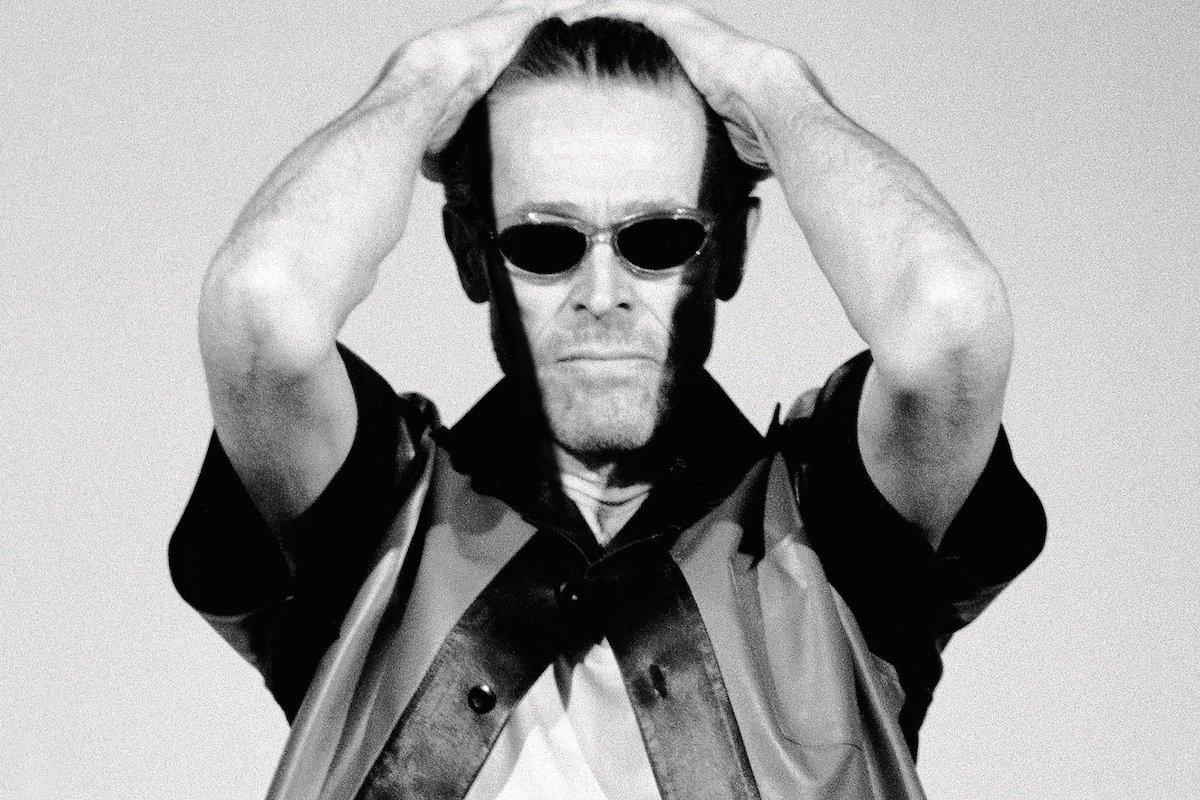
While he does not actively scroll through TikTok or Instagram, he is insulated by a culture that refuses to let him remain offline. "I don’t have to seek it out. It’s in the culture. So much of it is in your face," he notes. When friends and colleagues forward him bizarre digital creations—such as the infamous image of him smoking a cigarette beside a mouldy orange—he does not recoil. "People send me weird stuff, yeah. I enjoy it sometimes."
Official Statements & Direct Perspectives
Dafoe’s reflections on his career, aging, and his fascination with younger artists reveal an artist who remains remarkably unjaded by his legendary status.
On Aging and Identity
One of the most poignant lines in Late Fame was actually written into the script by Dafoe himself, sourced directly from his own internal monologue regarding the passage of time.
"I put it in there because I’ve said it in interviews," Dafoe explains. "I used to be the youngest in every group, and then one day — it’s not a gradual thing — I woke up and I was the oldest one. I’m dealing with that."
This existential whiplash heavily influences how he views his place on film sets. Surrounded by younger actors and crew members between takes in coffee shops and restaurants, Dafoe is often cast in the role of the veteran dispensing "war stories." Yet, this categorization creates a fascinating internal dissonance.
"When I’m put in that position of an older actor and people ask me things, it’s confusing. My identity is that I’m a young guy. I’m a kid."
On Collaborating with Youth
Reflecting on the wisdom imparted to him decades ago by Gene Hackman—who famously warned him, "Whatever you do, never work with a first-time director"—Dafoe admits he deliberately discarded that advice. Instead, he actively seeks out the vitality of emerging talent.
"I’m always trying to figure out what young people are up to, because they have an energy I respect and want to tap into. They have their lives ahead of them, and a desire to make something. When you need to make something, and the world drops away, and you have this single purpose — that’s attractive to me. How they think might be different to me — I’m not a kid — but I can learn from them."
Rather than offering patronizing mentorship, Dafoe views youthful ambition as a necessary antidote to professional stagnation. "What I want to avoid is people who are stuck and don’t have that desire. Sometimes people lose that over time. I haven’t lost it. Maybe I’m a little bit of a bloodsucker, but I turn very much to the younger generation to put me in places where I’m not comfortable."
Future Outlook
As Late Fame prepares for its September theatrical release, Willem Dafoe shows no signs of slowing down his relentless pace. His ability to bridge the gap between high-art masterworks and decentralized internet culture ensures his relevance across multiple generations of audiences.
The paradox of Willem Dafoe is that his longevity is fueled entirely by his refusal to age mentally. By treating every project—whether an experimental theatrical piece with the Wooster Group, an auteur-driven indie drama, or an absurdly viral internet meme—with the same unyielding dedication and playful abandon, he has secured a form of cultural immortality.
For Dafoe, the future is not about resting on the laurels of a 159-credit filmography, but about seeking out the next uncomfortable space, the next young director with a burning desire to create, and the next shape to perform. As long as he remains hungry, the culture will keep watching—and memeing—every move he makes.