Executive Overview
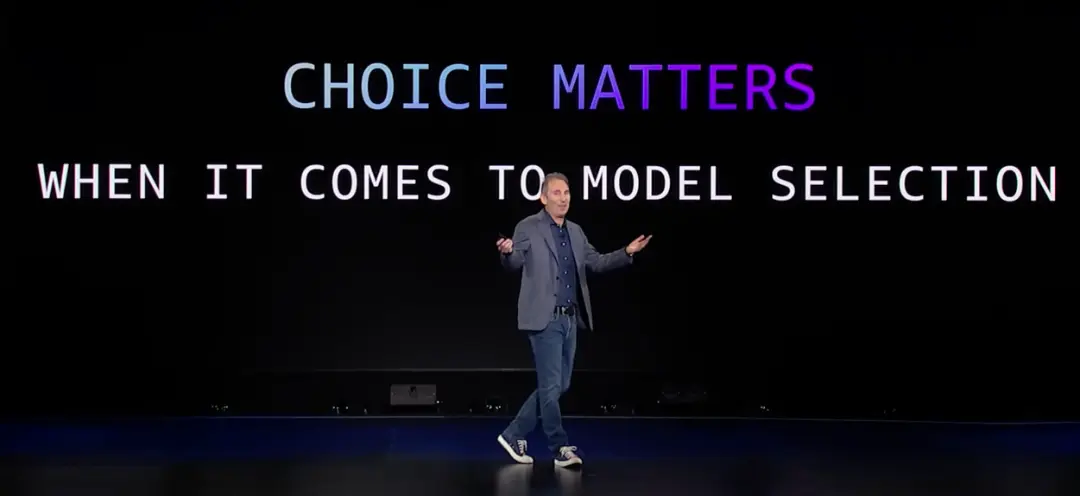
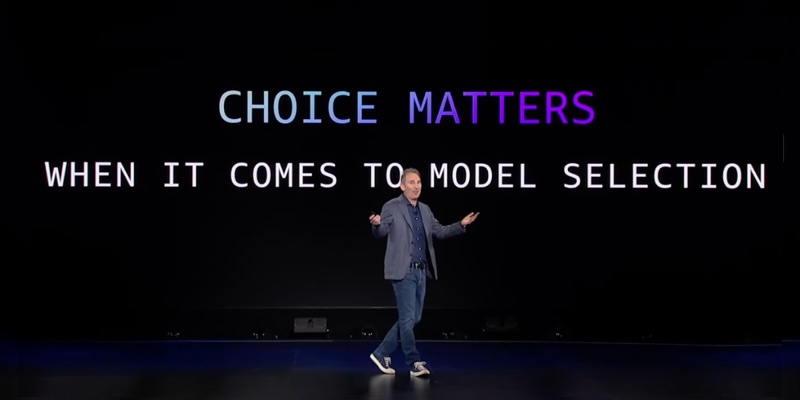
The paradigm of enterprise artificial intelligence is undergoing a profound structural shift. For years, the prevailing sentiment in generative AI development was defined by a singular, maximalist pursuit: raw intelligence, raw parameter scale, and the relentless deployment of the largest possible frontier models regardless of resource consumption. However, the defining narrative of the current technological landscape is no longer simply "how smart is the model?" but rather "which model perfectly balances capability, cost, and latency for a specific, granular step in a workflow?"
This strategic maturation was underscored dramatically on Amazon Web Services (AWS). Amazon Bedrock—AWS’s fully managed service for deploying high-performing foundation models via unified APIs—has officially integrated a powerful suite of next-generation models: OpenAI’s GPT-6 Sol and GPT-6 Luna, alongside Anthropic’s Claude Opus 5.5.
This comprehensive rollout marks a critical inflection point for enterprise architecture. By introducing models explicitly engineered for targeted intelligence-versus-efficiency curves, AWS is enabling developers to abandon the inefficient "one-size-fits-all" approach to LLM deployment. GPT-6 Sol arrives tailored for the rigorous, high-complexity demands of software development and continuous operations. Simultaneously, GPT-6 Luna democratizes high-volume, repeatable tasks through optimized pricing and speed. On the other side of the aisle, Anthropic’s Claude Opus 5.5 redefines long-context execution and agentic coding, achieving unprecedented milestones in token efficiency.
As organizations grapple with the financial and operational realities of scaling generative AI production workloads, this convergence of multi-model choice, cost reduction, and advanced observability signifies a mature industry entering its next golden age. This report provides an in-depth examination of these new releases, their architectural impacts on Amazon Bedrock, and what they signal for the future of cloud-native AI engineering.
Detailed Chronology: The Evolution of Model Choice on Amazon Bedrock
The arrival of GPT-6 Sol, GPT-6 Luna, and Claude Opus 5.5 on Amazon Bedrock did not happen in a vacuum; it is the culmination of a rapid acceleration in frontier model deployment that has characterized the cloud ecosystem.
The Shift Toward Granular Optimization
Over the past several quarters, enterprise customers utilizing AWS have voiced a consistent architectural challenge: while models from the GPT-5 and early Claude generations delivered staggering capabilities, running them for deterministic, high-frequency, or lower-complexity tasks introduced prohibitive latency and cost footprints. Developers frequently found themselves utilizing massively over-provisioned models for tasks that required strict structural formatting, rapid data parsing, or routine code refactoring.
Recognizing this operational friction, AWS and its foundational partners—OpenAI and Anthropic—accelerated the development of models optimized not just for benchmarks, but for the economic and latency realities of production-grade software engineering.
OpenAI’s GPT-6 Sol and Luna Landing
OpenAI’s introduction of the GPT-6 tier on Amazon Bedrock represents a major milestone in managed model availability. Divided into two specialized variants—Sol and Luna—this release splits the traditional monolithic general-purpose model into distinct operational personas:
- GPT-6 Sol: Engineered specifically for the demanding, recurring cognitive loops of modern software development and cloud operations (DevOps). Sol is optimized to handle multi-step reasoning, complex API integrations, and continuous integration/continuous deployment (CI/CD) pipeline troubleshooting. It maintains the deep semantic understanding expected of top-tier frontier models while offering substantial architectural improvements over its GPT-5.6 predecessors.
- GPT-6 Luna: Designed for high-volume, focused, and repeatable execution. Luna addresses the enterprise need for programmatic task automation—such as automated classification, batch data extraction, and content generation—at a fraction of the cost. By stripping away extraneous latency and focusing processing power on structured outputs, Luna makes high-throughput generative workflows economically viable at enterprise scale.
Crucially, both models debut on Amazon Bedrock at price points significantly lower than their GPT-5.6 predecessors, directly addressing the total cost of ownership (TCO) pressures faced by CTOs and engineering directors.
Anthropic’s Claude Opus 5.5 Debut
Simultaneously, Anthropic launched Claude Opus 5.5, the vanguard of the new Claude 5.5 model family, natively integrated into Amazon Bedrock. Building upon the foundational strengths of the Claude Opus lineage, version 5.5 introduces a paradigm shift in token economy: it accomplishes significantly more complex reasoning tasks while consuming fewer tokens than its predecessor, Opus 5.
Claude Opus 5.5 is explicitly tuned for agentic coding and long-running autonomous workflows. In modern software engineering, autonomous agents must maintain context over extended sessions, reading massive codebases, writing unit tests, executing code, and iterating based on error logs. Opus 5.5’s architectural refinement minimizes context degradation and reduces the token bloat that historically plagued long-running agentic loops, making it an indispensable asset for enterprise engineering teams building autonomous developer tools.
Supporting Context, Architectural Impacts, and Metrics
To fully appreciate the significance of these integrations, one must examine the underlying infrastructure of Amazon Bedrock and the technical metrics driving enterprise adoption.
The Bedrock Advantage: Unified Infrastructure Meets Multi-Model Choice
Amazon Bedrock provides a serverless architecture that allows organizations to securely build and scale generative AI applications using foundation models from leading AI companies through a single API. This architecture eliminates infrastructure management, allowing engineering teams to focus purely on application logic.
The addition of GPT-6 Sol, GPT-6 Luna, and Claude Opus 5.5 into this ecosystem magnifies the core benefits of Bedrock:
- Flexibility Without Migration Friction: Enterprises can switch between OpenAI and Anthropic models—or route specific tasks to different models dynamically—without altering their underlying application code or compliance frameworks.
- Enterprise-Grade Security and Governance: All inputs and outputs routed through Amazon Bedrock remain encrypted and isolated within an organization’s virtual private cloud (VPC). Data used to invoke these models is never used to train the underlying foundation models, satisfying the stringent regulatory compliance requirements of finance, healthcare, and government sectors.
- Fine-Tuning and RAG Integration: Bedrock seamlessly integrates these new models with Retrieval-Augmented Generation (RAG) pipelines, Amazon Kendra, and vector databases (such as Amazon OpenSearch Service), empowering developers to ground GPT-6 and Claude Opus 5.5 outputs in proprietary corporate data.
The Economics of Token Efficiency and Latency
In enterprise production environments, the metrics that matter most are Time-to-First-Token (TTFT), Tokens Per Second (TPS), and Cost per Million Tokens.
- Cost Reductions: With GPT-6 Sol and Luna launching at substantially reduced price points compared to previous generations, organizations can scale their automated operations without triggering exponential cloud bill inflation.
- Token Optimization: Claude Opus 5.5’s ability to execute complex agentic loops with fewer tokens directly addresses the hidden costs of LLM usage—specifically, context window costs that accumulate during multi-turn diagnostic and coding sessions.
- Latency Balancing: By matching tasks to the appropriate model tier (e.g., routing a simple classification task to GPT-6 Luna rather than a heavyweight reasoning model), systems achieve sub-second latencies that are critical for real-time user-facing applications.
The Rise of Agentic Observability
As noted in AWS engineering circles following the release, the maturation of multi-model architectures has created a parallel imperative: observability.
Running autonomous, multi-step AI agents powered by models like Claude Opus 5.5 and GPT-6 Sol introduces complex debugging challenges. Unlike traditional software, where execution paths are deterministic, agentic systems make autonomous decisions regarding which tools to invoke, when to query APIs, and how to self-correct.
AWS has responded by rapidly expanding its observability tooling—integrating advanced tracing, cost attribution dashboards, and telemetry within Amazon CloudWatch and Bedrock model evaluation tools. Developers can now trace the exact reasoning steps, token counts, and latency bottlenecks of an agentic workflow in real time, ensuring enterprise-grade reliability and auditability.

Official Statements and Industry Perspective
While specific enterprise case studies are rolling out as organizations begin stress-testing these models in staging environments, industry analysts and cloud architects have been vocal about the strategic implications of the AWS announcements.
Cloud infrastructure analysts view the simultaneous availability of OpenAI and Anthropic frontier models on AWS as validation of Amazon’s multi-model strategy. Rather than tying its cloud platform to a single proprietary AI partner, AWS has positioned Amazon Bedrock as the ultimate Switzerland of enterprise AI—a neutral, secure nexus where customers can leverage the absolute best models from across the entire technology landscape.
"The conversation in enterprise AI has officially graduated from a novelty showcase to a disciplined exercise in systems architecture," noted one enterprise cloud strategist. "When you give engineering teams access to specialized tools like GPT-6 Sol for complex DevOps loops, GPT-6 Luna for high-volume automation, and Claude Opus 5.5 for agentic coding—all managed under the robust security umbrella of Amazon Bedrock—you remove the technological friction that has slowed down enterprise AI ROI."
Furthermore, the emphasis on cost-to-performance ratios reflects a broader market correction. Enterprises are no longer willing to subsidize inefficient AI implementations. The aggressive pricing models accompanying the GPT-6 tier signal that foundation model providers and cloud hyperscalers recognize that mass adoption depends entirely on predictable, scalable economics.
Future Outlook: What Lies Ahead for AWS Builders
As we look toward the remainder of the year and beyond, the trajectory of cloud-native artificial intelligence on AWS is clear. The era of static prompt-and-response applications is giving way to autonomous, multi-agent ecosystems capable of executing complex, long-running business workflows with minimal human intervention.
Key Trends to Watch on AWS:
- Dynamic Model Routing: Expect to see advanced orchestration frameworks on Amazon Bedrock that automatically route user prompts to the most cost-effective and latency-optimized model in real time, switching dynamically between OpenAI and Anthropic endpoints based on immediate task complexity.
- Deeper Autonomous Agent Integration: With Claude Opus 5.5 optimizing agentic coding, developer tooling on AWS (such as Amazon Q and third-party IDE integrations) will evolve to handle end-to-end software delivery lifecycles autonomously—from architectural planning and code generation to automated security auditing and deployment.
- Expanded Edge and Hybrid AI Capabilities: As models become more efficient (exemplified by Luna’s high-volume focus and Opus 5.5’s token reduction), the boundary between cloud-based foundation models and edge execution will continue to blur, opening up new possibilities for low-latency enterprise applications.
Engaging with the AWS Community
For developers, architects, and technology leaders looking to stay at the forefront of these advancements, active participation in the cloud ecosystem is essential.
- AWS Builder Center: Connect with fellow builders, share custom architectural solutions, and access advanced tutorials by joining the AWS Builder Center.
- Events and Workshops: Keep an eye on the official AWS Events page for upcoming virtual and in-person developer workshops, deep-dive technical sessions, and hackathons focusing on Amazon Bedrock and agentic workflow orchestration.
- Stay Updated: Monitor the What’s New with AWS page and the AWS Blogs for continuous updates as new model capabilities, pricing structures, and observability tools roll out over the coming weeks.
The tools are in place, the choice is unprecedented, and the economics have never been more favorable. For builders on AWS, the mandate is clear: match the model to the mission, optimize your efficiency curves, and start building the next generation of intelligent enterprise applications.