Executive Overview
In the ecosystem of Magic: The Gathering, color philosophies dictate not just mechanical boundaries, but fundamental worldviews. While white builds fortitudes of order, blue weaves tapestries of omniscience, green nurtures the inevitable cycles of nature, and red burns with the unbridled fury of emotion, black stands entirely alone. Unapologetically self-serving, black’s philosophical core is anchored in individual ambition, calculated risk-taking, and the absolute conviction that any price—be it life, loyalty, or sanity—is worth paying for a competitive advantage.
Black’s ruthlessness extends far beyond surface-level creature destruction or targeted discard spells. It transforms life totals into currency, animates the fallen to fight once more, and ruthlessly deconstructs an opponent’s most meticulously orchestrated game plans. Even its most chaotic and eccentric spells reflect a driving hunger to exert control over the table.
However, this immense power is never granted without a tax. The strongest black cards demand heavy sacrifices: lost life totals, sacrificed permanents, or resources spent far ahead of schedule. The hallmark of a master black mage lies in discerning when those costs are merely nominal fees compared to the spoils of victory. Below is a comprehensive breakdown of the ten most iconic, powerful, and historically significant black cards in the history of Magic: The Gathering, tracing their evolution from vintage formats to contemporary Commander tables.

Detailed Chronology: Ten Masterpieces of Black Magic
10. Blood Artist (Avacyn Restored, 2012)
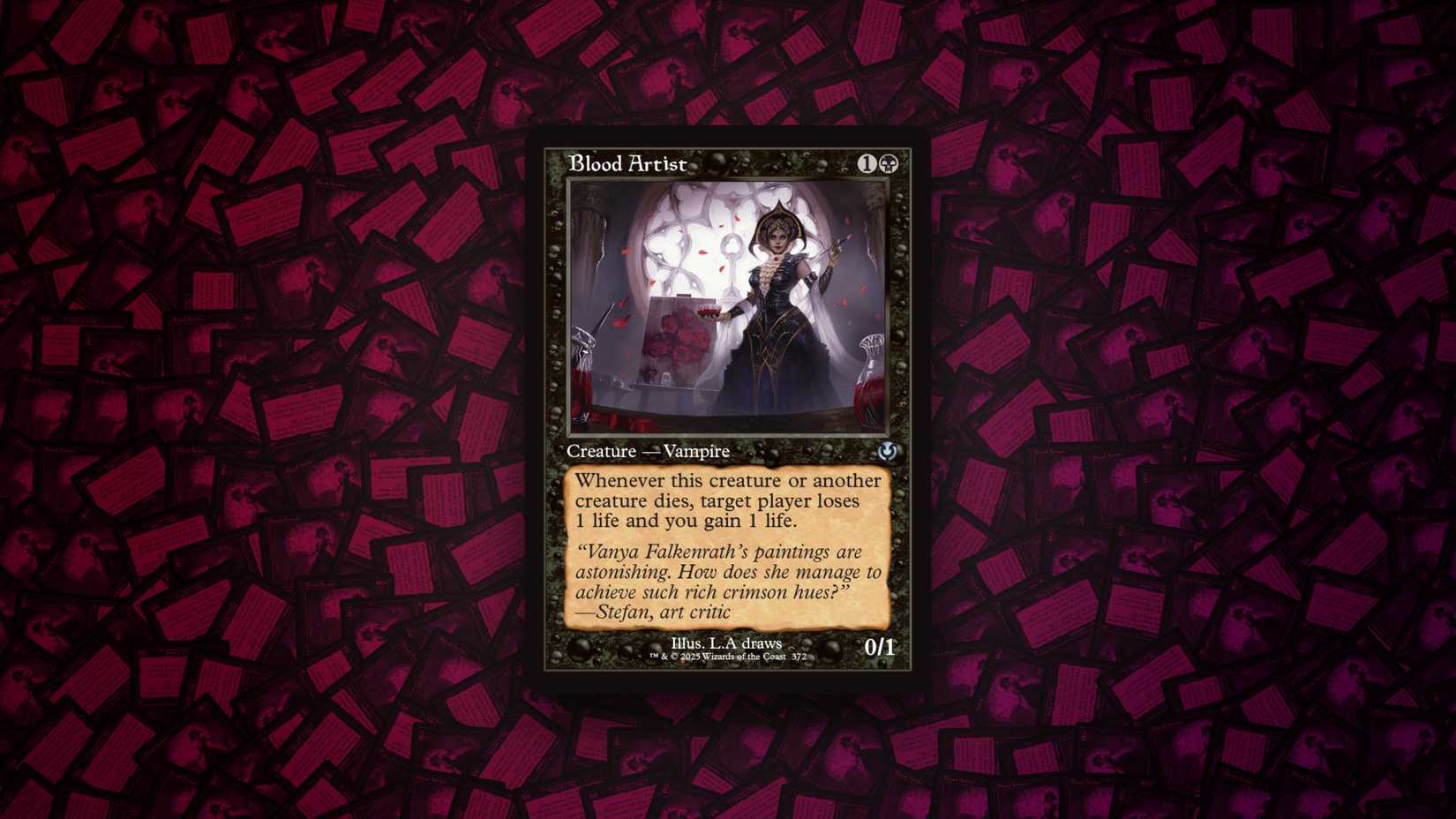
In a trading card game defined by constant combat trades, board wipes, and sacrificial loops, Blood Artist ensures that mortality itself is never wasted. For just two mana, this unassuming Vampire triggers whenever any creature dies, draining one life from a target player and restoring one to you. Crucially, the ability does not specify whose creature has perished; it profits equally from your own sacrificial fodder and an opponent’s desperate defensive measures.
Blood Artist quickly became the bedrock of "Aristocrats" archetypes—strategies that weaponize the death of their own assets to grind opponents out of the game. Rather than reanimating a fallen threat, Blood Artist converts tragedy into a steady trickle of attrition. Every loss becomes an incremental step toward total victory.
9. Liliana of the Veil (Innistrad, 2011)
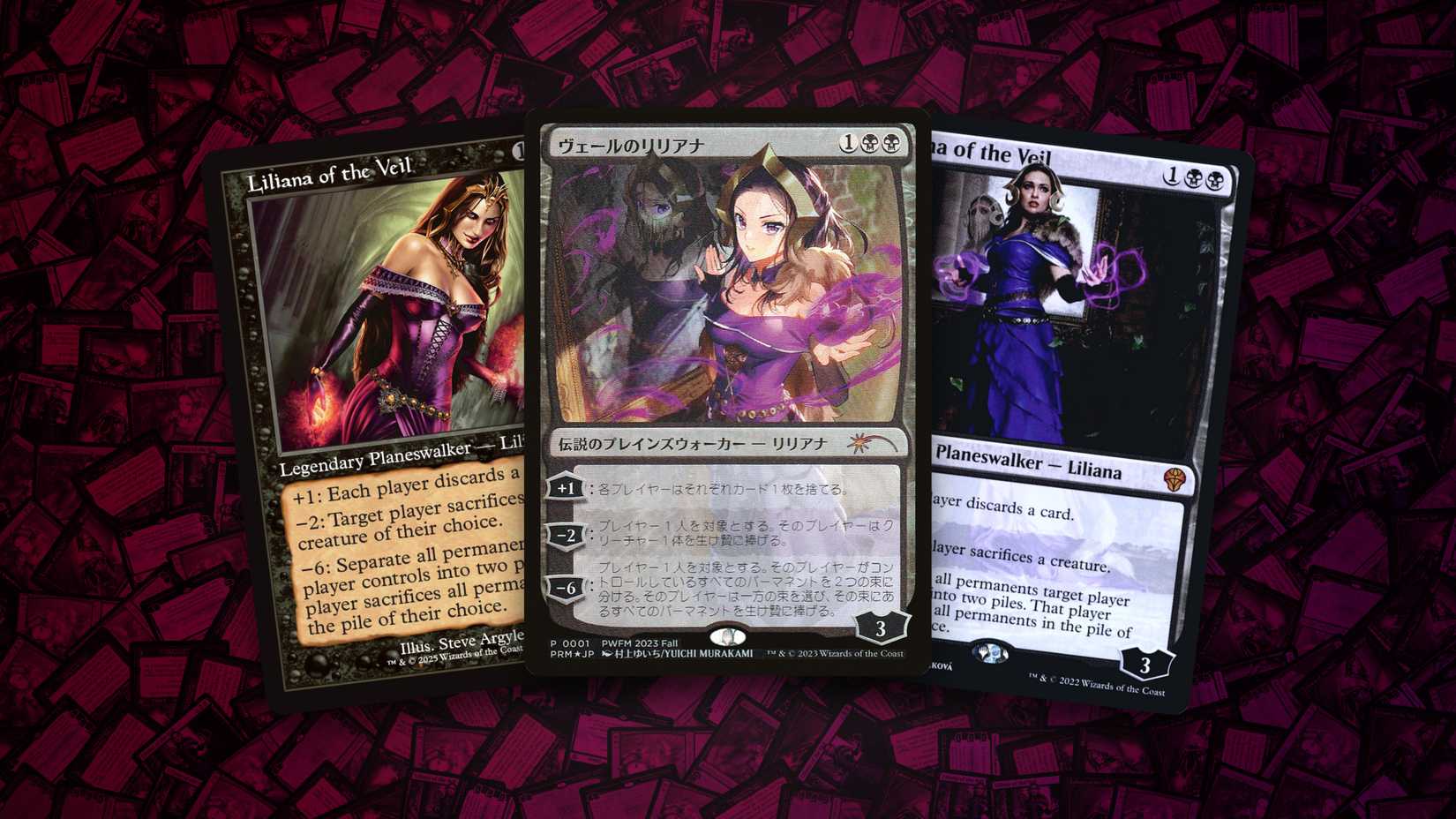
Few Planeswalkers command the battlefield with the understated, oppressive elegance of Liliana of the Veil. Rather than relying on a flashy ultimate ability to close games, Liliana’s strength lies in systemic, relentless resource denial. Her first ability forces each player to discard a card; her second mandates the sacrifice of a creature; her final ultimate divides an opponent’s permanents into two piles, forcing them to sacrifice an entire half of their board state.
While symmetrical discard and sacrifice effects demand that the black player also surrender resources, black thrives in asymmetrical punishment, orchestrating gamestates where its own losses are mitigated while opponents are left top-decking empty-handed.
8. Entomb (Odyssey, 2001)
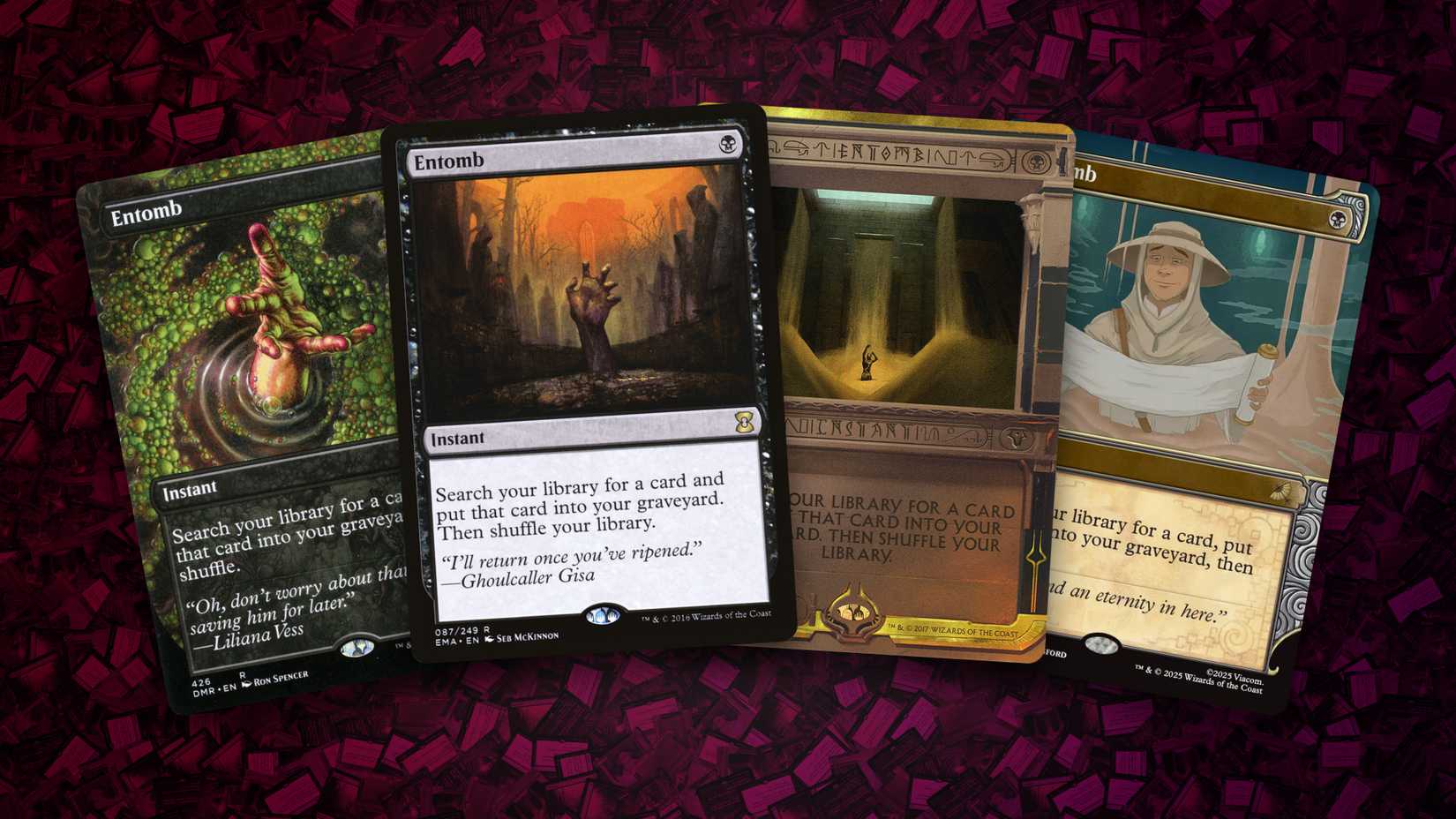
The graveyard in Magic: The Gathering is rarely a final resting place; with the right tools, it functions as a sprawling secondary hand. Entomb is the ultimate expression of this paradigm shift. For a single black mana at instant speed, it allows a player to search their library for any card and drop it straight into the graveyard.
When paired with recursion engines, Entomb acts as a one-mana shortcut to summon world-ending titans like Griselbrand, Archon of Cruelty, or Sheoldred, the Apocalypse before opponents have even laid down their second land. It epitomizes black’s willingness to bypass fair play entirely.
7. Reanimate (Tempest, 1997)
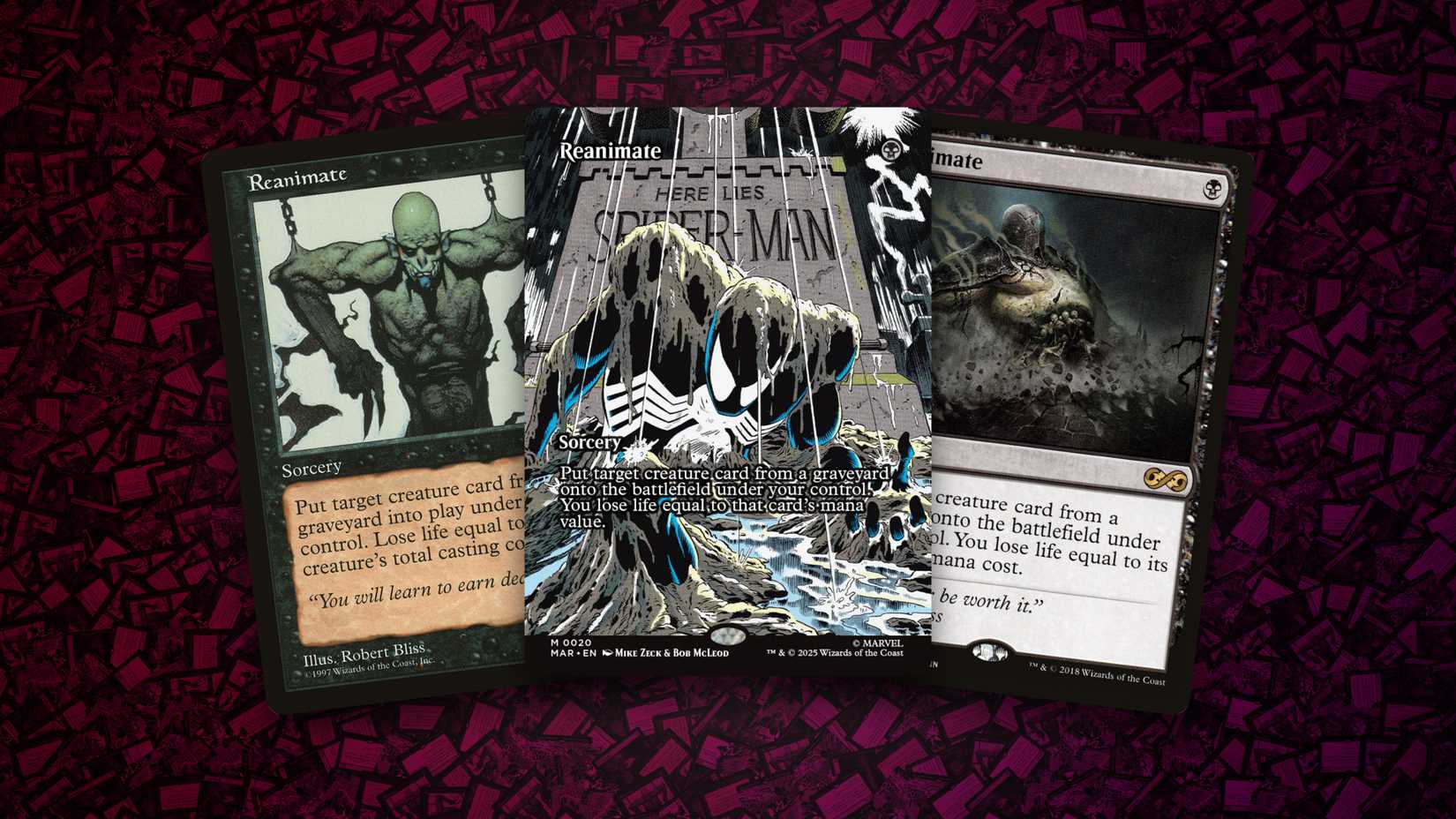
If Entomb loads the gun, Reanimate pulls the trigger. First printed in 1997, this single-mana sorcery plucks any creature from any graveyard—friend or foe—and drops it directly onto the battlefield, extracting a life payment equal to that creature’s mana value.
Reanimator archetypes have spent nearly three decades weaponizing this exchange, feeding monumental threats to the grave on turn one. The ability to poach an opponent’s discarded powerhouse underscores black’s opportunistic worldview: in the realm of death, property rights do not exist.
6. Worst Fears (Journey into Nyx, 2014)
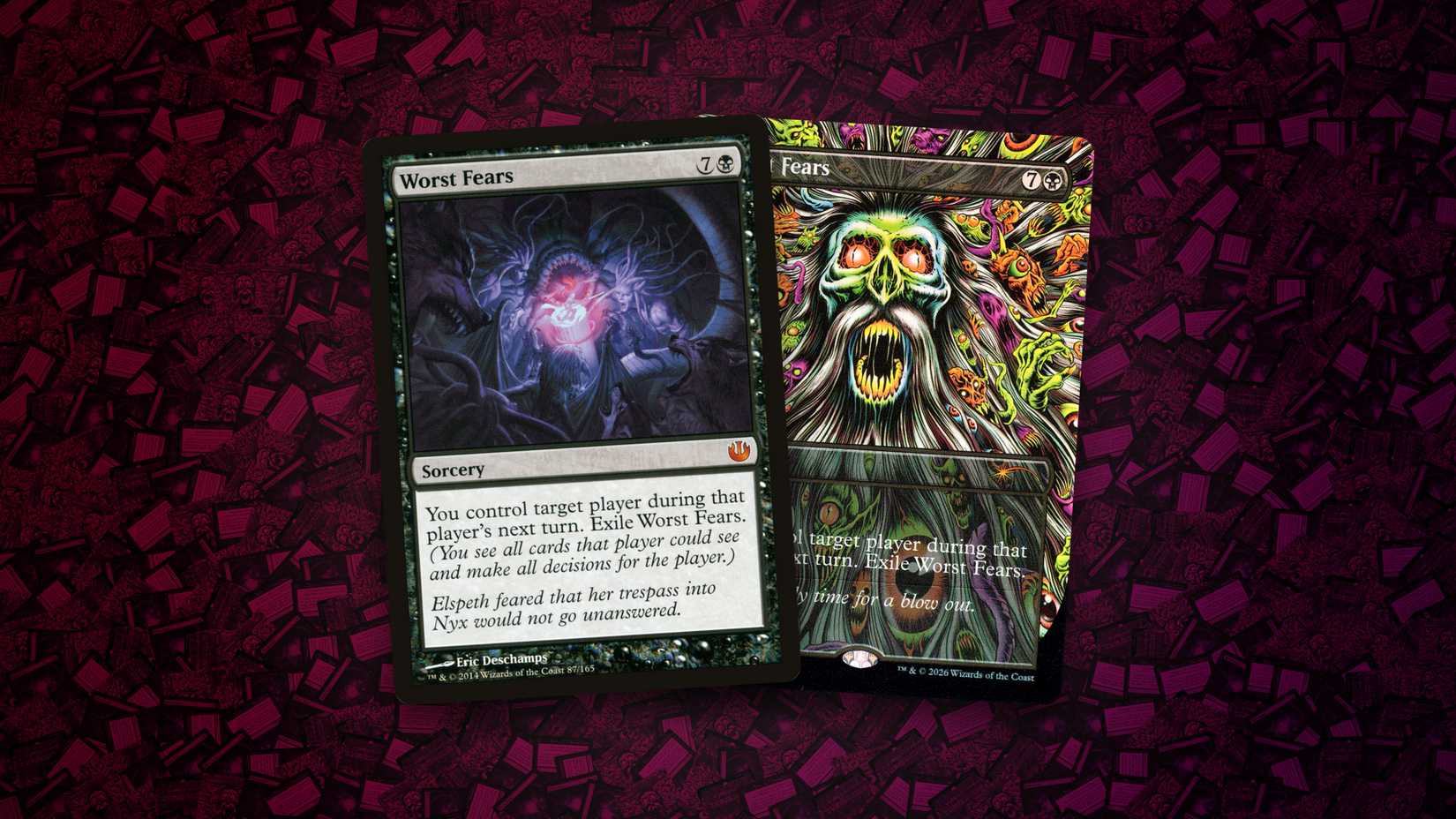
Moving away from hyper-efficient tournament staples, Worst Fears represents black magic at its most theatrical and sadistic. Costing a hefty eight mana, this sorcery seizes complete control of a target player during their next turn, letting you tap their lands, attack their allies, and dismantle their own board state.
While not designed for blisteringly fast legacy formats, its inclusion in high-mana Commander formats introduces an unforgettable layer of psychological warfare. It turns the very mechanics of a competitive card game into a personal instrument of total domination.
5. Thoughtseize (Lorwyn, 2007)
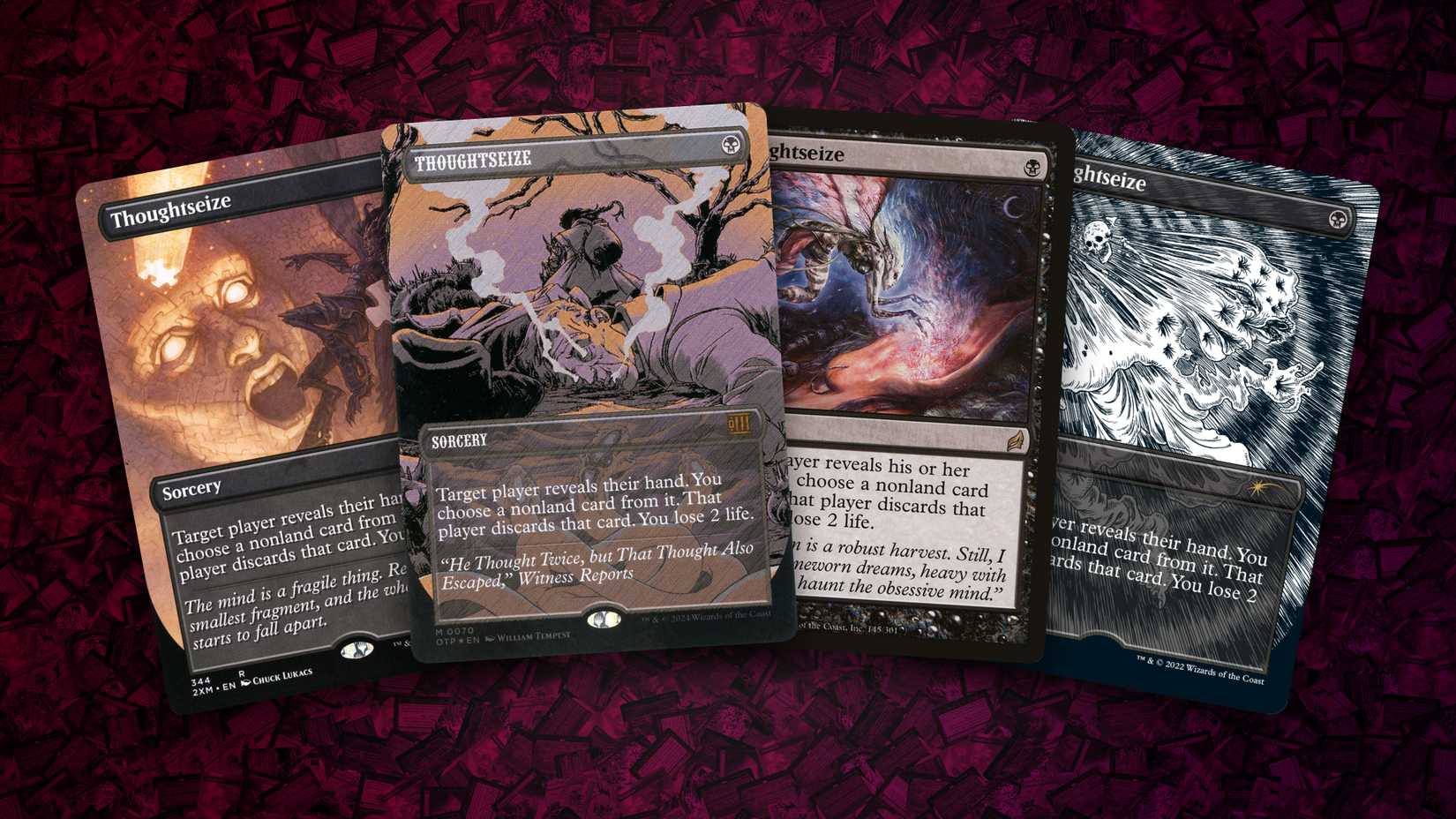
Before an opponent can cast a game-winning spell, Thoughtseize ensures they never get the chance. For one black mana and two life, it strips the best nonland card from an opponent’s hand while granting complete visibility over their hidden plans.
Since its debut in 2007, Thoughtseize has anchored competitive constructed formats by dismantling combos and high-end finishers alike. The inability to hit lands is not a flaw, but a design requirement for precision—forcing the caster to identify and sever the exact linchpin holding the opponent’s strategy together.
4. Yawgmoth’s Will (Urza’s Saga, 1998)
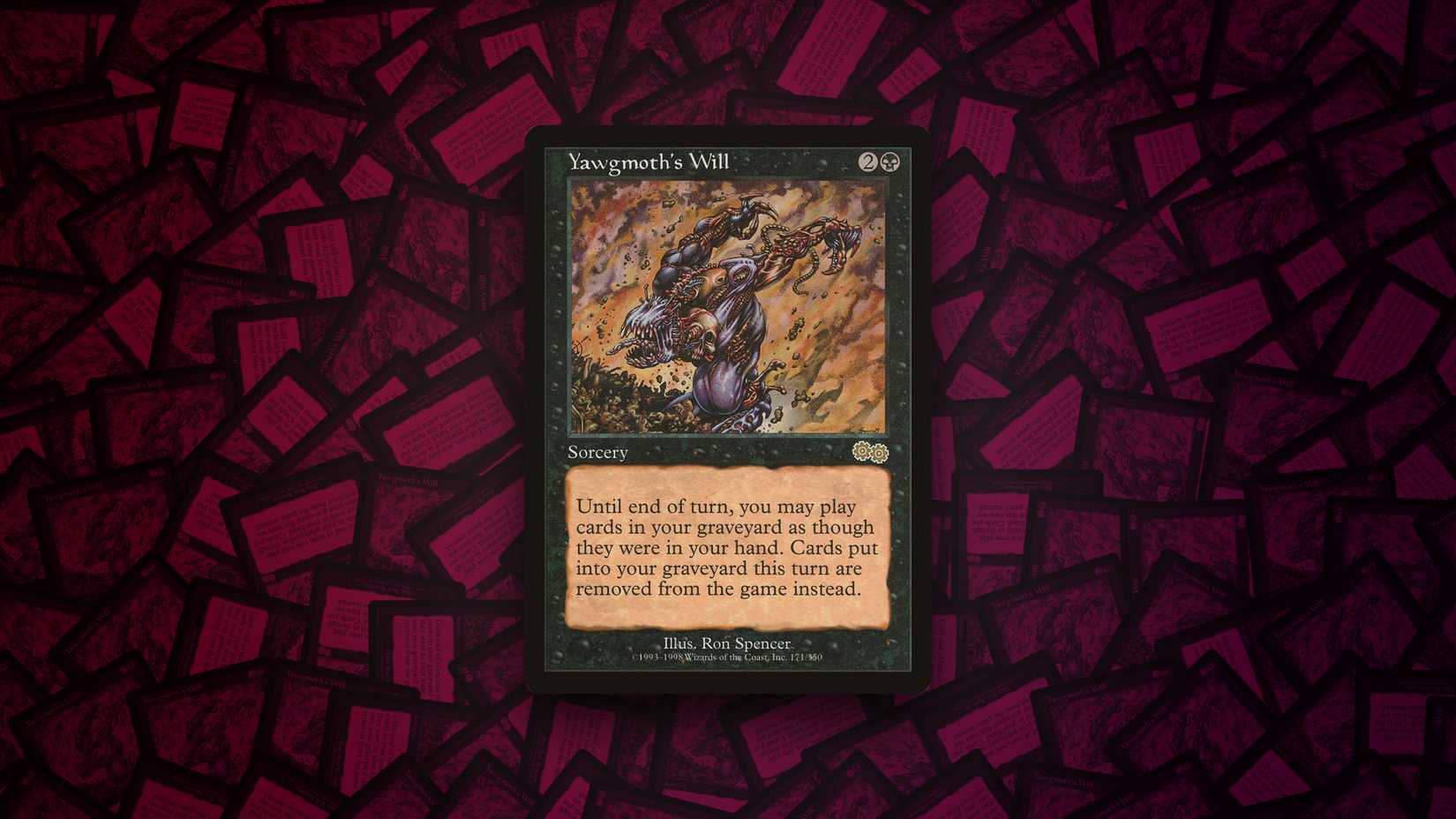
Yawgmoth’s Will fundamentally redefined how the game interacts with the graveyard. This three-mana sorcery grants permission to play cards from the graveyard for a single turn, transforming a previously spent resource pool into a secondary hand capable of executing explosive, game-ending storm combos.
So overwhelmingly efficient that it earned the moniker "Yawgmoth’s Win," the card quickly attracted bans and restrictions across Vintage and Legacy formats, standing as the absolute zenith of black recursion philosophy.
3. Dark Ritual (Alpha, 1993)
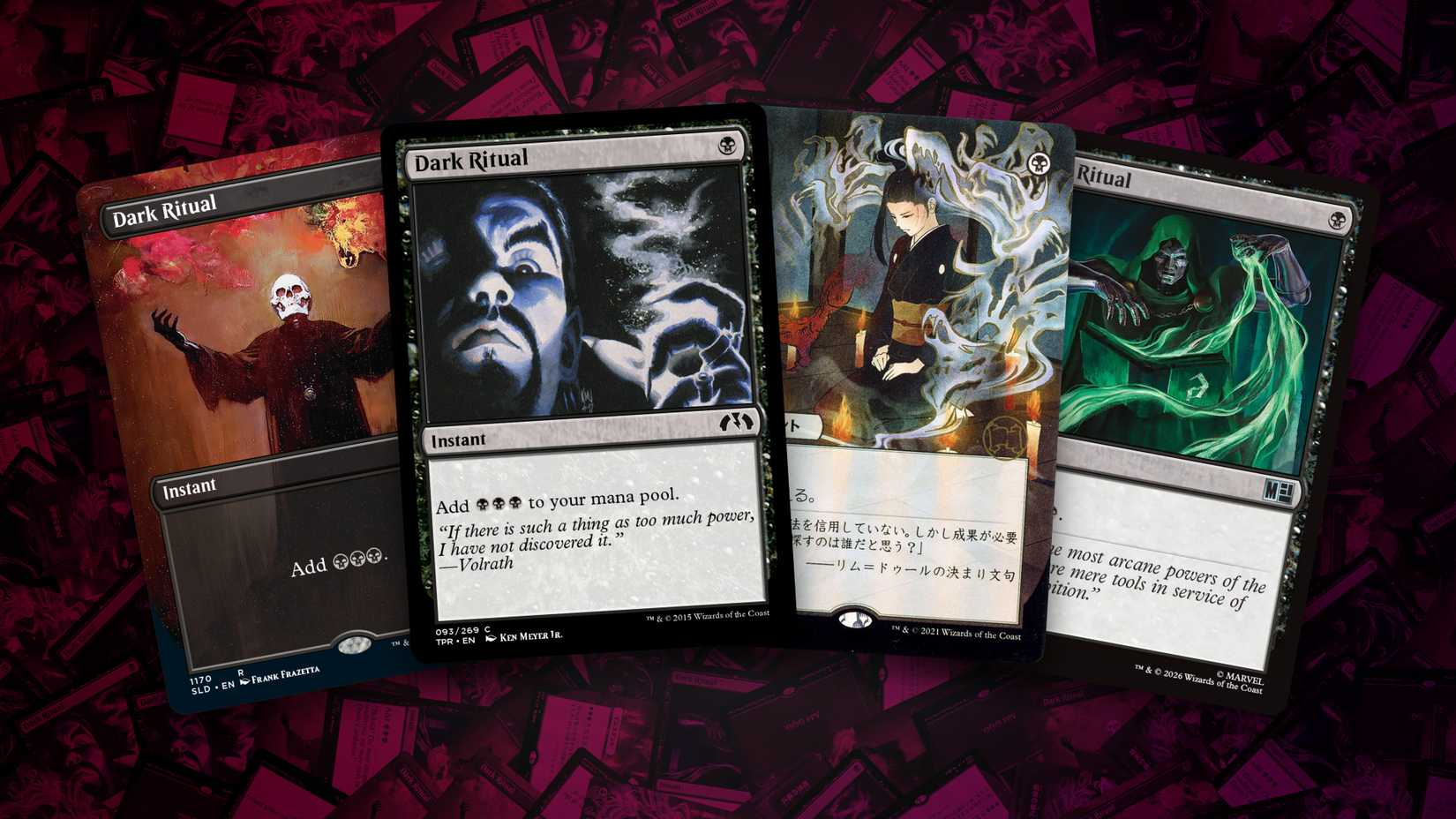
Few plays strike as much immediate terror into an opponent as a turn-one Dark Ritual. Costing one black mana to generate three, it provides an instant-speed burst of fast mana, enabling explosive early-game plays that leave opponents scrambling to establish defensive footprints.
Dating back to the foundational Alpha set, Dark Ritual represents black’s foundational philosophy: trading long-term stability and card advantage for immediate, blistering velocity. It is black at its most impatient and explosive.
2. Demonic Tutor (Alpha, 1993)
Magic is structurally built on the randomized chaos of the draw step, but black has never trusted luck with its survival. Demonic Tutor bypasses the randomness of the library entirely, granting unconditional access to any single card in your deck for just two mana.
Its raw consistency broke competitive play almost immediately upon release. By acting as a second, perfect copy of every broken singleton in a deck, it forced widespread restrictions and bans. To this day, Demonic Tutor stands as definitive proof that consistency is the most dangerous mechanic in the game.
1. Necropotence (Ice Age, 1995)
During the infamously oppressive competitive era of 1996, known as "Black Summer," tournament tables were flooded with players actively draining their own life totals down to single digits just to flood their hands with answers. The catalyst was Necropotence.
Replacing the standard draw step with an open-ended ultimatum—paying life to exile cards from the library and pick them up on future turns—Necropotence treated the player’s life total and the graveyard as entirely expendable variables. No other card captures black’s relentless, self-sacrificial appetite for absolute power quite as completely.
Supporting Context & Metrics: The Meta-Impact of Black
The historical dominance of black cards across competitive formats is not merely anecdotal; it is reflected in tournament data, banlist frequencies, and format saturation.
- Format Representation: In formats like Commander, Commander-centric black staples (such as Demonic Tutor and Vampiric Tutor) appear in an overwhelming majority of black-inclusive decklists. According to community metrics aggregated via platforms like EDHREC, black is consistently among the most heavily played primary colors in casual and competitive multiplayer environments alike.
- Legacy and Vintage Restrictions: Out of the ten cards detailed above, historic powerhouses like Yawgmoth’s Will, Demonic Tutor, and Necropotence populate restricted or banned lists across competitive eternity formats, serving as a testament to their mechanical potency.
- The Economy of Life: Across competitive archetypes, black cards account for the highest percentage of life-loss-as-a-resource mechanics in Magic, maintaining an average historical conversion rate of approximately 2 life per card drawn or searched in high-efficiency spells.
Official Statements and Design Insights
Wizards of the Coast lead designer Mark Rosewater has frequently addressed the unique design space occupied by black within the color pie. In past design columns and philosophical breakdowns, Rosewater noted:
"Black is the color that forces players to confront the cost of winning. While other colors couch their advantages in terms of morality, nature, or community, black is entirely transparent. It asks: ‘What are you willing to give up?’ If the answer is everything, black will give you the tools to conquer the board—provided you can survive the toll."
This design philosophy ensures that black cards continually push the boundaries of risk and reward, serving as mechanical pressure valves that test the structural integrity of every new expansion set.
Future Outlook: The Evolution of Black in Modern Magic
As Magic: The Gathering continues to expand through modern design horizons—including direct-to-consumer sets, Universes Beyond crossovers, and accelerated standard rotations—the mechanical identity of black remains remarkably resilient.
While modern card designs often lean toward balanced resource exchanges to avoid the format-warping dominance seen during eras like "Black Summer," the core tenets established by cards like Dark Ritual, Thoughtseize, and Demonic Tutor continue to inform new printings. Designers frequently revisit the "life-as-a-resource" and "graveyard-as-a-hand" paradigms, ensuring that black will forever remain the definitive home for players who view rules, life totals, and even death itself as mere negotiating points on the path to absolute victory.