Executive Overview
The landscape of psychiatric care is standing at a transformative crossroads. With approximately one in six American adults currently prescribed antidepressant medication, traditional pharmacotherapy has long served as the primary, albeit imperfect, frontline defense against major depressive disorder (MDD).
While millions rely on selective serotonin reuptake inhibitors (SSRIs) and other psychotropic drugs to manage their symptoms, these medications frequently come paired with a heavy burden of adverse physiological side effects—ranging from weight gain and emotional blunting to severe sexual dysfunction and gastrointestinal distress. Furthermore, weeks of trial and error are often required to find the right molecule and dosage, leaving vulnerable patients in prolonged distress.
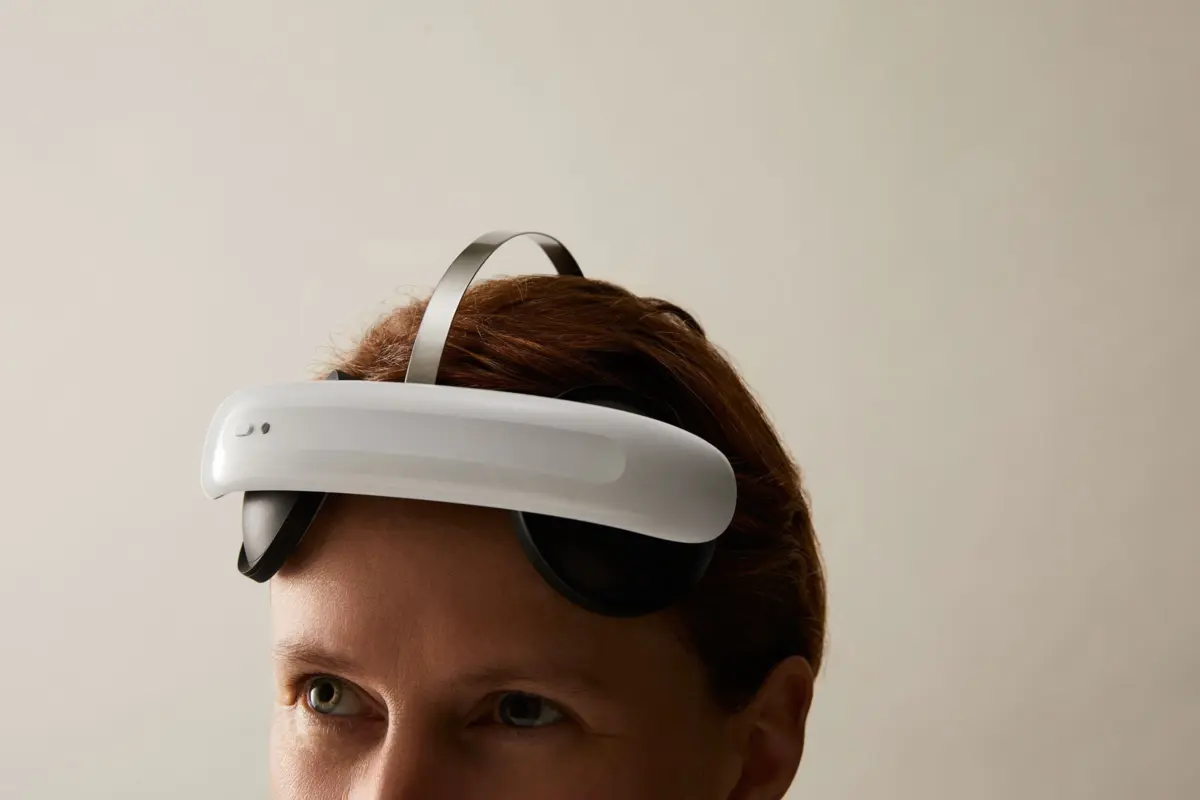
Enter a futuristic contender: a prescription-only, at-home wearable headset developed by Swedish neurotech firm Flow Neuroscience. Operating at the intersection of consumer electronics and clinical neurology, the device delivers low-intensity electrical currents to the left frontal lobe—the region of the brain critically involved in mood regulation and emotional processing.
Having secured clearance from the US Food and Drug Administration (FDA) in December, the Flow headset represents a vanguard of medical technology: a new breed of consumer-accessible neuromodulation tools designed to decentralize mental health treatment from clinical settings straight into the living room.
However, as this novel device makes its official debut in the United States, it collides with a complex healthcare matrix. Boasting a four-figure out-of-pocket price tag, the headset currently exists in a liminal space between high-tech luxury and accessible medicine. While clinical trials show promising remission rates that rival traditional interventions, the financial barrier to entry raises urgent questions about healthcare equity, insurance reimbursement models, and the future viability of nonchemical psychiatric treatments in a profit-driven medical ecosystem.
Detailed Chronology: The Evolution of Flow Neuroscience and FDA Clearance
The journey from a theoretical concept in a Scandinavian laboratory to an FDA-cleared medical device in the United States spans years of rigorous clinical research, regulatory navigation, and psychiatric innovation.
- The Genesis (Pre-2019): Clinical psychologist Daniel Månsson and neuroscientist Erik Rehn recognized a glaring bottleneck in conventional depression therapies. While treatments like transcranial magnetic stimulation (TMS) demonstrated profound efficacy in reactivating dormant neural pathways in the brain’s frontal lobe, they required patients to commute to specialized clinics five days a week for several weeks. Månsson and Rehn sought to democratize this technology, engineering a safe, home-use alternative that utilized transcranial direct current stimulation (tDCS).
- European Rollout (June 2019): Flow Neuroscience achieved its first major regulatory milestone by securing CE-mark certification in Europe as a Class IIa medical device for the treatment of depression. This allowed the company to introduce the headset to the European market, where it rapidly gained traction. Over the next five years, more than 65,000 patients across Europe utilized the device, and the UK’s National Health Service (NHS) initiated pilot programs to evaluate its integration into public healthcare pathways.
- The Pivotal US Clinical Trial (2023–2024): To satisfy stringent American regulatory standards, Flow conducted a robust, randomized, controlled trial involving 174 participants diagnosed with major depressive disorder. The trial tested the headset against a sham (placebo) version, incorporating both patients taking antidepressants and those abstaining from medication.
- FDA Clearance (December 2024): Backed by the compelling data from its clinical trials—which demonstrated a 45 percent symptom remission rate among active device users—Flow Neuroscience officially received clearance from the US Food and Drug Administration. This milestone cleared the path for the device to be prescribed by licensed US clinicians, either in person or via telehealth platforms, marking its official entry into the world’s most lucrative pharmaceutical and medical device market.
Supporting Context & Metrics: Science, Efficacy, and the Economics of Brain Stimulation
To understand the mechanics of the Flow headset, one must examine the neurobiology of depression. Extensive neuroimaging studies indicate that individuals suffering from major depressive disorder often exhibit hypoactivity—reduced neural firing and weakened synaptic connections—in the left dorsolateral prefrontal cortex. This specific region acts as the brain’s emotional thermostat, playing a pivotal role in executive function, motivation, and mood stabilization.
The Mechanism of Action
The Flow headset addresses this neural deficit through transcranial direct current stimulation (tDCS). Worn across the forehead for 30 minutes a day, the device delivers a continuous, imperceptibly low electrical current (measured in milliamperes) directly to the left frontal lobe. This gentle current depolarizes the underlying neuronal membranes, making them more likely to fire and encouraging long-term potentiation—the strengthening of synapses over time.
Clinical Trial Outcomes
In the pivotal 10-week clinical trial involving 174 MDD patients:
- 45 percent of participants who used the active Flow device experienced a complete remission of their depressive symptoms.
- 22 percent of participants in the control group (who received a sham stimulation that mimicked the physical sensation without delivering active current) achieved remission.
- The trial successfully included both unmedicated patients and those concurrently taking antidepressants, suggesting that tDCS can serve as an effective augmentative therapy under medical supervision.
Side Effect Profiles: Pharmaceuticals vs. Electrical Stimulation
One of the most compelling arguments levied by advocates of neurostimulation is the stark contrast in side-effect severity when compared to traditional pharmacology.
- Antidepressants (SSRIs/SNRIs): Frequently induce systemic side effects, including nausea, severe weight fluctuations, insomnia, emotional blunting, profound fatigue, and sexual dysfunction. While some side effects subside after a few weeks, others persist throughout the duration of treatment, often causing patients to prematurely abandon their regimens.
- The Flow Headset: Clinical data indicates that reported side effects are localized and generally mild. Users occasionally experience transient skin irritation beneath the electrodes, mild tension headaches, or temporary difficulty concentrating during the initial stages of adaptation.
The Financial Hurdle
Despite its clinical promise, the Flow device faces a formidable economic barrier in the United States. Unlike generic antidepressants, which are routinely covered by health insurance with minimal co-pays, the Flow headset operates largely outside standard reimbursement frameworks.
.jpg)
- Initial Cost: Patients must pay $2,200 out of pocket for the initial 10-week protocol (which includes the device and app subscription).
- Ongoing Maintenance: Continued use requires a subscription model costing $325 per month.
Without broad insurance coverage, this cost structure risks relegating advanced neurostimulation to an elite luxury for affluent patients, creating a two-tiered system of mental healthcare access.
Official Statements: The Visionaries Speak
The paradigm shift toward nonchemical psychiatry has attracted heavyweights from both the clinical and venture capital spheres.
Daniel Månsson, co-founder and CEO of Flow Neuroscience, emphasizes that the motivation behind the device was rooted in the pragmatic limitations he witnessed firsthand as a clinical psychologist.
"In order to have a real impact on the problem, you need to create something that has the effect on the brain needed, but that can be used in a home environment in a safe and effective way," Månsson explains. He notes that shifting therapy from the clinic to the couch is essential for scaling mental healthcare to meet surging global demand.
Billionaire venture capitalist Vinod Khosla, an early and vocal investor in Flow Neuroscience, takes an even more direct view of the future of neuropsychiatry, framing chemical antidepressants as a temporary technological stepping stone.
"My bet is, if you ask any person who’s on depression drugs, they’d prefer not to be on them," Khosla asserts. "They’d like a nondrug, nonchemical treatment for it."
Future Outlook: A New Era of Neuromodulation
The introduction of Flow’s headset to the US market does not happen in a vacuum. It is part of a broader, rapidly accelerating technological movement toward consumer-accessible and prescription-grade brain-computer interfaces and neurotech wearables.
We are witnessing the early stages of a hardware revolution in psychiatry and neurology:
- Cognixion has modified augmented reality hardware like the Apple Vision Pro to engineer advanced communication systems for paralyzed individuals, bypassing traditional speech and motor pathways.
- Muse has popularized consumer headbands designed to monitor EEG brain activity and guide users through meditative states.
- Elemind has developed specialized wearables engineered to modulate neural oscillations and help individuals fall asleep faster without pharmaceutical sedatives.
As these technologies mature, the line between consumer wellness gadgets and FDA-regulated medical devices will continue to blur. For Flow Neuroscience, the immediate battle lies on two fronts: convincing skeptical insurance providers to reimburse home-use tDCS devices, and scaling manufacturing to reduce costs for everyday patients.
If these hurdles can be cleared, the Flow headset and its technological successors may fundamentally rewrite how society approaches mental health. By trading chemical scripts for targeted electrical impulses, modern medicine may finally be turning the page on a century of pharmacotherapy, ushering in an era where healing the mind is as simple as wearing a pair of smart headphones.