By The Medical Examiner Desk
Executive Overview
When news breaks of a suspected plague death involving a laboratory worker in a remote Siberian city, it triggers an almost instinctive, visceral response across the globe. The word plague alone evokes centuries of historical trauma, conjuring spectral images of the Black Death, medieval doctors in terrifying beaked masks, and biblical reckonings.
Last week, the sudden and mysterious death of a 28-year-old researcher at an anti-plague facility in Irkutsk set off a chain reaction of international media speculation, regional quarantine measures involving nearly 200 people, and a geopolitical war of words. Early, frantic reports suggested she had fallen ill after breaking a test tube containing Yersinia pestis. While regional authorities initially confirmed she died of the plague before backpedaling to "possibly," and Russian federal authorities officially attributed her death to "pneumonia of unknown etiology," the global panic was already cemented.
Yet, a rigorous examination of the facts reveals a reassuring truth: from an epidemiological standpoint, the risk of a widespread global plague outbreak originating from this incident is virtually nonexistent. The bacterium itself is well-understood, easily contained, and readily treated with standard, accessible modern antibiotics.
Instead, the genuine source of alarm among biosecurity experts and international observers has very little to do with the infectious agent itself. The real worry centers on geopolitical transparency, biosafety protocols within high-containment laboratories, and the long-shadowed legacy of state-sponsored biological research in Russia. This article examines the medical realities of the plague, the cultural weight of its terrifying branding, and why intelligence and biosecurity professionals—rather than the general public—are right to keep a close eye on Siberia.
Detailed Chronology: Anatomy of a Siberian Health Scare
The sequence of events surrounding the Irkutsk laboratory worker reads like a case study in how modern information voids can amplify ancient fears.
The Incident and Initial Reports
The victim, a 28-year-old laboratory technician, was employed at a specialized anti-plague research institute in Siberia. Last week, she fell violently ill and subsequently died under deeply ambiguous circumstances. Initial intelligence leaking out of local networks suggested a catastrophic containment failure: the worker had reportedly fractured a test tube containing bacterial pathogens during routine handling.
As news trickled out of the remote region, regional government officials issued statements confirming that the cause of death was indeed the plague. Concurrently, independent regional news outlets reported that nearly 200 individuals who had come into contact with the victim—or with those who treated her—were placed under strict medical observation and quarantine protocols.
The Official Pushback
As international media picked up the story, the narrative shifted rapidly. Russian federal health authorities issued denials, pushing back against the plague diagnosis and formally attributing the death to "pneumonia of unknown etiology." The initial government official who confirmed the plague death modified his statement to include the word possibly, while global health bodies like the World Health Organization (WHO) reported no immediate signs of secondary or further infections spreading outward from the facility.
This contradiction between local panic, regional leaks, and federal denial has created a murky informational landscape. Whether the pathogen involved was pneumonic plague or an unrelated pulmonary infection, the incident has exposed severe vulnerabilities in how high-consequence biological data is managed, reported, and communicated to the global community.
Supporting Context & Metrics: Understanding Yersinia pestis
To understand why the public panic is largely misplaced, one must look at the biological reality of the disease. Plague is not a relic of the past confined exclusively to history textbooks; it is a naturally occurring zoonotic disease caused by the bacterium Yersinia pestis, which circulates primarily among fleas and small mammal hosts.
The Three Faces of Plague
Depending on the route of infection, plague typically manifests in three clinical forms:
- Bubonic Plague: The most common form, which infects the lymphatic system, causing painful, swollen lymph nodes known as "buboes."
- Septicemic Plague: Occurs when the bacteria multiply in the blood, leading to sepsis and tissue necrosis.
- Pneumonic Plague: The rarest and most dangerous form, affecting the lungs. This type is suspected in the Siberian case, which could explain the official diagnosis of "pneumonia of unknown etiology," though pneumonia can be triggered by dozens of common pathogens.
Modern Prevalence and Treatment
Unlike in the 14th century, modern medicine holds a decisive upper hand against Yersinia pestis. Globally, the World Health Organization tracks roughly 1,000 to 2,000 annual cases of plague, predominantly concentrated in endemic regions across Africa, Asia, and the Americas. In the United States, a handful of cases occur each year; as recently as last year, a young man succumbed to pneumonic plague in Arizona.
To put these numbers in perspective, the seasonal influenza virus claims thousands of lives in the United States alone every single year, making the plague a statistically minor public health threat by modern standards. Furthermore, unlike viral pathogens that evade treatment, Yersinia pestis is exceptionally sensitive to standard, widely available antibiotics such as streptomycin, gentamicin, and doxycycline. When administered early, these treatments cure the infection almost entirely.
The Power of Branding: Why "The Plague" Terrifies Us
Even trained public health journalists admit to feeling a chill down the spine upon hearing the word plague. Why does a disease responsible for so few modern deaths retain such an unmatched psychological stranglehold over humanity?
Historical Trauma: The Black Death
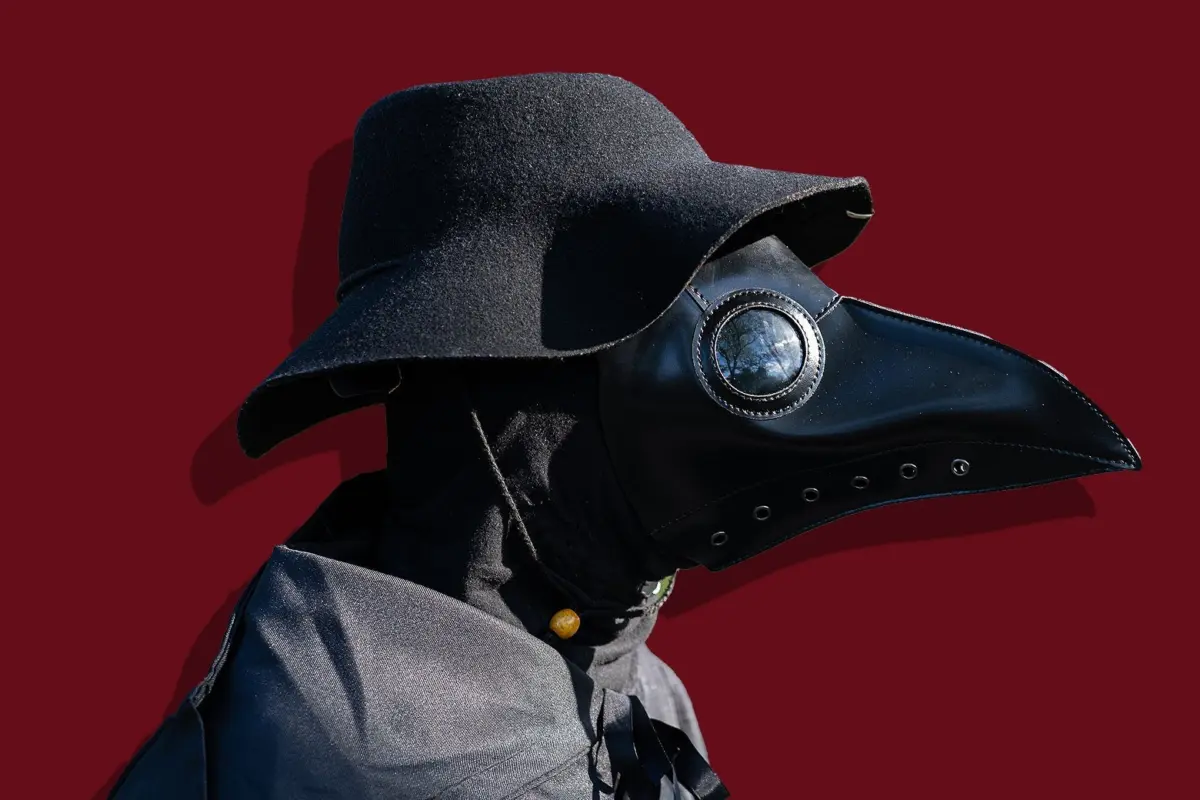
The foundational fear of the plague is deeply embedded in cultural memory, largely inherited from the devastation of the Black Death in the 14th century. Historians estimate that the bubonic plague wiped out at least one-third of Europe’s population—claiming an estimated 25 million lives—in a matter of years. Compounding this terror are the indelible historical images of 17th-century plague doctors wearing grotesque, beaked masks stuffed with aromatic herbs, which serve as permanent visual monuments to mass mortality.
Linguistic and Biblical Shorthand
Long before germ theory explained bacteria and viruses, plagues were woven into human mythology as instruments of divine retribution. The Bible chronicles the ten plagues of Egypt—transforming water to blood, unleashing locusts, and bringing about widespread darkness and death—solidifying the association between plagues and supernatural wrath.
Over centuries, the word plague transcended its specific biological definition to become universal shorthand for any catastrophic, rapidly spreading calamity. Today, we use the term colloquially ("I avoided him like the plague") to denote existential dread.
The Long Shadow of COVID-19
This historical baggage was violently reactivated by the COVID-19 pandemic. Though SARS-CoV-2 was a coronavirus rather than a bacterium, the collective trauma of the past few years mirrored ancient plague outbreaks. Humanity experienced global lockdowns, overflowing hospitals, the haunting inability to comfort dying loved ones, and the ubiquitous sight of protective masks—the modern equivalents of the plague doctor’s beak. When a modern headline invokes "the plague," it instantly taps into this fresh reservoir of pandemic PTSD.
Epidemiological Realities: Why Epidemiologists Aren’t Worried
From a pure epidemiology standpoint, if an outbreak scenario had to be chosen, the plague is vastly preferable to many modern alternatives, such as novel respiratory viruses featuring asymptomatic transmission.
Epidemiologists have outlined several key reasons why the Siberian incident is extremely unlikely to blossom into a global catastrophe:
- Low Contagiousness: Unlike measles—where a single infected individual can leave a room and transmit the virus to someone entering hours later—pneumonic plague requires relatively close, direct contact with respiratory droplets. Casual proximity in open spaces rarely results in transmission.
- Rapid Symptom Onset: Plague symptoms manifest aggressively and quickly, often within 24 hours of infection. This rapid onset drastically curtails the window in which an asymptomatic individual can unknowingly travel and spread the disease.
- Prophylactic Efficacy: Individuals who have had known contact with an infected person can be successfully treated with prophylactic antibiotics before symptoms even manifest, effectively halting transmission chains in their tracks.
By contrast, recent scares involving pathogens like hantavirus—which features an incubation period of up to 42 days—demand extensive, grueling quarantines. The plague, by comparison, moves too fast and hits too hard to silently slip through global containment nets.
Future Outlook: The Real Biosecurity Concern
If the general public has virtually zero risk of contracting the plague from the Russian lab incident, why are experts losing sleep? The answer lies not in epidemiology, but in geopolitics and biosecurity.
The fundamental unease stems from the lack of transparency emanating from Russian authorities. Pneumonic plague has long been identified by organizations like the U.S. Centers for Disease Control and Prevention (CDC) as a pathogen possessing potential utility as a biological weapon. Historically, the Soviet Union maintained an extensive, sophisticated offensive bioweapons program—such as the massive installations operated by the secretive Biopreparat organization—which researched and weaponized strains of plague, anthrax, and smallpox.
While modern concerns are strictly hypothetical, biosecurity experts are forced to ask uncomfortable questions:
- Was the researcher working with an engineered strain of Yersinia pestis?
- Were genetic modifications introduced to render the pathogen resistant to standard first-line antibiotics?
- What are the safety and containment standards currently enforced within Russia’s network of biological research facilities?
Conclusion: Who Should Be Watching?
Ultimately, the distinction must be made between public health risk and national security vigilance. As epidemiologists emphasize, it is the professional duty of biosecurity analysts and intelligence agencies to worry about state laboratory accidents, missing inventory, and potential dual-use research irregularities.
However, that professional anxiety should not translate into panic for the general public. For the average citizen halfway across the world, the probability of contracting the plague from this incident remains statistically nonexistent. The headlines may weaponize the terrifying history of the Black Death, but the reality on the ground is clear: the danger is not that a medieval pandemic is returning to sweep the globe, but rather that opaque state actors may be mishandling dangerous pathogens behind closed doors.