Executive Overview
In the relentless ecosystem of modern internet culture, viral phenomena often emerge from the most surreal and unexpected places. The latest sensation capturing the attention of millions across TikTok, YouTube, and various meme communities is a peculiar, AI-generated musical clip known colloquially as "I Remember When You Were Little, Little, Little, Little" or "I Remember When You Was Lil."
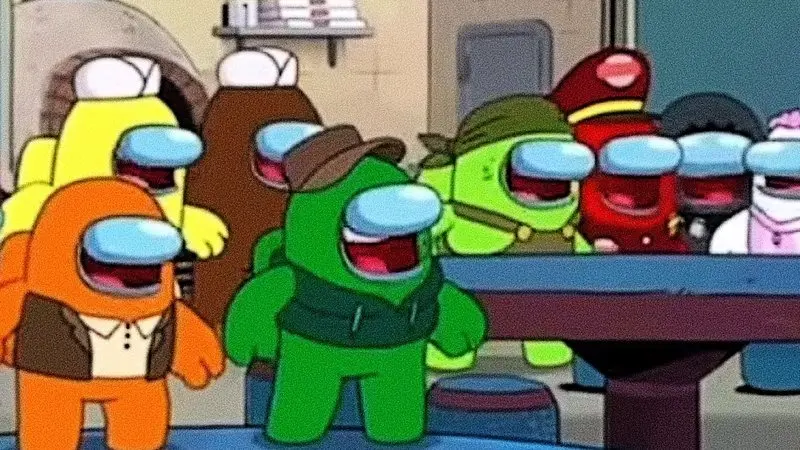
Derived from a bizarre artificial intelligence-generated video featuring characters from the cultural touchstone video game Among Us, the meme revolves around an orange crewmate casually walking into a room and launching into a repetitive, earworm-like chant: "I remember when you were little, little, little, little," stretching the final word out into a hypnotic loop.
Originally uploaded in late September 2026 by a now-deleted TikTok creator operating under the handle @fitztheamongus, the clip rapidly transcended its humble origins as generic AI-generated video spam—often categorized derisively as "AI slop." Over the course of October and November 2026, the audio and visual components underwent a rigorous process of internet transmutation. It morphed from a standalone oddity into a relatable situational meme, a slowed-down auditory aesthetic, an international sensation, and a cornerstone of contemporary "brainrot" culture.
This deep-dive report offers a comprehensive examination of the phenomenon, tracing its trajectory from a fringe TikTok post to a multi-million-view viral sensation, analyzing its cultural resonance, and evaluating the broader implications of AI-assisted content in meme generation.
Detailed Chronology: From Obscurity to Viral Dominance
The Genesis: Late September 2026
The timeline of the "Little" meme begins in the final week of September 2026. A TikTok account bearing the handle @fitztheamongus published a short, AI-generated video clip. The animation featured prominent characters from the social deduction phenomenon Among Us—specifically highlighting an orange crewmate—acting within a domestic or casual room setting.
Rather than standard gameplay or typical fan animation, the AI generation tools produced a surreal sequence where the orange character marches into the space and delivers a deadpan, sing-song vocalization: "I remember when you were little, little, little, little."
Recognizing its bizarre nature, a user quickly cross-posted the clip to the Reddit community /r/AIslop on September 27th, 2026. Communities dedicated to cataloging and mocking low-effort artificial intelligence creations often inadvertently serve as incubation chambers for viral internet memes, and this instance proved to be no exception.
The First Iteration of Relatable Humor: Early October 2026
While the initial reception on Reddit treated the video as a curio of algorithmic absurdity, TikTok creators quickly saw comedic potential in its specific brand of awkward nostalgia. On October 3rd, 2026, TikTok user @_cb_bc_ published the video with a targeted, highly relatable text overlay:
"What random people you’ve never seen before tell you at the family reunion."
This framing struck a chord with internet audiences. The specific brand of unsolicited, overly familiar commentary from distant relatives—commenting on how much one has grown—mapped seamlessly onto the repetitive, slightly unhinged nature of the AI’s vocal delivery. The video quickly accumulated over 41,000 views within its first month, establishing the narrative template that subsequent creators would build upon.
Exponential Spread and Diversification: Mid-to-Late October 2026
By mid-October, the meme experienced a massive surge in visibility, diversifying across multiple platforms and stylistic sub-genres:
- October 11th, 2026: TikTok user
@0koraiya0deployed a variation of the family reunion joke, capitalizing on the established formula. This iteration resonated even further, pulling in over 985,000 views in a single month. - October 11th, 2026: Recognizing the standalone audio appeal, the YouTube channel Ultimate Shorts Memes published the isolated full-length version of the song and video, securing over 30,000 views.
- October 11th, 2026: Simultaneously, European creator Timitimibãř wartek 3 uploaded a slowed-down, reverb-drenched atmospheric remix of the audio to YouTube, accumulating 33,000 views. The creator also cross-posted this slowed version to TikTok on the same day, where it exploded past 1.8 million views in a month, proving that audiences hungered for atmospheric, melancholic, or distorted takes on the original upbeat absurdity.
- October 27th, 2026: The meme crossed over into mainstream anime culture when TikToker
@chasediaz69published a high-velocity remix combining the audio with dramatic animation clips from the acclaimed series JoJo’s Bizarre Adventure. This cross-pollination of fandoms propelled the video past 1.2 million views in just one week.
International Adaptation: November 2026
As the meme entered its second month, it broke language barriers. On November 2nd, 2026, Russian TikTok creator @npnrofls uploaded a localized adaptation, performing a direct translation and vocal cover of the song in Russian. The localization immediately struck a chord with Eastern European audiences, gathering over 144,000 views in a mere 48 hours and cementing the meme’s status as a cross-cultural export.
Supporting Context & Metrics
To fully understand the weight of the "I Remember When You Were Little" phenomenon, one must examine the metrics and the cultural category it inhabits: Brainrot Content and AI-Generated Memes.
Defining the "Brainrot" Ecosystem
In contemporary internet vernacular, "brainrot" refers to hyper-online, fast-paced, highly repetitive content that spreads rapidly among younger demographics (particularly Generation Alpha and younger Gen Z). This content relies heavily on absurdism, earworm audio loops, deep-fried visual aesthetics, and surreal character crossovers—often utilizing intellectual properties completely out of their original context, such as Among Us, Skibidi Toilet, or various gaming mascots.
The Among Us "Little" song fits squarely into this lineage. The source material is inherently nonsensical: an artificial intelligence hallucinates a scene where a faceless space crewmate recounts childhood growth with an aggressive, stuttering cadence. Rather than rejecting this uncanny output, digital native audiences embraced its eerie imperfection.
Quantitative Breakdown of Viral Reach
| Date (2026) | Creator / Channel | Platform | Content Type / Caption | Approximate Views / Metric |
|---|---|---|---|---|
| Late Sept | @fitztheamongus | TikTok | Original AI video upload | Original Source (Deleted) |
| Sept 27 | /r/AIslop |
Archival repost of original video | Community-wide awareness | |
| Oct 3 | @_cb_bc_ |
TikTok | "Family Reunion" text overlay meme | 41,000+ views (1 month) |
| Oct 11 | @0koraiya0 |
TikTok | Similar situational family meme | 985,000+ views (1 month) |
| Oct 11 | Ultimate Shorts Memes | YouTube | Full-length source archive | 30,000+ views (1 month) |
| Oct 11 | Timitimibãř wartek 3 | YouTube | Slowed-down audio version | 33,000+ views (1 month) |
| Oct 11 | Timitimibãř wartek 3 | TikTok | Slowed-down audio version | 1.8 million+ views (1 month) |
| Oct 27 | @chasediaz69 |
TikTok | JoJo’s Bizarre Adventure crossover remix | 1.2 million+ views (1 week) |
| Nov 2 | @npnrofls |
TikTok | Russian language vocal cover/remix | 144,000+ views (48 hours) |
The Mechanics of AI-Driven Memetics
The trajectory of this meme highlights a significant shift in how internet culture is manufactured. Historically, memes required human effort, original drawing, deliberate musical composition, or accidental video capture. In the mid-2020s, generative AI tools have lowered the barrier to entry for bizarre, hyper-specific absurdism.
However, the AI tool merely provided the raw clay. The true cultural work was executed by the secondary layer of creators: the TikTokers who applied situational humor ("family reunions"), the remixers who slowed the audio down to evoke uncanny dread, and the editors who merged it with anime tropes. The phenomenon demonstrates that while AI can generate the initial stimulus, human curation, contextualization, and remix culture remain the driving forces behind what catches fire globally.
Sociological & Industry Impact
The widespread adoption of the Among Us "Little" meme prompts important discussions regarding the evolution of online humor and the normalization of synthetic media within youth subcultures.
The Irony of "AI Slop" Reclamation
Initially flagged by internet subcultures as low-value "AI slop"—a term used to describe lazy, automated content flooding social media feeds—the video underwent a process of ironic reclamation. Internet users frequently take media deemed low-quality or corporate-generated and infuse it with layers of meta-irony, surrealism, and hyper-specific situational storytelling. By stripping the AI creation of its original context and forcing it into relatable scenarios (such as awkward family encounters), users subvert the technology, turning automated nonsense into a shared cultural joke.
The Longevity of Among Us IP in Meme Culture
Years after its peak mainstream gaming popularity in 2020, Innersloth’s Among Us has proven to be remarkably resilient within meme spaces. The minimalist, bean-like design of the crewmates acts as an absolute blank canvas. Because they lack traditional facial features or complex human expressions, they can be inserted into virtually any emotional state, narrative, or absurd musical scenario without breaking visual continuity. The "Little" meme is merely the latest chapter in a multi-year saga of internet creators using crewmates as avatars for existential absurdity.
Future Outlook
As the calendar turns toward the close of 2026, where is the "I Remember When You Were Little" meme heading?
- Short-Term Saturation: Like most fast-burning TikTok audio trends, the direct use of the original clip faces imminent saturation. Creators are continually pushing the boundaries of the joke through increasingly obscure crossovers, multi-language translations, and deep-fried audio distortions to maintain engagement.
- Evolution into Abstract Soundboard Lore: Much like previous audio clips that graduated from viral videos to permanent additions to internet lexicon, the phrase "little, little, little, little" is likely to persist in comment sections, livestreams, and gaming chat rooms as shorthand for repetitive, unsolicited commentary or uncanny nostalgia.
- The Blueprint for Future AI Memes: Perhaps the most enduring legacy of this phenomenon is its status as a case study for future AI-driven internet culture. It proves that as generative video and audio tools become more accessible, the defining memes of tomorrow will not necessarily be high-budget productions, but rather accidental algorithmic glitches that human creativity weaponizes for mass amusement.
Ultimately, the journey of the orange Among Us crewmate marching across a room to sing about the passage of time serves as a fitting mirror for the internet age: chaotic, automated, deeply ironic, and strangely united through shared laughter in the face of digital absurdity.