Executive Overview
The video game industry has long operated under the assumption that grand, systemic, open-world first-person role-playing games are the exclusive domain of industry titans. For over two decades, franchises like The Elder Scrolls and Fallout have commanded monolithic development budgets, massive multi-hundred-person teams, and endless cycles of hype, anchoring the genre in the public consciousness. Yet, as players wait patiently—often indefinitely—for the next installment in Bethesda’s storied catalogue, a quieter revolution has been taking place in the indie and mid-tier development space.
Enter Tainted Grail: The Fall of Avalon, a dark fantasy RPG developed by Questline and published by Awaken Realms. Emerging as a standout release, Tainted Grail unashamedly adopts the structural framework of The Elder Scrolls, offering a flexible, first-person sandbox where player agency dictates progression. However, rather than serving as a mere imitation or a placeholder for future AAA releases, Tainted Grail captures the elusive magic of classic tabletop RPGs and early 2000s PC epics, refining them into a taut, meticulously crafted experience.
With a team of roughly 50 developers—a fraction of the workforce behind modern blockbusters like Starfield—Questline has delivered an atmospheric, lethal, and remarkably deep adventure. Boasting a "Very Positive" user rating from over 20,000 reviews on Steam, the game proves that focused scope, superior encounter design, and artistic vision can outweigh gargantuan budgets and endless development pipelines. For enthusiasts starved of quality first-person fantasy sandboxes, Tainted Grail has transformed from a dark horse into an essential genre milestone.
Detailed Chronology: From Tabletop Roots to Digital Avalon
The lineage of Tainted Grail did not begin on personal computers or modern consoles; its foundations were laid in the physical realm of tabletop role-playing games (TTRPGs) and board gaming.
The Board Game Foundation (2019–2021)
Before translating its grim vision to a digital medium, Polish studio Awaken Realms cultivated the intellectual property through Tainted Grail: The Fall of Avalon, a massive narrative-driven cooperative board game funded via Kickstarter in 2018 and delivered to backers in 2019. Drawing heavily upon Arthurian mythos twisted through a grimdark, post-apocalyptic lens, the board game presented a dying island of Avalon consumed by the creeping corruption of the "Wyrdness." It emphasized harsh survival mechanics, difficult choices, and deep lore. The overwhelming success of the tabletop iteration laid fertile ground for a digital adaptation, prompting Awaken Realms to establish internal development capabilities under the studio banner Questline to bring Avalon into the first-person digital sphere.
Early Access and Iterative Development (2023–2024)
Transitioning a narrative-heavy board game into an open-world, first-person action RPG is no small feat. Questline launched Tainted Grail: The Fall of Avalon into Steam Early Access, inviting the community to stress-test its mechanics, explore its mechanics, and provide critical feedback on its combat and stability. During this phase, the development team focused heavily on refining the game’s reactive systems, balancing its punishing difficulty curves, and expanding its environmental storytelling. Unlike many early access titles that languish in development hell, Questline maintained a steady cadence of updates, progressively unlocking regions of the island and incorporating complex character build paths—including unorthodox additions like martial arts systems that allowed players to tackle Arthurian fantasy as a kung-fu master.
The 1.0 Release and Critical Re-evaluation (2025)
The official launch of Tainted Grail: The Fall of Avalon in 2025 marked a watershed moment for mid-tier RPGs. While mainstream media cycles remained hyper-focused on speculative news surrounding future AAA releases—such as Bethesda’s long-off The Elder Scrolls 6: Sentinel—word-of-mouth recommendations among PC gamers turned Tainted Grail into a runaway commercial and critical success. Reviewers and players alike began noting that the game accomplished what many thought impossible: replicating the tactile joy of exploring an open world without the bloated, repetitive filler that often plagues contemporary open-world design.
Supporting Context & Metrics: Scaling Down to Scale Up
In an era where AAA game development budgets routinely exceed hundreds of millions of dollars and require teams numbering in the hundreds or thousands, Tainted Grail stands as a masterclass in efficient resource allocation and scoped ambition.
Team Size and Production Scale
To understand the engineering and design triumph of Tainted Grail, one must examine the production metrics:
- The Elder Scrolls V: Skyrim (2011): Developed by a core team of approximately 100 people at Bethesda Game Studios.
- Starfield (2023): Required a massive workforce scaling to over 400 developers.
- Tainted Grail: The Fall of Avalon (2025): Crafted by a dedicated team of roughly 50 developers at Questline.
Despite operating with roughly one-eighth of the personnel behind Bethesda’s recent sci-fi epic, Questline managed to construct an intricate, systemic world that successfully hooks players for 50 deeply engaging hours.
World Design: Quality Over Quantity
Rather than prioritizing map square-footage—a common industry trap that results in vast, empty expanses of procedurally generated terrain—Tainted Grail opts for a curated, dense environment. Divided into three primary regions, the world of Avalon is an exercise in meticulous placement:
-
The Island Asylum: Serving as the introductory area, this sprawling, multi-layered facility functions as an open-ended tutorial. Rather than rushing
the player down a linear corridor, the asylum features locked doors, hidden subterranean chambers, and rich lore fragments that encourage hours of unauthorized rummaging before the player even steps foot onto the main island.
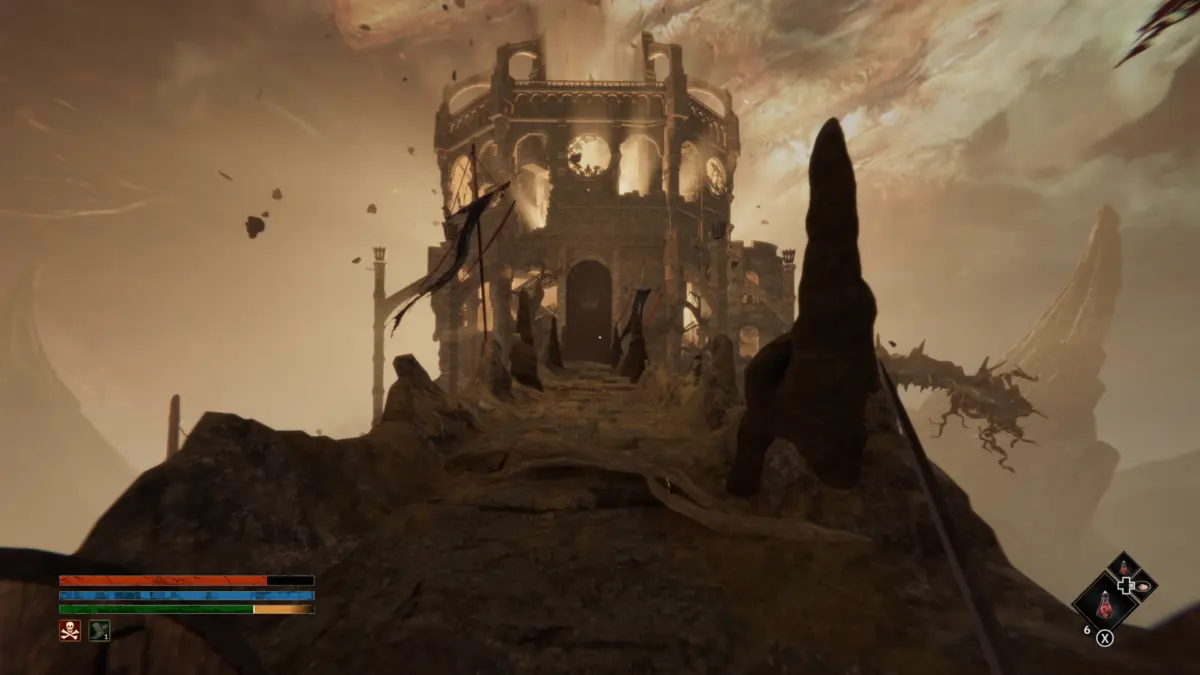
- The Open Sandbox: Once out in the wider world, players find a landscape that is genuinely dangerous. Basic foes—skeletons, brigands, and cursed wildlife—hit hard, forcing players to respect their environment. Venturing out at night introduces acute peril, elevating exploration from a casual checklist to a tense survival endeavor.
Combat Mechanics and Progression
Where Bethesda’s titles have historically relied on floaty, rudimentary real-time combat systems, Tainted Grail borrows cues from skill-based action RPGs and souls-likes. It demands tactical positioning, stamina management, and mastery of defensive maneuvers.
Character progression is refreshingly organic. Following the classic Elder Scrolls philosophy, you improve your capabilities by performing them—using swords makes you better with swords; casting spells enhances your magical affinity. However, the game forces specialization. While the temptation to craft a "jack-of-all-trades" hybrid character is ever-present—especially with expansive alchemy systems and diverse loot tables—the harsh lethality of Avalon ensures that unfocused builds are swiftly punished. Players must commit to their chosen archetype, whether that is a heavily armored spellblade, a stealthy rogue, or a mystical brawler.
Official Statements and Industry Reception
The success of Tainted Grail has sparked broader industry discussions regarding player fatigue with mega-budget, hyper-inflated open-world titles, and the rising appetite for focused, high-craftsmanship mid-tier RPGs.
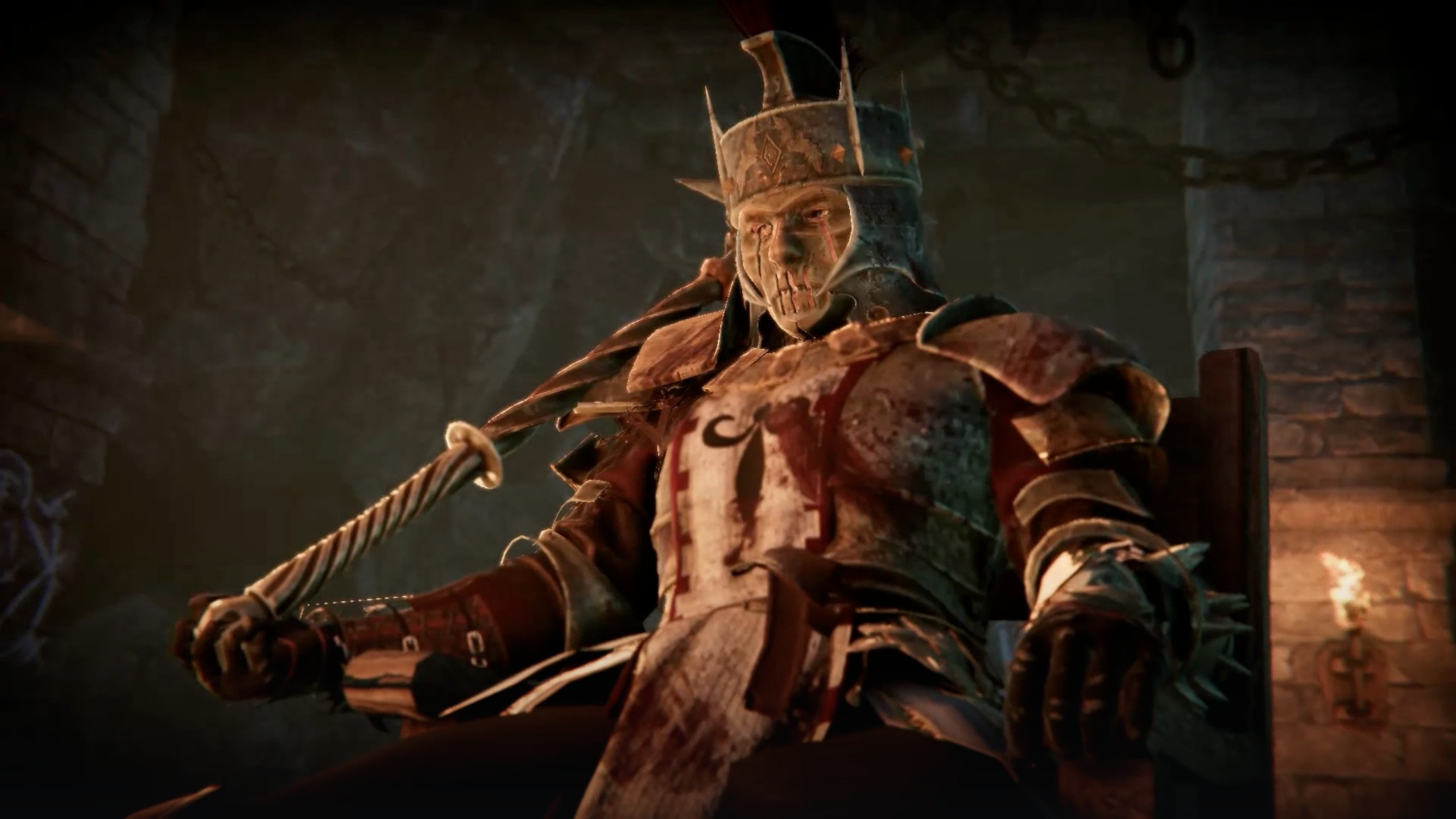
Critics and players have frequently highlighted the game’s unique aesthetic identity. As industry commentators note, Tainted Grail successfully weaponizes visual juxtaposition. It marries the pastoral, arboreal beauty of Arthurian legend with grotesque, apocalyptic horror. The result is a world that feels simultaneously familiar and deeply alien—a feat achieved through striking art direction rather than pure graphical fidelity.
Speaking on the game’s reception, community sentiment reflected on platforms like Steam—where the title maintains a "Very Positive" aggregate score across more than 20,000 reviews—underscores a collective sigh of relief from RPG fans. As industry analysts point out, the market was primed for a game that respects the player’s time while honoring the foundational tenets of first-person sandbox exploration.
Questline’s developers designed Avalon not as a checklist of map icons, but as an interactive diorama where unexpected encounters lurk around every corner. Whether stumbling upon an ancient crypt housing a legendary weapon or crossing paths with an eccentric immortal bargaining for favors, the game channels the unpredictable, emergent storytelling of a tabletop session run by an imaginative Dungeon Master.
Future Outlook: The New Benchmark for Mid-Tier RPGs
As the video game landscape looks toward the horizon—weighing the eventual, distant release of AAA flagships like The Elder Scrolls 6: Sentinel—the paradigm within the RPG genre is shifting. Tainted Grail: The Fall of Avalon has proven that players do not need to wait half a decade for massive corporate entities to satisfy their cravings for immersive, sandbox fantasy.

Questline’s achievement demonstrates that the "middle-market" RPG—often feared dead or commercially unviable in the face of live-service giants and $70 blockbusters—is not only alive, but thriving. By focusing on tight environmental design, meaningful difficulty, robust build variety, and a distinct artistic voice, the studio has set a new standard for independent and mid-tier development.
For those who have yet to brave the cursed shores of Avalon, the barrier to entry has never been lower, thanks to a publicly available PC demo on Steam. As the industry digests the commercial success of Questline’s dark fantasy epic, one thing is certain: the era of blind corporate brand loyalty is giving way to an appreciation for execution, creativity, and sheer atmospheric immersion.