By Tristan Ogilvie
Updated: November 3, 2026
Executive Overview
The legendary musical partnership of Trent Reznor and Atticus Ross—best known as the driving creative force behind industrial rock icons Nine Inch Nails and as one of modern cinema’s most decorated composer duos—is officially reuniting with acclaimed director David Fincher. The pair will provide the original musical score for The Further Mis-Adventures of Cliff Booth, an upcoming cinematic event that bridges generations of filmmaking talent. This high-profile project marks the sixth major feature film collaboration between Reznor, Ross, and Fincher, a creative triad renowned for redefining atmospheric storytelling through sound.
Confirmation of the duo’s involvement arrived somewhat covertly when Netflix released the official theatrical and promotional poster for the film via its corporate social media channels. Eagle-eyed fans who scrutinized the fine-print credits at the bottom of the poster discovered the composer attribution, setting off waves of excitement across film and music communities alike.
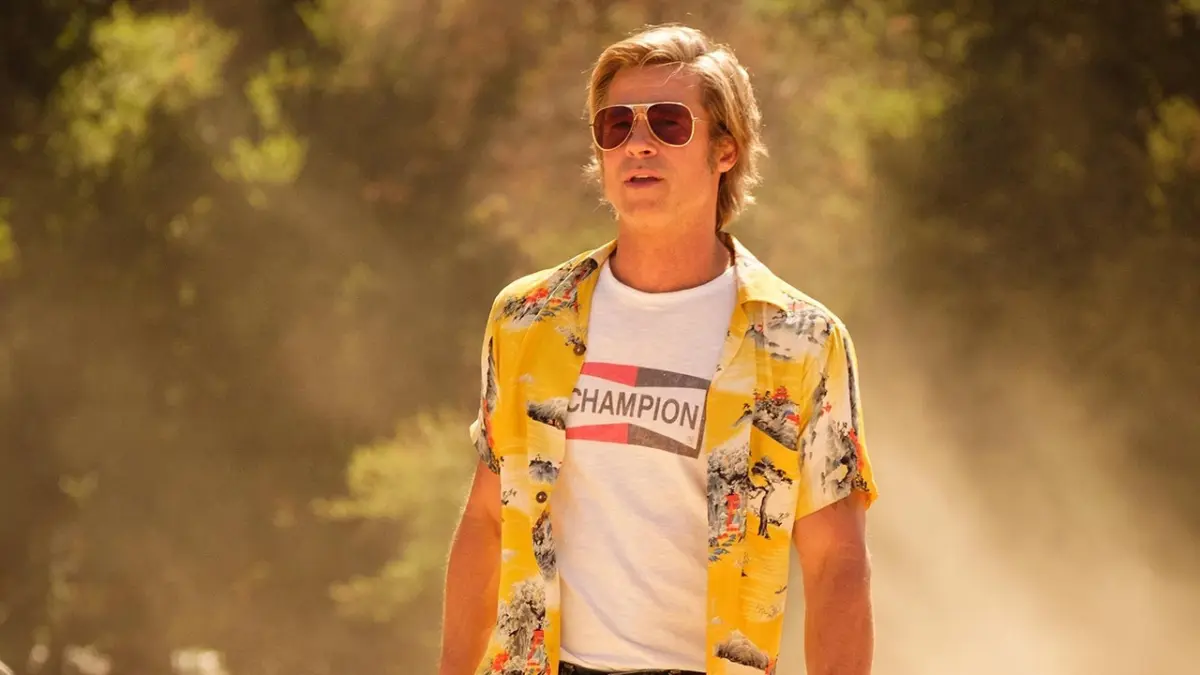
The Further Mis-Adventures of Cliff Booth represents a fascinating collision of Hollywood auteurs. Written by Quentin Tarantino as a narrative follow-up to his 2019 masterpiece Once Upon a Time in Hollywood, the script is famously being brought to life not by Tarantino himself, but by David Fincher. Starring Brad Pitt in a triumphant return to his Academy Award-winning role as the effortlessly cool, lethal Hollywood stuntman Cliff Booth, the film is poised to be one of the cinematic highlights of the late 2026 release calendar.
Following a global IMAX theatrical rollout scheduled for November 25, 2026, the film will make its streaming debut on Netflix on December 23, 2026. With Reznor and Ross orchestrating the auditory landscape, the project promises to marry Tarantino’s stylized, pulp-inflected universe with Fincher’s meticulous, tense aesthetic, underpinned by an award-winning sonic pedigree.
Detailed Chronology: The Evolution of Reznor, Ross, and Fincher
To understand the weight of this sixth collaboration, one must examine the profound history shared between Trent Reznor, Atticus Ross, and David Fincher. Over the past decade and a half, their creative partnership has fundamentally shifted expectations of what contemporary film scores can achieve, moving away from traditional orchestral safety nets toward textured, electronic-driven psychological soundscapes.
1. The Social Network (2010): The Genesis
The partnership began in earnest when Fincher enlisted Reznor (alongside his newly minted permanent collaborator Atticus Ross) to score his biographical drama The Social Network, which chronicled the founding of Facebook. Up to that point, Reznor was primarily known as the abrasive, visionary mastermind behind Nine Inch Nails. Transitioning into feature film scoring was a bold gamble for both parties, but the result was an unqualified triumph.
The score relied heavily on synthesized drones, unsettling ambient electronics, and a warped, classical-meets-digital interpretation of university anthems (most notably showcased in the track "In the Hall of the Mountain King"). The gamble paid off spectacularly: the score not only defined the anxious, fast-paced zeitgeist of the digital age but also earned Reznor and Ross the Academy Award for Best Original Score at the 83rd Academy Awards in 2011.
2. The Girl with the Dragon Tattoo (2011) and Gone Girl (2014)
Riding high on their Oscar success, Fincher immediately brought the duo back for his grim adaptation of Stieg Larsson’s The Girl with the Dragon Tattoo. Reznor and Ross delivered a chilling, industrial soundscape that mirrored the freezing, brutal landscapes of Sweden.
Three years later, they reunited for Gone Girl (2014), adapting Gillian Flynn’s psychological thriller. For this score, Reznor and Ross famously researched the soothing, hypnotic qualities of ambient mall music, weaponizing tranquility to create an underlying sense of dread and suburban rot. It cemented their reputation as masters of tension.
3. Mank (2020) and the Television Interlude
In 2020, Fincher shifted gears dramatically with Mank, a black-and-white biographical drama exploring Herman J. Mankiewicz and the writing of Citizen Kane. Eschewing their trademark synthesizers and modern electronic production, Reznor and Ross adapted to the period setting by utilizing exclusively acoustic instruments authentic to the 1930s. Relying on period-accurate brass, upright pianos, and authentic recording techniques of the era, the score proved the duo’s astonishing versatility across genres and eras.
4. The Further Mis-Adventures of Cliff Booth (2026): The Sixth Chapter
Now, six collaborations in, Reznor and Ross return to Fincher’s camp with The Further Mis-Adventures of Cliff Booth. While details regarding the specific sonic direction of the score remain tightly under wraps, the historical precedent suggests a fascinating sonic collision. Given that the film deals with the twilight era of 1970s Hollywood stunt work and pulp adventure, fans can reasonably expect a blend of retro analog instrumentation, gritty swagger, and the signature avant-garde tension that has become the hallmark of the Reznor-Ross-Fincher triumvirate.
Supporting Context & Metrics: A Legacy of Accolades
The announcement of their involvement in The Further Mis-Adventures of Cliff Booth arrives amidst a remarkably active and decorated period for Reznor and Ross. Their transition from rock icons to premier Hollywood composers is backed by a staggering collection of industry milestones and metrics.

| Award / Accolade | Project / Year | Category | Result |
|---|---|---|---|
| Academy Award | The Social Network (2011) | Best Original Score | Won |
| Academy Award | Soul (2021) — with Jon Batiste | Best Original Score | Won |
| Golden Globe Award | Challengers (2025) | Best Original Score | Won |
| Grammy Nomination | Tron: Ares (2026) | Best Score Soundtrack for Visual Media | Nominated |
Beyond their work with Fincher, Reznor and Ross have systematically conquered nearly every corner of modern media composition. Their work on Pixar’s Soul (2021) earned them a second Academy Award, proving they could bring warmth and existential wonder to animation just as easily as they brought dread to thrillers.
In recent years, their momentum has only accelerated. In 2025, they took home the Golden Globe Award for Best Original Score for Luca Guadagnino’s high-energy tennis drama Challengers, injecting pulse-pounding techno beats into sports cinema. Furthermore, earlier in 2026, the duo earned a fresh Grammy nomination for their contributions to the Tron: Ares soundtrack, released under the formal Nine Inch Nails banner.
This dual-track existence—simultaneously writing traditional cinematic scores under their own names and producing heavy electronic music as Nine Inch Nails—has allowed Reznor and Ross to maintain absolute cultural relevance across both the music charts and the cinematic landscape.
Official Statements and Production Insights
The path toward The Further Mis-Adventures of Cliff Booth has been uniquely collaborative, involving a rare handover of creative ownership between two of modern cinema’s most dominant voices: Quentin Tarantino and David Fincher.
In a recent, highly anticipated interview with Empire Magazine, David Fincher pulled back the curtain on how the project materialized. According to Fincher, the script—penned entirely by Tarantino—was initially an unwieldy monster.
"Quentin’s original draft was essentially two movies rolled into one," Fincher revealed to Empire. "It was brilliant, deeply funny, and packed with incredible period detail, but the narrative sprawl was immense. In order to get the film down to a lean, impactful theatrical runtime of around two hours and 20 minutes, I had to ruthlessly cut 60 pages from the screenplay."
Despite these substantial structural trims, Tarantino’s unmistakable voice remains the foundation of the film. The story picks up the thread from Once Upon a Time in Hollywood, following the further escapades of Brad Pitt’s Cliff Booth as he navigates the changing tides of the American film industry in the wake of the 1960s cultural shift.
Star-Studded Cast and Cross-Media Launch
The film’s production weight is further amplified by a powerhouse ensemble cast. Alongside Brad Pitt reprising his career-defining role, the film stars:
- Elizabeth Debicki (Tenet, The Crown)
- Scott Caan (Hawaii Five-0, Ocean’s Eleven)
- Carla Gugino (The Fall of the House of Usher, Watchmen)
- Yahya Abdul-Mateen II (Watchmen, Candyman)
- Peter Weller (RoboCop, Sons of Anarchy)
The synergy surrounding the project extends beyond the silver screen. In an unusual and highly coordinated multi-platform release strategy, Quentin Tarantino is set to release an official novelization of the film on December 8, 2026. Published just weeks after the IMAX premiere and shortly before the Netflix streaming rollout, the novel will serve as a direct literary follow-up to Tarantino’s bestselling 2021 release, Once Upon a Time in Hollywood: A Novel, offering fans an expanded, unedited look at the expansive narrative world that Fincher condensed for the screen.
Future Outlook: A Cinematic Event Takes Shape
As the clock ticks down toward the winter release schedule, anticipation for The Further Mis-Adventures of Cliff Booth has reached a fever pitch. The combination of Quentin Tarantino’s incomparable knack for character dialogue and pulp world-building, filtered through the icy, razor-sharp directorial lens of David Fincher, represents an unprecedented collision of directorial sensibilities.
Crucially, the addition of Trent Reznor and Ross to the sonic architecture ensures that the film will possess an immersive, cutting-edge auditory identity. Whether their score leans into the dusty, sun-baked paranoia of 1970s Los Angeles or pushes boundaries with experimental electronic dissonance, the track record of this six-time collaboration leaves little room for doubt.
Audiences will have their first opportunity to experience the full audiovisual spectrum when The Further Mis-Adventures of Cliff Booth opens globally in IMAX theaters on November 25, 2026. For those unable to catch it on the big screen, the film will land on Netflix on December 23, 2026, perfectly positioned to dominate the holiday entertainment cycle.