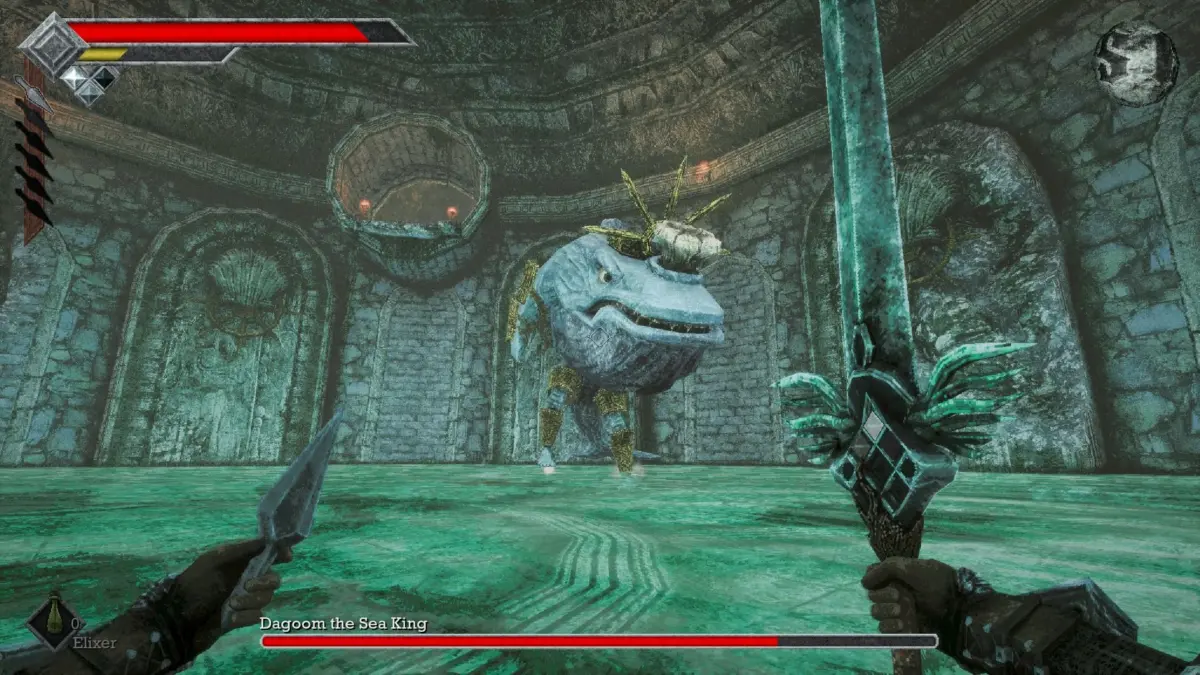
Executive Overview
The first-person dungeon crawler subgenre has seen a massive resurgence in recent years, leading to what many critics describe as peak saturation. Yet, amid a crowded marketplace of retro-styled throwbacks and indie dark fantasy titles, Queen’s Domain—developed by Freshly Baked Games—has managed to violently wrench itself apart from the pack.
Launched on Steam on October 30, following an intriguing demo cycle that hinted at its potential, the game has quickly emerged as one of the critical critical darlings of the year. Marrying the atmospheric dread and deliberate pacing of FromSoftware’s pre-Souls classic King’s Field series with the fluid, high-velocity traversal mechanics reminiscent of Metroid Prime, Queen’s Domain subverts expectations at nearly every turn.
What begins as a grounded, slow-paced medieval trudge evolves—upon defeating the first major boss—into an exhilarating, vertical movement sandbox. Propelled by innovative weapons that double as traversal tools, an experience-through-use progression system devoid of arbitrary stat allocation, and level design that rivals the genre-defining classics, Queen’s Domain is far more than a nostalgia trip. It is a masterclass in pacing, exploration, and first-person game design.
Detailed Chronology: From Grounded Roots to Skyward Heights
The Slow Burn of the Opening Act
To truly appreciate the genius of Queen’s Domain, one must understand its deliberate barrier to entry. During the opening half-hour of the game, players are firmly tethered to the dirt. The movement speed is measured, the combat requires methodical spacing, and the overall atmosphere leans heavily into the grim, oppressive traditions of indie "King’s Field-likes" such as Lunacid.
For some players, this initial pacing can act as a deterrent. Early reports from community spaces and editorial desks alike highlighted a brief period of friction. New players accustomed to the twitch-reflex speed of modern shooters or fast-paced rogue-lites might initially find the boots-on-the-ground reality somewhat heavy. However, this restraint is entirely intentional. Freshly Baked Games uses this initial heaviness as a narrative and mechanical baseline, establishing a stark psychological contrast for what happens next.

The Turning Point: Entering the Domain of the Air Dash
The game’s design philosophy fundamentally pivots the moment a player overcomes the first major boss encounter. As a reward for this early triumph, the player is handed Endu, a magic-infused holy sword equipped with an air-dash capability.
Suddenly, the world opens up like a complex, three-dimensional clockwork mechanism. The rigid geometry of the early dungeons transforms into a vertical playground. The Holy Sword Endu does not merely grant a single evasive lunge; as players progress, they can discover and equip special gems that augment the blade, granting additional mid-air dashes. Reports from players deep into the campaign note scaling up to three or more simultaneous aerial dashes, allowing them to zip effortlessly across abysses and bypass massive swaths of terrain without ever touching the floor.
This mechanical shift turns traditional dungeon crawling on its head. Areas that once felt terrifying and claustrophobic suddenly invite sequence-breaking exploration, rewarding inquisitive players who eye a distant ledge and figure out the precise geometric choreography required to reach it.
Expanding the Arsenal: The Caestus and Beyond
Endu is only the entry point to a deeply versatile toolkit. Unlike traditional RPGs that force players down rigid class paths or require painstaking stat allocation upon leveling up, Queen’s Domain champions a system of experiential mastery reminiscent of immersive sims like BioShock or Nightdive Studios’ System Shock remake.
Weapons in Queen’s Domain level up organically simply by being used. This fluid design philosophy encourages players to constantly rotate their active loadouts, experimenting with different offensive profiles rather than locking themselves into a single optimal build.

- The Caestus: A brilliant example of this design is the Caestus, a medieval knuckle-duster weapon adapted from Souls-borne traditions. Beyond dealing swift blunt-force damage to skeletal enemies resistant to traditional slashing weapons, the Caestus features a special uppercut attack. While devastating in combat, adventurous players quickly realized this uppercut can double as an effective vertical double-jump. Utilizing the Caestus in tandem with Endu unlocks previously inaccessible verticality, turning traversal into an environmental puzzle where mastery of weapon skills yields tangible exploration rewards.
Supporting Context & Metrics: Where Queen’s Domain Stands in the Market
To understand the industry significance of Queen’s Domain, one must look at the current landscape of independent PC RPGs and dungeon crawlers.
- The Indie King’s Field Revival: Over the past several years, retro-styled first-person RPGs drawing inspiration from early 3D dungeon crawlers have flooded platforms like Steam. Titles leaning into low-poly aesthetics, dense UI nostalgia, and cryptic world-building have carved out a dedicated niche. Queen’s Domain elevates this trend through meticulous art direction, an exquisite soundtrack, and uncompromising sound design.
- Player Investment and Scope: Estimated at a robust 30+ hours for a thorough playthrough, the game offers substantial meat for its price point. Reviewers and hardware testers have noted extreme replayability and depth; internal testing at major outlets revealed players successfully max-grading upwards of 20 distinct weapons across a single campaign, proving that the game’s combat sandbox holds up over dozens of hours.
- Pricing Strategy: Freshly Baked Games launched the title on Steam with a special introductory price of $17 USD, marked down from its standard MSRP of $20 USD. This consumer-friendly entry point has undoubtedly contributed to its rapid early momentum and positive word-of-mouth spread across social platforms and enthusiast forums.
Official Statements & Critical Reception
Early critical consensus highlights the game’s rare ability to marry nostalgic sensibilities with modern, fluid movement mechanics. Critics have been particularly vocal about the game’s pacing risk versus reward payoff.
"Queen’s Domain starts out resembling other entries in a growing subgenre… paying homage to the first-person dark fantasy RPG series FromSoftware put out before its soulsborne turn. But once you’re rocking the Holy Sword, Endu? Holy shit." — Early Access & Launch Reviews
Industry writers who initially struggled with the heavy, unyielding nature of the pre-boss gameplay have turned around entirely, emphasizing that the deliberate pacing of the first thirty minutes makes the eventual liberation of the air-dash feel earned and euphoric.
Furthermore, veterans of the genre have drawn direct lines of comparison not just to indie peers like Lunacid, but to monumental genre milestones:
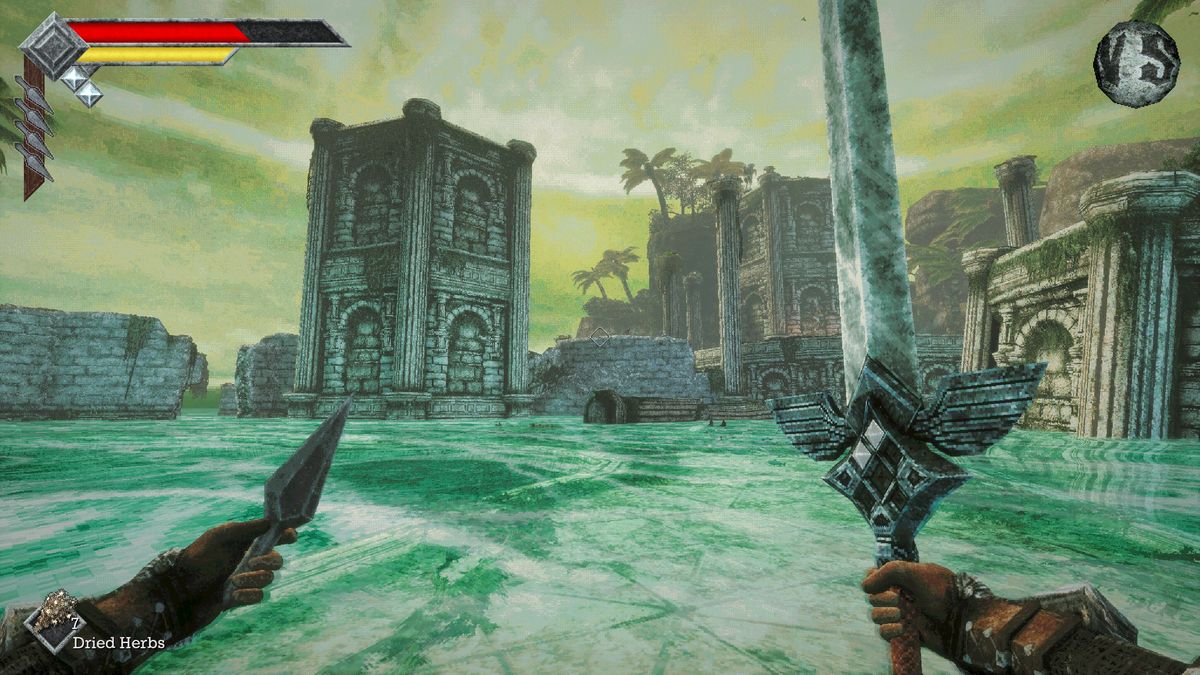
- The Metroid Prime Parallel: Critics have frequently invoked Nintendo’s legendary Metroid Prime when discussing Queen’s Domain. The comparisons are rooted in shared DNA: a cryptic, isolated atmosphere, breathtaking vistas, and an innovative approach to first-person movement that turns environmental navigation into a core gameplay pillar.
- Metroidvania Backtracking, Refined: While game-spanning backtracking can frequently lead to frustration in poorly designed worlds, early indicators suggest that Queen’s Domain avoids the obtuse pitfalls of its historical inspirations, rendering the inevitable return trips rewarding rather than tedious.
Future Outlook: A New Benchmark for First-Person Metroidvanias
As Queen’s Domain settles into its post-launch window, the trajectory for Freshly Baked Games looks exceptionally bright. The title has successfully proven that the first-person Metroidvania space—long dormant or dominated by a handful of AAA heavyweights—is ripe for indie innovation.
With players currently diving headfirst into the multi-dozen-hour campaign, community hubs are already buzzing with speedrunning theories, sequence-breaking discoveries, and weapon-upgrade optimization guides. The realization of vertical traversal powered by dynamic tools like Endu and the Caestus sets a high bar for any upcoming titles in the "King’s Field-like" or retro-dungeon-crawler sphere.
For enthusiasts of deep dark fantasy, methodical action-RPGs, and brilliant environmental design, Queen’s Domain is an essential purchase. Available now on Steam, it stands ready to consume the free time of anyone brave enough to step past its deceptively slow threshold and take flight into the skies above. Stay tuned for our comprehensive, full-length review as we complete our deep dive into the deeper reaches of the domain.