Executive Overview
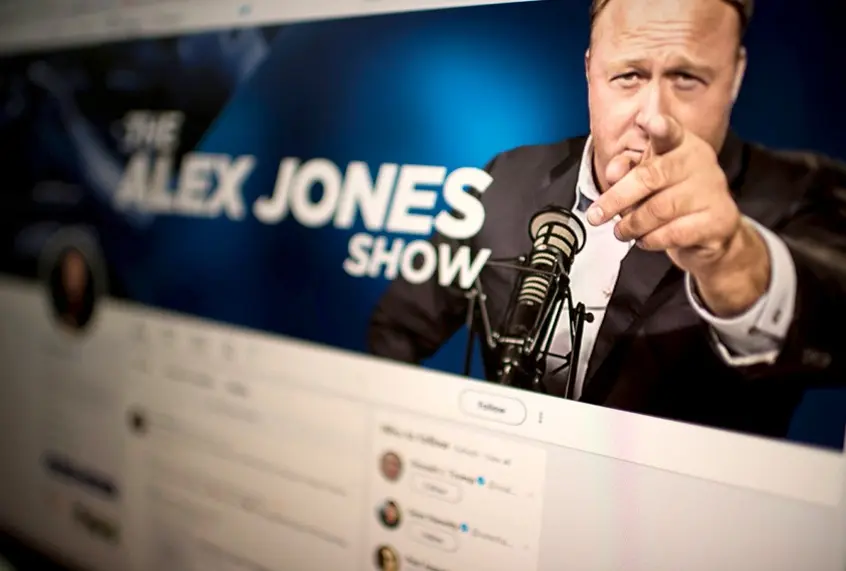
In a watershed moment for content moderation and the governance of digital public squares, Twitter enacted a seven-day suspension of conspiracy theorist Alex Jones and his media outlet, Infowars, in August 2018. The decision marked a sudden and definitive about-face for the social media giant, which had previously resisted mounting public pressure to ban Jones, consistently defending his right to post under the platform’s existing terms of service.
The suspension was triggered after Jones urged his followers to ready their "battle rifles" against the mainstream media and other perceived political opponents—a direct and unmistakable violation of Twitter’s policies against inciting violence against civilians.
The enforcement action placed Twitter CEO Jack Dorsey at the center of a raging global debate over corporate responsibility, free speech absolutism, and the ethical duties of Silicon Valley executives. While Apple, Facebook, YouTube, Spotify, and Pinterest had already purged Jones and Infowars from their ecosystems for hate speech and harassment, Twitter initially stood alone in maintaining a hands-off approach.
In an exclusive interview with NBC News, Dorsey defended the company’s measured response, emphasizing the philosophy of rule-bound consistency over reactionary censorship. However, as digital platforms increasingly grapple with the real-world harms spawned by coordinated disinformation campaigns, the Alex Jones controversy stands as a foundational turning point in how modern democracies police the boundaries of online speech.
Detailed Chronology: The Road to the Infowars Purge
The summer of 2018 marked a seismic shift in the digital landscape. For years, Alex Jones had used platforms like Infowars to distribute elaborate falsehoods, vicious harassment campaigns, and inflammatory conspiracy theories. While traditional publishers and broadcasters kept Jones at arms-length, major technology companies offered him an unprecedented megaphone, reaching millions of users daily.
By August 2018, the dam broke. Within a matter of days, a coordinated wave of private-sector enforcement dismantled Jones’s digital empire across almost every major platform:
- Early August 2018: Apple takes the first major industry step, removing several Infowars podcasts from its iTunes and Podcasts directories for violating hate speech guidelines. Shortly thereafter, Spotify pulls multiple episodes of the Alex Jones Show.
- August 6, 2018: Facebook permanently bans four pages associated with Alex Jones and Infowars, citing repeated violations of its policies regarding hate speech and harassment. Google-owned YouTube follows suit, terminating the primary Infowars channel—which boasted over 2.4 million subscribers—along with several secondary channels. Pinterest and Mailchimp quickly join the exodus, severing ties with Jones and his organization.
- August 14, 2018: Twitter remains the primary outlier. Despite public outcry and internal pressure, the platform refuses to ban Jones, pointing to the fact that his specific tweets had not crossed the line into direct policy violations.
- August 14–15, 2018: Hours after Twitter’s defense, Jones publishes a video across his channels—and shares it on Twitter—calling on his supporters to get their "battle rifles" ready to confront the media and political adversaries.
- August 15, 2018: Twitter abruptly reverses its stance. The platform locks Jones’s personal account and the official Infowars account for a seven-day "timeout," citing the explicit incitement of violence.
- August 15, 2018 (Later): Twitter CEO Jack Dorsey sits down for an extensive interview with NBC News anchor Lester Holt, where he defends the temporary suspension, sparking a firestorm of debate over the adequacy of "timeouts" versus permanent bans.
Supporting Context & Metrics: The Anatomy of a Conspiracy Empire
To understand the gravity of Twitter’s intervention, one must examine the staggering reach and real-world consequences of Alex Jones’s media machine. For decades, Infowars operated as a high-frequency engine of radicalization, producing daily broadcasts, articles, and social media clips designed to outrage, mislead, and mobilize an aggrieved base.
A Legacy of Harassment and Harm
As media critics and investigative reporters have exhaustively documented, Jones’s career was built upon a foundation of destructive hoaxes:
- 9/11 "Trutherism": Jones spent years propagating conspiracy theories claiming that the September 11 terrorist attacks were "inside jobs" orchestrated by the United States government.
- Targeted Harassment: Jones repeatedly used his platforms to launch false accusations of pedophilia and corruption against public figures, including high-ranking government officials and special counsel Robert Mueller.
- The Sandy Hook Massacre Hoax: Perhaps most egregiously, Jones spent years claiming that the tragic 2012 mass shooting at Sandy Hook Elementary School—which claimed the lives of 20 children and six educators—was an elaborate hoax staged by the government using "crisis actors."
The human cost of these falsehoods was catastrophic. Families of the Sandy Hook victims were subjected to years of relentless harassment, death threats, and intimidation by Jones’s followers. This campaign of terror ultimately culminated in landmark defamation lawsuits filed against Jones in Texas and Connecticut, leading to multi-million-dollar judgments that effectively bankrupted Infowars and forced a legal reckoning for the purveyor of disinformation.
The Metrics of Moderation
Prior to the August 2018 bans, the numerical footprint of Jones’s enterprise was formidable:
- YouTube: Over 2.4 million subscribers and hundreds of millions of cumulative video views.
- Facebook: Multiple pages aggregating millions of followers.
- Twitter: Hundreds of thousands of followers across personal and organizational accounts, serving as a rapid-response channel to drive traffic back to the primary Infowars website.
When Apple, Facebook, YouTube, and Spotify coordinated their actions in August 2018, they severed access to an audience numbering in the tens of millions. Twitter’s decision to issue a seven-day timeout—while significantly milder than a permanent IP ban—marked the first time the platform acknowledged that Jones’s rhetoric had crossed from objectionable political speech into dangerous incitement.
Official Statements and Industry Reactions
The cascading bans on Alex Jones ignited an intense national debate concerning the nature of free speech in the twenty-first century. Because private social media companies are not bound by the First Amendment—which restricts government censorship, not private corporate policy—the debate centered on ethics, public trust, and the concentration of speech governance in the hands of a few unelected tech executives.
Jack Dorsey and the "Rule of Law" Approach
In his interview with NBC News’ Lester Holt, Twitter CEO Jack Dorsey articulated a philosophy rooted in institutional neutrality. He argued that allowing personal biases to dictate moderation decisions would destroy the integrity of the platform.
"We can’t build a service that is subjective just to the whims of what we personally believe," Dorsey told Holt, explaining why he had resisted earlier calls to ban Jones.
Dorsey maintained that temporary suspensions serve a specific behavioral purpose within Twitter’s enforcement framework:
"I feel any suspension, whether it be a permanent or a temporary one, makes someone think about their actions and their behaviors… Whether it works within this case to change some of those behaviors and change some of those actions, I don’t know. But this is consistent with how we enforce."
Following the broadcast of the interview, Dorsey took to Twitter to clarify his remarks, emphasizing that timeouts are part of an escalating scale of penalties rather than a guarantee of rehabilitation:
"To clarify: I was speaking broadly about our range of enforcement actions, when asked why we timeout functionality on Twitter. I don’t assume everyone will change their actions. Enforcement gets tougher with further reported violations."
Critics and the Demand for Accountability
Civil rights organizations, media watchdogs, and victims’ advocacy groups argued that Dorsey’s measured approach was dangerously naive when applied to actors who systematically weaponize disinformation. Critics pointed out that a seven-day timeout was little more than a slap on the wrist for a figure whose broadcasts routinely generated immense financial profit through the sale of survivalist gear, dietary supplements, and merchandise advertised on Infowars.
Furthermore, free-speech absolutists and right-wing political figures condemned the coordinated nature of the tech industry’s actions, framing the bans as a form of Silicon Valley censorship designed to silence conservative and anti-establishment viewpoints. This political counter-narrative positioned Jones not as a purveyor of malicious harassment, but as a martyr for political dissent—a framing that Jones himself actively amplified to rally his supporters and drive traffic to his independent website.
Future Outlook: The Post-2018 Moderation Landscape
The Alex Jones suspension of August 2018 served as a vital testing ground for the modern era of trust and safety engineering. It exposed the structural limitations of treating global communication networks like traditional common carriers and forced technology executives to confront the weaponization of their tools by bad-faith actors.
While Twitter initially opted for a temporary timeout in August 2018, the escalation of violations eventually forced the platform’s hand. Months later, in September 2018, Twitter permanently banned both Alex Jones and Infowars from its platform for violating cumulative behavior and harassment policies, aligning its policy enforcement with those of Apple, Facebook, and Google.
The fallout from the Infowars saga reshaped the digital policy landscape in several permanent ways:
- Standardization of Multi-Platform Enforcement: The coordinated bans established a precedent that extreme violations of safety standards—such as targeted harassment, incitement of violence, and malicious disinformation campaigns—warrant industry-wide exclusion rather than isolated penalties.
- Evolution of Enforcement Frameworks: Tech companies were forced to move beyond reactive, complaint-driven moderation toward proactive algorithmic and policy-driven detection systems. The debate shifted from whether platforms should moderate content to how they can do so transparently and equitably.
- The Decentralization Challenge: As major platforms closed their doors to Jones, he and similar extremist figures migrated to alternative, less-regulated platforms, encrypted messaging apps, and self-hosted domains. This migration highlighted the ongoing "whack-a-mole" dynamic of digital moderation, proving that content bans do not eliminate extremist ecosystems, but rather push them further into insular digital enclaves.
Ultimately, Jack Dorsey’s defense of Twitter’s initial hesitation captured the agonizing dilemma at the heart of modern platform governance: balancing the utopian ideal of an open, uninhibited global conversation against the dystopian reality of coordinated disinformation, stochastic terrorism, and the systematic abuse of digital infrastructure.