Executive Overview
Developer Frogwares has long carved a niche for itself within the realms of detective fiction and cosmic horror, but their latest endeavor marks a distinct and confident pivot. The Sinking City 2, the highly anticipated sequel to the 2019 open-world investigation title, abandons some of its predecessor’s sprawling yet barren design choices in favor of a tighter, highly atmospheric, over-the-shoulder survival horror structure.
Within minutes of stepping into the waterlogged streets of Arkham, Massachusetts, players will find themselves confronted with a familiar reality: this is, fundamentally, Resident Evil wearing a fedora. However, rather than diminishing the title, this direct lineage to Capcom’s modern survival horror crown jewels serves as a high compliment. Blending the tense resource management, claustrophobic corridor navigation, and tactical combat of modern survival horror with a rich, meticulously detailed 1920s Lovecraftian backdrop, Frogwares has delivered an experience that is far more than a mere derivative cover band.
Despite minor technical shortcomings in facial animations, a lighter-than-expected detective deduction system, and the curious absence of a traditional sanity mechanic, The Sinking City 2 stands as a triumphant, harrowing descent into madness. It successfully marries pulp-fiction action with metaphysical dread, offering genre enthusiasts a compelling, deeply atmospheric stopgap while they await Capcom’s next official installment.
Detailed Chronology and Narrative Progression
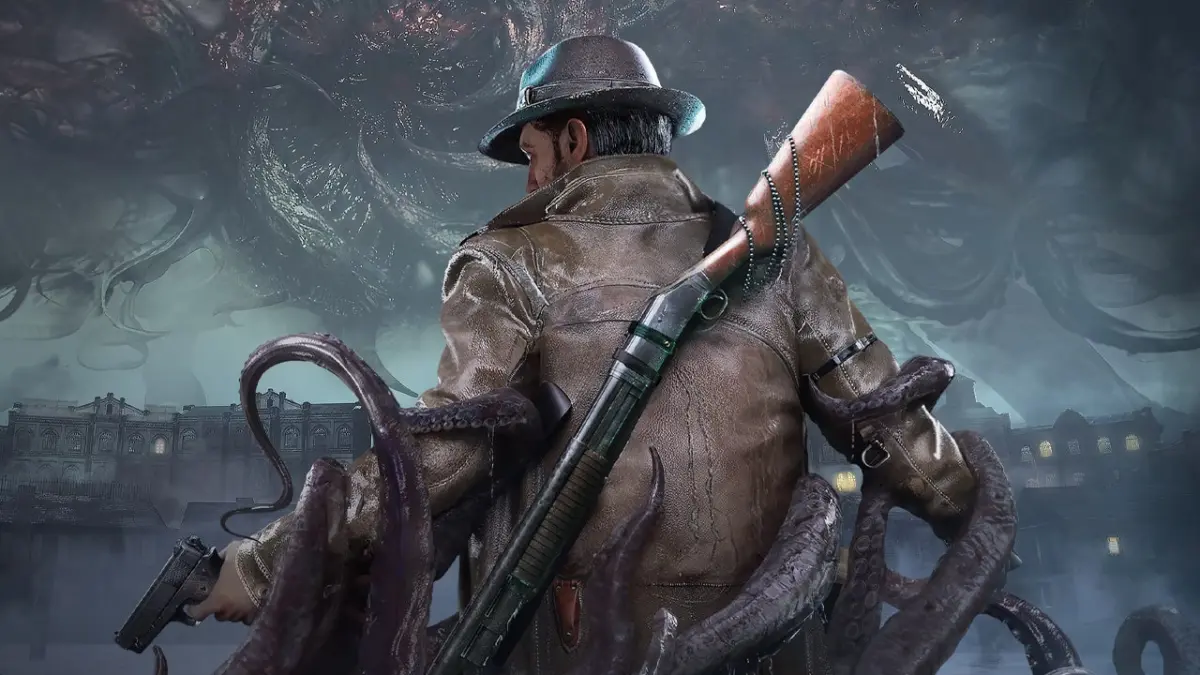
The narrative thrust of The Sinking City 2 grounds its cosmic absurdity in deeply personal stakes. Players assume the role of Calvin Rafferty, a hard-chinned, two-fisted, and reckless occultist in 1929 who awakens just as an apocalyptic flood threatens to wipe Arkham off the map. Calvin is cast in the mold of classic pulp fiction heroes—brave to a fault, resilient, yet possessing enough hidden emotional depth to anchor the high-concept weirdness.
The core motivation driving Calvin forward is both intimate and tragic. An ill-fated, half-remembered expedition into H.P. Lovecraft’s surreal Dreamlands has left his partner and paramour, Faye, trapped in a catatonic state. This immediate emotional hook carries the player effortlessly through the slightly deliberate pacing of the opening chapter.
Chapter-by-Chapter Architectural Evolution
As the story unfolds across distinct chapters, Arkham itself evolves as a character, with each locale presenting a radically different visual and structural vibe:
- Chapter 1: The Flooded Streets and Abandoned Hotels. Beginning amidst rising tides, players must navigate the watery ruins of Arkham via boat before seeking refuge in a decaying, haunted hotel. The introductory hours establish the unforgiving survival loop while introducing players to subtle nods and appearances from various corners of the broader Cthulhu mythos.
- Chapter 2: The Abandoned Hospital. Widely considered the harrowing high-water mark of the campaign, this chapter traps the player within the sterile, rusted confines of a derelict medical ward. True to the survival horror playbook, this zone introduces an unkillable, terrifying stalker enemy archetype in the proud tradition of Mr. X and Nemesis, forcing players into frantic loops of stealth, evasion, and desperate resource conservation.
- Chapter 3: The Arkham Fish Market. Delivering precisely what genre veterans would expect from a Lovecraftian port town, this seaside industrial nightmare tests Calvin’s mettle against fish-themed horrors that aggressively subvert any lingering sense of safety.
The plot manages to engage with the heavier, more existential metaphysical concepts of Lovecraftian lore—effectively selling the terrifying notion of entities completely beyond human comprehension—while expertly sidestepping some of the source material’s more antiquated and problematic tropes. The narrative avoids overly convoluted, esoteric finales that require online video guides to decipher, offering instead a cohesive, emotionally resonant descent into the abyss.
Supporting Context and Mechanics
Mechanically, The Sinking City 2 is an unapologetic, reverent tribute to the over-the-shoulder Resident Evil formula, most notably mirroring the rhythm and tension of the 2019 Resident Evil 2 remake.
Resource Scarcity and Combat Loop
Calvin can assemble a modest arsenal of firearms, but ammunition is critically scarce. Players will find themselves regularly combing through ruined desks, blood-soaked drawers, and damp cabinets for every last round. Melee combat is an option of absolute last resort; engaging even standard zombie-like thralls in hand-to-hand combat almost invariably results in heavy damage, forcing players to consciously weigh the expenditure of precious healing items against scarce ballistic supplies.
Calvin strikes a comfortable balance between vulnerability and competence—he lacks the acrobatic action-hero prowess of a late-game Leon S. Kennedy, yet feels far more grounded and capable than the profoundly fragile protagonists found in titles like Resident Evil Requiem.
Feature Breakdown and Mechanical Parallels
- Inventory and Crafting: Familiar grids govern inventory management, where field-foraged herbs and chemical compounds are synthesized into vital healing and defensive resources.
- Environmental Puzzles: Progression often hinges on classic survival horror puzzle architecture, requiring players to scour rooms for key items to unlock heavy, sealed doors.
- New Game+ Perks: Completing challenges unlocks powerful, game-altering perks for subsequent playthroughs, mirroring Capcom’s post-game incentive structures.
To prevent frustrating softlocks during intense boss encounters or claustrophobic arena battles where ammo reserves might run completely dry, Frogwares implemented infinitely respawning loot drops. While this concession arguably undercuts the game’s strict survival difficulty—and highlights the fact that boss fights remain a minor structural weak point—it keeps the pacing intact during the title’s less inspired combat spectacles.
Distinguishing Innovations: Runes and Conspiracy Boards
To prevent the experience from feeling like a carbon copy of its inspirations, Frogwares introduced two standout gameplay systems:
- The Rune Perk System: Players can unlock and equip powerful supernatural runes divided into four escalating tiers of potency. These modifiers grant distinct tactical advantages, such as increased weapon damage while operating with the flashlight turned off—rewarding players for braving pitch-black corridors and engaging unseen terrors. Because top-tier runes cannot be acquired within a single playthrough, the system generates robust replay value.
- The Detective Conspiracy Board: Moving away from passive observation, players discover written clues scattered across environments. These notes can be pinned and manually connected with red yarn strings on a dedicated investigation board. Correctly mapping relationships between different evidence groups yields vital progression points, narrative hints, and optional treasure locations.
While puzzle difficulty can be decoupled from combat difficulty, turning off helper icons mostly removes automatic UI prompts rather than generating genuine intellectual hurdles. Furthermore, a glaring omission for a title bearing the Cthulhu banner is the complete absence of a sanity mechanic. Without reality-bending hallucinations or psychological meters forcing Calvin to question his own perception, the game misses an opportunity to fully realize the mental erosion central to cosmic horror.
Official Statements and Industry Insights
In recent promotional and post-launch developer roundtables, representatives from Frogwares addressed the strategic shift from the open-world investigations of the original 2019 title to the more linear, focused design of The Sinking City 2.
"With the first game, we cast our net exceptionally wide, trying to build an expansive, open-world playground that occasionally diluted the pure, oppressive dread we wanted to evoke," noted a senior project lead during a recent developer insights briefing. "For the sequel, we realized that true cosmic horror thrives on claustrophobia, curated pacing, and architectural dread. By leaning into the structural blueprints laid down by modern survival horror masters, we were able to focus entirely on atmosphere, environmental storytelling, and intense, moment-to-moment survival."
Industry analysts have praised this pivot, noting that mid-tier developers frequently struggle to sustain quality across vast open worlds. By narrowing their scope, Frogwares has successfully delivered a critically cohesive product that punches well above its production budget, relying on stellar art direction, rich texture work, and committed voice acting to bridge minor technical gaps in facial animation.
Future Outlook
The commercial and critical reception of The Sinking City 2 marks a vital turning point for Frogwares. Having successfully demonstrated their capacity to pivot genres while maintaining their signature narrative depth, the studio has cemented its reputation as a premier architect of interactive weird fiction.
Looking ahead, industry watchers anticipate robust post-launch support, potentially including expanded New Game+ modifiers, additional difficulty tuners to satisfy hardcore puzzle solvers, and story-driven DLC expansions that could further delve into Lovecraft’s expansive Dreamlands. More importantly, this project proves that Frogwares can competently modernize its mechanical framework without sacrificing its artistic identity. As players increasingly demand tighter, highly replayable single-player horror experiences rather than bloated, open-world checklists, The Sinking City 2 provides a masterclass in focused design—proving that even in the bleakest depths of the Cthulhu mythos, there is plenty of terrifying life left in the survival horror genre.