Executive Overview
The landscape of modern mobile connectivity is shifting once again as major telecommunications providers finalize their commercial strategies for Apple’s innovative iPhone Handoff feature. Following initial rollouts and pricing announcements by carriers like T-Mobile and Deutsche Telekom, Verizon has officially confirmed its pricing structure for the capability, which debuted as a core software component of iOS 27.
Beginning immediately, Verizon subscribers wishing to use a single phone number across two distinct iPhone devices simultaneously will be billed an additional $10 per month. This pricing model places Verizon at the higher end of the carrier spectrum for the service, effectively doubling the $5 monthly fee levied by rival domestic competitor T-Mobile.
Apple’s iPhone Handoff—initially teased at the Worldwide Developers Conference (WWDC) and later spotlighted during the company’s fall “Surprise and Shine” hardware and software event—was engineered to solve a friction point for multi-device Apple ecosystem users. By allowing a primary phone number to transition active status, cellular connectivity, and messaging synchronization between two compatible iPhones seamlessly, the feature eliminates the tedious requirement of swapping physical or digital SIM profiles. However, the convenience comes with recurring carrier surcharges that vary wildly by provider, raising questions about consumer adoption rates, carrier monetization strategies, and the broader economics of multi-device cellular integration.
Detailed Chronology: From WWDC Preview to Carrier Pricing Wars
To understand the current economic realities of iPhone Handoff, it is necessary to examine the trajectory of the feature from an experimental software preview to a commercially deployed carrier service.
1. The WWDC Genesis
When Apple first previewed iOS 27 at WWDC earlier in the year, the company highlighted continuity features as a primary pillar of the new operating system cycle. Among them, iPhone Handoff emerged as a heavily requested feature for power users, journalists, and enterprise clients who carry multiple iPhones—such as a compact device for personal use and a larger Pro model for professional tasks.
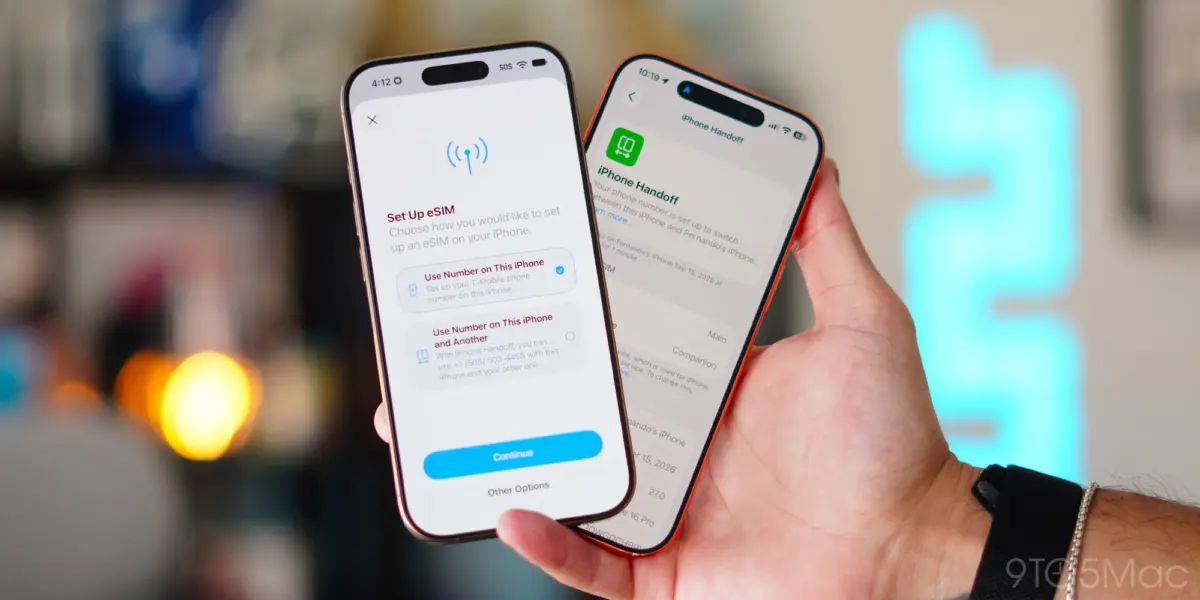
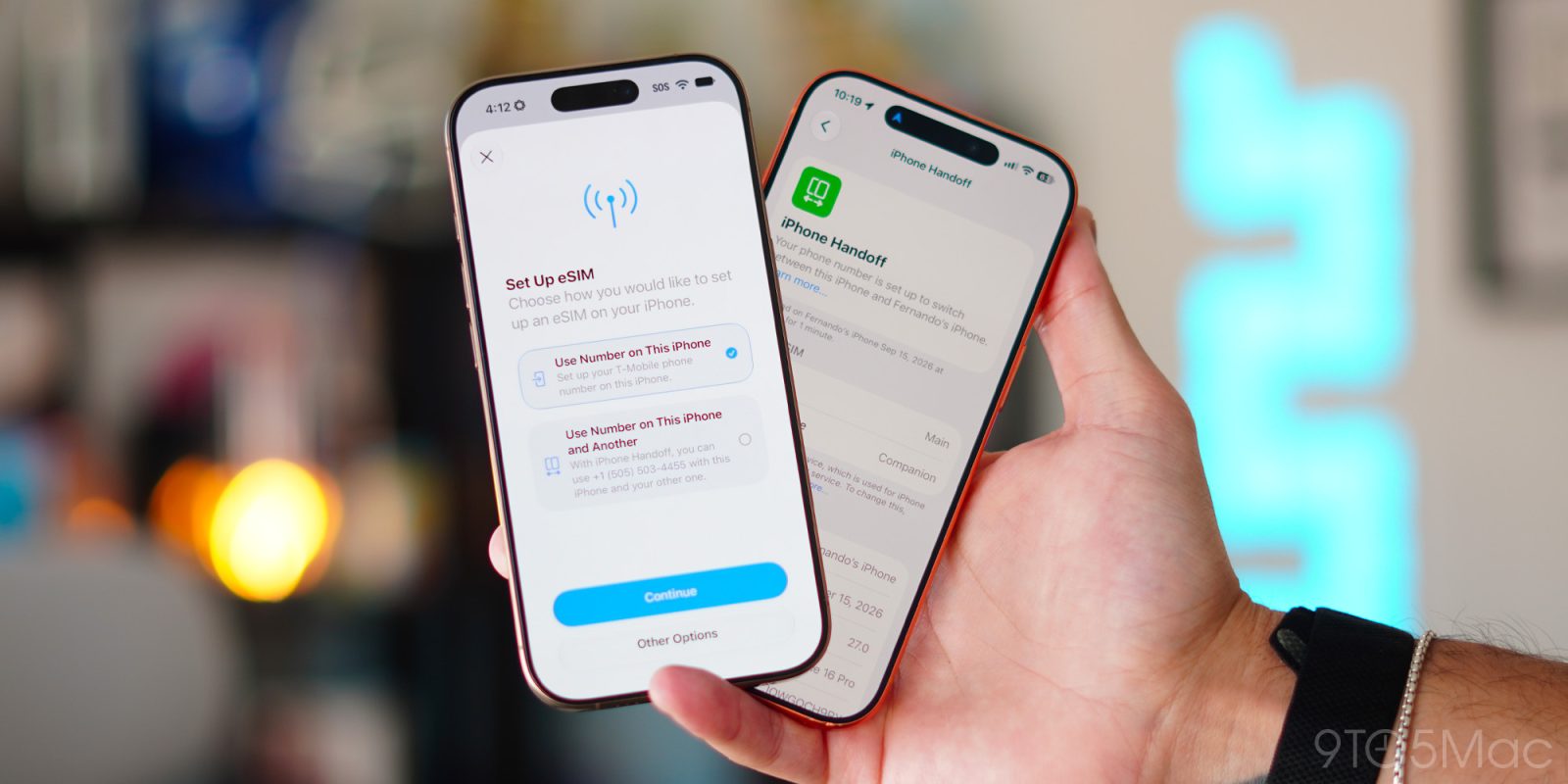
Unlike traditional call forwarding or multi-device setups that rely on Wi-Fi calling and iCloud syncing (such as answering an iPhone call on an iPad or Mac), iPhone Handoff operates natively on cellular infrastructure. It allows two independent iPhone handsets to register with the carrier network under a single subscriber identity module (SIM) or digital profile, enabling true cellular parity on both devices without requiring manual number transfers.
2. The "Surprise and Shine" Event
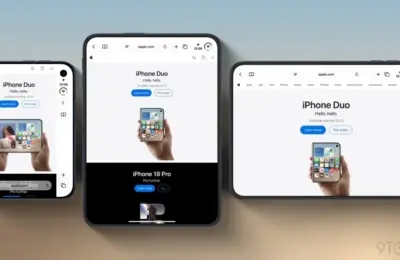
At the subsequent “Surprise and Shine” special event last month, Apple dedicated significant stage time to demonstrating the practical applications of iPhone Handoff. Executives showcased how users could effortlessly switch their active cellular line from a pocketable device like the hypothetical iPhone Duo to a flagship powerhouse like the iPhone 18 Pro on the fly.
During the presentation, Apple outlined the initial launch partners committed to supporting the infrastructure required for the feature. Domestically, T-Mobile was named alongside international giant Deutsche Telekom, while Verizon and European carrier EE were promised to follow before the conclusion of the calendar year.
3. The T-Mobile and Deutsche Telekom Salvos
Shortly after Apple’s autumn showcase, T-Mobile seized the initiative by becoming the first major carrier to reveal its commercial terms. The "Un-carrier" announced a straightforward $5 monthly add-on fee for iPhone Handoff, establishing an initial baseline for consumer expectations in the US market.
Simultaneously, across the Atlantic, Deutsche Telekom integrated the functionality into its existing MultiSIM framework. European subscribers faced a monthly tariff of €6.95, unless the feature happened to be bundled into higher-tier, premium enterprise or family data plans.
4. Verizon Enters the Fray at $10/Month
The timeline advanced significantly when MacRumors uncovered official documentation and press releases confirming Verizon’s pricing model. Coming in at $10 per month per line, Verizon’s pricing strategy is precisely twice as expensive as T-Mobile’s domestic offering. Despite the steep surcharge, Verizon’s leadership is betting that its subscriber base—particularly enterprise accounts and high-net-worth tech enthusiasts—will absorb the cost in exchange for uninterrupted access to its robust 5G network infrastructure.
Supporting Context & Metrics: The Cost of Ecosystem Convenience
The fragmented pricing models adopted by tier-one carriers highlight a broader industry trend: the monetization of ecosystem-level software features. While Apple designs and builds the software plumbing required for features like iPhone Handoff, the actual routing, authentication, and network resource allocation rely entirely on carrier infrastructure.
Comparative Carrier Pricing Breakdown
| Carrier / Provider | Region | Monthly Cost for iPhone Handoff | Implementation Method |
|---|---|---|---|
| Verizon | United States | $10.00 / month | Dedicated add-on feature for iOS 27 compatible lines |
| T-Mobile | United States | $5.00 / month | Standalone monthly digital feature |
| Deutsche Telekom | Europe | €6.95 / month | Tied into existing MultiSIM infrastructure (unless bundled) |
| AT&T | United States | Not Supported ($0) | Carrier has opted out, favoring traditional eSIM transfers |
The AT&T Holdout Strategy
Notably absent from the iPhone Handoff ecosystem is AT&T. When industry analysts and tech publications like CNET questioned AT&T representatives regarding their timeline for supporting the feature, the carrier acknowledged the technological ingenuity of Apple’s solution but explicitly stated it had no current plans to implement support.
Instead, AT&T has doubled down on optimizing its existing digital infrastructure, pointing consumers toward its streamlined eSIM activation and instant transfer options. For AT&T, the engineering overhead and support costs required to maintain dual-device synchronized profiles on a single number apparently do not align with their near-term product roadmap—or their desire to introduce yet another niche billing category.
Hardware Ecosystem Synergies
The rollout of iPhone Handoff coincides with a shifting hardware paradigm. Apple’s ongoing hardware diversification—exemplified by rumors and releases surrounding form-factor innovations like the rumored pocketable iPhone Duo and the heavy-duty specifications of the iPhone 18 Pro series—creates natural pressure for multi-device ownership. Consumers increasingly desire specialized hardware for different contexts (e.g., lightweight exercise vs. heavy multimedia creation) without enduring the friction of managing distinct phone numbers, text message threads, or dual-carrier bills.
Official Statements and Corporate Perspectives
Carriers have been careful to position their pricing strategies around the concepts of flexibility, network reliability, and professional productivity.

In its official press release detailing the rollout, Verizon emphasized the seamless nature of the service, framing the $10 monthly investment as an operational tool for modern professionals:
"Verizon will support iPhone Handoff, giving customers the flexibility to use a single Verizon phone number seamlessly across two compatible iPhone models. Whether using the pocketable iPhone Duo on the go or iPhone 18 Pro for work, customers can switch active status between devices at any time while keeping full access to Verizon’s 5G network. iPhone Handoff will be available from Verizon for $10/month on compatible iPhones models running iOS 27."
Conversely, T-Mobile’s more aggressive $5 pricing structure reflects its historical positioning as a market disruptor attempting to undercut legacy incumbents like Verizon and AT&T. By positioning the feature as an affordable lifestyle upgrade rather than a premium enterprise tool, T-Mobile aims to drive higher attach rates among consumer demographics.
Apple, for its part, has maintained a neutral stance regarding carrier pricing decisions. Cupertino’s role has strictly been that of a software architect, providing the foundational APIs and user interface frameworks within iOS 27 while leaving commercial terms, billing integrations, and subscriber verification entirely up to the carrier partners. For users seeking deep technical documentation on how the feature operates under the hood, Apple continues to direct traffic to its official support portal (Apple Support Article #127274).
Future Outlook: Will Consumers Pay for Handoff?
As the dust settles on the initial carrier announcements, the ultimate success of iPhone Handoff will be determined in the marketplace. At $10 a month ($120 annually) on top of existing unlimited data plans, Verizon’s pricing tier transforms what could have been a basic, value-add software utility into a luxury digital convenience.
Economic Implications for Enterprise and Consumer Segments
- The Enterprise Market: For corporate environments where employers subsidize mobile communications, Verizon’s $10 monthly fee is unlikely to encounter major pushback. Employees who juggle an iPhone 18 Pro for heavy office workflows and a smaller secondary device for travel will find the seamless synchronization of calls, voicemails, and iMessage threads well worth the corporate expense.
- The Consumer Market: Individual consumers, however, may exhibit sticker shock. In an economic climate where monthly subscription fatigue is prevalent—spanning streaming services, cloud storage, software utilities, and basic connectivity—adding an extra $60 to $120 a year just to keep a second phone active on the same number is a tough sell. T-Mobile’s $5 model strikes a more palatable consumer equilibrium, while AT&T’s outright rejection suggests that some carriers view the feature as an over-engineered solution to a problem easily solved by existing eSIM transfer protocols.
What Lies Ahead
Looking forward, the trajectory of iPhone Handoff will depend heavily on adoption metrics collected over the coming quarters. If Verizon and T-Mobile report strong attach rates despite the recurring fees, other global carriers—and perhaps even holdouts like AT&T—may reevaluate their stances and build out the necessary backend infrastructure.
However, if high carrier pricing stifles adoption, Apple may find itself forced to lobby for more consumer-friendly carrier terms in future iOS iterations, or explore alternative, carrier-agnostic connectivity models that bypass traditional telecom billing structures altogether. For now, early adopters on Verizon’s network must weigh the undeniable magic of frictionless multi-device continuity against the very real, recurring monthly cost of modern ecosystem integration.