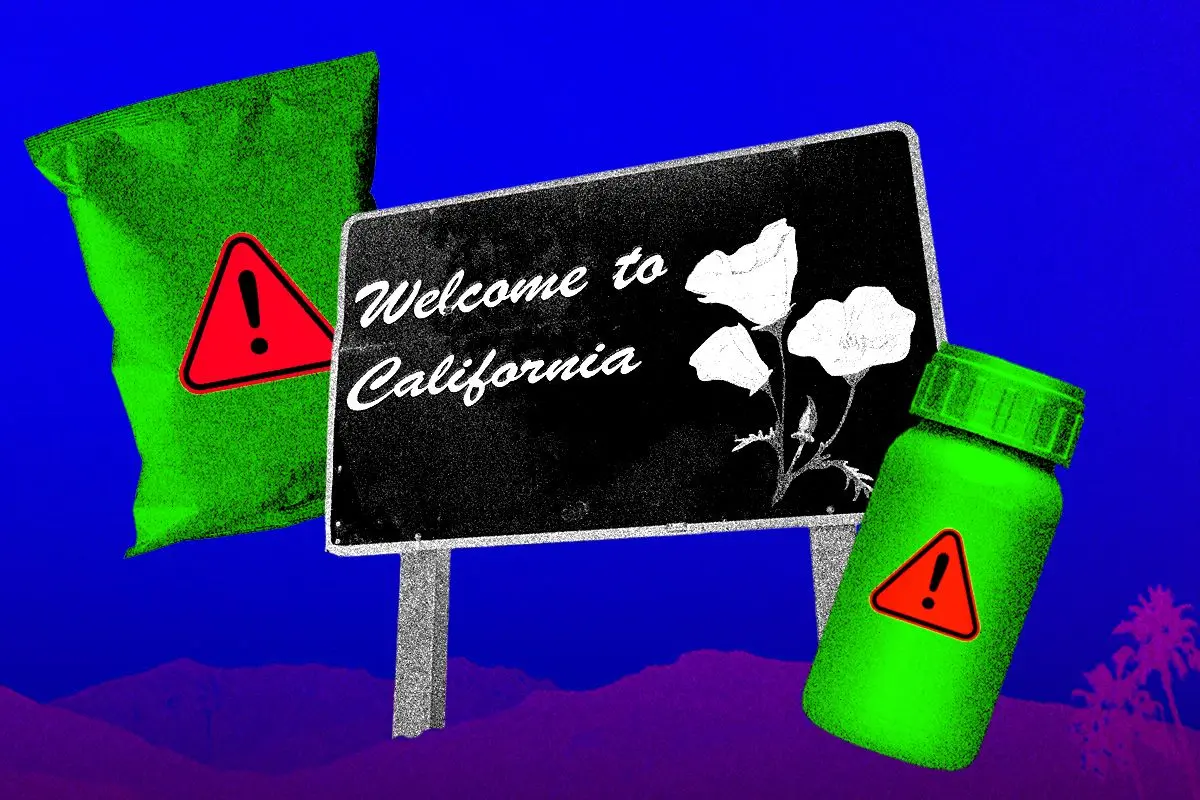
For millions of shoppers across the United States, a familiar scenario plays out daily: you purchase an item—whether it is a brand-new television, a kitchen appliance, a dietary supplement, or a child’s toy—turn it over, and encounter an alarming, blunt statement. Printed in stark black lettering, the sticker warns: "California Proposition 65 Warning: This product contains chemicals known to the state of California to cause cancer and birth defects or reproductive harm."
For the uninitiated, this encounter often sparks a moment of panic. Is the item safe to bring into the home? Should it be returned immediately? Can mere proximity to the device pose a health risk?
Enacted in 1986 as the Safe Drinking Water and Toxic Enforcement Act, California’s Proposition 65 is approaching its momentous 40th anniversary. Yet, despite four decades of existence, the omnipresent label remains one of the most widely misunderstood consumer protection regulations in the United States. Far from a straightforward safety ban or an absolute indicator of imminent danger, Prop 65 is fundamentally a "right-to-know" law. It does not dictate what products can be sold; rather, it mandates transparency.
Understanding Prop 65 requires navigating a complex intersection of toxicology, public policy, and corporate risk management. While the regulation has successfully compelled manufacturers to rethink chemical use and granted consumers unprecedented insight into supply chains, its sheer ubiquity has introduced a new challenge: "over-warning." When every third item in a household bears a cancer warning, discerning genuine hazards from routine compliance becomes an exhausting guessing game for the average buyer.
Detailed Chronology: The Evolution of Prop 65
To understand how these ubiquitous warnings became a staple of modern commerce, one must examine the legislative journey that brought Proposition 65 to life in the mid-1980s.
1986: A Landmark Grassroots Ballot Initiative
Proposition 65 began not as a top-down bureaucratic decree, but as a voter-led initiative. In November 1986, California voters approved the measure by an overwhelming landslide—roughly 63 percent to 37 percent. During an era marked by rising public anxiety over industrial pollution, chemical dumping, and toxic exposure in everyday environments, the public demanded greater accountability.
The original intent of the law was straightforward: protect drinking water sources from being contaminated with chemicals known to cause cancer or reproductive toxicity, and ensure that citizens were explicitly notified before being exposed to such substances.
The Regulatory Framework Unfolds
Administered primarily by California’s Office of Environmental Health Hazard Assessment (OEHHA), Prop 65 established an ever-expanding roster of regulated substances. The state was tasked with compiling and regularly updating a master list of chemicals proven by scientific consensus to be carcinogens or reproductive toxicants.
Unlike federal regulations that often set hard bans on specific chemical concentrations in final products, Prop 65 operates on a threshold model. It relies on "safe-harbor" numbers—maximum allowable dose levels (MADLs) for reproductive toxicity and no significant risk levels (NSRLs) for carcinogens. If a business can prove that exposure to a chemical falls below these safety thresholds, no warning is legally required. If the exposure exceeds those levels, a warning label becomes mandatory.
The Ripple Effect Across National Commerce
Because California represents one of the largest and most lucrative consumer markets in the world, companies outside the state quickly realized they could not easily segment their manufacturing lines just to avoid the regulation. To sell goods to major national retailers—such as Target, Amazon, and Walmart—manufacturers found it economically advantageous to apply Prop 65 warning labels universally rather than risk devastating legal penalties or being barred from the California market entirely. Consequently, a California-specific ballot initiative quietly transformed into a de facto national labeling standard.
Supporting Context & Metrics: The Science and Scope of Exposure
The sheer breadth of Proposition 65 is staggering. The official chemical list encompasses thousands of entries, ranging from heavy metals like lead, cadmium, and arsenic to synthetic compounds, pesticides, and even naturally occurring elements found in soil and water.
Natural vs. Synthetic: The Dietary Supplement Dilemma
One of the most frequent points of consumer confusion involves natural products, such as herbal extracts and protein powders. Because these goods originate from the earth, they can absorb trace levels of heavy metals from the soil or ambient environment.
Under strict Prop 65 standards, even naturally occurring trace contaminants can trigger a warning requirement if they cross the state’s stringent safe-harbor lines. This has created an environment where health-conscious consumers might spot a cancer warning on an organic superfood supplement, leading to deep skepticism regarding both the safety of the product and the credibility of the warning itself.
The Economics of Caution: Testing vs. Labeling
Why do companies slap warning labels on products that might pose negligible risk? The answer lies in the legal architecture of Prop 65.
The law includes a unique enforcement mechanism: private citizen-lawsuits. Environmental groups, law firms, and private citizens can sue businesses on behalf of the state for failing to provide adequate warnings, collecting a share of any resulting civil penalties. Facing the high cost of toxicological testing to prove compliance, many smaller and mid-sized companies adopt a defensive posture. For them, printing a standardized warning label is infinitely cheaper than funding a scientific defense or risking a crippling lawsuit.
Official Statements & Expert Perspectives
To separate fear from fact, public health officials, toxicologists, and legal experts emphasize that the presence of a Prop 65 warning is not a direct verdict of toxicity.
"At that time, it was part of a broader effort to address a growing concern that the public had about toxic chemical exposure," explains Dr. Megan Schwarzman, an environmental health scientist at UC Berkeley’s School of Public Health. She notes that the primary goal was to empower consumers to make informed choices, while simultaneously incentivizing corporations to reformulate their supply chains to eliminate hazardous inputs.
The Rigorous Process of Chemical Listing
How do substances make it onto the Prop 65 list in the first place? Mariana C. Stern, a cancer epidemiologist and member of California’s Carcinogen Identification Committee (CIC), explains that the evaluation process is intensely deliberate. The committee comprises independent scientists, toxicologists, molecular biologists, and epidemiologists who meticulously comb through scientific literature.
"We may spend the whole day trying to dissect one chemical," Stern says. "It’s not uncommon that we end up deciding we don’t have enough evidence to add this compound to the list."
Chemicals are typically added through four distinct pathways:
Mandates originating from California’s Labor Code.
Rigorous evaluations by the CIC or the Developmental and Reproductive Toxicant Identification Committee (DARTIC).
Designations by authoritative bodies, such as the US Food and Drug Administration (FDA) or the International Agency for Research on Cancer (IARC).
Formal identification by state or federal environmental agencies.
The Problem of "Over-Warning"
Despite the scientific rigor behind the chemical listings, the widespread application of labels has created a severe communications hurdle.
"We definitely have a concern with over-warning," admits Tina Cox, section chief of OEHHA’s Proposition 65 Implementation Program. "Any unnecessary warnings do make it difficult for consumers to identify where the real exposures are, and it does dilute the value of Prop 65 warnings."
When consumers are bombarded with identical warnings on everything from a high-end smartphone to an industrial power tool, fatigue sets in. People stop reading the notices, defeating the core legislative objective of drawing meaningful attention to hazardous exposures.
Practical Consumer Guidance: Navigating Risk in Daily Life
Given that modern life involves background exposure to countless environmental chemicals, how should a consumer approach products bearing a Prop 65 label? Air pollution scientist and researcher Shahir Fouad Masri points out a comforting reality: zero exposure is an unattainable illusion.
"You’re never going to be zero exposure, even if you avoid all Prop 65 labels," Masri explains. "If you have a product that doesn’t have a label, it’s one of two things: It was tested and it didn’t exceed Prop 65, and therefore it’s safe, or simply nobody ever sent it to the lab."
Instead of experiencing panic, experts recommend adopting a pragmatic, dose-and-frequency assessment framework:
Evaluate Usage Frequency: Consider how often you interact with the item. A chemical exposure that occurs once a year carries a vastly different risk profile than daily, long-term ingestion or absorption.
Assess the Route of Exposure: Dermal absorption varies drastically across the human body. For instance, the skin on the palms of your hands is thick and calloused, whereas the skin on your face or mucous membranes readily absorbs compounds. Handling a tool with a warning label while wearing work gloves minimizes risk far more effectively than using an unverified cosmetic product directly on facial skin.
Common-Sense Mitigation: Simple habits—such as washing your hands after handling holiday string lights containing flexible PVC plastic (which often utilize phthalates for pliability)—can drastically cut down unnecessary chemical transfer.
Future Outlook: Reforming Prop 65 for the Next Era
As Proposition 65 approaches its 40th milestone, the state of California is actively working to modernize the regulation and restore the communicative power of its warnings.
Recognizing that generic, boilerplate warning language has contributed to consumer numbness, OEHHA has implemented sweeping updates to warning label requirements. Businesses are transitioning toward "short-form" and specific warnings that must explicitly name at least one chemical driving the notice, moving away from vague catch-all phrases like "may cause cancer or reproductive harm." Companies have been granted a compliance window extending through January 2028 to fully update their packaging and digital storefronts.
Concurrently, state agencies are ramping up educational outreach for small and mid-sized businesses, clarifying the exact mathematical boundaries of safe-harbor thresholds to discourage defensive, unnecessary labeling.
Ultimately, Proposition 65 remains a pioneering blueprint for consumer advocacy. While its execution has occasionally stumbled into the trap of bureaucratic noise, its foundational philosophy endures: public health transparency is a fundamental right.
As Dr. Schwarzman aptly summarizes: "I want to encourage us all not to feel like the toxic things are inevitable, and there’s nothing we can do, because there often is something we can do." By pairing consumer mindfulness with smarter regulatory oversight, the next chapter of Prop 65 may finally strike the elusive balance between absolute corporate accountability and clear, actionable public information.