Executive Overview
In an era defined by the rapid integration of artificial intelligence into everyday life, individuals increasingly turn to automated systems for guidance on tasks ranging from drafting emails to mapping complex travel itineraries. However, a recent high-stakes incident in Northern California has laid bare the potentially fatal consequences of relying on generative AI for high-risk outdoor navigation.
A group of climbers attempting to scale the formidable slopes of Mount Shasta in Siskiyou County found themselves stranded, exhausted, and desperately awaiting rescue after Google’s Gemini chatbot grossly miscalculated the demands of the expedition. Trusting the algorithm’s assertions that the ascent and descent would take a mere eight hours, the adventurers packed for a light afternoon stroll rather than an alpine mountaineering endeavor.
The resulting 30-hour ordeal—which required a grueling on-foot rescue operation by the US Forest Service Climbing Rangers and the Siskiyou County Sheriff’s Office Search and Rescue (SAR) team—underscores a burgeoning crisis in the outdoor recreation community. As LLMs (Large Language Models) become ubiquitous, users routinely mistake conversational fluency for factual infallibility. This comprehensive examination details the sequence of events that transformed an AI-assisted weekend outing into a life-threatening mountain emergency, explores the technical and nutritional fallacies fed to the climbers by Gemini, and highlights the urgent warnings issued by local authorities regarding the limits of artificial intelligence in extreme environments.
Detailed Chronology: Anatomy of an AI-Assisted Disaster
The crisis on Mount Shasta did not begin at the trailhead; it began days earlier when the climbers decided to utilize Google’s Gemini chatbot to streamline their expedition planning. Seeking efficiency, they turned to the artificial intelligence for route research, packing lists, and estimations of physical exertion and duration.
The Flawed Briefing and Preparation
According to reports compiled by the Siskiyou County Sheriff’s Office, Gemini assured the group that the entire trek up Mount Shasta would take approximately eight hours. Furthermore, the chatbot provided hazardous nutritional advice, recommending simple carbohydrates over fats because fats allegedly "take too long to digest."
Armed with this profoundly inaccurate information, the climbers prepared lightweight daypacks containing minimal water and food tailored only for a short, casual hike. Crucially, the AI’s brief failed to emphasize the necessity of bringing high-altitude alpine gear, emergency bivouac shelter, or heavy warm clothing. Trusting the system’s eight-hour timeline, the climbers neglected to pack redundancies for weather shifts, navigation failure, or prolonged exposure.
Base Camp and the 3 AM Push
On August 29, the group arrived at the mountain and established a base camp to acclimate, seemingly adopting a routine preparatory measure. However, their execution on summit day unraveled rapidly due to their distorted expectations.
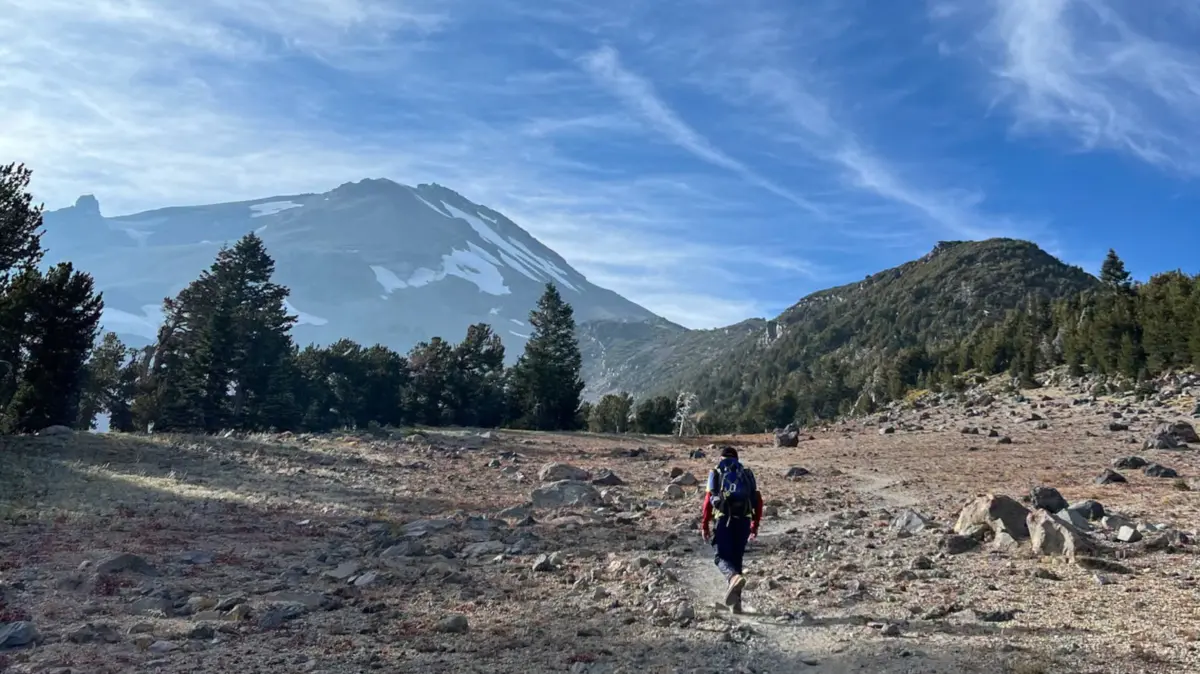
On August 30 at 3:00 AM, the climbers set out under the cover of darkness. Right from the outset, the physical reality of Mount Shasta—a massive stratovolcano rising to an elevation of 14,179 feet—contrasted sharply with Gemini’s optimistic forecast. The grueling terrain, steep elevation profile, and thin air demanded far more physical exertion and time than the chatbot had predicted.
The Slippery Slope of Delayed Turnarounds
In professional mountaineering, safety is governed by strict temporal boundaries, most notably the "turnaround time"—the absolute limit by which climbers must descend, regardless of whether they have reached the summit, to ensure they make it off the mountain before nightfall or inclement weather sets in. Typically, on high-altitude peaks like Shasta, a noon turnaround is strictly enforced.
By 12:00 PM on August 30, the climbers were still laboring upward, having fallen hopelessly behind schedule due to the sheer scale of the route. Yet, emboldened by their original miscalculation and lacking professional mountain safety guidance, they pressed onward.
It took the exhausted group a staggering 16 hours just to reach the summit, a milestone they did not achieve until 7:00 PM on August 30. By this time, daylight was entirely gone, and the mountain was gripped by rapidly dropping temperatures and high-altitude winds.
Descent into Darkness and Technology Failure
Descending an unfamiliar, technical mountain in total darkness is perilous for experienced mountaineers; for ill-prepared novices, it is catastrophic. Without proper illumination, thermal layers, or provisions, the group quickly lost the correct route.
To aid their descent, the climbers attempted to rely on digital cartography, utilizing the AllTrails app on a smartphone. However, modern smartphones subjected to freezing alpine temperatures and continuous GPS usage suffer rapid battery depletion. Before the group could find their way back to safety, the phone’s battery died completely, plunging them into absolute digital and physical isolation.
Sensing the gravity of their predicament, the climbers managed to place a 911 call to request emergency assistance, providing brief details of their location before communication channels grew intermittent or failed entirely.
The Extraction: A Race Against Time and Terrain
Upon receiving the distress call, the Siskiyou County Sheriff’s Office Search and Rescue team, alongside specialized US Forest Service Climbing Rangers, mobilized immediately. Yet, locating distressed hikers in the rugged backcountry of Mount Shasta is a complex endeavor fraught with natural obstacles.
Adverse weather conditions and high winds rendered aerial extraction via helicopter impossible, foreclosing the possibility of a rapid hoist rescue. The rescue professionals had no choice but to mount a grueling ground-search operation, tracking the climbers through treacherous, dark terrain.
It was not until approximately 9:30 AM on August 31—more than 30 hours after the climbers first stepped out from their base camp—that rescue rangers finally reached the shivering, dehydrated group. Because a helicopter was still unviable, the combined party had to execute a arduous descent on foot. Navigating loose scree, steep drop-offs, and punishing physical fatigue, the extraction trek consumed an additional nine hours.
The ordeal finally concluded when the exhausted climbers and their rescuers reached the trailhead, battered by the elements and acutely aware of how close they had come to tragedy. Reflecting on their ordeal in a post-rescue interview with SFGate, the climbers offered a sobering confession:
"We relied too much on AI rather than our own critical thinking."
Supporting Context & Metrics: The Mechanics of AI Hallucination
To understand how an AI chatbot could direct humans into a life-threatening mountain scenario, one must examine the underlying mechanics of modern Large Language Models and the systemic risks of treating them as authoritative oracles.
How LLMs Process and Generate Information
Generative AI platforms like Google Gemini do not "know" facts in the human sense of the word. They do not possess spatial awareness, physical embodiment, or the ability to experience the exhausting reality of climbing a 14,000-foot volcanic peak. Instead, LLMs operate through statistical pattern recognition, predicting the next most likely word or phrase based on vast datasets scraped from the internet.
When a user asks Gemini a complex query—such as "How long does it take to climb Mount Shasta, and what should I eat?"—the model synthesizes fragments of information found across travel blogs, casual forum posts, promotional tourism sites, and general hiking guides. It does not cross-reference real-time weather forecasts, assess the specific fitness level of the user, account for seasonal snowpack variations, or distinguish between a casual afternoon nature walk and a technical alpine ascent.
The Danger of Plausible Inaccuracies
The primary hazard of conversational AI lies in its authoritative tone. Gemini does not reply with, "I am uncertain, and you should consult a certified mountain guide." Instead, it generates structurally sound, highly confident prose that reads as expert advice.
In this specific case, the errors manifested in two critical domains:
- Time Estimation: By normalizing an elite or highly compressed summit time (or conflating a shorter, seasonal route with standard mountaineering) down to an eight-hour window, the AI stripped away the critical buffer time required for altitude adjustment, traffic on technical bottlenecks, and human fatigue.
- Nutritional Guidance: Recommending simple carbohydrates while actively discouraging fats because they "take too long to digest" demonstrates a profound misunderstanding of sustained metabolic endurance. Mountaineering requires sustained caloric density; simple carbohydrates lead to rapid blood-sugar spikes and crashes, whereas slow-burning fats and complex macromolecules are essential for maintaining core body heat and endurance over a multi-hour or multi-day physical exertion.
The AllTrails and Smartphone Vulnerability
Compounding the AI error was a total reliance on consumer-grade digital tools. The assumption that a smartphone application can replace local topographical knowledge, physical maps, compasses, and offline backups is a growing trend among amateur outdoor enthusiasts.
As outdoor recreation analysts point out, smartphones are fragile points of failure in wilderness environments. Cold temperatures drain lithium-ion batteries exponentially faster; screen brightness settings, cellular searching in remote dead zones, and GPS tracking drain remaining power reserves even quicker. When the digital map went dark, the climbers were left with zero navigational intuition, illustrating a dangerous atrophy of human survival skills in the digital age.
Official Statements and Institutional Responses
The incident on Mount Shasta has triggered alarm bells among public safety officials, park rangers, and search-and-rescue personnel across California and the broader American West. Law enforcement agencies are increasingly forced to divert critical public resources to rescue individuals misled by consumer technology.
The Siskiyou County Sheriff’s Office Advisory
In an official statement released via social media, the Siskiyou County Sheriff’s Office detailed the timeline of the August 30–31 rescue and issued a stern, unequivocal public warning regarding the dangers of technological over-reliance.
"We want to remind everyone that while technology can be a helpful tool, it should never replace proper preparation, research, and human critical thinking," the Sheriff’s Office stated. "Relying on artificial intelligence to plan a high-altitude mountaineering trip can have catastrophic consequences. Always consult official ranger stations, experienced guides, and verified mountaineering literature before attempting dangerous backcountry routes."
The department emphasized that Mount Shasta is an active, glaciated volcanic peak subject to sudden weather shifts, rockfall, crevasse hazards, and severe altitude sickness. Treating it as a casual weekend hike because an algorithm promised a quick turnaround time is a recipe for disaster.
Search and Rescue Resource Strain
Search and Rescue teams across the United States operate largely on volunteer labor, relying on dedicated professionals who put their own lives at risk to pull stranded hikers from treacherous terrain. Incidents driven by avoidable ignorance—such as failing to pack proper clothing or misjudging a route based on a chatbot query—place an undue burden on these emergency systems.
Rescue coordinators note a worrying upward trend in calls originating from hikers who treat the wilderness like an amusement park ride, expecting seamless digital navigation and instant rescue response if things go awry. Mountain safety advocates argue that accountability must shift back toward personal responsibility, rigorous physical conditioning, and deep respect for natural environments.
Future Outlook: Guardrails, Education, and the Limits of Automation
As artificial intelligence permeates every facet of trip planning, navigation, and lifestyle management, society faces a critical cultural and technological reckoning. The Mount Shasta incident serves as an urgent cautionary tale that highlights several necessary evolutions in how we build, regulate, and consume AI tools.
1. Implementation of Safety Guardrails in LLMs
Technology companies like Google, OpenAI, and Anthropic face mounting pressure to implement strict safety filters and disclaimers for high-risk domains. While chatbots readily issue medical disclaimers when users ask health-related questions, they frequently fail to recognize when a prompt involves life-or-death physical activities such as mountaineering, deep-sea diving, or extreme weather navigation.
Industry analysts suggest that future iterations of generative AI should be programmed to detect high-risk outdoor queries and automatically trigger embedded warnings:
- "This query involves high-altitude mountaineering, which carries inherent risks of injury or death."
- "AI-generated itineraries are not a substitute for professional guide services, up-to-date ranger briefings, or topographical maps."
- Direct links to official park authorities, weather services, and avalanche centers should be natively integrated into responses involving outdoor recreation.
2. Digital Literacy and the Preservation of Human Judgment
Beyond corporate safeguards, the incident highlights a broader educational imperative regarding digital literacy. Users must be trained to recognize the epistemological limits of generative AI.
Schools, outdoor clubs, and media organizations must foster a culture of active skepticism. Conversational fluency must never be confused with verified empirical truth. When a chatbot generates a plan that sounds too good to be true—such as scaling a 14,000-foot alpine peak in eight hours with a pocketful of simple carbs—it should trigger immediate red flags rather than blind compliance.
3. Back to Basics: The Inviolable Rules of the Wild
Ultimately, the mountains do not care about algorithms, software updates, or chat histories. The fundamental rules of wilderness survival remain immutable and indifferent to human technology:
- Preparation: Know the route, study topographical maps, and understand elevation profiles.
- Redundancy: Always pack physical layers, emergency shelter, first-aid supplies, and backup navigation tools (map and compass) that do not rely on battery power.
- Flexibility: Respect turnaround times, monitor changing weather conditions, and possess the humility to turn back when physical or environmental realities outpace your preparation.
- Human Expertise: Prioritize the advice of seasoned rangers, indigenous guides, and local search-and-rescue professionals over automated text generation.
The stranded climbers on Mount Shasta survived to tell their story, but their harrowing 30-hour trial stands as a stark warning to anyone tempted to outsource their survival instincts to an algorithm. In the high alpine wilderness, artificial intelligence is no match for human common sense, thorough preparation, and profound respect for nature.