Executive Overview
In the fast-paced ecosystem of contemporary internet culture, viral trends emerge and fade with dizzying speed. Yet, every so often, a specific audio-visual artifact cuts through the digital noise, capturing the zeitgeist of modern online humor. The latest iteration of this phenomenon is the "Hey, Can I Have This?" meme—a viral exploitable and self-professed "brainrot" format centered around Ted, the foul-mouthed, anthropomorphic bear from Seth MacFarlane’s hit franchise.
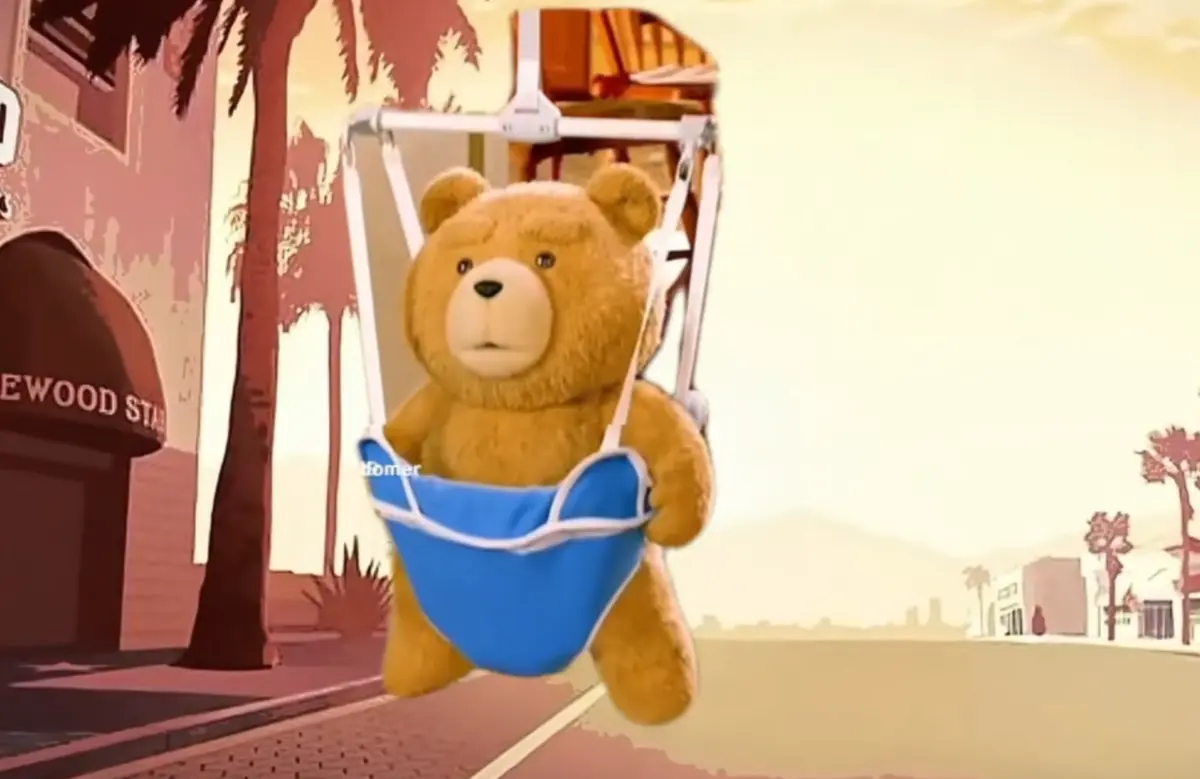
Originating from Peacock’s prequel television series Ted, the clip features the titular bear cheerfully bouncing in a blue baby swing while delivering the deceptively simple line: "Hey, can I have this?" What began as a seemingly innocuous scene in a television comedy quickly mutated into a massive digital wildfire on TikTok. By late August 2026, the meme had evolved into a ubiquitous reaction format, spawning thousands of remixes, absurd visual mashups, and hyper-stylized edits.
This deep-dive investigation explores the origins of the "Can I Have This?" meme, traces its meteoric rise across social media platforms, analyzes the mechanics of its virality within the "brainrot" subculture, and examines the broader implications of how modern meme formats achieve hyper-accelerated adoption.
Detailed Chronology: From Scripted Television to Digital Infamy
To understand how a plastic baby swing and a CGI bear became the focal point of global digital culture, one must trace the precise trajectory of the meme from its television debut to its transformation into viral shorthand.
The Source Material: Peacock’s Ted Series
While Seth MacFarlane’s Ted franchise first captivated audiences in the 2012 feature film starring Mark Wahlberg, the specific visual and audio building blocks of the meme stem from the streaming television prequel series hosted on Peacock. Set in the 1990s, the series explores Ted’s early years living with teenage John Bennett and his family.
The pivotal moment occurs in Season 2, specifically within the sixth episode titled "Roe v. Weed." In a scene set in the Bennett family home, Ted finds himself amusingly occupying a blue baby swing harness. Bouncing up and down with characteristic childlike innocence masking his cynical adult psyche, Ted looks up and cheerfully asks, "Hey, can I have this?"
While the joke played well within the narrative context of the sitcom, television audiences at large could not have predicted that this specific three-second clip would be decoupled from its narrative entirely, repurposed into a blank canvas for digital absurdity.
The Spark: August 23, 2026
The transition from television screen to TikTok feed occurred on August 23, 2026. TikTok user @part.time.domer uploaded what is widely recognized as the genesis of the trend. Pairing the isolated audio and visual clip of Ted in the baby swing with minimal framing, the post struck an immediate chord with the algorithm.
The inaugural video defied traditional narrative logic, leaning instead into the absurdist irony favored by modern Gen Z and Gen Alpha digital natives. Within just nine days of posting, the video accumulated over 1.7 million views and nearly 189,000 likes. The digital Rubicon had been crossed; the template was officially viable.
Accelerated Spread and Remix Culture (Late August 2026)
Following the initial catalyst, the meme metastasized across TikTok at an exponential rate. Within days, creators began stripping the audio, applying heavy reverb, distortion, and layering it over completely unrelated gaming footage, surreal animations, and surrealist text-overlay jokes.
- August 26, 2026: User
@heycanihavethiscapitalized on the growing momentum by launching an account dedicated entirely to the format, pulling in over 773,000 views in under a week. - August 29, 2026: The format breached gaming subcultures when user
@tex_editz63integrated the Ted clip into a Grand Theft Auto V pastiche, generating 1.5 million views and pushing 333,000 likes within 72 hours. - August 30, 2026: Further expanding into niche internet subcultures, user
@overwatch_futadeployed the meme alongside character tropes, proving the format’s infinite adaptability.
By the close of August 2026, the meme had solidified into a canonical "brainrot" format—a term affectionately used by internet users to describe hyper-repetitive, overstimulated media consumption designed for instant comedic gratification.
Supporting Context & Metrics: The Anatomy of a "Brainrot" Exploit
To quantify the success of the "Hey, Can I Have This?" trend, one must examine the mechanics that drove its engagement metrics. Memes do not go viral by accident; they succeed because they possess specific structural advantages within algorithmic feeds.
The Power of the CapCut Template Ecosystem
A primary driver behind the explosive spread of the meme was its low barrier to entry. Creators on TikTok rely heavily on editing software integrations—most notably CapCut. By packaging the Ted baby-swing clip into easily customizable templates, casual users did not need advanced video editing skills to participate. They simply needed to drop the template into the editor, attach a personal caption or an absurd object of desire, and publish.
Understanding the "Brainrot" Phenomenon
In internet parlance, "brainrot" refers to content characterized by surrealism, rapid pacing, deep-fried audio effects, and nonsensical repetition. The Ted meme fits this profile perfectly.
- Visual Repetition: The continuous bouncing of Ted in a blue baby swing creates a hypnotic, low-stakes visual loop that keeps viewers transfixed for the duration of the short-form video.
- Auditory Overstimulation: Creators frequently layer pitch-shifted audio, bass-boosted sound effects, and chaotic background tracks over Ted’s innocent question, creating a sensory overload that resonates deeply with contemporary meme aesthetics.
- The Irony of Desire: The phrase "Hey, can I have this?" functions as an ultimate blank check for irony. It is deployed when a creator wants to claim absurd, impossible, or socially unacceptable objects, concepts, or scenarios—ranging from fictional video game weapons to abstract existential dread.
Quantitative Overview of Early Virality
| Date (2026) | Creator Handle | Key Context / Integration | Views (Approx.) | Likes (Approx.) |
|---|---|---|---|---|
| August 23 | @part.time.domer |
Original pioneer video | 1.7 Million | 188,700 |
| August 26 | @heycanihavethis |
Dedicated format expansion | 773,800 | 87,100 |
| August 29 | @tex_editz63 |
GTA V gaming crossover | 1.5 Million | 333,300 |
| August 30 | @overwatch_futa |
Subculture target/catboy edit | 449,700 | 72,600 |
Cultural Impact and Industry Response
The rapid rise of the "Can I Have This?" meme underscores a broader shift in how television networks and streaming platforms market their intellectual property. Historically, studios relied on traditional trailers, promotional interviews, and paid media placements to drive viewership. In the modern era, however, organic user-generated content (UGC) and memeification serve as far more potent catalysts for cultural relevance.
By releasing Ted on a streaming platform like Peacock, NBCUniversal inadvertently created an interactive sandbox for digital creators. When a single three-second clip of a CGI bear in a baby swing generates tens of millions of cumulative impressions across social media, it functions as free, highly targeted marketing that reaches demographics traditional television advertisements often fail to engage.
Furthermore, the meme highlights the evolution of anthropomorphic characters in internet culture. Ted—a character already defined by his irreverent, boundary-pushing personality—proved to be an ideal vehicle for absurdist humor. The juxtaposition of a cynical adult consciousness trapped inside a plush toy bouncing in an infant’s toy provided the exact comedic friction necessary for viral sustainability.
Future Outlook: The Lifecycle of Modern Exploitable Memes
As the initial wave of the "Hey, Can I Have This?" meme matures, industry analysts and meme historians look ahead to predict its long-term trajectory.
Like most hyper-viral TikTok formats, the meme follows a predictable lifecycle curve:
- Inception & Isolation: A specific, out-of-context moment is extracted from mainstream media.
- Exploitation & Mutation: Creators apply the template to various subcultures, gaming universes, and absurd scenarios, driving peak engagement.
- Saturation & Irony: The format becomes so ubiquitous that meta-memes mocking the trend begin to emerge.
- Archival & Nostalgia: The meme settles into digital history, preserved on platforms like Know Your Meme as a defining artifact of late-summer 2026 internet culture.
Whether the trend evolves into a permanent fixture of internet slang or fades into the background noise of social media feeds, its legacy is secure. The "Can I Have This?" meme stands as a testament to the unpredictable nature of digital virality, proving that with the right combination of absurd source material, accessible editing tools, and algorithmic lightning in a bottle, even a bouncing blue baby swing can capture the collective attention of the online world.