Executive Overview
The conversation surrounding artificial intelligence and visual media has long been plagued by a fundamental misunderstanding. Critics point to poorly rendered hands, uncanny valley expressions, and sterile compositions, dismissing the entire medium as low-effort "AI slop." But according to AI strategist Lauren deVane, judging advanced generative visual models by amateur output is akin to "judging all piano music by watching a five-year-old bang keys in a dentist’s office. Mozart exists; we just are judging it based on this kid smashing keys."
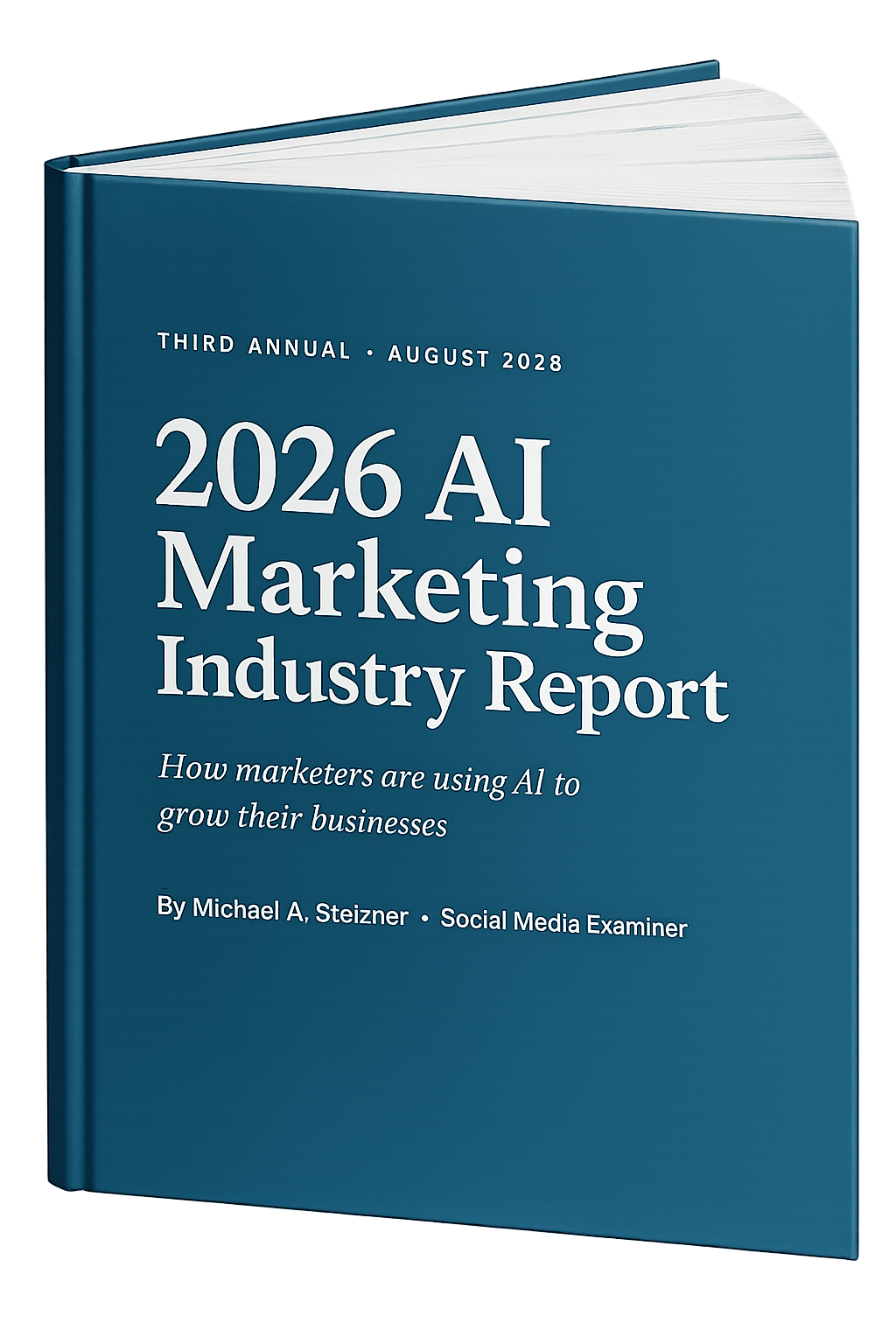
The underlying technology has evolved past its awkward early days of diffusion-based noise-reduction. Modern architectures, particularly OpenAI’s GPT Image and multi-model creative platforms like Magnific, utilize expansive language grounding and billion-pixel statistical mapping. They do not merely stitch together patches of disparate data; they understand context, interpret complex visual assets, and render typography with layout precision.
Yet, marketers continue to flood social feeds and ad campaigns with uninspired, cookie-cutter assets. The bottleneck is no longer the technology’s capability—it is human input. Without a rigorous, intentional prompting framework and precise visual referencing, users default to the system’s baseline averages. This report explores why AI imagery routinely falls flat, how forward-thinking brands are scaling original content creation, and the exact seven-pillar framework required to elevate AI graphics from generic noise to brand-defining art.
Detailed Chronology: The Evolution of Generative Visuals
To understand how to master modern AI imaging, marketers must first understand the structural shifts that transformed the landscape over a remarkably short window.
Phase 1: The Diffusion Era and Its Limits
When generative tools like early iterations of DALL-E first emerged, the medium relied heavily on diffusion-based models. These systems functioned similarly to a classical sculptor chipping away at a block of marble: they started with raw pixelated noise and iteratively refined the data until a recognizable shape emerged.
While groundbreaking for its time, this approach suffered from severe mechanical limitations. Models struggled with anatomy—famously producing six-fingered hands—and rendered human eyes with a hollow, glass-like gaze. Furthermore, because these models lacked sophisticated contextual reasoning, users had to painstakingly describe every minute detail of a scene. If a vital instruction was missing from the text prompt, the system guessed arbitrarily, resulting in distorted proportions and predictable, uninspired output.
Phase 2: The Cognitive Shift to Language-Grounded Models
The current generation of image generators represents a paradigm shift. Today’s state-of-the-art models are backed by sophisticated large language models (LLMs). Rather than blindly searching a digital library for separate "cat" and "surfboard" photos when given a compound command, the model analyzes the conceptual intersection of those items, processing current events, reading uploaded reference assets, and interpreting spatial relationships.
This cognitive backing allows modern tools to ingest complex inputs. If a user uploads a high-resolution photograph of peach-pineapple-mango sparkling water and commands the system to "create a surreal, vibrant world around it," the model identifies the individual fruit notes and architects a complementary environmental design.
Moreover, modern text-rendering capabilities have leaped forward. Contemporary systems can generate precise paragraphs of text complete with explicit font directions, typographical hierarchy, and structural placement. Despite these massive leaps, the average marketer continues to enter basic prompts like "make me a flyer, here’s the information." The model, receiving no distinct artistic direction, defaults to predictable layouts, average fonts, and generic icon placement—giving birth to the ubiquitous "ChatGPT slop flyer."
Supporting Context & Metrics: The Reality of Modern AI Adoption
The challenges of visual asset generation do not exist in a vacuum; they reflect a broader industry-wide scramble to master generative tools without institutional support.

Recent industry data reveals a telling story about how marketing professionals are navigating this technological wave:
- The DIY Learning Curve: Approximately 85% of marketers are forced to learn AI applications entirely through independent experimentation.
- The Training Deficit: Only 7% of marketing professionals receive formal company-sponsored AI training.
- Out-of-Pocket Investment: More than half of all practitioners spend their own personal funds to access advanced professional AI tooling.
This autonomous, trial-and-error approach explains why many marketing teams fail to unlock advanced capabilities. Without standardized workflows or structural training, teams default to superficial text prompts, resulting in homogenous brand imagery that fails to cut through the digital noise.
Practical Use Cases: Scaling Cohesive Visual Worlds
For modern brands, overcoming the generic AI trap unlocks unprecedented operational efficiencies, particularly in content volume and campaign agility.
Direct-to-Consumer (DTC) and Caged-Product Scaling
Consider a consumer packaged goods (CPG) brand that sells a single core product across ten distinct flavor profiles. Traditional commercial photography requires separate studio sessions, lighting setups, and post-production for every single SKU—an expensive, time-consuming logistical nightmare.
With modern multi-model AI pipelines, a marketer can establish a single, robust prompt template. By feeding individual reference images of each flavor into the system, the model reads the product packaging, notes the distinct color palette, and automatically constructs a matching, high-end environment.
Lauren deVane applied this methodology to her family’s enterprise, Club Critterz, which manufactures 3D-printed animals spanning 800 distinct SKUs. By utilizing standardized prompt structures coupled with unique animal reference inputs, the company generated 800 distinct product images that maintained complete visual cohesion because they shared the exact same foundational architecture.
B2B and Digital Service Applications
The benefits extend far beyond physical products. B2B service brands, software companies, and digital agencies often struggle to maintain a unified visual identity across web pages, pitch decks, and ad campaigns.
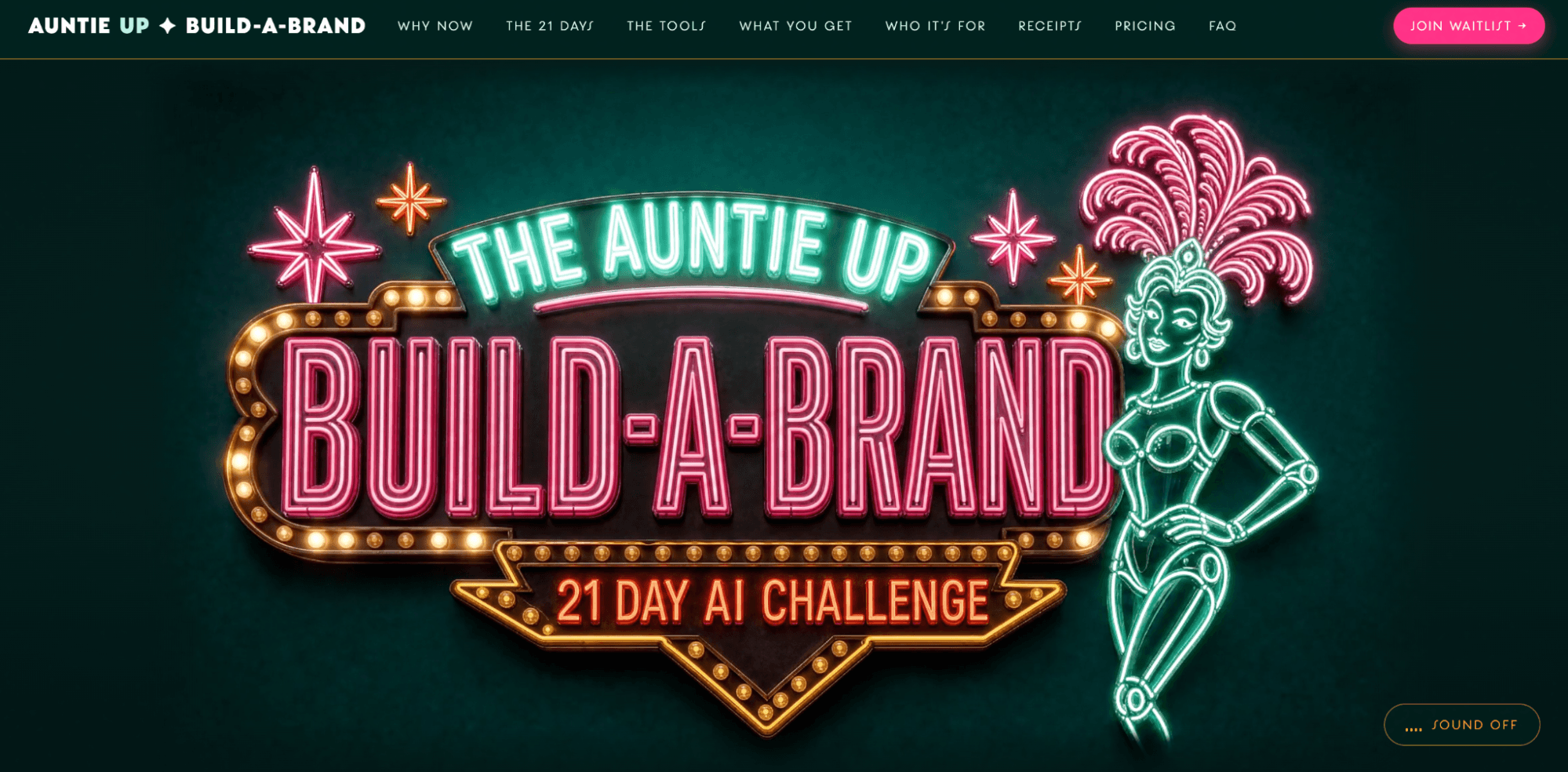
By anchoring AI generation to a comprehensive aesthetic reference system, marketers can construct entire web properties from scratch. For instance, building a complete digital sales funnel—from hero banner illustrations to section-by-section iconography—under a futuristic casino aesthetic (Auntie Up) becomes seamless. Every generated asset inherits the identical color harmony, lighting schema, and stylistic texture simply because the prompt references the same foundational design world.
Official Strategies: The Seven-Pillar Prompt Framework
To bridge the gap between amateur experimentation and professional-grade art direction, deVane developed the Seven-Pillar Prompt Framework. This methodology acts as a control panel for visual generation, ensuring that every dimension of an image is intentionally designed rather than left to algorithmic chance.
[The Seven-Pillar Prompt Framework]
 1. Medium        -> What type of visual? (Photograph, 3D Render, Line Art)
 2. Subject       -> What is the exact entity and action?
 3. Setting       -> What is the surrounding environment?
 4. Composition   -> How is the frame structured and angled?
 5. Lighting      -> What is the mood, source, and temperature of light?
 6. Aesthetic     -> What are the stylistic and cultural design cues?
 7. Intent        -> What emotional response or action should it evoke?
Pillar 1: Medium
Marketers must explicitly define the visual category of the output. Ambiguity invites mediocrity. Specify whether the asset is a commercial photograph, a vector-style illustration, a hyper-detailed 3D render, or minimalist line art. If choosing an illustration style, drill down further: Is it fine art, a sharpie sketch, or a textured crayon drawing?
Pillar 2: Subject and Action
Move beyond static nouns. Instead of prompting for "a person," specify "a female entrepreneur looking directly into a vanity mirror with a confident, relaxed expression." Instead of "a can of soda," command the engine to render "an aluminum beverage can dripping with condensation, dynamically balanced on its tapered edge." Action creates narrative tension.
Pillar 3: Setting and Scene
Avoid flat, single-word environment descriptions. Requesting "a retro diner" yields a predictable jukebox-and-vinyl scene. Prompting for "a dimly lit retro diner featuring dark wood vertical paneling, cracked turquoise vinyl booths, and the harsh neon glow of an amber beer sign" forces the AI away from its default library and into original territory.
Pillar 4: Composition
Control how the camera frames your subject. Dictate whether the shot is a wide-angle environmental capture, an extreme macro close-up, a dramatic low-angle perspective, or an overhead flat lay. In graphic design contexts, specify whether the layout demands strict symmetry, asymmetric minimalism, or dense maximalism.
Pillar 5: Lighting
Lighting dictates emotional resonance faster than almost any other design variable. Move past generic brightness commands. Define specific scenarios: soft morning light filtering through sheer linen curtains, harsh directional studio strobes with deep shadows, or the warm, single-source glow of an antique brass desk lamp.
Pillar 6: Aesthetic and Vibe
Rather than lazily instructing the model to copy a famous artist’s signature style, deVane advises marketers to deconstruct why an aesthetic works. If drawn to a cinematic style, translate those preferences into descriptive language—such as symmetrical framing, restricted color saturation, and flat architectural perspectives.

Pillar 7: Intent
What psychological reaction must the viewer experience? For a high-end skincare advertisement, should the viewer sense clinical efficacy, restorative calm, or immediate purchase urgency? Because modern LLM-backed image models process context, defining emotional intent directly alters facial expressions, color temperatures, and environmental warmth.
The Magnific Workflow and Multi-Model Optimization
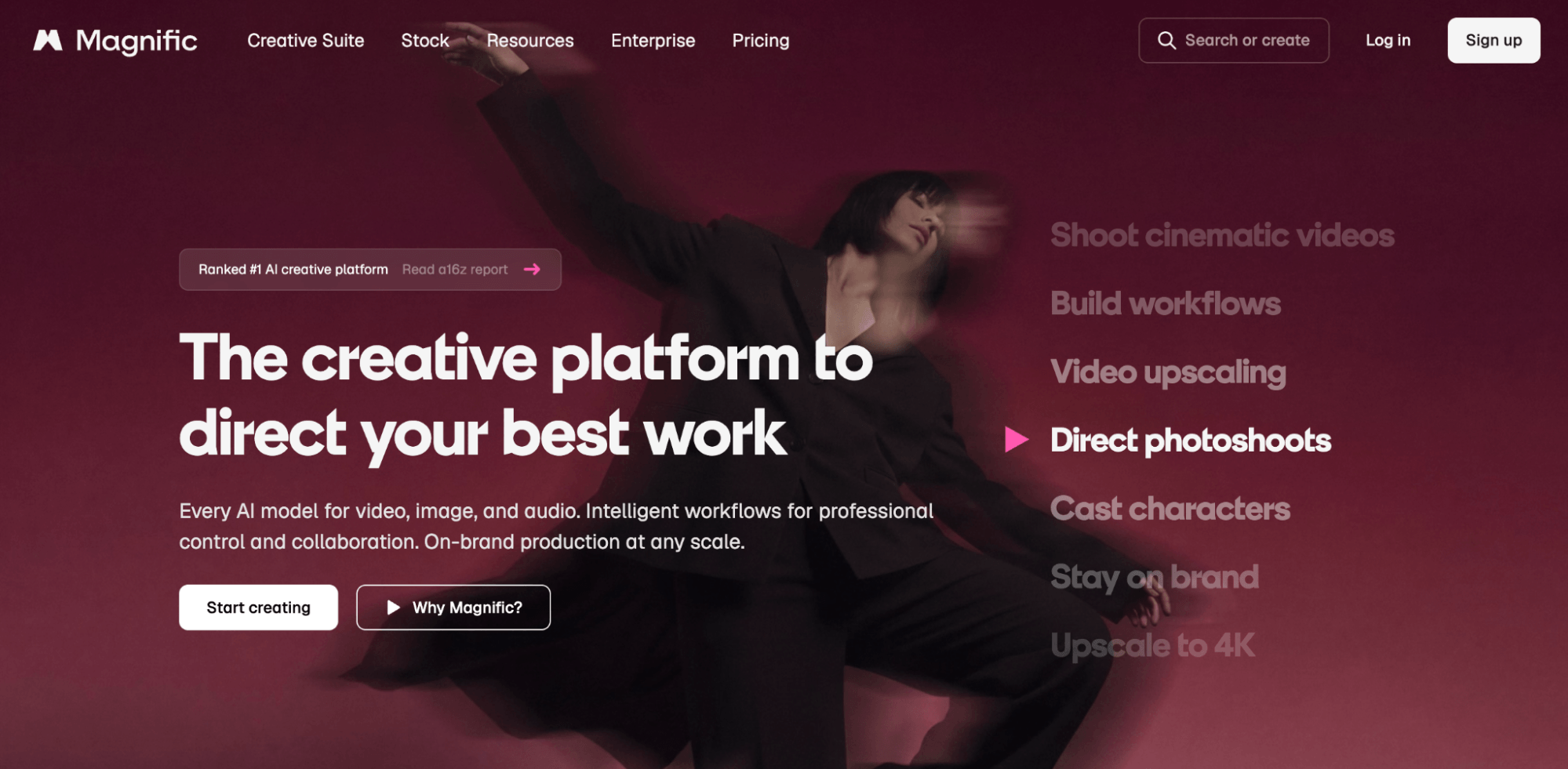
While standalone AI interfaces offer a baseline starting point, advanced marketers are leveraging multi-model platforms like Magnific to scale production and maintain strict quality control.
The Power of Volume and Variation
A core limitation of native chat interfaces is their default output of a single image per prompt. Because generative AI is inherently probabilistic, lighting, typography, and compositional geometry rarely hit perfection on the first execution.
Magnific bypasses this bottleneck by generating up to eight distinct variations simultaneously from a single prompt. Having a portfolio of choices drastically increases the probability of capturing a usable, production-ready asset without wasting valuable time manually adjusting variables one-by-one.
Model Cross-Comparison
Different engines excel at different tasks. Multi-model environments allow marketers to run identical prompt architectures across multiple models—such as GPT Image and Google Imagen—simultaneously. Evaluating outputs side-by-side enables creative teams to match the specific strengths of a model to the precise technical demands of a campaign.
Integrating the Model Context Protocol (MCP)
Recent workflow integrations, including Model Context Protocol (MCP) connectors linking Claude directly to platforms like Magnific, have streamlined digital production entirely. Marketers can operate within a single chat window, assigning Claude expert personas—such as creative director, director of photography, and lead stylist—using specialized skills like Prompty Poppins.
The workflow operates seamlessly:
- Claude authors the website code or campaign copy.
- The system formulates an optimized multi-pillar image prompt.
- Magnific executes the generation across high-end rendering models.
- The finalized asset drops directly into the digital workspace or local file directory.
This unified approach allows creators to effortlessly transition from static hero images to dynamic video prompts using advanced motion models like Seedance or Google Omni, all within a single, cohesive conversational thread. Furthermore, native design plugins for Adobe Photoshop and Illustrator allow professionals to pull AI-generated layers directly into legacy design software for final retouching.
Future Outlook: The Professionalization of AI Art Direction
As generative imaging matures, the competitive advantage will no longer belong to those who merely know how to type commands into a chat box. The barrier to entry is dropping, flooding the market with low-effort visual noise.
The future belongs to the digital art directors—marketers who cultivate a deep, articulate understanding of taste, composition, lighting, and brand psychology. By mastering foundational preparation, leveraging precise reference assets, executing the Seven-Pillar Prompt Framework, and utilizing multi-model production pipelines, forward-thinking brands can break free from the sea of generic AI imagery. The technology is no longer the limit; human imagination and intentional direction are the ultimate variables of success.