Executive Overview
In the sprawling digital ecosystem of modern social media, cultural flashpoints frequently emerge from the most mundane origins. The latest linguistic and behavioral battleground centers around a remarkably specific piece of physical body language: "Bird Hands."
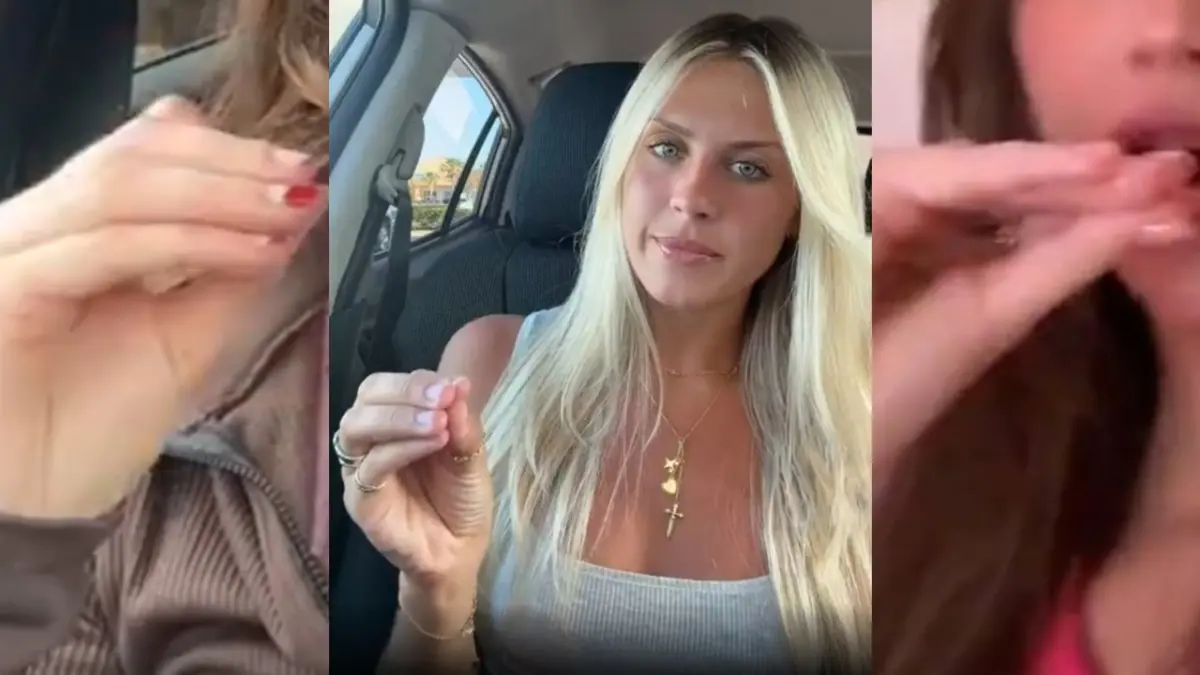
Characterized by a gesture where an individual pinches their fingertips together at the tips—forming a shape vaguely reminiscent of a bird’s head and beak—this behavioral quirk has ignited a fierce, polarized debate across platforms like TikTok, X (formerly Twitter), and YouTube. To some online commentators, particularly within the male-dominated digital subcultures often referred to as the "manosphere," the gesture has been branded as a behavioral red flag. Critics claim it signals instability, manipulative tendencies, dominance, and unhinged condescension. Conversely, women across the internet have fiercely reclaimed the gesture. They argue it is a natural, expressive tool used to emphasize critical points during passionate discussions, dismissing the criticism as an attempt by men to dodge accountability and avoid listening.
Spanning a viral arc from early 2025 through late 2026, the "Bird Hands" phenomenon provides a fascinating case study in how minor social observations are weaponized in the ongoing digital gender wars. This report offers a comprehensive investigative look into the origins, trajectory, cultural pushback, and broader implications of the "Bird Hands" phenomenon.
Detailed Chronology
Early 2025: The Genesis on X and TikTok
The discourse surrounding "Bird Hands" began quietly in the early months of 2025, coalescing primarily on X (formerly Twitter). Users began noticing a recurring pattern in videos shared by women on TikTok—specifically those expressing strong opinions, grievances, or critiques regarding dating standards and unattractive traits in men.
One of the earliest catalysts for this observation occurred on March 18, 2025. The official X account for the popular Whatever Podcast—a staple of manosphere and modern dating discourse—shared a screen recording of a TikToker engaged in a passionate monologue. The woman in the video frequently pinched her fingers together to punctuate her arguments. Accompanying the video, the Whatever Podcast account posted a bewildered and exasperated caption: "WHY DO THEY ALL DO THE THING WITH THEIR HAND?!"
Throughout the spring of 2025, this sentiment was amplified by similar accounts. Content creators began clipping and cataloging instances of women utilizing the gesture while speaking emphatically about relationship dynamics. However, the slang term itself had not yet been formally coined.
Mid-2025: The Birth of the Term and the Manosphere Uptake
The inflection point that transformed a general observation into a named cultural meme occurred in June 2025. On June 10, U.S. Senator Cory Booker published a video across TikTok and X featuring a woman named Viv, who spoke passionately in favor of immigration reform and against mass deportation policies.
The following day, June 11, 2025, X user @ItIsHoeMath—a prominent dating and manosphere-related content creator known for analytical breakdowns of modern relationships—quoted Senator Booker’s post. In his commentary, he directed attention toward the speaker’s hand movements, utilizing the phrase "bird hands" to describe the gesture. This moment marks the earliest documented online use of the term.
The post generated significant engagement within manosphere circles, setting off a wave of derivative content. Shortly thereafter, on June 21, 2025, the creator behind the hoe_math YouTube channel published a dedicated video essay analyzing the phenomenon. The video struck a chord with the channel’s audience, surging past 1.1 million views over the course of the year and cementing "Bird Hands" as an official item in the lexicon of online behavioral critiques.
Late 2025 to Early 2026: Expansion and Mainstream Exposure
As the year progressed, the discourse expanded beyond niche manosphere channels. In September 2025, popular YouTuber The Dadvocate released an analytical video examining the trend, further pushing the conversation into broader parenting and lifestyle spaces.
By early 2026, the trend had crossed the aisle of digital discourse, provoking direct pushback from female content creators who sought to deconstruct and demystify the gesture. On March 25, 2026, TikToker @frigidbarrell uploaded a counter-narrative video arguing that men fundamentally misunderstood the gesture. She posited that the hand movement was frequently used in videos targeted toward female audiences and suggested it often served as a natural byproduct of women visually emphasizing their manicured nails. The video struck a massive nerve, pulling in over 1.8 million views in just six months.
Summer and Fall 2026: Peak Virality and Counter-Rebellion
By the summer of 2026, "Bird Hands" had achieved full-blown cultural saturation, triggering a massive wave of defensive and satirical content from women on TikTok.

On June 1, 2026, TikToker @bee_genevieve posted a viral video directly addressing the trend. She remarked:
"Men say they hate bird hands when they’re emphasizing their words and I think what men really hate is when women are trying to make a point because then they actually have to listen to them and obviously that’s what they actually hate."
The video resonated deeply with female users, racking up over 2.1 million views within three months and inspiring thousands of imitation and reaction videos under the hashtags #icks and #birdhands. Women began playfully testing whether they naturally used the gesture, with creators like @rissasofar posting videos realizing in real-time that they were guilty of doing "bird hands."
Despite the pushback, anti-gesture sentiment continued to thrive among male-centric internet subcultures. On September 8, 2026, X user @FriknJoeBravo77 posted an image compiling four separate screenshots of women performing the gesture, paired with the warning caption: "Learn the signs of crazy." The post quickly garnered nearly 20,000 likes and thousands of reposts, proving that the culture war surrounding the hand movement remained as active as ever.
Supporting Context & Metrics
To understand the staying power of "Bird Hands," one must analyze the quantitative metrics and psychological underpinnings driving its spread:
- Engagement Velocity: Videos analyzing or defending the gesture routinely cross the million-view threshold on TikTok and YouTube. For instance, @bee_genevieve’s June 2026 defense video accumulated over 2.1 million views, while @frigidbarrell’s March 2026 analysis cleared 1.8 million views.
- Demographic Polarization: Analytics from social listening tools indicate a stark gender divide in how the term is utilized. Mentions of "Bird Hands" coupled with negative sentiment tags (e.g., "red flag," "manipulative," "crazy") originate predominantly from male-identifying accounts within the manosphere and dating-strategy niches. Conversely, neutral-to-positive mentions or satirical reclaimings originate overwhelmingly from female-identifying creators.
- Cross-Platform Diffusion: While the term originated on X, its visual lifecycle depends entirely on TikTok, where short-form video formats allow users to easily clip, imitate, and critique physical gestures in real time.
Official Statements & Cultural Perspectives
The Manosphere Perspective: Behavioral Signifiers and "Icks"
Within the digital spaces where the term was popularized, "Bird Hands" is frequently categorized as an "ick"—a modern slang term for a sudden, visceral turn-off in dating and interpersonal dynamics.
Commentators within this sphere argue that highly animated, hyper-specific hand gestures—particularly those involving pinched fingers pointed directly at a camera or conversation partner—correlate with aggressive communication styles. Critics argue that the gesture visualizes an attempt to dominate a conversational space, projecting an image of condescension, instability, or calculated manipulation. To these creators, pointing out the gesture serves as a shorthand heuristic for identifying undesirable behavioral traits in modern dating prospects.
The Feminist and Mainstream Pushback: Dismissal of Accountability
In direct opposition, female creators and digital commentators have framed the anti-"Bird Hands" movement as a misogynistic tactic designed to police women’s bodies and expressions.
The prevailing counter-argument posits that the gesture is a universal, non-verbal communication tool used by passionate speakers—regardless of gender—to add cognitive emphasis to complex thoughts. By pathologizing a standard communicative habit as a sign of mental instability, critics of the manosphere argue that male commentators are attempting to invalidate women’s arguments. As the narrative goes, labeling a woman as "crazy" based on her hand gestures allows critics to dismiss the substance of her words without having to engage with them intellectually.
Future Outlook
As digital culture continues to hyper-analyze the minutiae of human behavior, "Bird Hands" serves as a prime example of how micro-trends evolve into macro-cultural debates.
Looking ahead, the trajectory of "Bird Hands" will likely follow the standard life cycle of internet slang. What began as an observational joke on X has successfully transitioned into a recognized cultural touchstone, complete with its own counter-culture and ironic sub-memes. Whether the gesture ultimately fades into obscurity or remains a permanent fixture of online dating lexicons, it highlights a profound truth about the modern internet: no human behavior, no matter how minute or subconscious, escapes the digital panopticon.
As long as men and women continue to debate the complexities of modern romance and communication across social media, physical quirks will continue to be loaded with ideological meaning—ensuring that the digital battle over gestures like "Bird Hands" is far from over.