Executive Overview
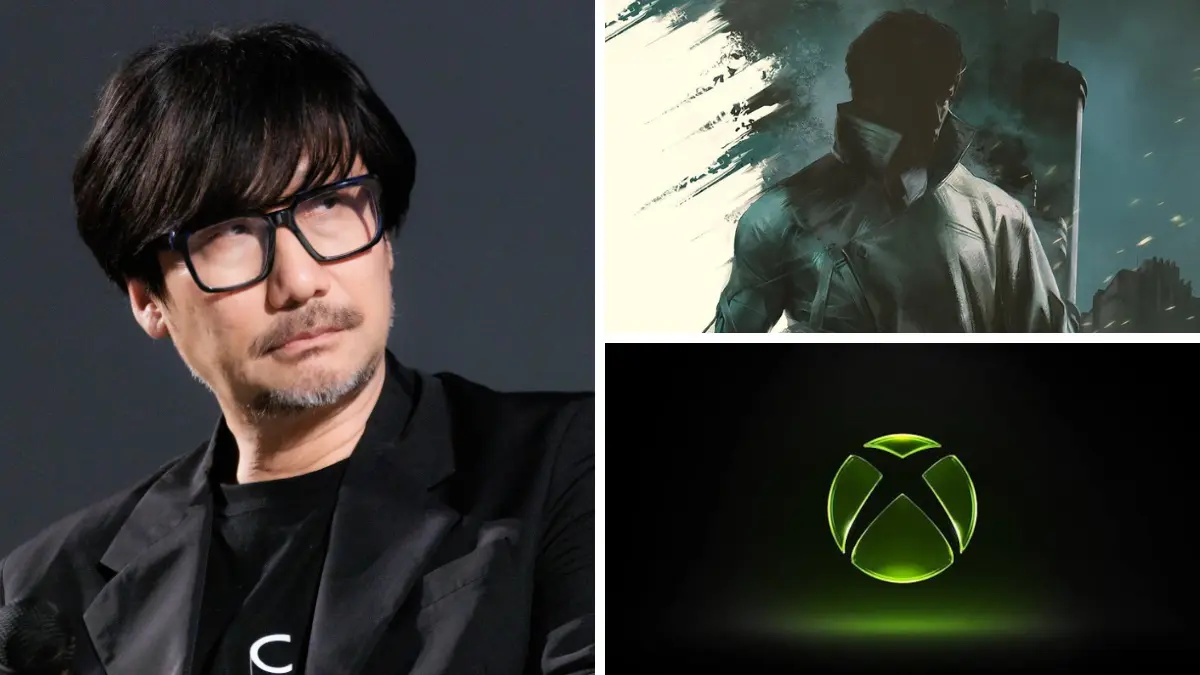
The video game industry is once again abuzz as legendary auteur Hideo Kojima steps back into the spotlight to drop major updates regarding his highly anticipated stealth-action title, Physint. Taking to his official social media channels, Kojima announced that acclaimed actor Bill Skarsgård will step into the leading role, temporarily working under the placeholder name "John Physint."
This major casting reveal arrived alongside a sleek, evocative new promotional poster bearing the chilling tagline, "The Next Cold War Begins." Furthermore, Kojima reaffirmed several previously announced cast members—including Brendan Fraser—and officially confirmed the continued involvement of legendary artist Yoji Shinkawa, whose iconic mechanical and character designs have defined Kojima’s masterpieces for decades.
However, the excitement surrounding Physint extends far beyond creative casting choices. The game finds itself at the center of one of the most high-profile developmental migrations in recent gaming history. Following a reported high-stakes fallout with Sony Interactive Entertainment—allegedly spurred by ballooning budgets, missed deadlines, and platform exclusivity disputes—the project has officially shifted its allegiances from PlayStation to Microsoft’s Xbox ecosystem.
As Kojima Productions ramps up marketing for Physint under its new partnership, questions loom large regarding technical hurdles, engine transitions, and the realistic timeline for a game that appears to be years away from hitting store shelves.
Detailed Chronology: From PlayStation Exclusive to Xbox Acquisition
To fully understand the gravity of the Physint announcement, one must trace the timeline of tumultuous events that brought the project to its current state.
The Initial Reveal
Physint was first formally teased during a Sony State of Play presentation, where Hideo Kojima triumphantly announced his return to the tactical espionage action genre—the very style of gameplay that catapulted him to global superstardom with the Metal Gear franchise. At the time, the project was framed as a cutting-edge, cinematic culmination of Kojima’s career, blending traditional video game mechanics with high-end cinematic presentation. Sony was positioned as the primary benefactor and publisher, cementing Kojima Productions as a key pillar of the PlayStation ecosystem alongside titles like Death Stranding and its upcoming sequel, Death Stranding 2: On the Beach.
The Fractured Partnership
Behind closed doors, however, tensions were reportedly mounting. Industry insiders and reports indicated that Physint was spiraling past its financial forecasts and missing internal developmental milestones. Sony, known for its strict quality assurance pipelines and structured milestone management, allegedly grew uncomfortable with the project’s trajectory.
Compounding these creative and financial friction points was the issue of multiplatform distribution. While Sony traditionally expects its flagship partnerships to remain tethered to the PlayStation family, Kojima’s vision seemingly required a broader reach. Reports surfaced that Sony ultimately chose to sever ties, dropping the project due to the combination of escalating budgets, missed deadlines, and the looming reality that the game would eventually need to release on rival platforms to recoup its immense production costs.
The Microsoft Rescuer Play
Enter Microsoft. Always aggressive in its pursuit of premier Japanese creative talent and industry-shaping partnerships, Xbox stepped in to scoop up Physint. This acquisition marks another major win for Microsoft’s ongoing efforts to court auteur-driven experiences, sitting alongside Kojima’s other major in-development project for the platform, the horror-focused O.D.
With the publisher transition complete, Kojima is wasting no time pivoting the marketing narrative. The re-emergence of promotional materials on social media signals that Physint has firmly established its new footing within the Xbox portfolio, even if the transition has introduced significant behind-the-scenes complications.
Supporting Context & Metrics: Cast, Crew, and Technical Hurdles
The renewed marketing push for Physint has provided clarity on the creative DNA steering the project, though it has also highlighted several technical uncertainties moving forward.
The Star-Studded Cast
The centerpiece of Kojima’s recent announcement is the confirmation of Bill Skarsgård as the game’s protagonist. Skarsgård, who has recently dominated horror and dark fantasy circles with his chilling performances—including his universally praised turn in Robert Eggers’ Nosferatu (2024)—brings a distinct, intense energy to the table. While early speculative fan theories hoped for actors like Robert Pattinson to fill the shadowy trench coat of the game’s enigmatic lead, Skarsgård’s casting promises a gritty, psychologically complex protagonist.
Alongside Skarsgård, Kojima reaffirmed the inclusion of an elite ensemble cast featuring:
- Brendan Fraser: The beloved Academy Award winner, whose career resurgence has made him one of the most sought-after dramatic actors in the industry.
- Sholi Lee: Bringing international prestige and dramatic depth to the production.
- Kumi Hamabe: A celebrated rising star in Japanese cinema, adding further cross-cultural appeal to the project.
The Indispensable Yoji Shinkawa
Perhaps the most reassuring detail tucked away in the production credits is the confirmation of Yoji Shinkawa’s role. Listed under character and mechanical design, Shinkawa’s signature brush-stroke aesthetic and hyper-detailed tactical gear designs have been synonymous with Hideo Kojima’s work since the late 1990s.
Fans worried that the messy publisher split might disrupt the core Kojima Productions team can breathe a sigh of relief. Shinkawa’s continued presence ensures that Physint will retain the unmistakable visual identity that defined classics like Metal Gear Solid and Death Stranding.
The Decima Engine Dilemma
While the creative team remains intact, Physint faces a monumental technical hurdle: the engine.
During its initial phase under PlayStation, Kojima Productions heavily utilized Sony and Guerrilla Games’ proprietary Decima Engine, a powerhouse graphics and physics framework that enabled the stunning open-world fidelity of Death Stranding. Because Decima is proprietary technology owned by Sony, it is virtually guaranteed that Kojima will be barred from using it now that the studio has jumped ship to Xbox.
Transitioning to a new game engine—such as Epic Games’ Unreal Engine 5 or an in-house proprietary framework—mid-development is no small feat. It requires rewriting core systems, retraining staff, and potentially discarding years of asset optimization. Industry analysts suggest this technical pivot could significantly extend the development cycle, meaning Physint is likely much further away from release than fans initially hoped.
Official Statements and Industry Impact
Hideo Kojima’s announcements are rarely just casual updates; they are carefully orchestrated cultural events. Through his preferred communication channels—including Bluesky and X (formerly Twitter)—Kojima has begun framing Physint not merely as a video game, but as a groundbreaking convergence of cinema and interactive media.
"The Next Cold War Begins." — Official Tagline for Physint
By dusting off early cast lists and appending Skarsgård to the marquee, Kojima is actively working to overwrite the negative press generated by his split from Sony. The messaging emphasizes continuity, creative freedom, and the unwavering support of Microsoft.
Xbox leadership has previously expressed immense pride in collaborating with Kojima, viewing creators of his caliber as essential to establishing Xbox as a premier destination for boundary-pushing narrative games. However, neither Microsoft nor Kojima Productions has formally addressed the specific financial figures or contract terminations associated with the Sony departure, maintaining a strict focus on the future of the slate.
Future Outlook: What Lies Ahead for Kojima Productions?
As the dust settles on the publisher shuffle, Kojima Productions finds itself juggling two massive, highly anticipated titles under the Xbox publishing umbrella: O.D. and Physint.
The Horizon for O.D.
Of the two projects, the horror experiment O.D. appears to be tracking much closer to completion. Revealed via its unsettling "Knock" trailer, O.D. utilizes cloud-gaming technology and cutting-edge photogrammetry in collaboration with Xbox Game Studios. For fans mourning the cancellation of Silent Hills (and its legendary playable teaser, P.T.), O.D. represents the spiritual fulfillment of those unfulfilled promises, and industry watchers anticipate a major release window announcement within the next year.
The Long Game for Physint
Physint, on the other hand, is a different beast entirely. Positioned as the culmination of Kojima’s career in tactical espionage action, the game aims to blur the lines between film and interactive software so completely that players may not realize when they are transitioning from cinematic cutscene to active gameplay.
Given the recent engine migration challenges, the necessity to rebuild foundational assets, and the sheer scale of the production, consumers should temper their expectations regarding a release date. Physint is a long-term play—an ambitious, high-budget gamble by Microsoft to secure a generational masterpiece.
As production ramps up under the guidance of Kojima, Shinkawa, and their newly expanded star-studded cast, the gaming world will be watching closely to see if Physint can overcome its rocky origins and truly redefine the espionage genre for a new generation.