Executive Overview
The transformation of the modern smartphone from a communications device into a comprehensive, all-in-one digital life organizer is reaching a significant milestone. Following recent rollouts in Virginia and Oklahoma, the adoption of mobile driver’s licenses and state-issued identification cards within the Apple Wallet ecosystem is accelerating at an unprecedented pace. Currently, 16 U.S. states, alongside Puerto Rico, natively support the integration, granting millions of iPhone and Apple Watch users the ability to breeze through select TSA security checkpoints, verify their identities with heightened privacy, and leave their physical leather wallets at home.
As the infrastructure surrounding digital governance matures, three additional states—Utah, Kentucky, and North Carolina—are poised to introduce support for Apple Wallet driver’s licenses in the near future. This impending expansion brings the United States within striking distance of a major milestone: nearly 20 states providing official, government-backed identification directly on Apple’s mobile platform.
This comprehensive report examines the current state of digital ID adoption across the United States, analyzes the backend tracking and official announcements pointing to Utah, Kentucky, and North Carolina as the next wave of adopters, and explores the broader technological, security, and cultural implications of living in a world where physical identification cards are steadily becoming optional.
Detailed Chronology: From Concept to Ubiquity
When Apple first introduced driver’s license and state ID support within the Wallet app back at WWDC in 2021, the initiative faced an intricate labyrinth of bureaucratic hurdles, legislative modifications, and technological security standardizations. Early implementations were slow to materialize, leaving many tech enthusiasts and everyday consumers wondering if the concept would remain a regional novelty rather than a nationwide standard.
[2021: Apple Announces Digital IDs]
       │
       ▼
[2023-2024: Slow Regional Rollouts]
       │
       ▼
[Summer 2026: Backend Evidence & New Launches (VA & OK)]
       │
       ▼
[Late 2026 / Early 2027: Utah, Kentucky, & North Carolina Expected]
The Early Pioneers and the Path to 2026
Arizona was the first state to officially launch the feature in early 2022, closely followed by states like Maryland, Colorado, and Georgia. For the first few years, the rollout crawled as individual state departments of motor vehicles (DMVs) grappled with how to securely integrate legacy databases with Apple’s rigorous encryption and privacy framework.
However, momentum shifted noticeably throughout 2025 and into 2026. The technology proved its reliability, and public demand for seamless, contactless identity verification skyrocketed. The additions of Virginia and Oklahoma over the past month mark a distinct pivot from experimental rollouts to mainstream adoption. With 16 states and Puerto Rico now live, the network effect is beginning to take hold, pressuring remaining state legislatures to modernize their systems or risk lagging behind in digital infrastructure.
The Next Wave: Utah, Kentucky, and North Carolina
Industry analysts and tech observers tracking backend updates and legislative sessions have identified three primary candidates primed to introduce Apple Wallet driver’s licenses next:
- Utah: Discovery made during the summer months revealed that Utah, alongside Virginia, had been quietly integrated into Apple’s backend infrastructure for driver’s license provisioning. With Virginia having successfully gone live following similar backend markers, technical indicators strongly suggest Utah is on the precipice of a formal public launch.
- Kentucky: Kentucky officials previously signaled their intent to overhaul the state’s digital ID architecture. Following extensive system upgrades completed earlier this year, all technical prerequisites for Apple Wallet integration appear to have been fulfilled, aligning with the commonwealth’s timeline to bring mobile IDs to its residents.
- North Carolina: In mid-2026, the North Carolina Department of Transportation officially announced the deployment of a modernized digital driver’s license system. Crucially, state announcements explicitly confirmed that support for Apple Wallet is scheduled to debut by early 2027, positioning North Carolina as a major southeastern anchor for the initiative.
While unexpected announcements from other states could occasionally disrupt this timeline, the convergence of backend developer evidence, state legislative updates, and administrative readiness makes Utah, Kentucky, and North Carolina the most definitive frontrunners for the next phase of deployment.
Supporting Context & Metrics: Security, Privacy, and Infrastructure
The rapid expansion of Apple Wallet IDs is not merely a matter of convenience; it represents a paradigm shift in how personal data is handled, stored, and presented. Understanding why states are willing to invest millions of dollars into upgrading legacy systems requires examining the underlying technology and the stringent metrics governing digital identification.
Privacy-First Architecture
One of the primary concerns citizens voice regarding digital IDs is privacy—specifically, the fear that presenting a phone to verify age or identity will grant third parties access to extraneous personal data, such as a home address, exact birthdate, or tracking history.

Apple and participating state DMVs have designed the system to mitigate these concerns through cryptographic protocols:
- Zero Knowledge Proofs: When a user presents their digital driver’s license to a bouncer at a venue or a TSA agent, the device only shares the specific information requested. For example, if a venue only needs to verify that a patron is over 21, the Apple Wallet transmits a cryptographic confirmation of age without revealing the exact birthdate, address, or license number.
- On-Device Encryption: Identification data is stored locally in the iPhone’s Secure Enclave—a dedicated, hardware-isolated security chip—rather than on remote cloud servers. Neither Apple nor state governments can track when or where a user presents their ID.
- Biometric Authentication: Access to the digital ID requires deliberate biometric authorization via Face ID or Touch ID. If an iPhone is lost or stolen, the device can be remotely locked or wiped via iCloud, rendering the stored identification completely inaccessible to unauthorized finders.
The TSA and Federal Acceptance
The viability of a state-issued digital ID heavily relies on acceptance by federal transportation and law enforcement agencies. Currently, the Transportation Security Administration (TSA) accepts Apple Wallet driver’s licenses at a growing number of major domestic airports across participating states.
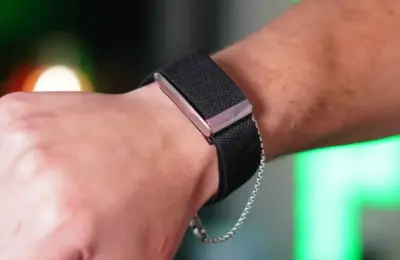
Travelers equipped with a supported iPhone or Apple Watch can simply tap their device at specialized identity reader terminals, authenticate with Face ID, and proceed through security without ever pulling a physical card from their wallet. This frictionless airport experience has served as one of the single most effective marketing tools for driving consumer adoption.
Official Statements and Industry Perspectives
While Apple maintains a relatively quiet stance regarding individual state launch schedules—typically deferring formal announcements to state governors and transportation departments—the public sector has become increasingly vocal about the benefits of digital transformation.
State Government Enthusiasm
State leaders launching these programs consistently point to two primary motivations: security and modernization.

During the launch rollout in Oklahoma, state representatives emphasized that digital IDs drastically reduce the risk of identity theft compared to physical cards, which can be easily lost, stolen, or counterfeited with sophisticated printing equipment. Furthermore, state DMVs view digital wallet integration as a critical step toward reducing administrative overhead at physical branch offices, allowing citizens to renew or manage credential updates digitally without waiting in long lines.
Civil Liberties and Consumer Response
Consumer advocacy groups, while initially cautious regarding privacy implications, have generally praised the decentralized architecture implemented by Apple and state partners. Because the system avoids centralized tracking databases, privacy watchdogs have found fewer vectors for government surveillance compared to traditional centralized digital identity databases deployed in other nations.
Public reception, measured through app store engagement, forum discussions, and social media sentiment, has been overwhelmingly positive among early adopters. The primary grievance among consumers remains regional fragmentation: individuals residing in non-participating states frequently voice frustration over the uneven geographic availability of the feature.
Future Outlook: The Road to 2030 and Beyond
As Utah, Kentucky, and North Carolina prepare to bring their residents into the Apple Wallet fold, industry analysts are already looking toward the horizon to predict the trajectory of digital identification over the next five years.
Achieving National Critical Mass
With nearly 20 states either live or actively launching support, digital IDs are transitioning from an early-adopter luxury to an expected standard. Pressure is mounting on populous holdout states—such as California, Texas, and New York—to accelerate their own digital initiatives. While administrative inertia and complex legacy IT contracts have slowed progress in certain jurisdictions, the undeniable momentum of peer states is expected to force widespread compliance by the end of the decade.

Beyond the Driver’s License
The successful integration of driver’s licenses and state IDs opens the door for a myriad of secondary credential types to enter the Apple Wallet ecosystem. Future iterations of the technology are widely expected to encompass:
- Digital Passports: International travel documents securely integrated into mobile devices, streamlining global transit.
- Professional and Medical Credentials: State-issued medical licenses, security clearances, hunting and fishing licenses, and professional certifications.
- Age-Verified Commerce: Seamless integration with e-commerce platforms, automated vending systems, and automated age-restricted retail environments.
Conclusion
The evolution of the Apple Wallet from a simple credit card repository into a secure, government-certified identification vault represents one of the most consequential consumer tech trends of the decade. As Utah, Kentucky, and North Carolina step up to join Virginia, Oklahoma, and the rest of the pioneering states, the dream of a truly wallet-free society draws ever closer to reality. For millions of iPhone users, the physical plastic card is rapidly becoming a relic of the past, replaced by an encrypted, biometric-locked digital twin that offers unprecedented security, privacy, and convenience.