Executive Overview
As the Marvel Cinematic Universe (MCU) builds toward its next monumental crossover events, the machinery of Marvel Studios is operating at a fever pitch. With Avengers: Doomsday sitting mere months away on the theatrical horizon, the secretive plot details surrounding the franchise’s new premier antagonist are slowly beginning to materialize—thanks in large part to strategic re-releases, post-credit stingers, and measured commentary from the film’s directors, Anthony and Joe Russo.
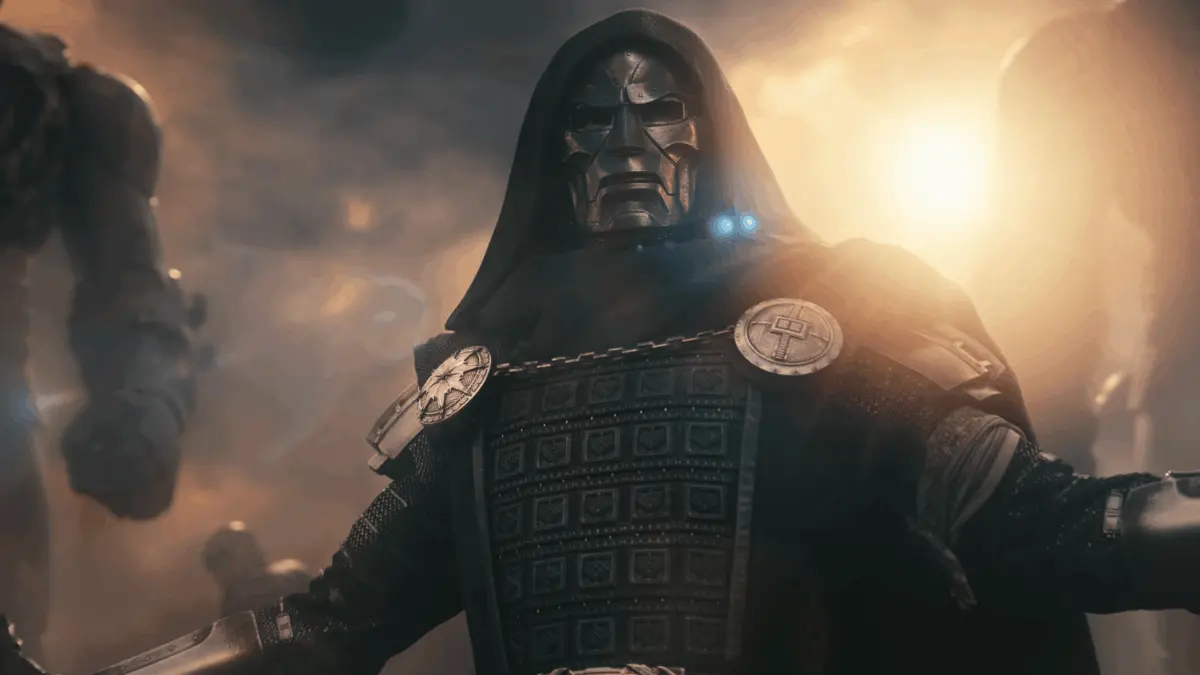
At the center of this brewing narrative storm is Victor von Doom. Recent footage attached to the newly minted Avengers: Endgame Encore re-release, coupled with clues dropped in The Fantastic Four: First Steps, indicates that the infamous tyrant’s overarching scheme involves far more than casual world domination. Instead, Doctor Doom is systematically targeting and abducting some of the most powerful and influential figures across the multi-verse—starting with Bruce Banner.
Far from a simple cameo-driven confrontation, these calculated disappearances point toward a meticulously orchestrated plot. Whether Doom is building a captive council, harvesting power, or restructuring reality to suit his own immaculate design, the stakes for Avengers: Doomsday and its subsequent companion piece, Avengers: Secret Wars, have never been higher. This report examines the unfolding mystery, analyzes the director’s cryptic teases, explores the targets of Doom’s abductions, and contextualizes what this means for the overarching narrative trajectory of the MCU’s Multiverse Saga.
Detailed Chronology of the Clues: From the Baxter Building to an Isolated Bunker
To understand the scope of Doctor Doom’s grand design, one must trace the breadcrumbs left across recent MCU media releases. The puzzle pieces have been scattered deliberately across both theatrical windows and specialized re-releases, rewarding dedicated fans who track every post-credits sequence and updated cut.
The Fantastic Four: First Steps Tease
The initial domino fell during the theatrical run of The Fantastic Four: First Steps. In a post-credits scene that sent ripples through fandom communities, the camera panned into the brightly lit living room of the Baxter Building. There, standing uninvited, was Victor von Doom, engaged in a quiet, chilling conversation with a young Franklin Richards—the reality-warping progeny of Reed Richards and Sue Storm.
Before the conversation could reach its climax, Sue Storm abruptly interrupts the encounter. What remains frustratingly ambiguous, however, is the exact outcome of the scene: did Doom manage to successfully snatch the extraordinarily powerful child, or was he thwarted and forced to retreat empty-handed? Regardless of whether Franklin left with him in that specific moment, the intent was crystal clear. Doom’s gaze is fixed upon the cosmic lineage of Marvel’s first family.
The Avengers: Endgame Encore Revelation
Months later, Marvel Studios dropped Avengers: Endgame Encore into theaters—a special re-release featuring additional footage, alternate cuts, and narrative connective tissue explicitly designed to bridge the gap toward Avengers: Doomsday.
The crown jewel of this re-release arrives in its closing moments, presenting a scene featuring Bruce Banner. Following the traumatic and chaotic events of Spider-Man: Brand New Day, Banner has chosen a path of self-imposed exile, hiding away in a fortified, high-tech subterranean bunker. Seeking solitude and attempting to keep his gamma-infused alter ego locked away from a fragile world, Banner begins recording a video log.
Mid-recording, the transmission abruptly shatters. Without warning, Doctor Doom materializes within the bunker. Before Banner can mount a defense or fully transform, Doom overpowers and abducts him. The sequence cuts to black, leaving audiences with the undeniable realization that the Incredible Hulk—one of the MCU’s historical powerhouses—has been reduced to a captive in Doom’s grand chess match.
Supporting Context & Metrics: The Anatomy of a Multiversal Threat
When evaluating the narrative weight of these abductions, it is essential to look at the historical precedent of Doctor Doom in Marvel Comics and how the MCU is adapting these classic traits for a compressed, high-stakes cinematic format.
Historically, Victor von Doom is rarely content with simple brute-force attacks. His genius intellect, mastery of both science and dark sorcery, and supreme arrogance mean his plans are layered with contingencies. In comic book arcs such as Secret Wars (both the 1984 and 2015 iterations), Doom frequently seeks to harness, siphon, or control external sources of supreme power to reshape existence in his own image.
Analyzing the Targets: Why Banner? Why Franklin?
- The Hulk / Bruce Banner: Beyond sheer physical durability and gamma radiation, Banner represents a unique duality of mind and monster. Capturing Banner allows Doom to study, neutralize, or weaponize a being who has stood toe-to-toe with Thanos and various cosmic entities.
- Franklin Richards: Widely recognized as one of the most powerful entities in the entire Marvel Multiverse, Franklin possesses reality-warping abilities capable of creating universes. If Doom is attempting to rewrite the multiverse or forge a "Battleworld," securing a reality-warper of Franklin’s magnitude is not just advantageous—it is foundational.
- The Children of the Marvel Universe: Long-standing speculation within the fan community has revolved around a "child-abduction" theory. Beyond Franklin Richards, rumors and theories have targeted Thor’s adopted child (Love) and, previously, the hypothetical offspring of Steve Rogers and Peggy Carter (though that specific theory faced severe narrative hurdles following the closure provided by Endgame Encore).
The underlying metric here is simple: Doom is not rounding up street-level heroes or standard vigilantes. He is hunting anomalies, gods, and cosmic keystones.

Official Statements and Industry Insights
The mystery surrounding these abductions has naturally sparked intense speculation across the entertainment industry. Speaking exclusively to Empire magazine, director Joe Russo addressed the chilling final moments of the Avengers: Endgame Encore re-release and offered a carefully measured tease regarding the scope of Doom’s mission.
When asked if Bruce Banner was merely an isolated target, Joe Russo’s response was characteristically enigmatic:
"I mean, look, his interest may extend beyond just Banner," Russo told Empire. "So, that’s what we’ll say about that."
This calculated ambiguity confirms what fans have suspected: Banner is not an isolated anomaly, but rather the opening salvo in a much larger operation. The Russo brothers, known for their meticulous narrative layering in films like Avengers: Infinity War and Avengers: Endgame, are once again orchestrating a multi-pronged antagonist introduction where the villain’s true objectives remain obscured until the climax of the first act.
Industry analysts note that utilizing re-releases to drop narrative connective tissue is a novel marketing and storytelling strategy for Marvel Studios. By embedding these critical lore updates into theatrical re-releases rather than traditional streaming shorts, Marvel is driving box-office engagement while ensuring that the transition from the Infinity Saga and early Multiverse Saga into the Doomsday era feels earned, urgent, and deeply mysterious.
Future Outlook: The Road to Doomsday and Beyond
With approximately two months remaining until the worldwide theatrical premiere of Avengers: Doomsday, the promotional campaign is entering its most critical phase. Yet, despite the impending release, Marvel Studios has managed to maintain a remarkably tight lid on the specifics of Doom’s ultimate endgame.
What to Expect in Avengers: Doomsday
As the film opens, audiences are expected to find a fragmented superhero community. With heroes scattered across various timelines, dimensions, and personal exiles—and now facing the systematic abduction of their heaviest hitters—the initial conflict will likely not be a unified front against a single army, but a frantic rescue and survival mission.
Doom’s motivation will take center stage. Is he gathering these powerful beings to form a forced coalition? Is he siphoning their unique metaphysical properties to power a multiversal engine? Or is he attempting to curate a specific pantheon of survivors as reality collapses in on itself?
The Horizon: Avengers: Secret Wars
Crucially, Avengers: Doomsday is designed as the penultimate chapter of this narrative arc. The threads woven through the abduction of Bruce Banner, the confrontation with Franklin Richards, and whatever subsequent captures occur in the film will not be neatly tied up in a single runtime.
Doctor Doom’s overarching shadow is guaranteed to stretch directly into next year’s Avengers: Secret Wars. As the multiverse careens toward a catastrophic convergence, Doom’s collection of captive heroes, gods, and anomalies will likely serve as the catastrophic fulcrum upon which the fate of all realities rests.
For now, the Marvel fandom is left parsing every frame of newly released footage, dissecting director interviews, and counting down the weeks. One thing is certain: Victor von Doom has arrived in the Marvel Cinematic Universe, and he is playing a game far larger—and far more dangerous—than anyone anticipated.