Executive Overview
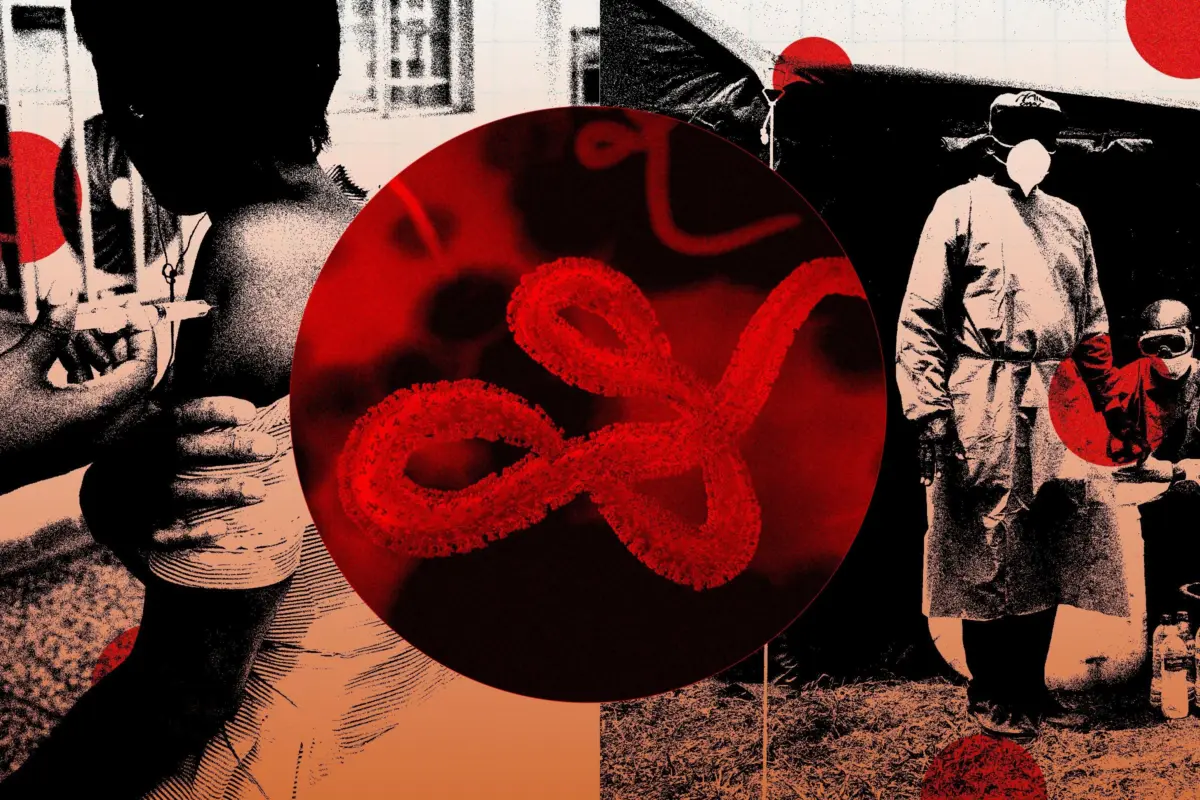
Ebola has not gone away. While the global consciousness has largely moved past the paralyzing collective anxieties of the COVID-19 pandemic, a silent and profoundly lethal crisis is unfolding across the heart of Africa. The ongoing Bundibugyo Ebola virus epidemic in the Democratic Republic of Congo (DRC) has rapidly morphed into one of the most terrifying public health emergencies of the modern era. According to government data compiled by the World Health Organization (WHO), more than 7,000 people have contracted the virus since May, with a staggering fatality rate hovering around 50 percent.
For veteran epidemiologists and global health security experts, the sheer velocity of the transmission is unprecedented. Nicole Lurie, executive director for preparedness and response and the US director at the Coalition for Epidemic Preparedness Innovations (CEPI), puts the threat into stark perspective. Having worked extensively in public health crisis management—including serving as assistant secretary for preparedness and response at the US Department of Health and Human Services during the West African Ebola epidemic—Lurie admits, “Other than Covid, which affected the whole world, this is the thing that has frightened me the most.”
Characterizing the trajectory of the disease, she adds bluntly, “This is the most rapidly growing Ebola outbreak that we’ve seen. It’s probably on pace to be the worst the world has ever seen, and it’s quite terrifying.”
Compounding the biological threat is a catastrophic convergence of geopolitical instability, systemic funding deficits, localized hostility toward humanitarian workers, and pervasive community mistrust. Unlike the global solidarity witnessed during the early phases of COVID-19, the response to the DRC epidemic is severely fractured. International responders are grappling with acute staff shortages following sweeping foreign aid cuts, the dismantling of critical agencies, and the withdrawal of major donor nations from multilateral health frameworks.
With vaccine trials racing against time and financial reserves projected to deplete by December, the international community stands at a perilous crossroads. Without immediate, unified intervention and substantial financial capitalization, health authorities warn that the outbreak could spiral completely out of control, threatening not only regional stability but international health security.
Detailed Chronology: From the First Cases to a Race for Immunization
The genesis of the current crisis traces back to May, when health authorities in the DRC first detected a surge of infections driven by the Bundibugyo strain of the Ebola virus. While neighboring Uganda successfully managed and neutralized its own spillover threats through disciplined contact tracing, strict isolation protocols, and specialized clinical care, the DRC proved to be a far more complex theater of operations.
Decades of localized armed conflict, displacement, and systemic governmental fragility have torn through the region, leaving millions of people internally displaced. This hyper-transient population makes traditional epidemiological tracking nearly impossible. Contact tracing—the fundamental bedrock of epidemic containment—has become, in the words of health officials, a daily "struggle."
As the caseload climbed past the thousands through the summer months, the scientific community mobilized with extraordinary urgency. Shortly after the initial outbreak notifications in May, CEPI took the unprecedented step of redirecting $100 million of its internal funding reserves to accelerate the research and manufacturing of countermeasures.
This capital infusion directly enabled scientists at the Serum Institute of India to manufacture trial doses of Oxford University’s ChAdOx1 BDBV vaccine at a blistering, record-shattering pace. Concurrently, a competing vaccine candidate developed by Moderna—also backed by CEPI funding—was fast-tracked. By late summer, both candidates successfully advanced past initial phase-one safety trials, with pivotal efficacy trials slated to commence immediately.
Yet, scientific breakthroughs are only as effective as their deployment. Professor Teresa Lambe, a leading vaccinology and immunology expert at Oxford University and the principal scientific investigator for the safety trials, describes a tense, high-pressure pivot. In May, Lambe was deeply immersed in developing a hantavirus vaccine following an outbreak on a cruise ship when her phone lit up with an urgent message from a former WHO insider detailing the emerging Ebola crisis in the DRC. The news prompted an instinctive, profanity-laced reaction. Knowing how rapidly local instability could strip containment efforts of their efficacy, Lambe immediately redirected her research focus, initiating a grassroots vaccine development drive fueled by philanthropic donations weeks before institutional funding frameworks like CEPI could formally organize.
“Covid was in some ways easier,” reflects Lambe, who admits she has not taken a single day off since the crisis erupted in May. Highlighting the psychological disconnect between the epicentre of the disaster and the rest of the world, she notes:
"We’re not in a lockdown, we’re not in a situation where people even know or care about what’s going on in the DRC… You’re not all pulling in the same direction because day-to-day life continues."
Supporting Context & Metrics: Escalating Numbers and Systemic Vulnerabilities
The numbers alone tell a chilling story of epidemiological acceleration. By historical standards, the trajectory of the current outbreak is unprecedented. During the devastating West Africa epidemic spanning from 2014 to 2016—widely cited as the most widespread Ebola crisis in history—it took many months for cumulative cases to clear the 1,000 mark. By comparison, the DRC outbreak has already surpassed 7,000 confirmed cases in a fraction of that timeframe, resulting in over 3,500 deaths.
| Outbreak Metric / Indicator | 2014–2016 West Africa Epidemic | Current DRC Bundibugyo Outbreak (2026) |
|---|---|---|
| Causative Strain | Zaire ebolavirus | Bundibugyo ebolavirus |
| Case Milestone (7,000 cases) | Reached late in the multi-year cycle | Reached within months of initial detection |
| Fatality Rate | ~40% to 50% | ~50% |
| Geopolitical Environment | High global awareness, unified response | Regional instability, severe donor fatigue |
| Primary Containment Barrier | Traditional contact tracing & isolation | Mass displacement, violence, active distrust |
However, statistics fail to capture the human element of resistance and mistrust hindering containment. Decades of institutional neglect, coupled with the trauma of persistent violence, have bred deep-seated suspicion of outside humanitarian workers among local populations.
These tensions have frequently boiled over into active violence. Red Cross volunteers have faced physical attacks, expensive and irreplaceable medical equipment—including life-saving ambulances—has been systematically destroyed, and safe burial teams have faced deliberate, dangerous delays. In communities where rumors spread faster than pathogens, medical interventions are frequently viewed with suspicion rather than gratitude.
Professor Lambe underscores this psychological barrier as her primary anxiety:
"The thing that worries me is vaccine distrust and mistrust. And even if we get vaccines that are fabulous, will they be used?"
This skepticism is further exacerbated by a severe global shortage of frontline resources. Global responder organizations have experienced chronic staffing deficits and supply chain bottlenecks following major geopolitical shifts. The structural withdrawal of the United States from the World Health Organization and the systematic dismantling of the United States Agency for International Development (USAID) at the onset of President Donald Trump’s second term left a massive vacuum in international health security.
Furthermore, sweeping foreign aid cuts enacted by the current US administration have left humanitarian missions facing acute shortages of basic medical consumables. Field clinics struggle to maintain adequate stocks of personal protective equipment (PPE), surgical masks, alcohol-based hand sanitizers, and diagnostic testing kits—the fundamental building blocks of outbreak management.
Official Statements and Institutional Responses
As criticism mounts over the sluggishness of the global response, governments and institutional bodies are offering divergent accounts of their roles, capabilities, and ongoing commitments.
When approached for comment regarding the foreign aid reductions and supply shortages, the US State Department declined to respond.
However, the Department of Health and Human Services (HHS) defended the federal government’s ongoing contributions through an official statement. Emily Hillard, HHS press secretary, outlined the multi-layered support being administered:
"CDC teams and partners are strengthening preparedness in the region by supporting surveillance, contact tracing, laboratory diagnostics, infection prevention and control, border health activities, community engagement, and other outbreak containment efforts in coordination with the governments of the DRC, Uganda, and other partners."
Hillard added that domestically, federal agencies are proactively assisting states by implementing "enhanced travel screening, clinical and public health guidance, laboratory readiness, and coordination with state and local health departments."
While the US government did commit $50 million in June to support CEPI’s countermeasures against the Bundibugyo outbreak, public health leaders emphasize that this infusion is a drop in the ocean compared to the actual operational needs. Nicole Lurie warns that unless additional capital is secured on an emergency basis, CEPI will completely exhaust its funding for the Ebola program by December.
“All governments need to play a role in supporting the work,” Lurie stresses, pointing out that sustainable global health security cannot rely solely on philanthropic foundations and depleted non-governmental reserves.
CEPI itself was originally forged in 2017—backed by a coalition of forward-thinking governments and the Bill & Melinda Gates Foundation—specifically designed to correct the agonizing delays exposed during the 2014–2016 West Africa epidemic. During that crisis, the agonizingly slow pace of vaccine development allowed the virus to claim over 11,000 lives before experimental immunization programs could finally bring the transmission chains to a halt.
Recalling her tenure as assistant secretary for preparedness and response at HHS during that period, Lurie remembers the profound psychological toll:
"There was an amazing amount of panic, and the phenomenal cost of what was required to treat the 11 cases reported in the US. I don’t think anybody really wants to go through that again."
Future Outlook: The Race Against Time and the Threat of Global Spillovers
As winter approaches and the December funding deadline for CEPI draws dangerously close, the immediate future of the DRC outbreak hangs in a precarious balance. Health experts agree on one fundamental truth: containment is mathematically impossible without the widespread deployment of a safe, effective vaccine.
Yet, translating laboratory success into field victories requires a trinity of elements that are currently in short supply: sustained international financing, unimpeded physical access to conflict-torn regions, and the active, willing cooperation of local communities.
If clinical trials for the Oxford-Serum Institute and Moderna vaccine candidates proceed as planned and demonstrate robust efficacy, logistics officers will face the monumental challenge of cold-chain distribution across active combat zones. Overcoming vaccine hesitancy will require hyper-localized, culturally sensitive community engagement campaigns led by trusted regional figures, rather than top-down edicts from foreign agencies.
Moreover, the broader geopolitical landscape provides little room for optimism. In an era marked by donor fatigue, isolationist foreign policies, and the retreat of traditional superpower leadership in multilateral health frameworks, the architecture of global health security is visibly fraying.
Should the international community fail to mobilize adequate resources before the end of the year, the consequences will extend far beyond the borders of Central Africa. Viruses do not respect political boundaries, and in an interconnected global transit ecosystem, an uncontrolled, accelerating epidemic in the DRC is only ever a plane ride away from a global health emergency.
The warning signs are flashing bright red. Whether the world chooses to look up before it is too late remains the defining public health question of our time.