Executive Overview
Hot on the heels of its smart home-focused hardware drop—which introduced the HomeView smart display and the HomePod mini 2—Apple has officially confirmed its third major product launch window of the season. Sent out earlier this week, sleek press invitations featuring the playful yet enigmatic tagline "Pro and Tell" point toward an intimate press and creator briefing scheduled for October 28 in Los Angeles.
Unlike Apple’s traditional broadcasted keynote events, this closed-door showcase is tailored specifically for hands-on demonstrations with media figures and digital creators. While Cupertino remains notoriously tight-lipped about exact product rollouts prior to showtime, supply chain whispers, patent filings, and industry analysts leave little room for ambiguity. All signs indicate a hardware blitz centered squarely on two pillars: Mac and iPad.
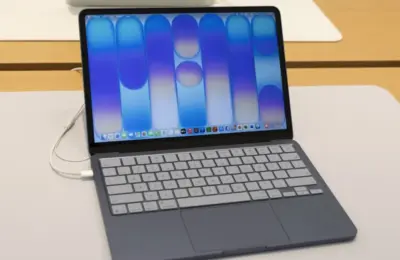
If rumors hold true, the tech giant is poised to break over a decade of personal computing dogma by unveiling its first-ever touchscreen MacBook, complete with an OLED panel. Simultaneously, Apple is expected to expand its cutting-edge M6 silicon footprint across the Mac portfolio and inject long-awaited panel and processing upgrades into its beloved compact tablet line.
Detailed Chronology: The Evolution of Apple’s Autumn Hardware Roadmap
The Fall 2026 Hardware Cadence
Apple’s product release strategy has increasingly relied on staggered, thematic waves rather than a single, monolithic autumn blockbuster. The first wave hit earlier this month with domestic smart home expansions, led by the interactive HomeView display and enhanced Siri AI integration. Now, the spotlight shifts abruptly to the high-performance professional and prosumer segments with the "Pro and Tell" event.
By targeting Los Angeles for a creator-centric briefing, Apple is signaling that these upcoming releases are designed explicitly for power users, developers, digital artists, and enterprise workflows.
The Star of the Show: The First Touchscreen OLED MacBook Pro
For years, the late Steve Jobs’ resistance to touchscreens on laptops ("touch surfaces don’t want to be vertical") governed Apple’s laptop design philosophy. However, changing consumer expectations and the widespread ubiquity of touch-enabled Windows laptops and convertibles have finally forced a strategic pivot.
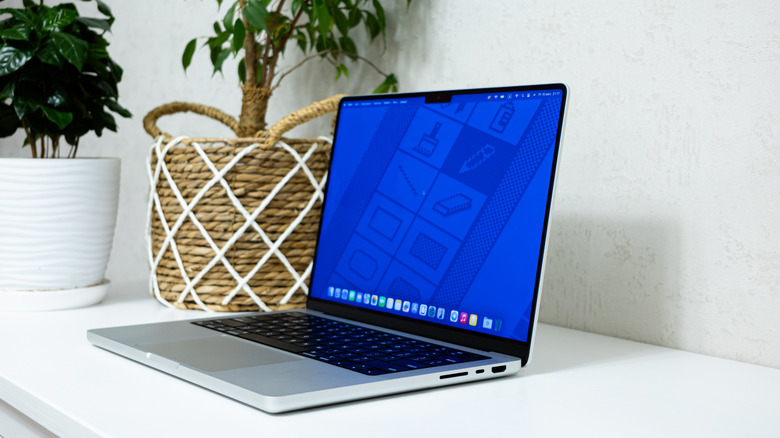
According to prominent industry reports, the crown jewel of the October 28 event will be a heavily redesigned MacBook Pro available in traditional 14-inch and 16-inch form factors.
- Form Factor Redesign: Industry insiders suggest this will represent the most substantial overhaul of the MacBook Pro chassis since the radical redesign introduced back in 2021. The device is expected to be noticeably thinner and lighter.
- Display Breakthroughs: By migrating to OLED technology, Apple can achieve significantly higher contrast ratios, deeper blacks, and ultra-thin bezels. Reports indicate the traditional camera notch may finally be replaced by a modern hole-punch camera cutout housing a hardware-integrated Dynamic Island.
- The Silicon Paradox: In a surprising twist, leaks indicate that this bleeding-edge touchscreen notebook may not feature Apple’s brand-new M6 silicon. Instead, sources point to Apple retaining the current-generation M5 Pro and M5 Max chips, preserving the debut of the M7 family for a subsequent 2027 refresh.
- Tiering and Pricing: Market watchers at Macworld note that this touchscreen variant is not intended as a direct 1:1 replacement for current non-touch models. Rather, it will sit atop the pricing hierarchy as an ultra-premium tier, ensuring traditional MacBook Pros remain available for buyers uninterested in paying a touchscreen luxury tax.
M6 Silicon Expands Across the Mac Lineup
While the flagship touchscreen MacBook Pro may sit out the M6 generation for now, the rest of the Mac ecosystem is primed to absorb Apple’s latest processing architecture. The M6 chip—which debuted earlier this summer inside the revamped Mac mini—is expected to anchor updates for two critical product lines:
- The Entry-Level 14-inch MacBook Pro: Mirroring its strategy from previous years, Apple is expected to inject the base-tier 14-inch MacBook Pro with the standard M6 chip. This iteration will forego the OLED touchscreen and chassis redesigns, focusing purely on raw performance gains and superior energy efficiency.
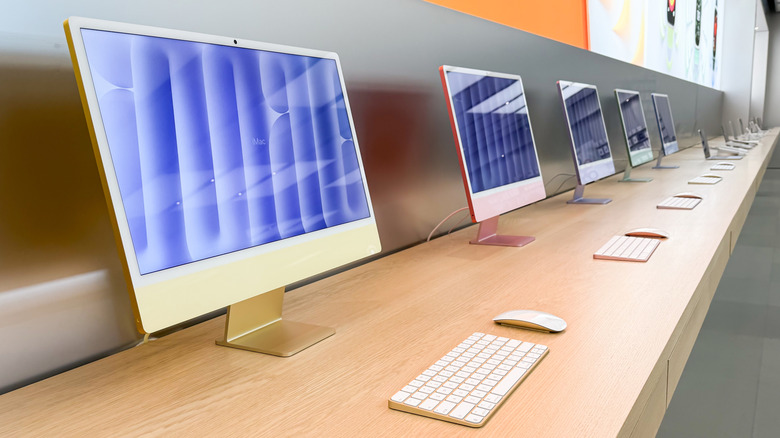
- The iMac Refresh: The popular all-in-one desktop is due for a substantial performance jump, having coasted on the M4 chip since its 2024 launch. The transition to M6 will dramatically enhance both CPU and GPU performance metrics. Furthermore, the inclusion of an upgraded dual 16-core Neural Engine will exponentially accelerate local machine learning and generative AI workflows—a crucial selling point for Apple Intelligence integration. Minor cosmetic tweaks, including fresh color palettes, are also rumored.
The iPad Mini’s OLED Renaissance
The tablet segment will not be left out of the October 28 festivities. The iPad mini is slated for a monumental generation-over-generation overhaul.
- The OLED Shift: For the first time, Apple is bringing OLED screen technology down to the mini footprint, liberating the small-form-factor tablet from traditional LCD panels. This makes the iPad mini the only device outside the iPad Pro tier to benefit from OLED visual fidelity.
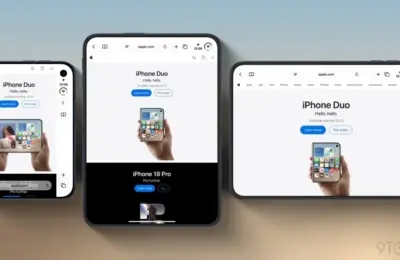
- Under the Hood: Current models rely on the A17 Pro chip originally inherited from the iPhone 15 Pro—a processor notoriously plagued by localized thermal throttling under heavy loads. The upcoming model is expected to leapfrog straight to the A20 Pro chip (shared with the iPhone 18 Pro and iPhone Duo), delivering sustained high-performance computing without the heat dissipation issues of its predecessor.
- Design and Durability: Additional rumors point toward shaved-down display bezels, a repositioned front-facing camera optimized for landscape orientation, and—in a historic first for the mini line—ingress protection or baseline water resistance.
Supporting Context & Metrics
To fully appreciate the scope of Apple’s upcoming October 28 announcements, it is helpful to examine the current technological and market context surrounding display panels, silicon architecture, and form-factor evolution.
The OLED Migration Matrix
Apple’s methodical transition from Liquid Crystal Display (LCD) and Mini-LED technologies to Organic Light Emitting Diode (OLED) panels has been one of the most closely watched supply chain stories of the decade.
| Device Category | Current Display Tech | Rumored Upcoming Tech | Estimated Release Window |
|---|---|---|---|
| iPhone Pro Models | OLED (Super Retina XDR) | Tandem OLED / ProMotion | Annual |
| iPad Pro Line | Tandem OLED | Tandem OLED (Refined) | 2024–2026 |
| iPad Air | IPS LCD | OLED | Late 2026 / 2027 |
| iPad Mini | IPS LCD | OLED | October 28, 2026 |
| MacBook Pro | Mini-LED (Liquid Retina XDR) | OLED + Touchscreen | October 28, 2026 |
| MacBook Air | IPS LCD | OLED | 2027 |
The shift to OLED on the MacBook Pro and iPad mini marks a crucial milestone. OLED panels eliminate the need for a separate backlight, allowing for deeper contrast ratios, true blacks, and significantly slimmer device profiles—directly enabling the physical redesigns rumored for Los Angeles.
Silicon Benchmarks: M5 vs. M6 Architecture
The divergence in Apple’s chip deployment strategies highlights a complex manufacturing balancing act. While the standard M6 chip emphasizes power efficiency and localized AI acceleration via its dual 16-core Neural Engine, high-end professional workflows still lean heavily on the architectural headroom provided by the M5 Pro and M5 Max.
- Power Efficiency: The 3nm fabrication refinements in the M6 allow entry-level machines to maintain all-day battery life while driving heavy background compute tasks.
- Thermal Management: By bypassing the thermal bottlenecks associated with older A-series chips (such as the A17 Pro in the current iPad mini) and moving toward the A20 Pro architecture, Apple ensures that its smaller form-factor devices can handle sustained workloads—such as high-res video rendering and advanced gaming—without throttling performance.
Official Statements and Industry Insights
While Apple maintains its traditional corporate silence regarding unannounced hardware, leaks sourced from industry insiders and supply chain auditors provide a reliable roadmap.
Mark Gurman of Bloomberg, widely regarded as one of the most accurate chroniclers of Apple’s internal roadmap, recently underscored the significance of the upcoming MacBook Pro redesign:
"Apple’s leadership, overseen by hardware engineering chief John Ternus, is attempting to bridge the gap between macOS and iPadOS workflows without compromising the foundational performance of the Mac. The introduction of an OLED touchscreen MacBook Pro represents a cultural shift within Cupertino—one driven by changing user demands in professional creative spaces."
Simultaneously, supply chain analysts tracking component orders out of East Asia have noted a sharp uptick in OLED panel allocations earmarked for sub-8-inch and 14-to-16-inch manufacturing lines, corroborating expectations for both the iPad mini and MacBook Pro revamps.
Future Outlook: What the "Pro and Tell" Event Means for the Tech Industry
The October 28 "Pro and Tell" event is far more than a routine seasonal hardware refresh; it represents a fundamental recalibration of Apple’s hardware philosophy.
For over a decade, Apple maintained a strict ideological boundary between its touch-first mobile operating systems (iOS and iPadOS) and its cursor-driven desktop environment (macOS). By introducing a touchscreen MacBook Pro—even one positioned as an ultra-premium, luxury tier—Apple is quietly acknowledging that modern professional workflows demand fluid, multi-modal input methods. Whether developers will rapidly adapt macOS applications for touch interfaces remains one of the most compelling questions heading into 2027.
Furthermore, the democratization of OLED screens across the iPad mini and MacBook lines signals the twilight of traditional LCD panels in Apple’s premium portfolio. As consumers increasingly prioritize visual fidelity, energy efficiency, and AI-ready processing architectures (bolstered by the M6 and A20 Pro chips), Apple is hardening its defenses against aggressive competition in both the creator laptop space and the high-end tablet market.
As the tech world converges on Los Angeles next week, all eyes will be on Cupertino to deliver on these lofty expectations—and to prove that its historic pivot toward touchscreen desktop computing is ready for prime time.