SAN MATEO, CA — In the modern theater of B2B technology marketing, trade show success has long been measured by vanity metrics. Companies proudly boast about thousands of scanned badges, towering stacks of business cards, and the sheer volume of foot traffic passing through their booths. Yet, seasoned revenue leaders know a hard truth: a badge scan is merely a maybe. It is a digital handshake that often decays in a marketing automation silo, waiting weeks for a disinterested SDR to send a cold sequence.
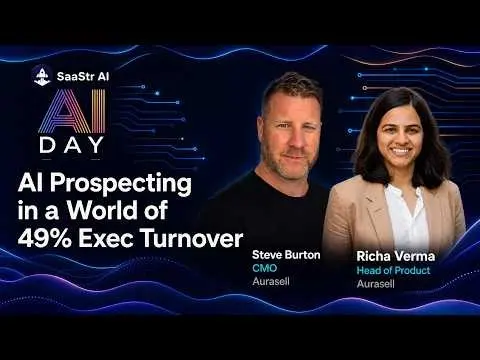
Months after the conclusion of the SaaStr AI Annual, a post on LinkedIn cut through the usual post-event noise and exposed the metric that actually matters. Steve Burton, Chief Marketing Officer of AI-native CRM provider Aurasell, was asked how many leads his company had harvested from the event. His response was characteristically direct:
“Don’t count leads, but we booked 85 meetings on the calendar.”
That single sentence encapsulates a fundamental paradigm shift in event sponsorship ROI. Aurasell did not just collect contact information; they secured 85 dedicated, 30-minute calendar blocks with qualified enterprise buyers. They bypassed the traditional, sluggish sales funnel entirely, walking away with a pipeline that most outbound teams spend half a year trying to construct.
As revenue leaders begin mapping out their discretionary marketing expenditures for the upcoming cycle, an examination of the SaaStr AI Annual 2026 offers a masterclass in event monetization—and provides a definitive roadmap for what brands can expect as preparations ramp up for SaaStr AI Annual 2027, scheduled for May 11–12 at the San Mateo County Event Center.
Executive Overview: The Death of the Vanity Metric
To understand why Aurasell’s approach resonated so deeply across the B2B SaaS ecosystem, one must first look at the hyper-competitive environment of the 2026 exhibition floor. Operating in the AI-native CRM category means sharing oxygen with industry heavyweights like Salesforce, emerging category creators like Lightfield, and a relentless wave of venture-backed startups all vying for the attention of the exact same Chief Revenue Officers (CROs) and Chief Executive Officers (CEOs).
Despite the noise, Aurasell carved out a dominant position. While the company secured the #3 spot on the official 2026 sponsor engagement leaderboard with an impressive 1,046 leads—trailing only Replit (1,423) and Lightfield (1,062), while edging out enterprise titan Salesforce (1,027)—Burton’s dismissal of raw lead volume underscores a maturing industry.
When you cross-reference Aurasell’s total lead count with their booked meetings, a telling conversion ratio emerges: roughly 8% of all leads captured at their booth transformed directly into scheduled customer meetings. This conversion benchmark provides a vital predictive model for future sponsors. Raw leads indicate foot traffic, but scheduled customer meetings dictate future revenue.
Furthermore, the velocity of these deals shattered conventional B2B sales timelines. Aurasell’s founding team reported that one enterprise organization fully transitioned its entire CRM infrastructure to Aurasell just five days after first encountering the product at the booth. In an industry where a core system-of-record replacement typically demands a protracted three-to-six-month evaluation cycle, a five-day conversion cycle highlights the unique gravity of the SaaStr floor: the attendees walking the convention center are founders, executives, and decision-makers controlling budgets between $5 million and $100 million+ in Annual Recurring Revenue (ARR), and they possess the unilateral authority to sign on the dotted line.
Detailed Chronology: Anatomy of a High-Conversion Event Strategy
Achieving enterprise-grade pipeline velocity does not happen by accident. An analysis of the top-performing sponsors from the 2026 event reveals a meticulous, multi-phase chronological playbook that begins long before the exhibition hall doors swing open.
Phase 1: Pre-Event Matchmaking (Weeks Before the Show)
The most successful sponsors realized that waiting for day-one foot traffic is a losing strategy. Instead, they leveraged proprietary matchmaking tools—such as the "Who Do You Want to Meet" application—weeks in advance. By proactively identifying and securing meetings with target accounts prior to arrival, top-tier sponsors ensured their calendars were pre-populated before stepping foot in San Mateo. A pre-scheduled 30-minute block with a Vice President of Sales who intentionally selected your company in an app carries an infinitely higher conversion probability than a random badge scan harvested late on the second afternoon.
Phase 2: Floor Execution and Elite Staffing
A common pitfall for enterprise exhibitors is deploying a booth crew composed solely of junior marketing associates or general brand ambassadors. These teams excel at handing out swag and scanning badges, but they grind to a halt when confronted with complex architectural questions, pricing negotiations, or security compliance inquiries.
Aurasell avoided this trap by staffing their booth with closers, solutions engineers, and founders. When an interested buyer approached the booth, they were met immediately with a live, unscripted demo and transparent pricing conversations. This operational rigor directly fueled anomalies like the five-day CRM migration; the people standing in the booth possessed both the technical depth to prove the product’s efficacy and the commercial authority to advance the deal.
Phase 3: Stage-to-Floor Amplification
Exhibition floor success is frequently amplified by visibility beyond the booth. Companies that combined physical floor presence with thought leadership—such as live technical demonstrations on main stages, targeted workshops, or specialized summit sessions—experienced dramatic multipliers in booth traffic. For instance, AI-driven BDR platform Artisan utilized a live main-stage demonstration that funneled high-intent audiences directly to their physical footprint, proving that content and commerce must operate in tandem.
Supporting Context & Metrics: Calculating the Financial Return
To evaluate the true economic impact of the SaaStr AI Annual, one must translate calendar bookings into hard financial forecasts.
With 85 targeted customer meetings secured by Aurasell, and assuming conservative enterprise SaaS deal dynamics—where system-of-record implementations routinely command ACVs (Annual Contract Values) ranging from $20,000 to over $100,000—a single event generates upwards of $3 million in high-probability pipeline.
[1,046 Total Leads]
       │
       ▼ (8% Conversion Ratio)
[85 Booked Customer Meetings]
       │
       ▼ (Enterprise ACV Assumptions)
[$3M+ in Immediate Verified Pipeline]
To contextualize this output, consider the baseline productivity of traditional outbound sales development. A high-performing outbound SDR typically generates 10 to 15 qualified meetings per month. By securing 85 customer meetings over the course of a multi-day event, Aurasell captured the equivalent output of a dedicated SDR for six to eight months—condensed into a single, high-impact window.
Moreover, the intrinsic stickiness of the software category must be factored into the equation. A customer acquired at a spring event is not merely a transient transaction; they represent long-term enterprise value. A CRM contract signed in May 2026 carries a high probability of retention well into the next decade, compounding the initial return on investment across multiple fiscal years.
Official Statements and Industry Insights
The philosophy of prioritizing pipeline velocity over raw lead accumulation is echoed widely across the sponsor community. Organizers tracking funnel metrics note a parallel phenomenon within their own operations: internal inbound agents booking sponsor meetings during the Annual cycle routinely manage average ticket sizes approaching $85,000.
Industry leaders emphasize that timing plays a critical role in board-level ROI evaluations. By hosting the flagship AI Annual in May (specifically, May 11–12 for the upcoming 2027 event), sponsors operate within an optimal fiscal window. A customer meeting booked in mid-May leaves two full quarters for deals to progress through procurement, legal, and security review. Consequently, mid-sized deals with 60- to 120-day sales cycles comfortably close in Q3, while larger enterprise transformations land squarely in Q4, neatly aligning with corporate calendar-year or mid-year budget cycles. This structural timing eliminates the perennial CFO objection that late-year events fail to materialize revenue within the current fiscal period.
Future Outlook: Preparing for SaaStr AI Annual 2027
Building upon the staggering benchmarks established in 2026—where the top nine sponsors collectively pulled 8,609 leads—the organizing team has set ambitious operational goals for SaaStr AI Annual 2027, returning to the San Mateo County Event Center on May 11–12, 2027.
The primary objective for the upcoming conference is ambitious: facilitating over 3,000 scheduled customer meetings directly on sponsor calendars.
To achieve this scale, event infrastructure has been upgraded to provide sponsors with an extended runway. The proprietary matchmaking application is slated to open weeks in advance of the conference. Early-committing sponsors secure dual advantages: the longest possible window to prepopulate their executive calendars and first-tier selection regarding stage speaking slots, summit participation, and premium booth locations on the exhibition floor.
Strategic Takeaways for 2027 Sponsors
For revenue organizations evaluating event budgets for the upcoming year, the mandate derived from the SaaStr AI data is clear:
- Lock in Commitments Early: Secure sponsorship tiers before Q1 budget allocations close to maximize pre-event matchmaking runway.
- Deploy Technical Closers: Eliminate the "marketing-only" booth strategy. Ensure solutions engineers and account executives are present to run live demos and discuss pricing on the spot.
- Shift KPIs from Quantity to Quality: Abandon the obsession with raw badge scans. Model your event expectations around booked, qualified customer meetings with verified enterprise buyers.
As Steve Burton and the leadership at Aurasell demonstrated, trade shows are no longer passive brand awareness exercises. When approached with rigorous pre-event outreach, executive-level staffing, and a laser focus on calendar bookings, a modern tech conference ceases to be an expensive networking party—it transforms into the single most efficient pipeline-generation engine in the B2B marketing portfolio.