Executive Overview
In the fast-evolving landscape of consumer technology, few debates have been as contentious as Apple Inc.’s position in the artificial intelligence race. Long perceived by industry analysts and competitors as playing catch-up to the aggressive generative AI deployments of Microsoft, Google, and OpenAI, Apple finds itself at a pivotal inflection point. Fresh off his official ascension to Chief Executive Officer in September 2026, John Ternus has broken his relative media silence to offer a resolute defense of the tech giant’s deliberate, privacy-first AI trajectory.
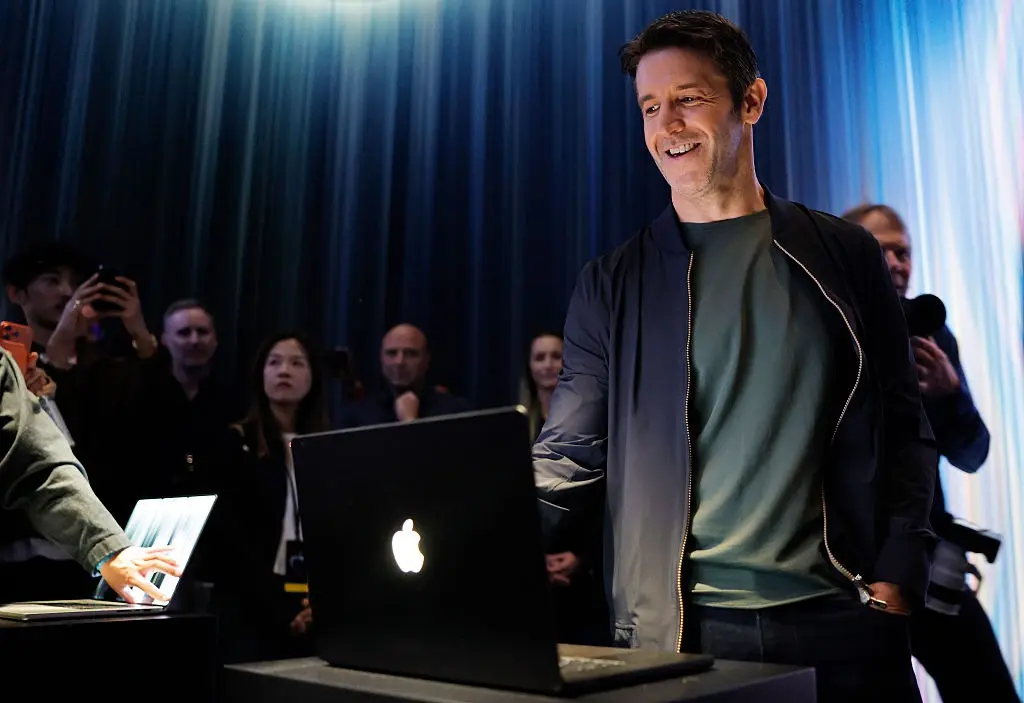
Speaking with veteran technology journalist Steven Levy in a wide-ranging interview for Wired, Ternus addressed the lingering skepticism surrounding Apple’s strategic direction. The interview comes on the heels of Apple’s autumn hardware launches in Los Angeles and follows the summer release of its long-delayed, thoroughly overhauled Siri assistant. Rather than apologizing for Apple’s measured timeline, Ternus presented a clear philosophy: Apple refuses to treat artificial intelligence as a marketing gimmick or an end unto itself.
Instead, the newly minted CEO outlined what industry insiders are calling the "Ternus Doctrine"—a product-centric vision that prioritizes seamless utility, on-device computing, and human craftsmanship over flashy, raw model capabilities. As Wall Street scrutinizes whether Apple’s massive hardware ecosystem can withstand the disruptive potential of autonomous AI agents, Ternus insists that Cupertino’s focus remains squarely on building intuitive user experiences, making the underlying technology virtually invisible to the end user.
+-----------------------------------------------------------------------------------+
|                            THE TERNUS AI PHILOSOPHY                               |
+-----------------------------------------------------------------------------------+
|  1. Utility Over Hype      -> "We don't want to ship AI for AI's sake."            |
|  2. Invisible Integration  -> AI should blend seamlessly with traditional software. |
|  3. Human-Centric Design   -> Products remain personal, deeply human endeavors.   |
+-----------------------------------------------------------------------------------+
Detailed Chronology: Apple’s High-Stakes Path to AI Integration
Understanding the current posture of Apple’s leadership requires examining the turbulent multi-year timeline that led to this moment. The narrative surrounding Apple’s AI capabilities has been defined by internal shifts, high-profile engineering bottlenecks, and a deliberate divergence from cloud-heavy industry trends.
  2024                        2025                       Summer 2026              Sept-Oct 2026
  +-------------------------+ +------------------------+ +----------------------+ +-------------------------+
  | Apple Intelligence      | | Infrastructure Shifts  | | Overhauled Siri      | | John Ternus becomes CEO |
  | Announced; Initial      | | & PCC Development      | | Launches to Mixed   | | Defends AI Strategy in  |
  | Siri Delays Revealed   | | Internal Restructuring | | Market Reception    | | Wired Interview         |
  +-------------------------+ +------------------------+ +----------------------+ +-------------------------+
The Initial Stumbles (2024–2025)
When Apple first unveiled its foundational framework for Apple Intelligence in 2024, expectations were set exceptionally high. However, technical friction quickly surfaced. The company’s stringent commitment to user privacy required building a hybrid execution engine—processing requests locally on Apple Silicon whenever possible and routing complex queries to Private Cloud Compute (PCC) clusters powered by custom Apple servers.
Engineering roadblocks in natural language understanding, cross-app orchestration, and localized context indexing led to repeated delays. Throughout 2025, while rivals rapidly rolled out autonomous web agents and multimodal foundation models, Apple faced growing criticism from investors and tech commentators who argued that Cupertino had fallen dangerously behind in the generative AI land grab.
The Summer 2026 Turning Point
By mid-2026, the pressure reached a boiling point. Summer 2026 marked the formal deployment of the revamped, context-aware version of Siri—a software update that had suffered nearly two years of internal delays and public anticipation.
While the updated intelligence layer brought significant improvements in personal context processing, system-wide action execution, and fluid conversational flow, initial reviews were divided. Tech publications noted that while the system was stable, secure, and deeply integrated into iOS and macOS, it lacked the flamboyant, unconstrained generative capabilities of standalone AI platforms. The release was characterized by many as solid yet anticlimactic, setting the stage for a critical corporate narrative reset.
Executive Succession and the Wired Interview (Late 2026)
Against this backdrop of strategic transition, long-time hardware engineering chief John Ternus officially assumed the role of Chief Executive Officer at the beginning of September 2026. Taking the helm during a transformational period, Ternus moved quickly to articulate Apple’s long-term vision.
Following a major hardware event in Los Angeles, Ternus sat down with Wired’s Steven Levy for a definitive interview published in late October 2026. The exchange served as the first major public platform for Ternus to directly confront the narrative surrounding Apple’s AI stance, framing the company’s past delays not as failures of innovation, but as the price of disciplined product development.
Supporting Context & Metrics: Silicon, Software, and the App Economy
To appreciate the tension between Apple’s strategy and the broader tech sector, one must examine the operational and financial metrics shaping the AI landscape in 2026.
The Economics of On-Device AI vs. Hyperscale Datacenters
While hyperscale competitors spent hundreds of billions of dollars collectively on massive GPU datacenters and high-wattage power infrastructure, Apple focused its capital allocation on hardware efficiency and custom silicon integration.
+---------------------------------------------------------------------------------+
|                       CAPEX & ARCHITECTURE STRATEGY                             |
+---------------------------------------------------------------------------------+
| Metric / Focus          | Hyperscale Competitors    | Apple Inc.                |
+-------------------------+---------------------------+---------------------------+
| Primary Infrastructure  | Centralized Superclusters | On-Device Neural Engines  |
| Monetization Model      | Cloud API / Subscriptions | Device Sales & Services   |
| Privacy Architecture    | Cloud Telemetry Processing| Zero-Knowledge Local Exec |
| Target Latency Model    | Network Dependent         | Real-time Edge Hardware   |
+-------------------------+---------------------------+---------------------------+
Apple’s investment in custom Neural Engines—embedded across millions of active A-series and M-series chips—has created a decentralized processing footprint. This architectural choice minimizes ongoing cloud compute operational costs while maintaining rigid privacy standards. However, it imposes strict parameter size constraints on the native models Apple can run without melting thermal budgets or degrading battery life.
The Threat to the $100 Billion App Store Ecosystem
A central vulnerability highlighted by industry analysts is the potential disintermediation of the App Store. As competing platforms push toward autonomous AI "agents"—capable of booking flights, ordering groceries, and managing workflows without opening third-party software—the traditional app-centric interface faces an existential challenge.
                   Traditional App Ecosystem Model
    +--------+     +-------------------+     +------------------+
    | User   | --> | App Store / iOS   | --> | Individual Apps  |
    +--------+     +-------------------+     +------------------+
                                                       |
                                            (Direct Services Revenue)

                     Autonomous Agent Model
    +--------+     +-------------------+     +------------------+
    | User   | --> | AI Agent Layer    | --> | Task Completion  |
    +--------+     +-------------------+     +------------------+
                                                       |
                                           (Bypasses App Ecosystem)
With Apple’s Services division generating significant high-margin revenue annually—largely driven by App Store transactions, subscriptions, and digital commerce—any fundamental shift away from standalone applications toward agentic abstraction represents a high-stakes gamble for the company’s financial model.

Official Statements & Deep-Dive Analysis
During the interview with Steven Levy, John Ternus addressed these industry pressures head-on, offering candid responses to public criticism and outlining Apple’s core product philosophy.
Dismissing Public Skepticism
Acknowledging the wall of noise regarding Apple’s perceived delay in the AI race, Ternus maintained a pragmatic, composed posture.
"Everyone has an opinion, but I really like where we’re at."
— John Ternus, CEO of Apple Inc.
Ternus’s remark underlines a deliberate corporate culture that resists reacting to short-term market narratives. By asserting confidence in Apple’s current positioning, Ternus signaled that the company measures progress not by third-party benchmark sprints, but by consumer adoption, systemic stability, and platform synergy.
"Invisible AI" vs. Feature Chasing
In one of the interview’s most insightful passages, Ternus drew a clear line between feature-driven hype and meaningful user utility, defining Apple’s software integration doctrine.
"We don’t want to ship AI for AI’s sake. When we’re doing it right, people won’t have to think about whether it was AI that made this happen or more traditional software. What matters is, did we build something that they really love?"
— John Ternus
This perspective highlights a core divergence in product design:
- The Hype-Driven Paradigm: Exposes raw model controls, prompt windows, and explicit AI badges to the user, emphasizing the intelligence of the machine.
- The Apple Paradigm: Treats AI as invisible infrastructure—akin to memory management or graphics rendering—where complex machine learning models operate in the background to simplify actions without drawing attention to the underlying algorithm.
The Human Element and the Future of Apps
When Levy pushed Ternus on whether advanced AI agents might eventually render individual apps—and by extension, the App Store ecosystem—obsolete, the CEO offered a philosophical defense of software creation and human-driven experiences.
"That could make life really easy, I suppose, but the creation of products is a deeply human and personal thing, something that we love to do."
— John Ternus
+---------------------------------------------------------------------------------+
|                       PARADIGM COMPARISON: AI EXECUTION                         |
+---------------------------------------------------------------------------------+
| Feature Context          | Autonomous Abstraction     | Human-Centric Tooling   |
+--------------------------+----------------------------+-------------------------+
| Interface Paradigm       | Text/Voice Agent Abstraction| Direct Canvas & Touch   |
| User Engagement          | Passive Delegation         | Active Creation         |
| Software Ecosystem       | Disintermediated Apps      | Enriched Application UI |
| Strategic Champion       | OpenAI, Anthropic, Google  | Apple                   |
+--------------------------+----------------------------+-------------------------+
Ternus’s defense of the application paradigm goes beyond preserving App Store economics; it speaks to Apple’s fundamental identity as a toolmaker for creative expression. In Apple’s view, software applications are not merely operational friction points to be automated away by a single prompt, but tailored canvases through which human intent, art, and productivity are expressed.
Future Outlook: The Ternus Era and the Horizon of Intelligent Hardware
As John Ternus settles into his role as Apple’s Chief Executive, the company faces both immense opportunities and steep execution hurdles. The path forward under his leadership will likely be defined by three critical vectors:
                          THE TERNUS ERA STRATEGIC VECTORS
                                         |
     +-----------------------------------+-----------------------------------+
     |                                   |                                   |
     v                                   v                                   v
+-----------------------+     +-----------------------+     +-----------------------+
|  Silicon-Level Native |     |   Privacy-Preserving  |     |   Ambient Computing   |
|   Neural Integration  |     |    Distributed Cloud  |     |   Form Factors        |
+-----------------------+     +-----------------------+     +-----------------------+
1. Deep Silicon-Level Neural Integration
With Ternus’s background rooted deeply in hardware engineering, Apple is uniquely positioned to tighten the coupling between custom silicon and proprietary AI architectures. Future iterations of Apple Silicon are expected to allocate significantly larger die area to localized Neural Processing Units (NPUs), enabling larger parameter models to run natively on iPhones, iPads, and Macs with near-zero latency and minimal battery consumption.
2. Privacy as a Competitive Moat
As autonomous AI systems demand deeper access to sensitive personal data—financial records, private communications, health metrics, and real-time location history—consumer security concerns will inevitably compound. Apple’s architecture, which blends zero-knowledge Private Cloud Compute with strictly sandboxed on-device storage, positions the company as a safe haven for users reluctant to upload their personal lives to monolithic third-party training clusters.
3. Ambient Computing and Next-Gen Form Factors
The ultimate test of the Ternus Doctrine will be its application to new form factors. From advanced spatial computing platforms like Vision Pro to rumored wearable audio and display accessories, invisible AI will serve as the glue that enables context-aware ambient computing. In these screen-constrained environments, software must anticipate user needs dynamically without relying on traditional menu structures or noisy chat boxes.
Conclusion
John Ternus’s first major interview as Apple CEO makes one thing clear: Apple will not be rushed into abandoning its core design principles by the prevailing currents of industry hype. By framing AI not as a standalone product, but as an invisible engine designed to enhance human creativity and personal privacy, Ternus is betting that consumers will ultimately value refined utility over unbridled computational novelty. Whether this deliberate approach will defend Apple’s market dominance against rapid structural shifts remains the defining question of the tech industry’s next decade.