Executive Overview
In an era defined by digital connectivity, the foundational architecture of the modern internet is undergoing a quiet yet seismic shift. For decades, conducting digital transactions, verifying identities, and transferring value have required a centralized intermediary. Whether clearing a credit card payment through a multinational bank, storing personal data on corporate cloud servers, or relying on governmental bodies to authenticate legal documents, society has built its digital trust upon centralized pillars.
Enter blockchain technology: a revolutionary paradigm shift designed to bypass traditional middlemen and establish trust through mathematical certainty rather than institutional authority.
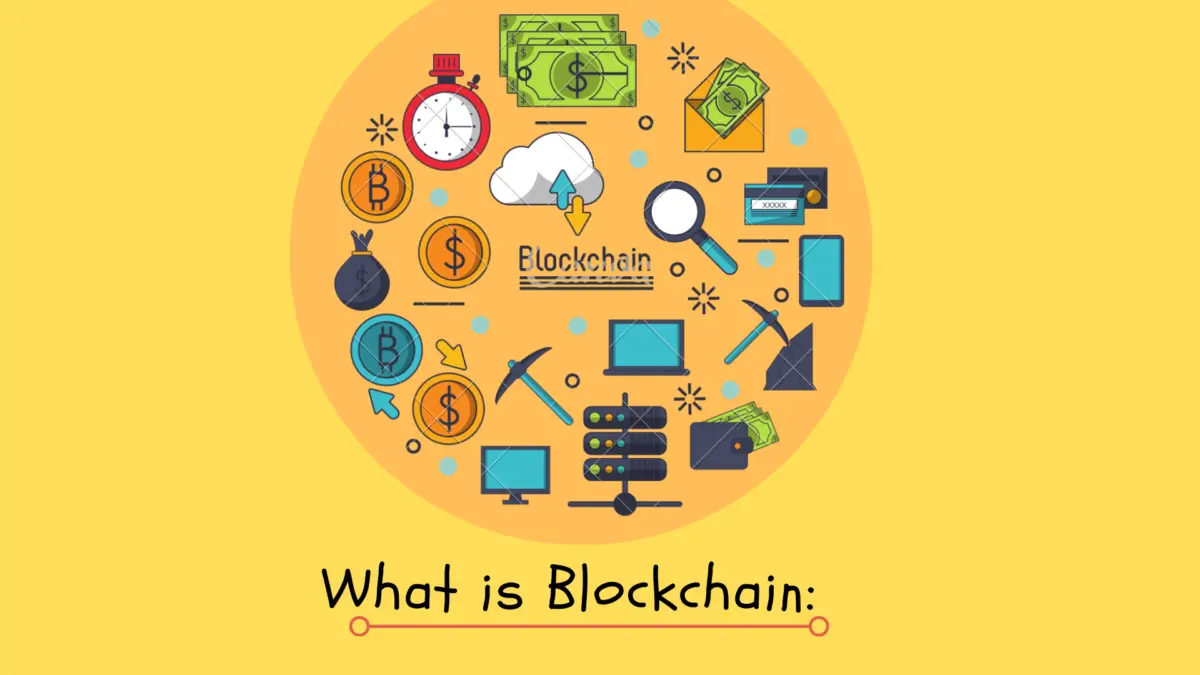
Often misconstrued as a mere synonym for Bitcoin or other volatile cryptocurrencies, blockchain is, in reality, a sophisticated structural framework. At its core, it is a decentralized, distributed digital ledger that securely records transactions across a peer-to-peer network of computers. By eliminating single points of failure, ensuring cryptographic immutability, and democratizing data governance, blockchain promises to redefine how humanity handles information, commerce, and accountability.
While its initial surge into public consciousness was fueled by the speculative meteoric rise of digital currencies, the technology’s true potential stretches far beyond financial speculation. Today, Fortune 500 enterprises—ranging from supply chain giants like Walmart and industrial conglomerates like Siemens to pharmaceutical leaders like Pfizer—are actively leveraging Distributed Ledger Technology (DLT) to solve monumental operational challenges. From tracking contaminated food supplies within seconds to securing tamper-proof legal contracts, blockchain is no longer a futuristic pipe dream; it is an active enterprise solution reshaping global trade.
Detailed Chronology: The Evolution of Decentralized Thought
The journey of blockchain technology did not begin with the anonymous whitepaper of Satoshi Nakamoto in 2008. Rather, it is the culmination of decades of cryptographic research, academic inquiry, and computer science breakthroughs. Understanding the lineage of blockchain requires tracing a deliberate timeline of innovation.
1991: The Cryptographic Genesis
The foundational concepts underpinning modern blockchains were first formally introduced in 1991 by two mathematicians, Stuart Haber and W. Scot Stornetta. Working to solve a pressing digital dilemma—how to prove that a document’s timestamp had not been backdated or tampered with—Haber and Stornetta proposed a system of cryptographically secured chains of blocks. Their work utilized cryptographic hash functions to secure document timestamps, effectively creating the world’s first rudimentary digital chain. However, at the time, the commercial internet was in its infancy, and the broader world was not yet ready for decentralized record-keeping.
1998: The Birth of Digital Gold
Nearly a decade later, computer scientist and legal scholar Nick Szabo advanced the cryptographic discourse by proposing a decentralized digital currency mechanism known as "Bit Gold." Although Szabo’s protocol was never officially implemented, it introduced critical conceptual frameworks—such as utilizing proof-of-work algorithms and cryptographic security for digital cash—that directly foreshadowed the architecture of modern cryptocurrencies. Szabo’s work remains widely regarded as a critical stepping stone toward modern blockchain engineering.
2008–2009: The Satoshi Nakamoto Breakthrough
The modern era of blockchain officially commenced in October 2008, when an elusive, pseudonymous figure (or group of figures) operating under the name Satoshi Nakamoto published the seminal whitepaper titled "Bitcoin: A Peer-to-Peer Electronic Cash System." Shortly thereafter, in January 2009, Nakamoto mined the genesis block of the Bitcoin blockchain, launching the world’s first operational decentralized currency network. By ingeniously combining cryptographic hashes, peer-to-peer networking, and proof-of-work consensus mechanisms, Nakamoto solved the notorious "double-spending problem," proving that digital assets could be transferred securely without the oversight of a central bank.
2015 and Beyond: The Smart Contract Revolution
While Bitcoin proved that decentralized money was possible, the launch of Ethereum in 2015 by Vitalik Buterin and his co-founders expanded blockchain’s horizons exponentially. Ethereum introduced "smart contracts"—self-executing code stored on the blockchain that automatically executes agreements when predefined conditions are met. This breakthrough transformed blockchain from a simple peer-to-peer ledger into a global, decentralized computing platform capable of running complex decentralized applications (dApps).
Supporting Context & Metrics: How Blockchain Works
To appreciate the disruptive force of blockchain, one must unpack the mechanics that differentiate it from traditional centralized databases.
The Architecture: Blocks, Hashes, and Chains
At its most fundamental level, a blockchain is a growing list of records, called blocks, which are linked together using cryptography. Each block contains:
- Transaction Data: A cryptographically verified record of recent activities or data exchanges.
- A Timestamp: An accurate record of when the block was created.
- A Cryptographic Hash: A unique mathematical fingerprint generated by an algorithm (such as SHA-256) that translates data into a fixed-size string of characters.
Crucially, every single block contains the cryptographic hash of the previous block. If a malicious actor attempts to alter the data stored in block three, that block’s hash changes immediately. This discrepancy breaks the cryptographic link to all subsequent blocks, alerting the entire network to tampering.
Decentralization vs. Traditional Databases
Traditional databases rely on a client-server architecture. An organization maintains a central server (or a cluster of cloud servers) where all data is stored. While this allows for rapid data retrieval and administrative control, it introduces critical vulnerabilities:
- Single Point of Failure: If the central server is compromised, hacked, or suffers a physical outage, the entire system goes down or data is lost.
- Lack of Transparency: Users must blindly trust the database administrator not to alter historical records, commit fraud, or mismanage data.
In contrast, a blockchain distributes an identical copy of the ledger across thousands of independent computers, known as nodes, scattered across the globe.
[Traditional Database]               [Blockchain Network]
      [Server]                         [Node] <--> [Node]
     /   |                               ^          ^
[Client][Client][Client]                           /
                                            [Node]
When a new transaction occurs, it is broadcast to the network. The nodes validate the transaction using consensus algorithms (such as Proof-of-Work or Proof-of-Stake). Once validated, the transaction is bundled into a block and permanently appended to the ledger. Because the data is redundant across thousands of independent nodes, no single entity can alter, censor, or destroy the historical record. If one node experiences technical failure or attempts to inject fraudulent data, the rest of the network cross-references the majority ledger and rejects the anomaly.
Official Statements and Enterprise Adoption
While public perception often binds blockchain to volatile crypto trading, global enterprises view the technology through an entirely different lens: operational efficiency, supply chain transparency, and immutable data auditing.
Industry leaders have increasingly integrated Distributed Ledger Technology into their core infrastructure. For example, retail titan Walmart, in collaboration with IBM and their Food Trust network, has pioneered enterprise-grade blockchain tracking.
Historically, tracing the origin of a contaminated food product—such as lettuce or packaged meats tainted with E. coli or Salmonella—was a painstaking ordeal. It frequently took food safety inspectors weeks or even months to trace an outbreak backward through layers of suppliers, distributors, and farms, leading to massive blanket recalls that cost millions of dollars and wasted wholesome food.
Through blockchain, Walmart reduced the time required to trace the exact farm-to-shelf journey of a sliced mango from nearly seven days down to 2.2 seconds.
In an official statement regarding enterprise blockchain deployment, industry analysts have highlighted the broader sentiment among corporate executives:
"The primary value of enterprise blockchain is not eliminating currency, but eliminating friction. By establishing an immutable, shared truth across disparate corporate silos, supply chains become transparent, audit costs plummet, and inter-organizational trust is automated through code."
Beyond retail and food safety, industrial giants like Siemens, financial institutions like AIG, and pharmaceutical behemoths like Pfizer are utilizing DLT to track complex international shipments, streamline insurance claim settlements, and secure sensitive medical data from unauthorized tampering.
Future Outlook: The Next Decade of DLT
As we look toward the horizon of the next five to ten years, the trajectory of blockchain technology points toward ubiquitous, invisible integration. Just as everyday internet users do not need to understand TCP/IP networking protocols to send an email, future consumers will interact with blockchain-powered systems without ever realizing they are using DLT.
1. Mainstream Enterprise Integration
We are moving past the initial phase of speculative hype and skepticism. Between 2026 and the end of the decade, C-suite executives, legal experts, and entrepreneurs will increasingly leverage blockchain not as a novelty, but as standard operating infrastructure. Legal smart contracts will automate complex corporate agreements, reducing litigation and administrative overhead. State and national governments are already exploring blockchain for secure digital identification systems, land registries, and voting mechanisms.
2. Scalability and Interoperability
Early blockchains faced severe bottlenecks regarding transaction speed and energy consumption (famously exemplified by Bitcoin’s proof-of-work energy footprint). However, modern layer-2 scaling solutions, energy-efficient consensus mechanisms (such as Proof-of-Stake), and cross-chain interoperability protocols are rapidly resolving these limitations. Blockchains will soon communicate seamlessly with one another, creating an interconnected web of secure, decentralized networks.
3. The Convergence of AI and Blockchain
One of the most exciting frontiers for the next decade is the convergence of Artificial Intelligence and blockchain technology. As AI generates vast amounts of synthetic data, deepfakes, and automated decisions, blockchain can serve as the immutable verification layer—proving the authenticity of digital content, securing AI training datasets, and ensuring autonomous agent transactions occur safely within predetermined guardrails.
Frequently Asked Questions About Blockchain
Is Blockchain a cryptocurrency?
No. Blockchain is the underlying foundational technology that makes cryptocurrencies possible. Think of blockchain as the highway system, and cryptocurrencies as the vehicles driving on it. While Bitcoin and Ethereum are digital currencies built on top of blockchains, blockchain technology itself can be used to store legal contracts, track medical records, or manage supply chains without any involvement of digital currency.
Is it possible for a Blockchain to be hacked?
Theoretically, yes, but practically speaking, it is exceptionally difficult. To successfully hack a major public blockchain (like Bitcoin or Ethereum), an attacker would need to control more than 50% of the entire network’s computing power simultaneously—a scenario known as a "51% attack." Because global networks consist of millions of independent nodes constantly auditing and cross-referencing one another, executing such an attack on established networks requires astronomical financial and computational resources, rendering it nearly impossible.
Who owns the Blockchain?
No single individual, corporation, or government owns a public blockchain. Blockchain is a decentralized technology distributed across a network of connected nodes. Because each participating device holds an identical copy of the ledger, ownership is collective, distributed, and trustless.
What is the difference between Bitcoin and Blockchain technology?
Bitcoin is a specific application—a decentralized digital currency—designed to facilitate peer-to-peer financial value transfer. Blockchain is the overarching digital ledger technology that records those transactions securely and transparently. Bitcoin cannot exist without blockchain, but blockchain can exist (and thrives) entirely independently of Bitcoin.
What is the difference between a traditional database and a Blockchain?
While both store data, their governance structures differ fundamentally. A traditional database is typically managed by a single administrator (client-server model), allowing data to be easily edited, deleted, or manipulated behind closed doors. A blockchain is a decentralized ledger shared across a peer-to-peer network. Data is added in permanent, cryptographically linked blocks; once recorded, data cannot be altered or deleted, ensuring absolute data integrity and removing the need for a trusted central authority.