Executive Overview
The landscape of modern superhero television has always been volatile, but few transitions have been quite as jarring as the recent corporate and creative shake-up at DC Studios. Following the unexpected ousting of co-CEOs James Gunn and Peter Safran, the future of the DC Universe (DCU) has plunged into a fog of uncertainty. Among the primary casualties of this studio-wide restructuring is HBO’s critically acclaimed prestige drama Lanterns.
Capturing the cultural zeitgeist with its gritty, grounded take on interstellar law enforcement, Lanterns was a resounding success for both HBO and Max. Season 1 concluded to widespread critical praise, and co-creator Chris Mundy had already assembled a dedicated writers’ room to map out the trajectory for Season 2. However, in a candid recent interview, Mundy assessed the probability of the series continuing under the new regime as a precarious "50/50."
For fans mourning the premature burial of this cerebral sci-fi mystery—which paired veteran space-cop Hal Jordan (Kyle Chandler) with earnest ex-Marine John Stewart (Aaron Pierre) to investigate a gruesome interstellar incident in rural Nebraska—the television horizon looks remarkably empty. Yet, salvation lies in television history. Exactly thirty years after it redefined speculative fiction, The X-Files stands ready as the ultimate spiritual successor. Boasting 218 episodes across 11 seasons, Chris Carter’s landmark procedural inverts the Lanterns formula, offering an expansive, endlessly watchable masterclass in supernatural investigation that more than fills the void left by DC’s fallen prestige series.
Detailed Chronology: From DC’s Intergalactic Noir to FBI Paranoia
The Rise and Stall of Lanterns
To understand why The X-Files serves as the perfect antidote to the cancellation blues of Lanterns, one must first examine what made the HBO series such a unique entry in the comic book adaptation landscape. Historically, cinematic and televisual adaptations of the Green Lantern mythos leaned heavily into cosmic opera: sprawling galaxies, vibrant alien architectures, and massive cosmic battles.
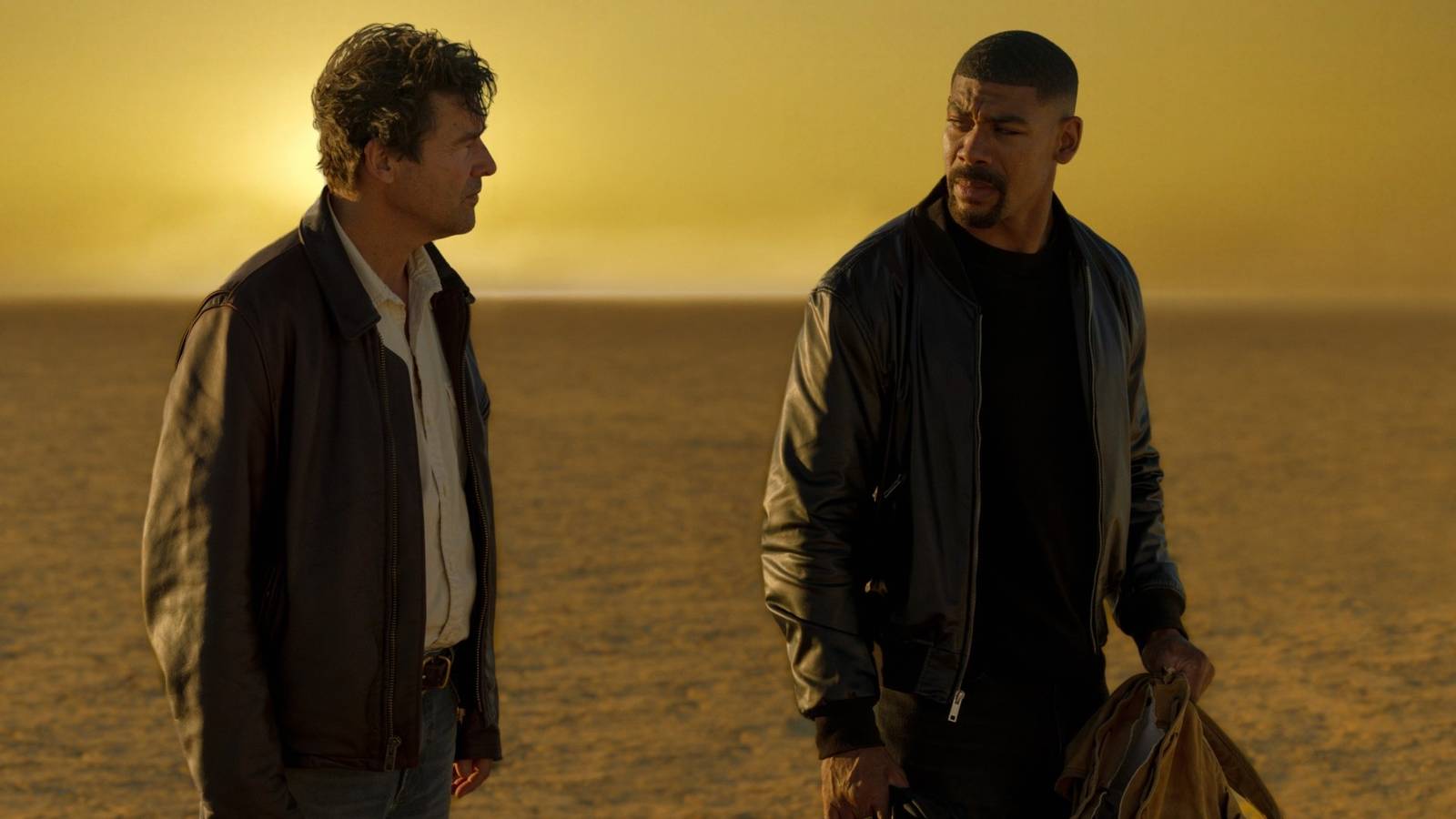
Lanterns deliberately threw out that rulebook. Influenced heavily by atmospheric crime procedurals like True Detective, the series grounded its narrative in a small-town American mystery—Rushville, Nebraska—where the cosmic horror of the universe intersected with raw, human desperation.
- The Veteran and the Rookie: Hal Jordan, portrayed with weary swagger by Kyle Chandler, represented Earth’s inaugural Green Lantern—a rule-breaking veteran worn down by universal warfare. Sensing Jordan’s instability and mounting frustration with his rogue tendencies, the enigmatic, alien Guardians of the Universe dispatched Aaron Pierre’s John Stewart. A disciplined, unyielding former Marine, Stewart was ostensibly paired as a partner, though the assignment functioned as a thinly veiled bureaucratic attempt to retire Jordan permanently.
- The Grounded Mystery: Rather than blowing up planets in the pilot episode, Lanterns focused on a slow-burn murder mystery. The dynamic between Jordan and Stewart relied on friction, begrudging respect, and ideological clashes over duty, jurisdiction, and morality.
- The Sudden Halt: With only eight episodes in its debut season, the series left audiences hungry for a broader exploration of the Green Lantern Corps and the overarching conspiracy hinted at in the finale. The abrupt leadership shake-up at DC Studios, however, has placed a giant question mark over the entire enterprise, leaving Mundy’s meticulously planned second season hanging in the balance.
Entering The X-Files: The Blueprint of Bureaucratic Odd Couples
While Lanterns adopted the "mismatched cops investigating the unknown" trope and filtered it through a superhero lens, The X-Files invented the modern television blueprint for this exact dynamic.
- The Ruse of the FBI: Premiering in September 1993, The X-Files similarly kicks off with an administrative ruse. Special Agent Fox Mulder (David Duchovny)—a brilliant criminal profiler driven by an obsessive, deeply personal belief in extraterrestrial life and government cover-ups—has been relegated to the basement of the FBI. Annoyed by his unorthodox methods and unhinged theories, the bureau’s higher-ups assign a foil: Special Agent Dana Scully (Gillian Anderson).
- Science Meets the Unexplained: Scully is a medical doctor by training and a staunch empiricist. Her mandate is clear and cynical: shadow Mulder, dismantle his pseudoscientific case files using rigorous scientific methodology, and build the bureaucratic paper trail required to discredit and ultimately reassign him.
- The Evolution of Partnership: Just as Jordan and Stewart discover a shared code of honor beneath their ideological war, Mulder and Scully undergo a seismic shift. Scully learns to look beyond the microscope, recognizing that the universe defies tidy laboratory parameters, while Mulder relies on Scully’s scientific skepticism to keep his wilder theories tethered to reality. Over the course of multiple seasons, this partnership deepens into one of the most iconic, organically developed relationships in television history.
Supporting Context & Metrics: Comparing the Two Universes
While the thematic parallels between Lanterns and The X-Files are striking, their structural execution offers distinctly contrasting viewing experiences. Below is a comparative breakdown of how these two sci-fi cornerstones stack up across key metrics:
| Metric | Lanterns (HBO / DC Studios) | The X-Files (Fox / 20th Century Fox) |
|---|---|---|
| Total Episode Count | 8 episodes (Season 1) | 218 episodes across 11 seasons |
| Format | Serialized, single overarching mystery | Hybrid (Procedural "Monster-of-the-Week" + Mytharc) |
| Primary Setting | Rural Nebraska (Rushville) & Cosmos | Global locations, FBI headquarters, Washington D.C. |
| Power Dynamics | Cosmic rings generating constructs of green light | Human intellect, firearms, forensic science, and skepticism |
| Tone & Aesthetic | Gritty, moody neo-noir crime thriller | Varied (Horror, dark comedy, political thriller, sci-fi) |
| Current Availability | Max | Pluto TV, Hulu, Disney Plus |
An Inverted Mirror of Storytelling
The brilliance of transitioning from Lanterns to The X-Files lies in how neatly they invert one another.

In Lanterns, the investigators themselves possess divine, reality-bending powers—Green Lantern rings capable of materializing anything the wearer can imagine—yet the narrative confines them to a remarkably low-to-the-ground, intimate investigative scope. The supernatural elements are worn by the protagonists, while the local environment remains stubbornly human and gritty.
In The X-Files, the opposite is true. Mulder and Scully are entirely unaugmented humans facing bureaucratic reprimands, desk jobs, and mundane weapons. Yet, the cases they investigate are infinitely more bizarre, terrifying, and cosmic. From parasitic alien life forms and shape-shifting mutants to government conspiracies involving grey aliens and synthetic viruses, The X-Files throws every conceivable urban legend, cryptid, and paranormal phenomenon at its protagonists.
Official Statements and Industry Impact
The vulnerability of Lanterns highlights a recurring structural issue in contemporary comic book media: the vulnerability of high-concept streaming projects to corporate executive turnover.
Speaking with The Playlist following the DC Studios executive restructuring, Lanterns co-creator and showrunner Chris Mundy addressed the grim mathematical reality facing the production:

"We had a writers’ room up and running, mapping out where these characters go next. We built a world that fans responded to, but in this industry, the creative vision is always at the mercy of the boardroom. Right now, looking at the landscape after the shake-up, I’d say the odds of moving forward are about 50/50. It’s out of our hands."
Mundy’s comments reflect a broader industry exhaustion with short-run streaming models that leave rich, expensive worlds stranded after a single 8-episode drop. In stark contrast, The X-Files represents an era of television production that prioritized longevity, character maturation, and narrative breathing room. Running for nine original seasons on Fox before returning for two revival seasons in 2016 and 2018, the series established a standard for how episodic television can build a loyal, multi-generational fanbase without relying on massive cinematic universe crossovers.
Future Outlook: Why The X-Files Remains Essential Viewing
For viewers grieving the premature loss of prestige comic book adaptations or lamenting the trend toward truncated, single-season streaming experiments, diving into The X-Files offers an almost endless well of entertainment.
1. Unmatched Episode Diversity
Unlike modern streaming series that adhere strictly to a cinematic eight-episode arc, The X-Files utilizes a hybrid format. It balances a sweeping overarching mythology (the "Mytharc" involving alien colonization and government conspiracies) with standalone "Monster-of-the-Week" episodes. One week, Mulder and Scully might be tracking a terrifying genetic mutant through a storm drain; the next, they might be participating in a darkly comedic satire written by comic geniuses like Darin Morgan. (Though viewers are traditionally advised to skip the notoriously uneven vampire-seduction episode "3," the vast majority of the run remains gold standard television).
2. Timeless Chemistry
The core engine of The X-Files—the razor-sharp intellectual and emotional friction between Duchovny’s Mulder and Anderson’s Scully—remains the gold standard for television partnerships. Their dynamic directly paved the way for every subsequent "believer vs. skeptic" duo in pop culture, including the partnership between Hal Jordan and John Stewart in Lanterns.
3. Accessible Availability
For fans looking to dive into the phenomenon, The X-Files has never been more accessible. All 218 episodes of the classic series are currently available to stream across multiple platforms, including Pluto TV, Hulu, and Disney Plus.
While the future of the Green Lantern Corps in the DCU remains locked behind boardroom doors and unbuilt constructs, the spooky, rain-slicked corridors of the FBI basement are wide open. If you loved the gritty partnership, the investigative mystery, and the cosmic paranoia of Lanterns, the truth is still out there—and it’s spread across eleven incredible seasons.