Executive Overview
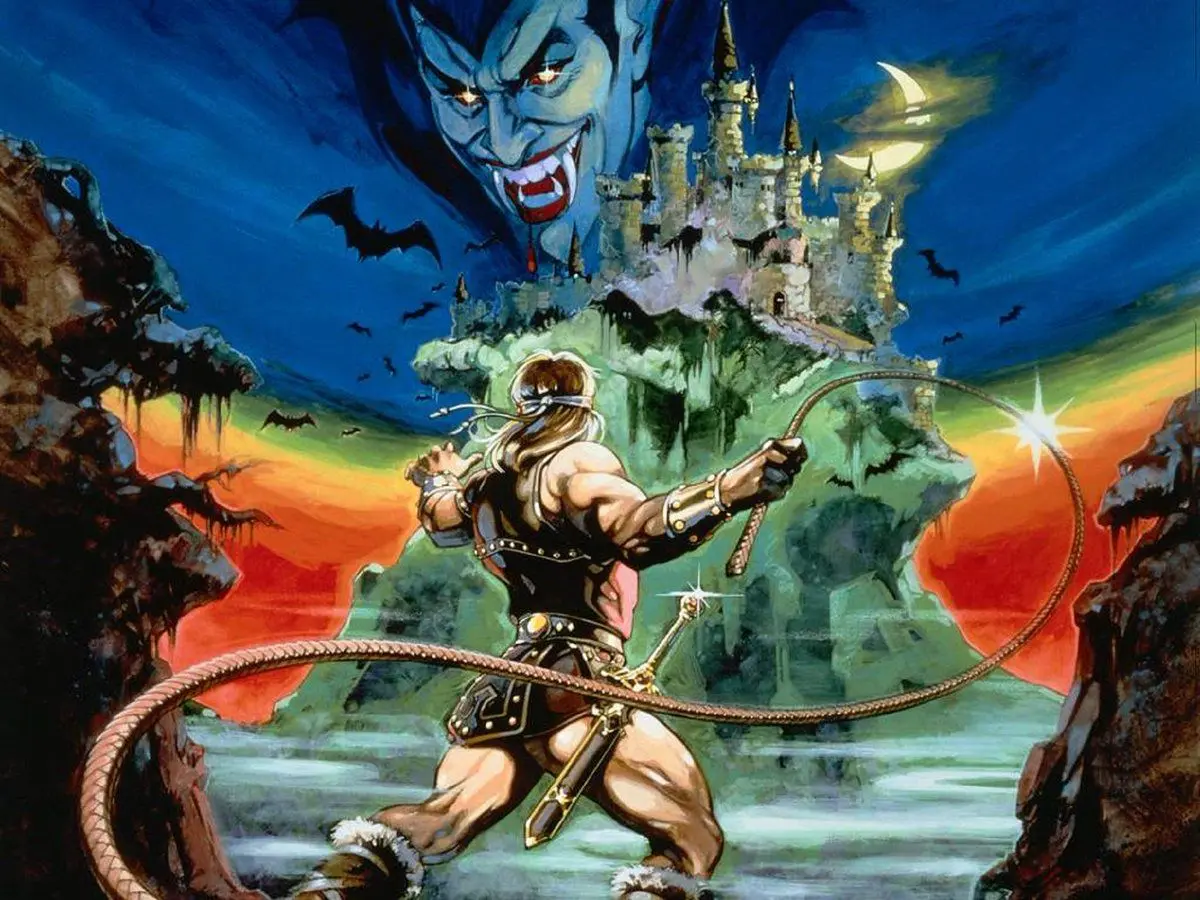
Forty years ago, the video game landscape underwent a fundamental paradigm shift. While modern titles launch to staggering commercial numbers, they rarely reshape the foundational DNA of the industry as a whole. Today’s market is saturated across countless genres, leaving players with the impression that very little terra incognita remains. Yet, four decades ago, Konami achieved the unthinkable with the release of Castlevania, a masterclass in atmospheric design, tactical action, and unforgiving difficulty that forever altered the trajectory of interactive entertainment.
First introduced to Japanese households on the Famicom Disk System as Akumajou Dracula on September 26, 1986, Castlevania established a blueprint that would echo through the decades. Chronicling the perilous journeys of the legendary Belmont clan as they wage generational warfare against the dark forces of Count Dracula, the original 2D platformer introduced gamers to a world drenched in gothic horror mythology. From navigating treacherous, crumbling staircases and mechanical gears to devouring dubious, candle-lit chicken feasts, players embarked on an atmospheric descent into terror that felt entirely revolutionary for its time.
As the industry prepares to celebrate the monumental legacy of this foundational franchise, its ripples are still acutely felt. From the souls-like architectural dread of modern dark fantasy to the sprawling design philosophies of the "Metroidvania" subgenre—and right up to contemporary crossover events and upcoming major franchise releases—Castlevania remains an untouchable titan of game design. This retrospective explores the historical genesis of Konami’s masterpiece, its meticulous mechanics, its vast cultural footprint, and its resilient future in modern gaming.
Detailed Chronology: From the Famicom Disk System to Global Phenomenon
To truly understand the impact of Castlevania, one must reexamine the technological and cultural ecosystem of the mid-1980s. When Akumajou Dracula debuted in Japan in the autumn of 1986, the video game industry was still recovering from the seismic crash of 1983. Developers were desperately searching for mature themes, deeper immersion, and mechanical identities that could appeal to an aging demographic while welcoming new players.
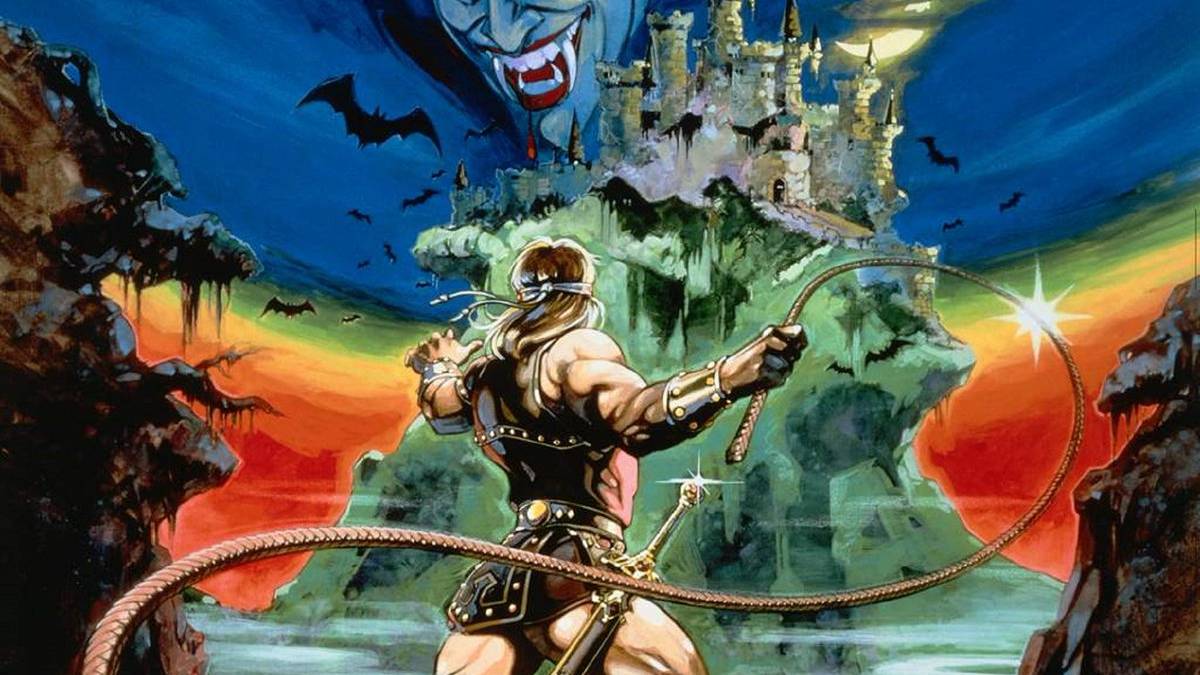
Konami’s development team found inspiration in classic Universal horror cinema—evoking the eerie cinematic universes of Dracula, Frankenstein’s monster, the Mummy, and the Grim Reaper. Transitioning from the simple, abstract shapes characteristic of early arcade and console titles, the team injected genuine character and cinematic dread into pixel art. When the game crossed international waters as Castlevania for the Nintendo Entertainment System (NES) in North America in 1987 (and Europe in 1988), it arrived alongside a marketing push that cemented its gothic aesthetic in the minds of a generation.
The Evolution of an Empire
The trajectory of the franchise over the next four decades reads like a historical map of video game evolution. As tracked by comprehensive retrospectives like Polygon’s exhaustive deep-dives into the series, the Castlevania portfolio eventually expanded to encompass over 30 distinct titles across a dazzling array of formats:
- The Golden 8-Bit and 16-Bit Era: Sequels and prequels like Castlevania II: Simon’s Quest (which experimented with open-world exploration and RPG elements) and Super Castlevania IV on the Super Nintendo refined the core audiovisual presentation.
- The Experimental Era: As hardware advanced through the 1990s and 2000s, the franchise took calculated risks. This yielded portable triumphs on the Game Boy Advance and Nintendo DS, experimental puzzle games, arcade spin-offs, a 3D fighting game (Castlevania Judgment), and daring 3D platformers on home consoles.
- The Golden Standard: The release of Castlevania: Symphony of the Night in 1997 completely redefined the series, birthing half of the globally recognized "Metroidvania" portmanteau and inspiring a renaissance of exploration-heavy, non-linear platformers.
Despite these radical pivots—some of which achieved runaway critical acclaim while others stumbled into historical obscurity—every single entry traces its lineage back to Simon Belmont’s initial, terrifying trespass into Dracula’s sprawling, accursed fortress.
Supporting Context & Metrics: The Anatomy of a Masterclass in Difficulty
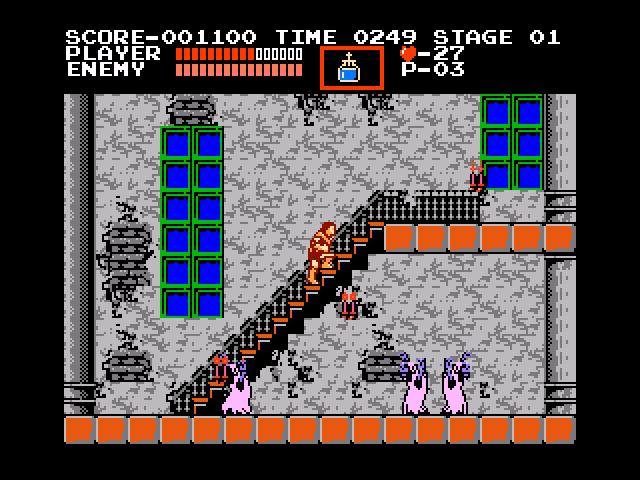
By contemporary standards, the original Castlevania is a brisk experience. Comprising just six distinct stages, a player who has mastered its idiosyncrasies can clear the game in under an hour. However, measuring Castlevania by its raw runtime is a fundamental misunderstanding of its design philosophy. Those six stages were compact battlefields engineered for maximum atmospheric tension and fiendish, unrelenting difficulty.
The Tyranny of Commitment
Much of the game’s legendary challenge stemmed from its uncompromising physics engine—a stark contrast to contemporary platforming peers. In titles like Nintendo’s Super Mario Bros., players enjoyed mid-air maneuverability; if Mario miscalculated a jump, a quick adjustment allowed him to stick the landing safely.
Simon Belmont offered no such luxury. The moment Simon committed to a jump, his trajectory was locked in stone. This design choice turned every chasm into a high-stakes psychological puzzle. A poorly timed leap invariably propelled Simon headfirst into a floating Medusa head or a bottomless abyss. Deaths came fast, frequently, and without remorse.

[Player Inputs Jump] ---> [Trajectory Locked] ---> [Incoming Medusa Head] ---> [Inevitable Doom]Battles of Attrition
Without the luxury of modern save states, checkpoint generosity, or battery backups, early playthroughs of Castlevania were authentic battles of attrition. Players had to master the utilization of strategic subweapons—daggers for straight-line crowd control, axes for arcing overhead threats, holy water for freezing fast-moving ground units, and crosses for sweeping clear-outs.
Reaching the terrifying, multi-phased boss encounters at the end of each stage required absolute dedication, precise memorization of enemy spawn patterns, and legendary perseverance. It forged a hardened community of players who understood that victory in Castlevania was earned through sweat, blood, and absolute mastery of its rules.
Official Statements and Industry Resonance
The psychological and structural imprint of Castlevania on modern game development is immeasurable. Prominent creators across the industry have frequently cited Konami’s gothic epic as a foundational pillar of their own creative philosophies.
Hidetaka Miyazaki, the visionary director behind FromSoftware’s critically acclaimed Dark Souls series and Elden Ring, has often pointed to classic horror and dark fantasy action games like Castlevania as core inspirations. The suffocating architectural horror, the pacing of methodical combat, and the unspoken rule that players must respect their environment are direct spiritual descendants of Simon Belmont’s crusade.
The industry’s respect for the franchise has manifested in major modern cross-media collaborations. For instance, developer poncle’s critically lauded Vampire Survivors expansion, Ode to Castlevania, brought dozens of iconic characters, weapons, and musical tracks into the modern roguelike space.
Furthermore, indie developers carving out the modern "Metroidvania" and soulslike spaces—such as the creators of Hollow Knight, the Ori series, Momodora, and Dead Cells—owe a direct debt to the structural brilliance of Castlevania: Symphony of the Night and its Koji Igarashi-led lineage. Igarashi himself, after departing Konami, successfully crowdfunded Bloodstained: Ritual of the Night in 2015, proving that the appetite for director-driven, gothic action-exploration games remains ravenous among modern audiences.
Future Outlook: A Legacy That Refuses to Die
Forty years after its initial conceptualization, Castlevania shows no signs of fading into retro obscurity. Its ongoing cultural and commercial viability was powerfully reinforced when Motion Twin’s acclaimed roguelike Dead Cells released its blockbuster Return to Castlevania expansion. The crossover resonated so deeply with both fanbases that it served as proof of concept for the franchise’s sustained market dominance.
This momentum has directly paved the way for brand-new horizons. Industry insiders and eager fans are currently turning their attention toward the horizon with the upcoming release of Castlevania: Belmont’s Curse. Slated to launch in October across major platforms—including the Nintendo Switch, PlayStation 5, Windows PC, and Xbox Series X/S—the new title promises to honor the series’ blood-soaked roots while introducing modern technical polish and responsive design.
What Lies Ahead?
As we look toward the next decade of interactive entertainment, the legacy of that unassuming 1986 Famicom release stands taller than ever. Castlevania proved that video games could do more than simply entertain—they could terrify, challenge, transport, and haunt players long after the console was powered down.
With new entries on the calendar, expansive crossovers keeping the IP in the cultural zeitgeist, and an entire generation of indie developers continuing to pull inspiration from its candle-lit corridors, one thing remains certain: the Belmont family whip will crack through the darkness for decades to come.