Executive Overview
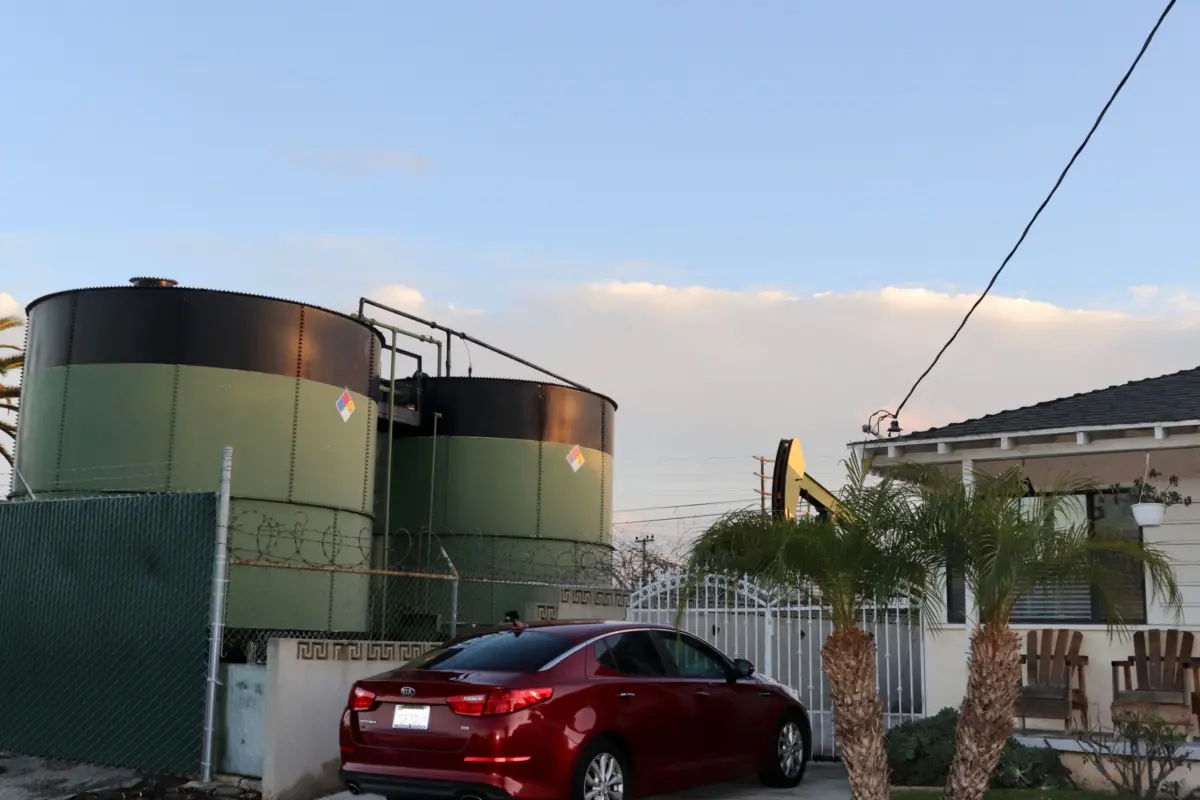
For generations, the constant, rhythmic thrum of pumpjacks and the sulfurous, rotten-egg stench of crude oil were as fundamental to Regina Martin’s childhood as school buses and neighborhood playgrounds. Growing up in the 1950s and 1960s near the sprawling industrial veins of Los Angeles—home to the nation’s largest urban oil-drilling field—Martin simply assumed that every child lived alongside industrial machinery. It was only well into adulthood that she began to connect her own chronic health issues and her sister’s severe asthma to the toxic realities of the landscape that raised them.
Martin’s story is not an isolated anomaly; it is a textbook illustration of systemic environmental racism. For over a century, Black, Latino, and low-income communities across Los Angeles and the United States have been disproportionately funneled into the shadows of refineries, highways, landfills, and oil wells. The toll of this forced proximity is well-documented: decades of heavy particulate pollution, volatile organic compounds, and methane leaks have been directly linked to devastating birth complications, child development delays, chronic respiratory illnesses, and soaring cancer rates.
Now, a historic legislative shift in California is attempting to transform these generations of lived trauma into a tangible public-policy reckoning. With the passage of AB 1661—spearheaded by Assemblymember Isaac G. Bryan—California is venturing into uncharted territory. The new law establishes a pioneering environmental reparations framework, steering $5 million in financial penalties levied against polluting operators of the Inglewood Oil Field into direct cash assistance for nearby households suffering from respiratory or reproductive health impacts.
Set to be signed into law by Governor Gavin Newsom, the measure promises up to $5,000 per household for 1,000 qualifying families living within a 2.5-mile radius of the field. More importantly, it forces an unprecedented question onto the national stage: What does a state owe to communities that have absorbed the toxic externalities of fossil fuel extraction for generations? And when the scope of the damage far exceeds the immediate financial remedy, can a localized pilot program truly begin to heal wounds written deep into the social, economic, and biological fabric of Black Los Angeles?
Detailed Chronology: From Extraction to Accountability
To understand the weight of California’s new legislative action, one must trace the historical trajectory of urban oil extraction in Los Angeles County—a history marked by intentional zoning, systemic neglect, and delayed accountability.
The Rise of the Urban Oil Field
During the early and mid-20th century, the discovery of massive oil reserves beneath the Los Angeles Basin triggered a localized economic boom. As drilling operations expanded across Baldwin Hills, Ladera Heights, and Inglewood, residential segregation and discriminatory housing practices—commonly known as redlining—systematically steered Black families into the surrounding neighborhoods. These areas were deemed economically expendable, making them prime real estate for industrial buildout.
For decades, oil extraction companies operated with virtual impunity. The Inglewood Oil Field, spanning roughly 1,000 acres of the Baldwin Hills, became a hyper-dense extraction zone surrounded by densely populated, predominantly Black neighborhoods. Residents lived in the crosshairs of constant industrial noise, fugitive emissions, and groundwater contamination. While the oil wealth generated immense fortunes for corporate stakeholders, the local population received little more than depressed property values, soaring medical bills, and diminished life expectancies.
The Legislative Turning Point: AB 2716
For years, community advocates and grassroots organizers fought uphill battles against powerful energy lobbies. However, the political tide began to turn as environmental justice coalitions amplified the voices of affected residents.
A critical breakthrough occurred with the passage of AB 2716, a landmark law signed by Governor Gavin Newsom in 2024. Authored by Assemblymember Isaac G. Bryan—the first Black legislator to chair the California Assembly’s Natural Resources Committee—AB 2716 mandated the complete closure of the Inglewood Oil Field by 2030. Furthermore, it established a strict punitive framework targeting low-producing wells. Recognizing that aging, low-output wells are notorious for leaking methane and other hazardous gases into the ambient air and local water tables, the state imposed a severe financial penalty: operators are charged $10,000 per well each month they remain active.
Crucially, the legislation dictated that these punitive revenues must not vanish into the state’s general fund. Instead, they are funneled directly into a community repair and reinvestment fund restricted to investments within a 2.5-mile radius of the drilling site.
The Birth of AB 1661 and Tax Shield Protections
Building directly upon the architecture of AB 2716, lawmakers introduced AB 1661 to determine how a portion of those penalty funds could be deployed to address the human cost of pollution. The legislation establishes a direct cash-assistance pilot program, allocating $5 million to provide relief payments of up to $5,000 to 1,000 households that can demonstrate respiratory or reproductive health impacts.
Recognizing that government aid can sometimes be undermined by subsequent tax burdens, California lawmakers also advanced a companion measure introduced by Assemblymember Tina McKinnor. This law explicitly shields reparations and direct relief payments from state taxation.
“California is actively preparing for the implementation of reparations programs,” McKinnor noted during the legislative push. “We must ensure that recipients receive the full benefit of these efforts.”
Backed by a coalition of roughly three dozen community organizations and facing zero public opposition, the legislative package heads toward final implementation, setting a dramatic precedent for how states can penalize corporate polluters while directly empowering victimized communities.
Supporting Context & Metrics: The Hidden Toll of Living on the Fence Line
The necessity of California’s environmental reparations experiment is underscored by staggering public health data and socioeconomic disparities that characterize fence-line communities across Los Angeles.
+-------------------------------------------------------------------------+
|                  THE IMPACT OF FENCE-LINE DRILLING                      |
+-------------------------------------------------------------------------+
|  Metric / Indicator       | Observed Realities in Urban Oil Zones       |
+-------------------------------------------------------------------------+
| Primary Pollutants        | Methane, Benzene, Hydrogen Sulfide, PM2.5   |
| Health Correlations       | Asthma, Low Birth Weight, Preterm Births    |
| Economic Drain            | Out-of-pocket medical bills, depressed home |
|                           | values, lack of corporate re-investment     |
| Geographic Scope          | 2.5-mile radius around Inglewood Oil Field  |
+-------------------------------------------------------------------------+
Public Health Disparities
Scientific studies consistently demonstrate that individuals residing within proximity to active oil and gas extraction sites face elevated risks of chronic and acute health conditions. Volatile organic compounds (VOCs) such as benzene—a known human carcinogen—frequently escape from aging wellheads, storage tanks, and pipelines. Hydrogen sulfide emits the characteristic rotten-egg odor that haunted Regina Martin’s childhood, triggering severe headaches, nausea, and chronic respiratory distress.
In the neighborhoods surrounding the Inglewood Oil Field, rates of asthma, cardiovascular disease, and adverse birth outcomes—including low birth weights and preterm deliveries—significantly outpace state averages. Children growing up in these zones experience developmental disruptions tied directly to chronic inflammation caused by airborne particulate matter.
Economic and Generational Deprivation
The harm caused by urban oil drilling extends far beyond physical pathology; it is an engine of systemic wealth extraction. Families trapped in polluted corridors face debilitating financial drains:

- Medical Debt: Out-of-pocket expenses for inhalers, emergency room visits, specialist consultations, and long-term treatments consume household savings.
- Property Devaluation: Homes located immediately adjacent to industrial extraction sites suffer from depressed market values, robbing families of the primary vehicle for intergenerational wealth accumulation.
- Insurance and Upkeep Costs: Constant exposure to particulate fallout requires higher home maintenance expenditures, adding insult to injury for low-income homeowners.
By channeling penalty fees into direct cash relief, AB 1661 acknowledges that environmental degradation is fundamentally an economic assault. Putting liquidity directly into the hands of residents provides a vital buffer against an increasingly unaffordable housing market and mounting healthcare costs.
Official Statements and Stakeholder Perspectives
The rollout of California’s environmental reparations framework has galvanized civil rights advocates, environmental justice leaders, and lawmakers alike, sparking a robust dialogue about the future of industrial accountability.
Assemblymember Isaac G. Bryan
As the legislative champion behind AB 2716 and AB 1661, Assemblymember Isaac G. Bryan views the initiative as a moral imperative long overdue for Black communities in Los Angeles. Representing the constituents who have absorbed the toxic burden of the Inglewood Oil Field, Bryan has pulled no punches regarding corporate culpability.
"The company has essentially just been extracting from the community with no investments in the community, no care in the community, and what feels like no regard at times for the broader community," Bryan told Capital B. "The community […] is due this repair, and it’s been long overdue. We know people are struggling. We know one of the biggest tools against an increasingly unaffordable society is to just put more money in people’s pockets."
Tianna Shaw-Wakeman, Black Women for Wellness
Grassroots organizations have served as the vanguard of this movement. Tianna Shaw-Wakeman, environmental justice program director with Black Women for Wellness in Los Angeles, emphasizes that the state’s action validates decades of community-led resistance.
"My hope has always come at the community level, at the grassroots level," Shaw-Wakeman explained. "I see how grassroots organizing has created long-term change in our local communities, and I see that that can be and is being replicated all over the country. Community members who have been deeply impacted, whose health has been deeply impacted, have never gotten restitution for that in any sort of way. We deserve more than we have been getting. And as we transition our city, as we transition our county, part of that story has to be addressing past harms."
Assemblymember Tina McKinnor
Highlighting the intersection of fiscal policy and social justice, Assemblymember Tina McKinnor stressed the importance of protecting recipients from secondary penalties through tax-exemption legislation:
"California is actively preparing for the implementation of reparations programs. We must ensure that recipients receive the full benefit of these efforts."
Future Outlook: Challenges, Replicability, and the Threat of Gentrification
While AB 1661 represents a monumental leap forward in environmental policy, its long-term success will hinge on execution, administration, and a clear-eyed understanding of the broader socio-economic pressures facing Los Angeles.
The Administrative Hurdle: Access Versus Bureaucracy
With tens of thousands of households living in proximity to the Inglewood Oil Field, the allocation of funds to just 1,000 households creates an immediate logistical and equity challenge. How Los Angeles County designs the application process will determine whether the program offers genuine relief or becomes bogged down in bureaucratic gatekeeping.
Traditional social welfare programs often require extensive documentation, medical records, and formal clinical diagnoses to prove eligibility. However, environmental justice advocates like Tianna Shaw-Wakeman and organizations such as Black Women for Wellness are strongly pushing back against these barriers. Many low-income residents suffering from chronic environmental illnesses lack formal diagnoses due to systemic disparities in healthcare access. Consequently, advocates are urging county officials to adopt self-attestation models, allowing residents to verify their eligibility without navigating costly and invasive medical hurdles.
The Specter of Green Gentrification
As the 2030 closure date for the Inglewood Oil Field approaches, a new and insidious threat looms over the surrounding neighborhoods: green gentrification.
When toxic industrial sites are decommissioned and remediated, the surrounding land often becomes prime real estate. In Los Angeles, recent years have witnessed a troubling trend where the closure of urban oil wells and subsequent investments in parks, urban greening, and infrastructure trigger skyrocketing rental prices and soaring property values. Rather than benefiting the families who endured decades of pollution, these improvements frequently price them out of their own neighborhoods.
"We can’t replace toxic oil extraction with gentrification," Shaw-Wakeman warns. "There is still a lot more to address beyond those 1,000 households. We’re trying to address the ways in which community members are still being harmed every day."
Beyond direct cash payments, the broader community repair fund—fueled by ongoing well penalties—must be strategically deployed to support long-term community stabilization. This includes investments in permanently affordable housing, community land trusts, local park infrastructure, and comprehensive environmental remediation that cleans up contaminated soil and water tables without displacing longtime residents.
A National Blueprint for Environmental Justice
Ultimately, California’s experiment extends far beyond the borders of Los Angeles County. As communities nationwide grapple with the legacy of industrial pollution, climate change, and systemic environmental racism, AB 1661 provides a living laboratory. It tests whether modern democracies possess the political will to move past merely regulating future emissions and take meaningful, material responsibility for compensating the human victims of past corporate harm.
If Los Angeles County can successfully administer this pilot program—distributing relief equitably, protecting vulnerable residents from displacement, and holding corporate polluters financially accountable—it may well establish a foundational blueprint that can be replicated in fence-line communities across the United States. For Regina Martin, Tianna Shaw-Wakeman, and countless others who grew up tasting sulfur on the wind, this legislation is not just about a check for 1,000 households; it is the first true acknowledgment that their health, their history, and their survival matter.