Executive Overview
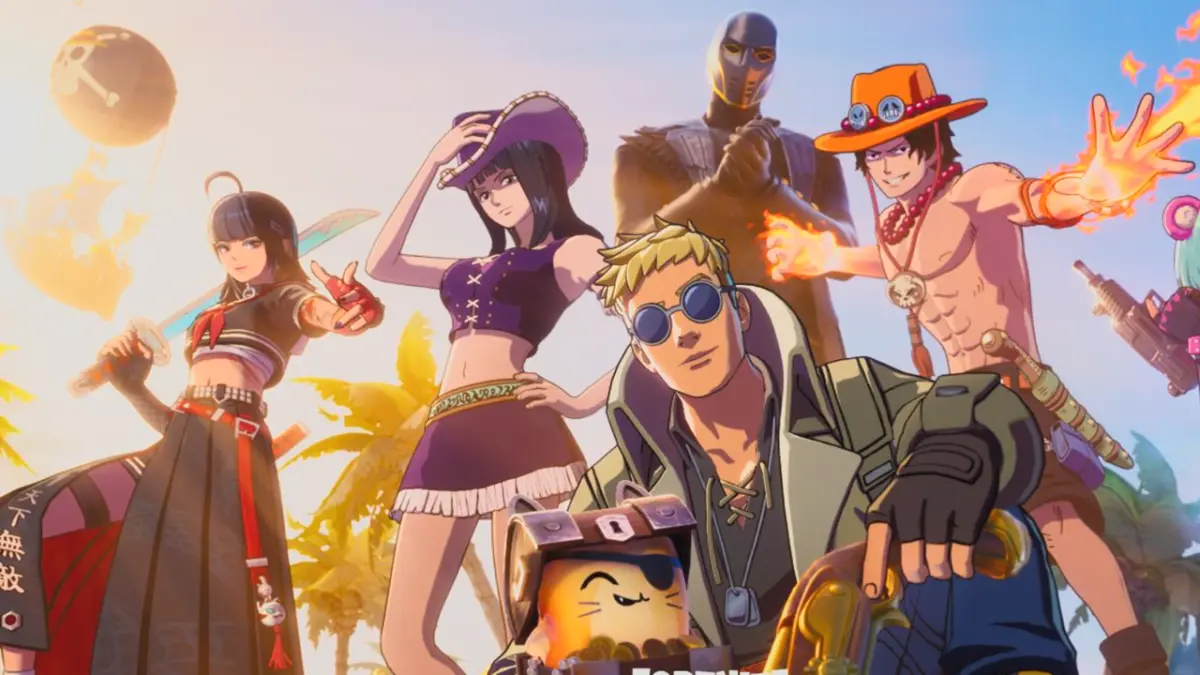
In the fast-paced ecosystem of live-service gaming, transparency is the bedrock upon which player trust is built. When that foundation fractures, the fallout can be swift, chaotic, and legally perilous. Epic Games learned this lesson anew following the explosive launch of Fortnite’s "Treasure Hunters" mini-season on November 1, 2026. At the core of the controversy is the "Pirate Token"—an exceptionally rare in-game collectible that grants the lucky recipient access to the Pirate Shop, effectively unlocking nearly every cosmetic item for free over a 14-day window.
For an item holding such unprecedented, high-value utility, the community’s response was predictable: absolute frenzy. Millions of players turned Fortnite’s islands upside down, cracking open every virtual chest in sight. However, as days passed and legendary grinders recorded thousands of unopened chests without a single token drop, frustration boiled over. The absence of officially published drop rates sparked a massive wave of backlash, leading to threats of perpetual boycotts, accusations of predatory psychological manipulation, and—most alarmingly for the studio—calls for a federal investigation by the United States Federal Trade Commission (FTC).
After a week of mounting public pressure and deafening silence from the developers, Epic Games finally blinked. Releasing an official data breakdown via the Fortnite Status channel on X (formerly Twitter), the studio unveiled the staggering mathematical odds behind the Treasure Hunters event. While the community has largely welcomed the long-overdue transparency, the fallout has reignited critical conversations regarding corporate accountability, predatory monetization models, and the psychological impact of obscurity-based loot mechanics on a younger demographic.
Detailed Chronology of a Community Meltdown
Day One: The Illusion of Opportunity (November 1, 2026)
The Treasure Hunters mini-season debuted to massive fanfare, introducing a novel mechanic centered around treasure chest exploration. Early promotional material and in-game framing suggested an exciting, high-stakes treasure hunt where every player had a chance to strike virtual gold. The ultimate prize—Pirate Shop Access—promised a fortnight of complimentary cosmetics, driving concurrent player counts through the roof.
However, unlike standard loot boxes or regulated microtransactions, which often carry legally mandated or community-expected transparency disclosures, the Pirate Token was embedded directly into regular gameplay loops. Players assumed standard rarity scaling, with many holding out hope that sheer time investment would eventually yield results.
Mid-Week: The Grind and the Realization (November 2–4, 2026)
As the days ticked by, the illusion began to shatter. Dedicated content creators and veteran players streaming their marathon sessions revealed harrowing statistics: squads dropping into matches continuously, accumulating thousands of opened chests without so much as a whisper of a Pirate Token.
Social media platforms quickly became clearinghouses for discontent. Speculation ran wild, with players attempting to reverse-engineer the math. Early community estimates pegged the drop rate at roughly 1:7,000—a daunting figure, but one considered within the realm of possibility for dedicated grinders. Little did they know, reality was exponentially more punishing.
The Boiling Point: FTC Threats and Boycotts (November 5, 2026)
By November 5, the mood shifted from bewilderment to outright hostility. Players began organizing formal pushbacks, pointing out that Fortnite’s massive player base—heavily populated by minors—was uniquely vulnerable to the fear of missing out (FOMO) perpetuated by unknown, opaque drop rates.
The controversy crossed a significant threshold when community members began calling out regulatory bodies. Prominent figures and consumer advocates publicly tagged the FTC, arguing that withholding odds for high-value items within an environment heavily marketed to children constituted an unfair and deceptive practice.
"Hello @FTC, Epic Games added a new ‘Pirate Token’ which doesn’t have any public odds of getting it, which creates anti-consumer field/FOMO. The game is majorly played by children, they can do anything if they wouldn’t get it, so take action against Epic Games please"
— @QuantSet, November 5, 2026
Simultaneously, calls for an indefinite boycott began to trend. Disgruntled veterans argued that the system heavily favored casual or newly returning players over loyalists who had dedicated thousands of hours to the title, creating a perceived rift in community equity.
The Breaking Point and Official Disclosure (November 7–8, 2026)
Facing a PR crisis that threatened to overshadow the entire mini-season, Epic Games relented. On November 7, the Fortnite Status account broke its silence, publishing the exact mathematical probabilities for every tier of treasure drop. The figures sent shockwaves through the community, confirming that the token was rarer than most players could have ever anticipated.
Supporting Context and Metrics: The Brutal Math
Epic Games’ official disclosure left no room for interpretation. By breaking down both normal match drop rates and the enhanced "Treasure Hours" windows, the developer quantified the exact odds governing the Treasure Hunters event.
Normal Match Drop Rates
The probability of securing items from standard chests during regular gameplay proved to be exceptionally slim, scaling dramatically from common cosmetic items to the holy grail of Pirate Shop Access:

- Gizmo (any variant): 1 : 127
- Weekly Loading Screen: 1 : 272
- Weekly Jam Track: 1 : 391
- Weekly Pickaxe or Backbling: 1 : 568
- Weekly Vehicle & Decal: 1 : 7,813
- Pirate Shop Access (Pirate Token): 1 : 137,500
- Weekly Gold Outfit: 1 : 1,562,500
To put the 1:137,500 figure for Pirate Shop Access into perspective, a player opening a chest every few seconds would need to dedicate hundreds—if not thousands—of uninterrupted hours to approach statistical certainty. The revelation prompted immediate dark humor online, with fans drawing parallels to decades-long fictional quests.
"@FortniteStatus ‘1:137,500 – Pirate Shop Access’. That’s why Luffy still hasn’t found the One Piece after 20 years."
— @uknonjones, November 7, 2026
Treasure Hours Multipliers
To inject temporary surges of excitement, Epic Games structured designated "Treasure Hours," during which drop rates receive substantial multiplicative boosts. While exact baseline windows vary, the published multipliers include:
- Pirate Shop Access: 1.5x boost
- Weekly Gold Outfit: 7.5x boost
- Weekly Vehicle & Decal: 10x boost
Even with a 1.5x multiplier applied during Treasure Hours, the foundational odds for the Pirate Token remain astronomical, cementing its status as an ultra-exclusive anomaly rather than an achievable seasonal goal for the median player.
Official Statements and Community Reactions
The immediate aftermath of the data drop saw a dual reaction from the Fortnite community: relief at the newfound transparency, paired with lingering frustration that it required a full-scale public relations disaster to achieve it.
Prominent creators and community voices took to social media to voice their mixed perspectives. Popular streamer StableRonaldo expressed straightforward appreciation for the clarity:
"Thank you, this is what we wanted. W Fortnite."
However, the prevailing sentiment echoed a demand for proactive communication rather than reactive damage control. User @M1das_OW2 captured the mood of the disillusioned veteran base:
"Thank you for transparency but it should not have taken a week."
Legal and consumer rights analysts noted that while the threat of FTC intervention may have ultimately been overstated given the free-to-play, non-monetary acquisition vector of the chests (as players were hunting via gameplay rather than direct cash purchases for the token), the psychological pressure and consumer deception arguments struck a raw nerve. The incident highlights a growing regulatory and ethical intolerance for hidden mechanics in modern video games, regardless of whether real currency is directly exchanged for the randomized roll.
Future Outlook: A Pattern of Controversy at Epic Games
This latest controversy does not exist in a vacuum. The Pirate Token backlash is merely the latest in a string of recent public relations hurdles for Epic Games. Just last month, the studio found itself embroiled in a separate community firestorm following the release of the "Nikki from Obsession" skin, which sparked intense debates among horror fans and triggered yet another wave of boycott threats.
Compounding these community relations challenges are internal pressures. Reports indicate that Epic Games has been pushing its development teams aggressively toward the integration of artificial intelligence technologies. Furthermore, highly anticipated pipeline projects—such as a secretive, crossover shooter featuring intellectual properties from Star Wars and Marvel—have reportedly faced internal delays.
As the Treasure Hunters mini-season moves past its initial turbulence, the big question facing Epic Games is whether this event will serve as a cautionary tale. The community has made its stance unequivocally clear: transparency is no longer a luxury feature to be doled out after a crisis, but an absolute baseline requirement. Whether Epic applies these lessons to future seasonal rollouts—or continues to court controversy through opaque, high-stakes engagement hooks—will shape player trust for the remainder of the chapter.