Executive Overview
We are currently living through a golden age of cooperative video gaming. Thanks to an industry-wide multiplayer renaissance, couples, roommates, and long-distance friends have a wealth of titles designed to forge trust, encourage communication, and test interpersonal bonds. From the chaotic cinematic hurdles of Split Fiction to the whimsical expanse of Big Walk, the market is saturated with games promising collaborative harmony. Yet, few hit the exact psychological sweet spot required for a relaxing, low-stress, yet intellectually stimulating date-night experience.
Enter Escape Academy 2: Back 2 School, developed by Coin Crew Games and published by iam8bit Presents. Launching on November 5 across PlayStation 5, Windows PC, Xbox One, and Xbox Series X (with a coveted day-one debut on Xbox Game Pass), this sequel to 2022’s sleeper hit Escape Academy expands on its predecessor’s formula in every conceivable way.
Where the original game functioned as a tightly wound appetizer—brilliant in execution but tragically brief—Escape Academy 2 arrives as a fully realized, substantial meal. It doubles, and at times triples, down on split-screen couch co-op and online multiplayer, delivering a bounty of digital escape rooms built to challenge communication skills without ever crossing into frustrating territory. While its narrative ambitions stumble slightly under the weight of flat visual-novel presentation, its ingenious environmental design, clever micro-puzzles, and new Super Mario 64-style exploration hub cement it as a near-perfect addition to the couch co-op canon.
As critic Giovanni Colantonio notes, it offers an evening of collaborative problem-solving that is infinitely more satisfying—and considerably less relationship-damaging—than building flat-pack IKEA furniture.
Detailed Chronology & Gameplay Evolution
From Appetizer to Main Course: The Making of Escape Academy 2
Coin Crew Games carved out a unique niche in the gaming landscape by leveraging their real-world expertise in designing physical escape rooms. Their 2022 debut, Escape Academy, successfully translated the tactile, frantic energy of an escape room into a digital medium. However, players and critics alike noted that the game ended just as it was hitting its stride. Even with subsequent DLC packs designed to extend playtime, the original release felt more like a proof-of-concept than a complete standalone journey.
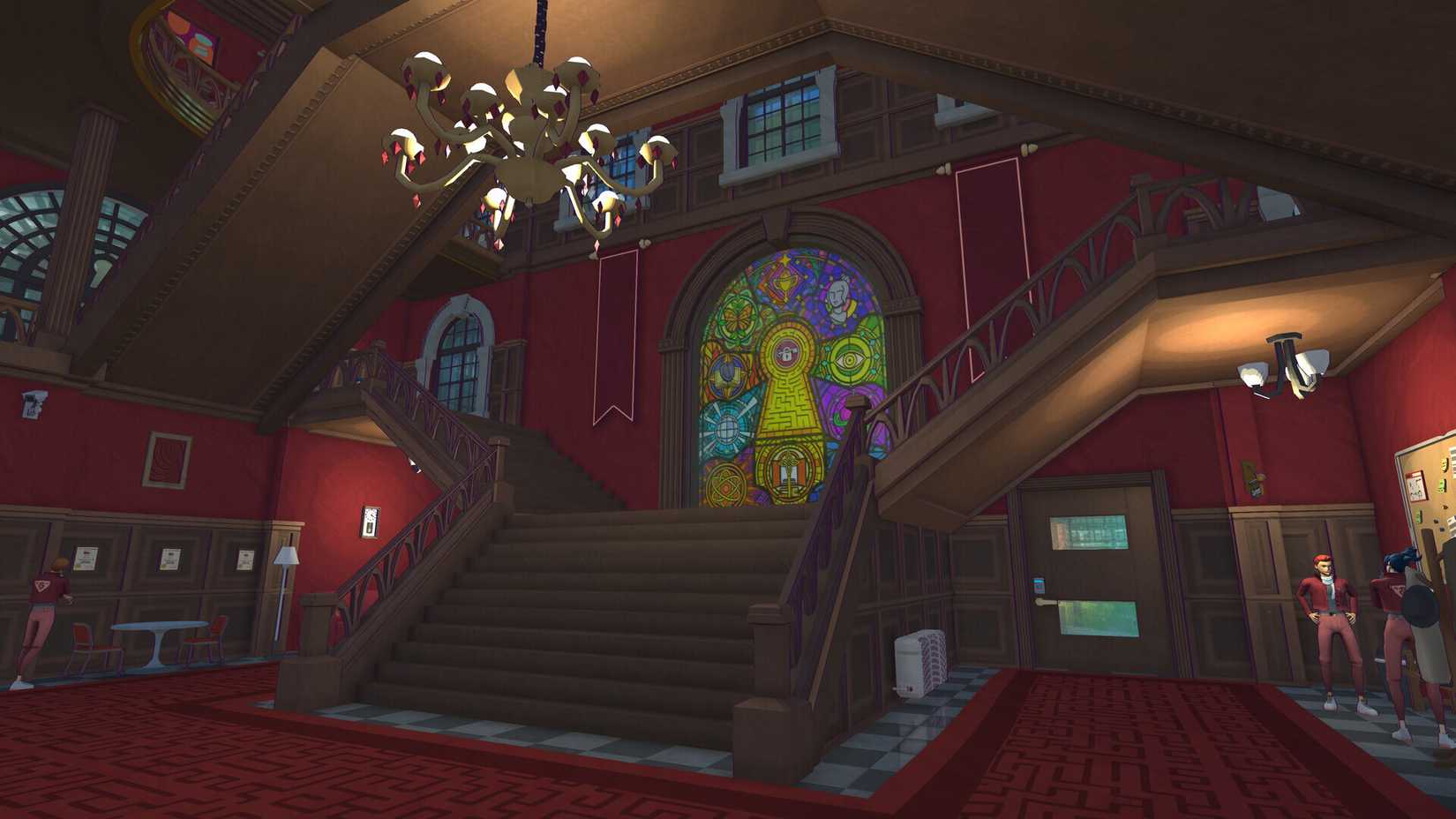
Back 2 School rectifies this shortcoming immediately. From the moment players step back onto the hallowed, puzzle-obsessed grounds of the titular academy, the scale and ambition of the project are immediately apparent. The puzzle rooms are larger, more intricate, and demonstrate a much deeper understanding of how individual spaces interconnect to form a cohesive overarching adventure.
Anatomy of a Puzzle Box
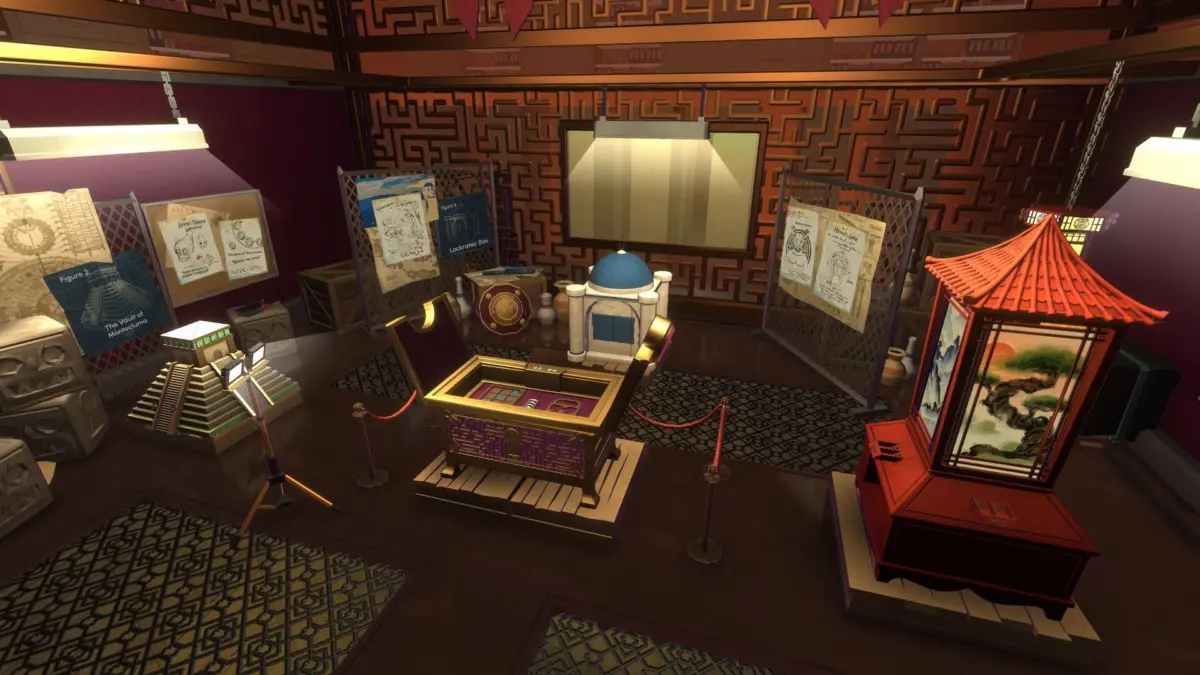
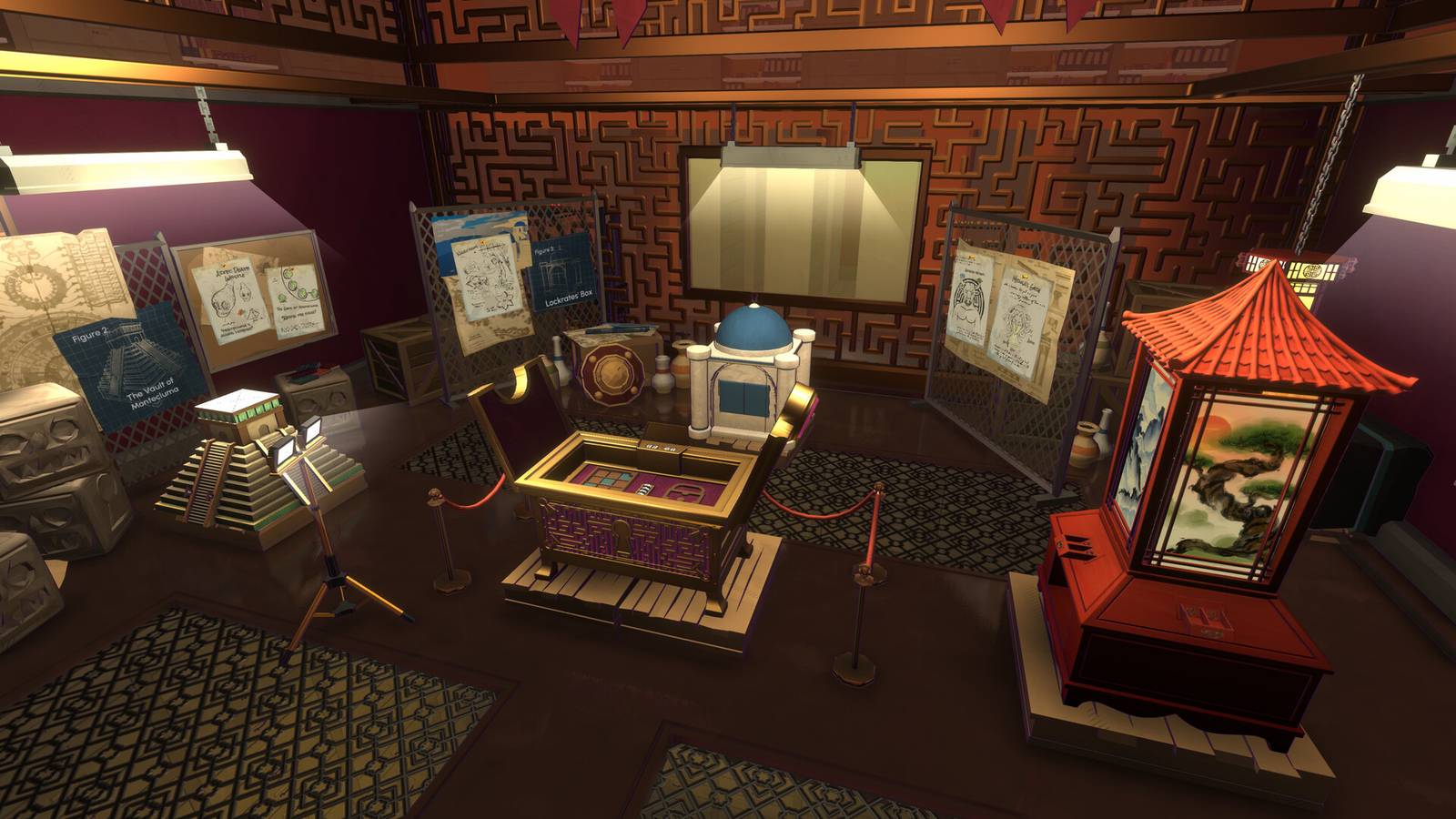
At its core, Escape Academy 2 retains the fundamental loop of its predecessor: players assume the roles of students at a specialized academy where education is entirely measured by one’s ability to defuse, decode, and escape themed puzzle boxes.
Coin Crew Games has refined its craft, ensuring that every room is an exercise in structured logic rather than pixel-hunting guesswork. Each escape room is built around a series of interconnected micro-puzzles that funnel naturally into a grand, satisfying conclusion.
Consider one of the game’s standout set-pieces: a race against the clock inside a towering, multi-tiered clock tower. To ascend to the top before time expires, players must rapidly divide tasks, handling everything from stray geometrical shapes and lengths of heavy rope to scattered lunar charts and esoteric acoustic clues.
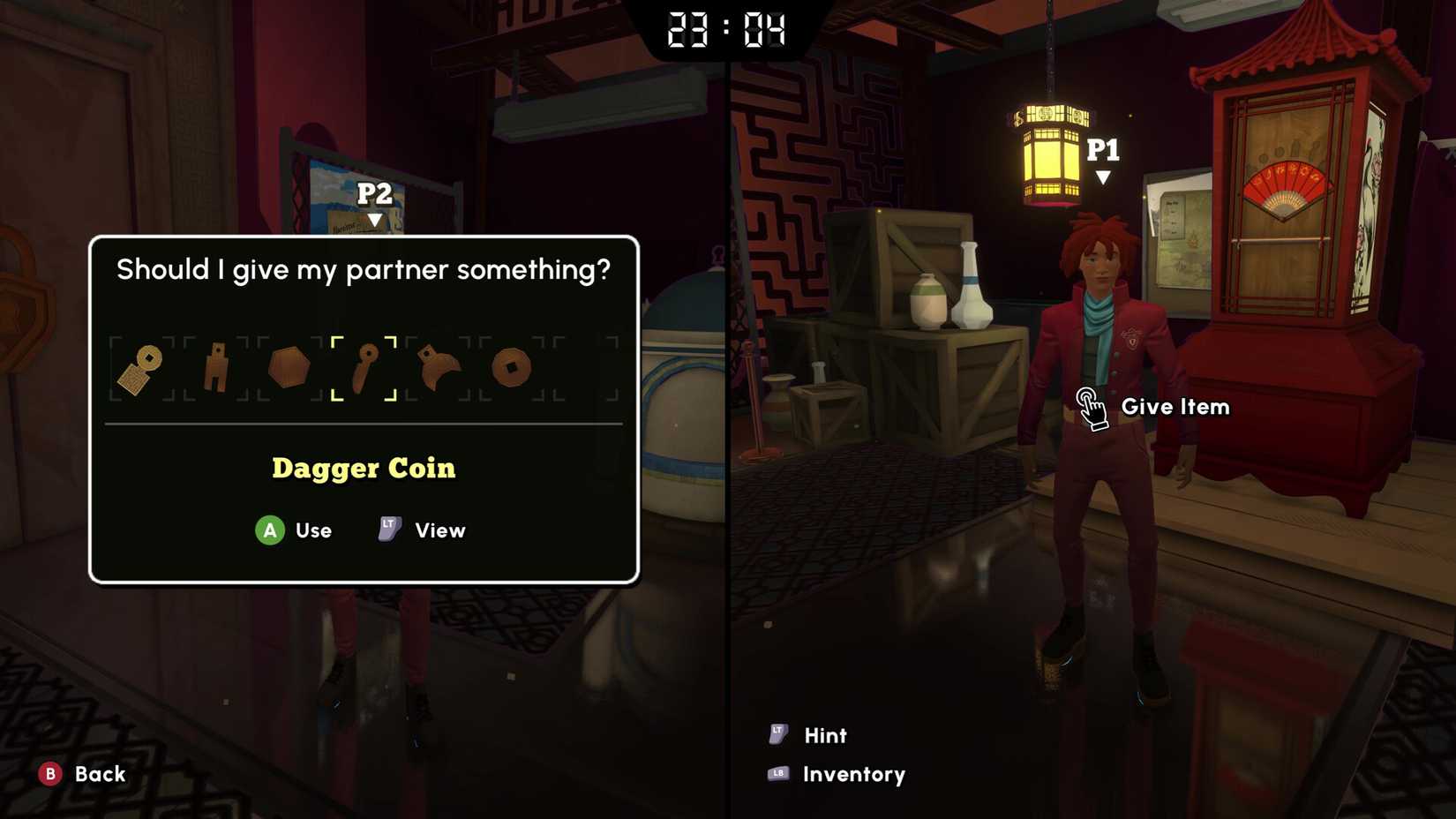
Crucially, the game’s design philosophy ensures that no player is ever left on the sidelines. There are always multiple concurrent riddles demanding attention, allowing duos to "divide and conquer." Whether playing via split-screen on the couch or coordinating online, teammates maintain a clear visual line of sight on each other’s inventories and actions. This transparency fosters real-time communication, transforming what could be a frustrating bottleneck into a lively dialogue.
Campus Exploration and "Collaborative Independence"
The most significant mechanical evolution in Escape Academy 2 is the introduction of a fully explorable school campus. Abandoning the strictly linear level-select menus of the first game, the sequel opens up its hub world Super Mario 64-style. Completing escape rooms rewards players with access to new wings, courtyards, and hidden alcoves of the academy.
This hub is packed with:

- Side-quests that reward currency and items.
- Collectible red herrings designed to throw puzzle-solvers off the scent.
- Secret mini-puzzles hidden in plain sight.
During typical playthroughs, this structural shift encourages a healthy dynamic of collaborative independence. Partners can naturally split up between major missions to pursue individual curiosities—such as grinding side-quests for cash or unlocking sprawling zip-lines that streamline campus navigation. It acknowledges a fundamental truth about human relationships: a healthy partnership requires moments of shared purpose balanced with a healthy degree of individual autonomy.
Supporting Context & Metrics
The Cooperative Gaming Boom
The release of Escape Academy 2 arrives at a pivotal time for the games industry. Over the past five years, data from digital storefronts like Steam, PlayStation Network, and Xbox Live indicates a massive surge in the popularity of cooperative and split-screen titles. Following the pandemic-era isolation, players increasingly seek out games that facilitate shared social spaces—whether on a physical couch or via online voice chat.
Market analyses show that titles emphasizing cooperative problem-solving often enjoy longer retail tails and higher retention rates than purely competitive multiplayer games. By positioning Escape Academy 2 as a premier "couples game" alongside hits like It Takes Two, Portal 2, and Blanc, Coin Crew Games has targeted a demographic that is chronically underserved by traditional first-person shooters and live-service action titles.
Accessibility and the "Skill Gap" Problem
One of the most insidious threats to a peaceful gaming session between partners is the "skill gap"—a scenario where one player’s superior mechanical reflexes or video game literacy leaves the other feeling alienated, useless, or overwhelmed.
Escape Academy 2 largely bypasses this pitfall through its genre roots. Because escape rooms rely on lateral thinking, observational acuity, and communication rather than high-APM (actions-per-minute) inputs, twin-stick shooter veterans and casual puzzle-enjoyers are placed on remarkably even footing. A partner who might struggle with platforming precision can easily shine by spotting a subtle numerical pattern on a wall or interpreting a cryptic journal entry.
Official Statements & Narrative Critique
The Narrative Misstep
While Escape Academy 2 excels in mechanical design and level architecture, its narrative ambitions meet a mixed reception. The sequel attempts to inject a deeper sense of lore by exploring the secretive history of the school and the personal histories of its enigmatic founders.
While the underlying mystery is serviceable and offers an adequate narrative spine to push players toward the finale, its presentation leaves something to be desired. The story is primarily communicated through flat, visual-novel-style dialogue sequences. These segments frequently lean heavily on overly punny writing that can test a player’s patience, often prompting groans rather than emotional investment.
However, as critics and early players point out, even this flaw has a silver lining. Poking fun at the corniness of the dialogue together becomes an unintended team-building exercise in its own right, turning a narrative shortcoming into a bonding ritual.
Developer Vision
Coin Crew Games has consistently emphasized that their goal is to bring the physical magic of escape rooms into living rooms worldwide. In pre-launch interviews, studio leads highlighted the importance of physical communication cues—even in digital spaces—arguing that the magic of puzzle-solving is amplified exponentially when shared with someone sitting right next to you.
The decision to launch Escape Academy 2 on Xbox Game Pass on day one is a calculated move to maximize this social potential, lowering the barrier to entry so that friend groups and couples can easily download and dive into the academy grounds without financial hesitation.
Future Outlook & Verdict
Escape Academy 2: Back 2 School succeeds because it understands precisely what its audience wants. It does not reinvent the wheel, nor does it attempt to be an exhaustive, hundred-hour epic. Instead, it delivers a breezy, engaging, and intellectually stimulating campaign tailored for pairs.
The puzzles strike a rare equilibrium: they are clever enough to provoke genuine "aha!" moments of triumph, yet rarely obtuse enough to induce controller-throwing frustration. The addition of campus exploration elevates the pacing, providing a welcome breather between the high-pressure environments of the core escape rooms.
As the industry continues to chase hyper-monetized live-service trends, titles like Escape Academy 2 stand as a refreshing reminder of the simple, enduring joy of solving a good puzzle with a loved one. When Escape Academy 2: Back 2 School launches on November 5 across PlayStation 5, Windows PC, and Xbox platforms (including Game Pass), it will undoubtedly secure its place as the definitive go-to game for date nights this holiday season.
Just remember: solving an intricate clockwork puzzle together may test your patience, but it is still infinitely more enjoyable than decoding a cryptic instruction manual while assembling Swedish flat-pack furniture.