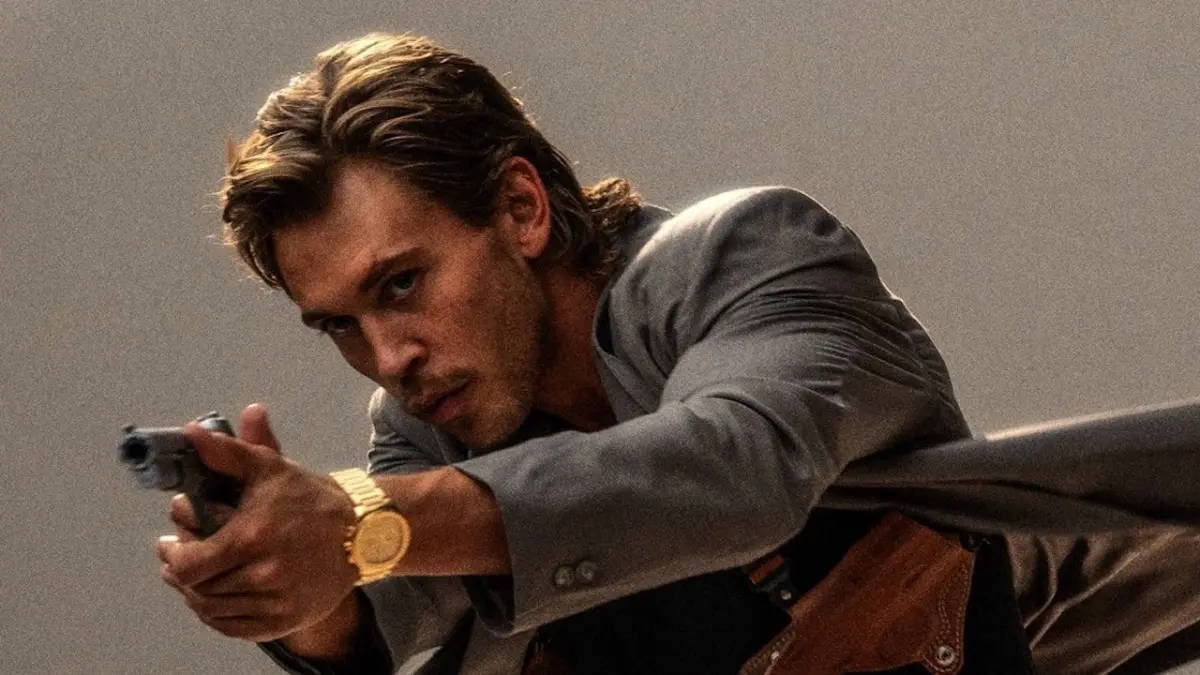
Production on Universal Pictures’ highly anticipated Miami Vice ’85 is currently underway, pulling crowds and generating heavy social media traffic on location in New York and New Jersey before the production relocates to South Florida once the regional hurricane season concludes. Directed by Joseph Kosinski, the film stars Austin Butler as the iconic undercover detective Sonny Crockett and Michael B. Jordan as his steadfast partner, Ricardo Tubbs.
However, recent on-set footage leaking from the production has sparked immediate debate among eagle-eyed cinephiles and die-hard fans of the original 1980s television series. Videos captured from the streets show Butler and Jordan cruising in an iconic white Ferrari Testarossa. While this vehicle is instantly recognizable as the definitive automotive symbol of the later seasons of the television show, its appearance in Miami Vice ’85 represents a glaring continuity and period-accuracy error.
Based on the timeline of the narrative Kosinski’s film is set to retell—the foundational pilot era and early seasons of the 1984 series—Crockett should instead be behind the wheel of a black Ferrari Daytona Spyder convertible.
Why would a major studio production overseen by a meticulous director make such a deliberate historical misstep? Industry analysts, legal experts, and automotive historians point to a fascinating, decades-old corporate rivalry and legal battle between Italian luxury automaker Ferrari and the creators of the original television program. Rather than risking a multi-million-dollar trademark infringement dispute, Universal Pictures appears to be sidestepping legal hurdles entirely by fast-tracking the white Testarossa into the narrative, prioritizing modern intellectual property compliance over strict adherence to 1980s television canon.
Detailed Chronology of the Automotive Controversy
To understand why the white Ferrari Testarossa in Miami Vice ’85 is causing such a stir among purists, one must journey back to the genesis of the original television series created by Anthony Yerkovich and executive produced by Michael Mann. When Miami Vice premiered on NBC in September 1984, style, atmosphere, and visual branding were prioritized above all else. At the heart of detective Sonny Crockett’s undercover persona was his sleek, black 1972 Ferrari Daytona Spyder convertible, a car that quickly became as much of a character on the show as Don Johnson or Philip Michael Thomas.
The Replica Problem and Ferrari’s Wrath
The reality behind the original vehicle, however, was far less glamorous than what appeared on screen. During the early pre-production phases, producers reached out to Ferrari North America requesting authentic vehicles for the gritty police drama. Ferrari flatly refused to supply genuine cars, unwilling to associate their prestigious brand with a weekly television show featuring drug cartels, shootouts, and gritty underworld dealings.
Undeterred, the production team turned to custom car builder Al McBurnie of McBurnie Coachcraft. McBurnie constructed replica Daytona Spyders using modified Chevrolet Corvette C3 chassis outfitted with custom fiberglass body panels designed to mimic the Italian sports car. These replicas performed the heavy lifting for stunts, chases, and close-ups throughout the first two seasons.
As the show exploded into a global cultural phenomenon, Ferrari’s stance shifted from indifference to fierce litigiousness. Infuriated by the widespread popularity of unauthorized replica vehicles bearing the iconic prancing horse silhouette, Ferrari launched a massive legal offensive in the mid-1980s. The Italian automaker filed lawsuits against both the show’s producers and McBurnie Coachcraft, citing severe trademark infringement, unfair competition, and illegal brand dilution.
The Stinger Missile Settlement
The high-stakes legal battle culminated in a unique corporate settlement that forever changed television history. According to legal recaps and industry lore, Ferrari won sweeping judicial protections for its corporate trademarks, securing unprecedented legal ownership over the unique "shape and profile" of its automobile designs.
Rather than shutting down the replica operations entirely through punitive damages, Ferrari brokered an unusual deal with the studio. The automaker agreed to drop its lawsuits and officially donate two brand-new, factory-authentic white Ferrari Testarossas—their current flagship supercar at the time—to the production.
There was, however, one catch: the fake Daytona Spyder had to be permanently and dramatically written out of the show in spectacular fashion.
Fans of the series remember the jaw-dropping result vividly. In the Season 3 premiere, titled "When Irish Eyes Are Crying," Sonny Crockett’s beloved black Daytona Spyder is targeted and blown to smithereens by a Stinger missile fired by an arms dealer. The unforgettable explosion sent shockwaves through the fan base and birthed one of early television’s most enduring dramatic moments. By the second episode of Season 3, the Miami-Dade Police Department conveniently supplied Crockett with the pristine white Ferrari Testarossa, establishing a new visual era for the remainder of the series.

Supporting Context, Production Metrics, and Fan Reaction
The decision by director Joseph Kosinski and Universal Pictures to bypass the Daytona Spyder era in Miami Vice ’85 highlights the complex tightrope modern Hollywood must walk when handling legacy intellectual property.
Production Scale and Location Shifts
Miami Vice ’85 represents a massive financial and creative investment for Universal Pictures. Principal photography kicked off in the urban corridors of Brooklyn, New York, and various municipalities across New Jersey, standing in for the gritty, neon-drenched aesthetic of the mid-1980s East Coast before the narrative moves southward.
Once the peak of the Atlantic hurricane season passes, the production will shift its base of operations to Greater Miami, utilizing authentic South Florida locations to capture the sultry, sun-baked atmosphere that defined the original series. The film has secured a prime theatrical release window, scheduled to hit commercial cinemas and IMAX screens nationwide on May 19, 2028.
The Fan Dilemma: Canon vs. Corporate Caution
While general audiences will likely care very little about which generation of Ferrari Austin Butler is driving, hardcore continuity buffs have taken to social media platforms like X (formerly Twitter) to dissect the set videos. The inclusion of the white Testarossa during a narrative period that ostensibly covers the events before the Daytona’s destruction has fueled intense speculation.
+-----------------------------------------------------------------------------------+
|                        MIAMI VICE VEHICLE TIMELINE COMPARISON                     |
+---------------------------+-----------------------------------+-------------------+
| Era / Medium              | Primary Vehicle                   | Legal/Canon Status|
+---------------------------+-----------------------------------+-------------------+
| TV Season 1–2 (1984–1986) | Black 1972 Ferrari Daytona Spyder | Corvette-based    |
|                           | (Replica)                         | replica; destroyed|
+---------------------------+-----------------------------------+-------------------+
| TV Season 3–5 (1986–1989) | White 1986 Ferrari Testarossa     | Genuine factory   |
|                           |                                   | vehicles provided |
+---------------------------+-----------------------------------+-------------------+
| Miami Vice '85 (Film)     | White Ferrari Testarossa          | Preemptive legal  |
|                           | (Appearing early in timeline)     | avoidance strategy|
+---------------------------+-----------------------------------+-------------------+
Industry analysts suggest that Universal’s legal department likely advised against building or utilizing replica Daytona Spyders. Given Ferrari’s famously aggressive protection of its intellectual property, trade dress, and vehicle silhouettes spanning the last forty years, commissioning unauthorized replicas today could trigger immediate legal pushback from Maranello. By skipping straight to the Testarossa—or potentially securing a modern licensing and partnership agreement with Ferrari for authentic vehicles—Universal effectively immunizes the production against costly litigation.
Official Statements and Industry Perspectives
While neither director Joseph Kosinski nor Universal Pictures’ legal division has issued a formal press release addressing the automotive anachronism, entertainment attorneys and franchise historians have weighed in heavily on the situation.
Entertainment legal analyst Marcus Vance noted in a recent industry brief:
"Automotive brand management is among the strictest in the global entertainment sector. Ferrari does not view its cars merely as props; they view them as registered trademarks whose physical geometry is protected by international trade dress laws. Replicating a vintage Ferrari without explicit corporate sign-off is a legal minefield. Universal choosing the path of least resistance by incorporating the Testarossa early is standard risk mitigation for a blockbuster production."
Meanwhile, automotive historians point out that the white Testarossa has become far more culturally synonymous with the Miami Vice brand than the Daytona Spyder ever was. For casual moviegoers buying a ticket in May 2028, seeing Crockett and Tubbs step out of anything other than a white Ferrari would feel fundamentally wrong, regardless of what television timeline logic dictates.
Future Outlook
As Miami Vice ’85 continues its grueling production schedule—transitioning from the northeastern asphalt to the palm-lined boulevards of Miami—anticipation for Joseph Kosinski’s cinematic reboot remains at an all-time high.
The pairing of Austin Butler and Michael B. Jordan promises a high-octane, stylish reimagining of the buddy-cop dynamic that revolutionized television four decades ago. While purists may continue to grumble over the chronological displacement of Sonny Crockett’s automotive stable, the production’s pragmatic approach ensures that the film will not bog down in courtroom battles before it even hits the silver screen.
Fans can expect further promotional rollouts, official first-look images, and teaser trailers in the months leading up to its theatrical debut. When Miami Vice ’85 finally roars into IMAX theaters on May 19, 2028, the sight of the white Ferrari Testarossa tearing down coastal highways to a synth-heavy score will undoubtedly eclipse any minor script chronology discrepancies in the minds of moviegoers worldwide.