The cinematic landscape of video game adaptations has undergone a radical renaissance over the last half-decade, transitioning from a graveyard of critically maligned cash-grabs to a frontier for visionary auteur-driven storytelling. Entering this lucrative and high-stakes arena is filmmaker Zach Cregger, whose previous masterclasses in modern horror—Barbarian (2022) and the critically acclaimed thriller Weapons—cemented his status as one of the genre’s most unpredictable and thrilling voices. Now, Cregger has turned his sights to Capcom’s legendary survival horror titan with the 2026 release of the Resident Evil movie reboot.
Early indicators suggest Cregger has pulled off the impossible. The film has debuted to widespread critical and commercial acclaim, netting an impressive 8 out of 10 rating from IGN, soaring into the 90s on Rotten Tomatoes across both critic and audience metrics, and hurtling toward franchise box-office records that threaten to eclipse the highest-grossing entries of the 2010s. Yet, this triumph was not achieved without friction. Before a single frame hit theaters, the production faced intense scrutiny and skepticism from a fiercely protective fan base wary of narrative divergences—specifically, the decision to pivot away from legacy protagonists like Leon S. Kennedy in favor of an original narrative centered around a beleaguered medical courier named Bryan.
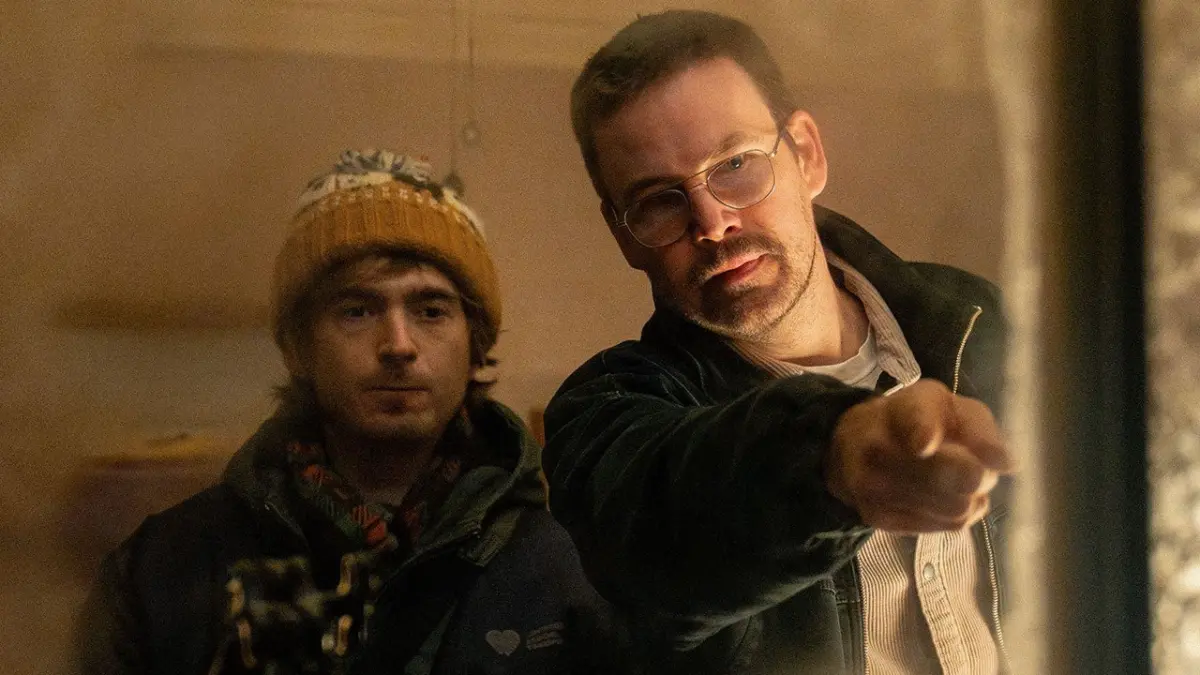
In a candid, deep-dive discussion with IGN’s Tom Jorgensen, Zach Cregger and star Austin Abrams pulled back the curtain on the arduous production process. The conversation explored navigating the turbulent waters of fan expectations, translating the visceral, adrenaline-fueled mechanics of a video game into cinematic language, crafting a relentless 85% action-driven runtime, and a terrifying near-miss involving a 150-pound bag of blood on set.
Detailed Chronology: From Naive Optimism to Box Office Domination
The journey of Cregger’s Resident Evil from conception to box-office juggernaut is a masterclass in challenging conventional Hollywood adaptation strategies. Initially, the filmmaker approached the intellectual property with the unvarnished enthusiasm of a lifelong fan. Having spent countless hours immersed in Capcom’s terrifying digital worlds, Cregger assumed that the broader fanbase would universally celebrate a director of his caliber stripping the franchise back to its roots as a pure, unadulterated survival horror experience.
However, the reality of managing a massive, entrenched fandom quickly set in. As early casting and plot details leaked, online forums erupted into debate regarding the film’s faithfulness to the source material. The absence of traditional canon heavyweights sparked immediate resistance. Reflecting on this initial wave of pushback, Cregger admitted to a degree of early naivety:
"I thought that fans of these games like me would be thrilled that somebody was coming along and turning Resident Evil into a survival horror movie… I did not really appreciate the sentiment of, ‘We’ve been waiting forever for Leon’s story.’ And I appreciate that. And I’m sorry that that’s not the story that I’m bringing here."
Rather than dismissing the backlash, Cregger expressed a deep-seated empathy for the skeptical fanbase, drawing a parallel to his own aversion to the earlier 2000s cinematic adaptations. Because those previous films failed to mirror the specific aesthetic and tonal atmosphere of the games Cregger grew up loving, he understood why purists might look at his reboot with a raised eyebrow.
Production logistics further tested the team’s resilience. Filming required immense physical stamina, exacting technical choreography, and a willingness to embrace the chaotic unpredictability of live-action stunt work. The culmination of these efforts is a film that prioritizes breathless momentum, keeping audiences pinned to their seats for the vast majority of its runtime.
Supporting Context & Metrics: Decoding the Success of a New Era
The critical and commercial performance of Cregger’s Resident Evil redefines what studios can expect from video game adaptations. Historically, Hollywood adaptations have stumbled by attempting to translate the active agency of gaming into a passive cinematic medium, often resulting in bloated lore dumps or hollow action set pieces that miss the psychological core of the source material.
Cregger bypassed this pitfall by focusing not on matching specific cutscenes, but on replicating the feel of playing a Resident Evil title. This meant importing the visual grammar of the games directly into the cinematography—specifically anchoring the camera in a third-party, over-the-shoulder perspective utilizing wide lenses. By mirroring this specific digital vantage point, Cregger established an immediate subconscious familiarity for viewers.
Furthermore, the film’s pacing directly mirrors the survival horror loop: resource scarcity, creeping dread, and grueling journeys on foot where every bullet counts.
- Weapon Progression: Characters begin with standard sidearms before graduating to shotguns and submachine guns like the MP5.
- Mutant Escalation: The narrative introduces increasingly terrifying biological aberrations powered by the t-Virus.
- The t-Virus Philosophy: Addressing critiques regarding the limited presence of "vanilla" zombies, Cregger defended his creative choices by emphasizing the limitless evolutionary potential of the t-Virus over standard reanimated corpses.
For Austin Abrams, stepping into the shoes of Bryan—an original character completely divorced from pre-existing game expectations—provided a liberating creative canvas. Rather than relying on traditional horror tropes, Abrams and Cregger grounded Bryan’s behavioral blueprint in an eclectic "holy trifecta" of cinematic underdogs: Marty McFly (Back to the Future), Kevin McCallister (Home Alone), and John McClane (Die Hard). This blend created an everyman hero utterly ill-equipped for the horrors unfolding around him, amplifying audience tension and relatability.
Official Statements & Behind-the-Scenes Revelations
The dialogue between Cregger, Abrams, and IGN offers profound insight into the meticulous coordination required to pull off the film’s hyper-kinetic style. Below are key highlights from their discussion detailing camera choreography, directorial leadership, and near-fatal on-set mishaps.
On Directing the Visual Language and Camera Work
Zach Cregger:
"I’m using the language of the games in the camera work. So I’m staying rooted in that third-person, over the shoulder with a wide lens style… And then to utilize the pacing of the games, the survival horror, the dread, the journey on foot where you’re entering this terrifying scenario, and you have two shotgun shells and you’re wounded."
Regarding his collaboration with camera operator James (who transitioned directly from hauling massive IMAX rigs on The Odyssey), Cregger noted the creative freedom enabled by standard-sized digital cinema cameras:
"He’s played video games because most people in our age group and younger have grown up on video games. So we all fundamentally understand the visual language of these games. And so it was a fun challenge for him to anticipate his attention and get there in time and tag these data points together."
Austin Abrams on Trusting the Director’s Vision
Austin Abrams:
"That’s why I felt comfortable going into it, because I knew that [Zach] was so passionate about it and had played so many hours of it… If it was someone else that wasn’t as much of a fan, that wasn’t as passionate about the games, I wouldn’t have felt comfortable."
The 150-Pound Blood Bag Incident
Among the most colorful anecdotes emerging from the production is a stunt gone wildly, memorably close to disaster during the "zombies off the roof" sequence. Abrams recalled nearly being obliterated by a massive, multi-gallon payload of cinematic gore:
Austin Abrams: "I remember running and then being like, ‘Oh, whoa, that was close.’ But I kept to my line and thankfully there weren’t any slips or anything like that. And then afterwards people being like, ‘Oh dude, that was…’"
Zach Cregger: "I remember bringing him to the monitor and being like, ‘Watch this.’ … And it’s in the movie."
Gaming Trauma as Creative Fuel
The conversation concluded with a lighthearted look at the personal gaming histories that shaped the filmmakers’ relationship with terror. While Abrams cited visceral psychological trauma from trying (and failing) to finish Dead Space, Cregger pinpointed a modern masterpiece as his ultimate scare:
Zach Cregger: "The most effective was Resident Evil 8. I played in VR, and that baby in the basement. It actually scared me so bad I had to stop. And I don’t think I’ve ever noped out of anything as an adult, but that did it… In VR, dude, it was too intense."
Future Outlook: A New Benchmark for IP Adaptations
The smashing success of Zach Cregger’s Resident Evil reboot marks a watershed moment for both the filmmaker and the horror genre at large. By proving that a high-profile intellectual property can be handled with both auteur-driven creative integrity and deep-seated reverence for its interactive roots, Cregger has established a new gold standard for video game adaptations.
As box-office projections continue to shatter records and audience scores hold steady in the 90s, the conversation within the industry has definitively shifted. Skeptics who once lamented the departure from traditional canon characters have been largely won over by the film’s relentless pacing, atmospheric dread, and meticulous visual homages.
Looking forward, this triumph opens the door for future installments—or similar cinematic ventures—to lean away from safe, formulaic studio mandates and instead embrace the visceral, anxiety-inducing mechanics that make video games so uniquely terrifying in the first place. With Resident Evil (2026), Zach Cregger has not only conquered the survival horror genre on film; he has ensured that the Umbrella Corporation’s cinematic footprint will haunt theaters for years to come.